




Why buyers look for a custom handle kitchen knife manufacturer
When sourcing a custom handle kitchen knife manufacturer, most buyers are not just shopping for a blade with a different grip. They are trying to solve a practical problem: how to get a kitchen knife that feels right in the hand, matches the intended food prep work, and still holds up in daily use. That matters whether you are building a private-label range, specifying tools for a restaurant kitchen, or developing a product line for home cooks who want a more distinctive knife.
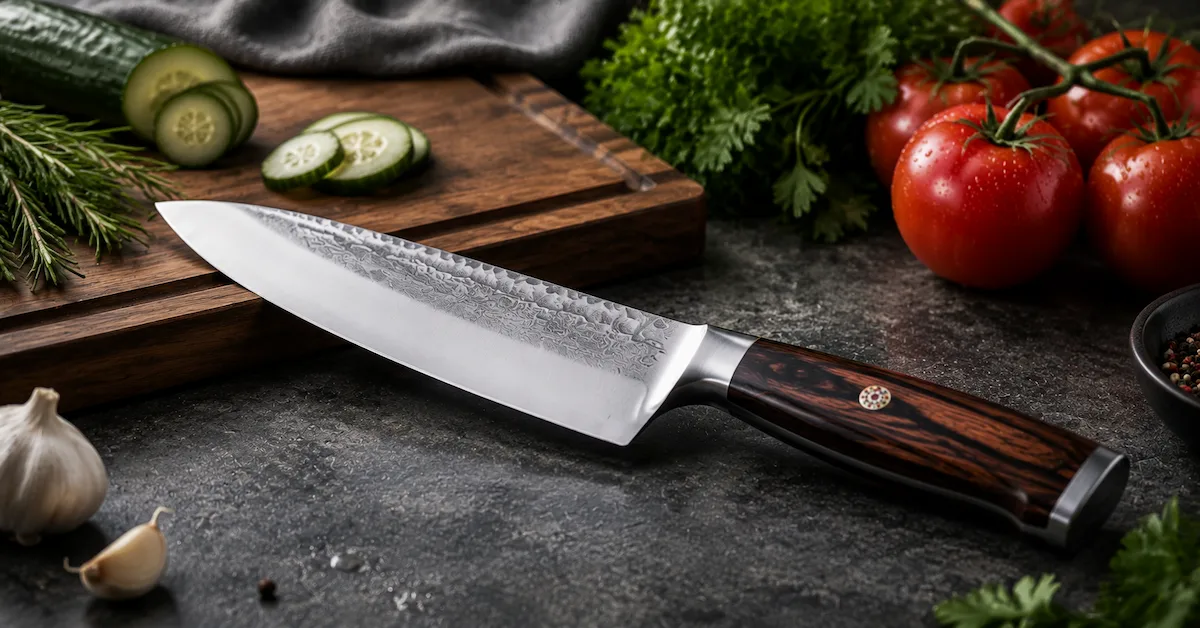
The knife in question fits the familiar chef’s knife category: a long, broad blade with a pointed tip and a gently curved cutting edge. That shape is not decorative. It is what makes the knife useful for slicing, chopping, dicing, and mincing vegetables, herbs, and proteins without forcing the user to switch tools every few minutes. For sourcing teams, the real decision is less about style alone and more about how the handle, blade finish, and manufacturing method work together in production.
A good custom kitchen knife manufacturer should be able to balance those choices without making the product feel overdesigned. That sounds obvious, but it is where a lot of programs drift. A knife can look impressive on a product page and still feel awkward in the hand, or it can be easy to sell visually and irritating to use every day. Buyers should treat the handle as a functional component first and a branding surface second.
What stands out in this knife style
The visible structure suggests a full-sized ergonomic handle with a tapered form, a metal bolster, and an end cap. That is a familiar layout in Western-style chef knives, and for good reason: it gives the user a secure hold and helps the knife feel planted during repetitive prep work. In a busy kitchen, that kind of balance can matter more than a flashy profile.
The blade also appears to have a Damascus-style layered or patterned finish. That look is popular because it adds depth and a handcrafted feel, but buyers should be careful here. A patterned finish can come from forge-welded layers, from etching, or from another decorative surface treatment. From the image alone, the exact process is not confirmable, and it would be a mistake to promise a customer that the pattern proves a specific steel construction. A seasoned knife manufacturer will be clear about what is real metallurgy and what is surface appearance.
The practical upside of this geometry is straightforward. A broad chef’s knife gives a large cutting surface for scooping chopped ingredients. The pointed tip supports finer work, and the curved edge supports a rocking motion for mincing herbs or onions. In a prep station, that versatility reduces tool changes and keeps workflow moving.
Handle design is not a cosmetic choice
Custom handle work is where many knife programs become either genuinely differentiated or quietly disappointing. A handle must fit the hand, resist fatigue, and survive repeated washing and use. If the knife is meant for home cooking, the handle should feel controlled even for smaller hands. If it is meant for a restaurant environment, grip security and durability usually matter more than ornamental detail.
The handle shown appears to use dark wood or a wood-composite material with a polished finish. That can create a warm, premium look, but buyers should ask how the material behaves in real use. Wood and wood-like materials can be attractive and comfortable, yet they need proper sealing and careful finishing. Metal bolsters and end caps can improve the feeling of solidity, though they also add weight and can change balance. That is not a defect; it is simply something to test, not assume.
One practical caution: an elegant handle shape that looks refined in a catalog can become slippery or fatiguing after a long prep session if the contouring is not right. The best manufacturers will discuss profile, taper, texture, and balance as separate variables. If they do not, that is usually a warning sign.
Blade finish, steel, and what you should ask before ordering
On a product level, buyers often focus on the blade pattern first. That is understandable, but the more important questions are usually about construction and consistency. Is the blade forged or machined? Is the patterned surface cosmetic, or does it reflect a layered build? What steel family is being used? What edge geometry is planned for the target market? None of those questions can be answered responsibly by appearance alone.
For a custom kitchen knife manufacturer, the best production conversation starts with use case. A home-cook chef’s knife may prioritize easy handling, strong visual appeal, and reasonable maintenance. A restaurant-oriented version may need a tougher, more predictable edge and a handle that remains comfortable through long shifts. The same silhouette can serve both markets, but the materials and finishing steps may need to change.
Buyers should also ask about the relationship between blade finish and maintenance. Patterned blades can hide small scratches better than highly polished surfaces, which is helpful in commercial settings. On the other hand, a decorative finish should never distract from edge quality. A knife that looks premium but does not cut cleanly is a short-lived sales story.
How the cutting task shapes the specification
This knife is suited to general kitchen food prep, so the specification should reflect that broad role. If the target buyer will use it for slicing vegetables, chopping herbs, and breaking down proteins, then edge retention, balance, and handle comfort all deserve attention. If the knife is meant as a gift item or retail display piece, the visual impression will matter more, but even then the blade still needs to perform like a real kitchen tool. Buyers can feel the difference immediately, and return rates tend to prove it.
How to evaluate a custom kitchen knife manufacturer
Not every supplier that calls itself a knife manufacturer is equally capable of custom work. For sourcing teams, the question is whether the factory can repeat the same result from batch to batch. Consistency is the hidden issue in knife production. A sample may feel excellent, but the real test is whether the handle fit, finish, and blade alignment stay stable across larger orders.
Look for a manufacturer that can talk in practical terms about handle materials, assembly method, finishing steps, and blade appearance. If they are vague about the patterned finish, that may be fine as long as they are honest about what is decorative and what is structural. If they start making absolute claims without documentation, the buyer should slow down. Knife programs attract a lot of exaggerated language, especially around Damascus-style blades.
Also pay attention to how the manufacturer handles packaging, labeling, and product presentation. A knife with a polished wood-look handle and patterned blade finish is often sold as a premium item. That means presentation is part of the product, not an afterthought. Weak packaging can undercut the perceived value of the knife even if the steel and edge are solid.
Common mistakes buyers make with custom handle knives
One common mistake is choosing a handle by appearance alone. The second is assuming a decorative blade pattern automatically signals high-end construction. A third mistake is ignoring how the knife will actually be cleaned, stored, and used. A restaurant kitchen and a home kitchen place very different demands on the same knife.
Another issue is over-specifying details that the market does not care about. If the knife is for everyday prep, buyers usually get more value from a comfortable handle and reliable edge performance than from obscure material claims. On the other hand, if the target customer is a collector or gift buyer, visual detail can justify a higher price point, provided the knife still works like a real tool.
There is also a tendency to neglect balance. A knife with a metal bolster and end cap can feel reassuring, but too much weight in the wrong place may make prolonged chopping less comfortable. This is one of those points that is hard to judge from a drawing. It needs hand samples, not just specs.
Practical buyer advice before you place an order
If you are sourcing from a custom handle kitchen knife manufacturer, ask for sample photos, construction notes, and a clear explanation of the blade finish. Confirm whether the Damascus-style look is layered steel or surface treatment. Confirm whether the handle material is natural wood, wood-composite, or another engineered material. Those are basic questions, but they prevent the kind of misunderstanding that becomes expensive later.
For procurement teams, it is also worth defining the target user early. A home-cook product can be slightly more decorative and still be perfectly credible. A restaurant tool usually needs stricter attention to grip, edge performance, and durability under routine use. If the knife is meant to serve both markets, expect compromises and make them deliberately.
Do not forget the simple things: packaging, labeling, and the way the knife is positioned in the buyer’s mind. A patterned blade and dark wood-look handle suggest a premium kitchen tool, but the product still has to deliver a clean cut and a comfortable hold. That is the point where a thoughtful custom kitchen knife manufacturer earns its keep.
FAQ: quick answers buyers usually need
Is this knife only for professionals? Not necessarily. The chef’s knife shape works for home cooks, restaurant prep, and general mise en place work. The right handle design can make it suitable for a broad audience.
Does the patterned blade mean true Damascus steel? Not always. A Damascus-style appearance may come from layered construction or from etching and other finishing methods. The exact process should be verified with the supplier.
What should matter most in a custom order? Start with fit, balance, and intended use. Visual appeal matters, but a knife that feels awkward will not stay in a customer’s kitchen for long.
What is the safest approach when comparing suppliers? Ask for clear build details, sample consistency, and a straightforward explanation of the handle and blade finish. A reliable knife manufacturer should be able to answer without drama.
What this decision really comes down to
Choosing a custom handle kitchen knife manufacturer is really about matching form to work. The knife shown here points to a familiar and useful product direction: a broad chef’s knife with a pointed tip, ergonomic handle, metal accents, and a patterned blade finish that gives it shelf appeal. That combination can work well in retail, gifting, and daily kitchen prep, as long as the build details are handled honestly.
If you are evaluating suppliers now, the next step is simple: define the intended user, request clear construction information, and test samples in real prep conditions. A knife that looks right on a screen is one thing. A knife that cuts cleanly, feels balanced, and survives repeated use is the product buyers remember.
