




Quick Answer:
A reliable cutting board manufacturer China partner should match board material, size, thickness, surface, edge treatment, stability and packaging to the intended food-preparation channel. Buyers should evaluate flatness, finish, grooves or handles, moisture and cleaning guidance, model-specific material evidence, customization control, sample approval and repeat-order records. MOQ, tooling, testing, production timing and delivery terms must be confirmed for the exact board project.
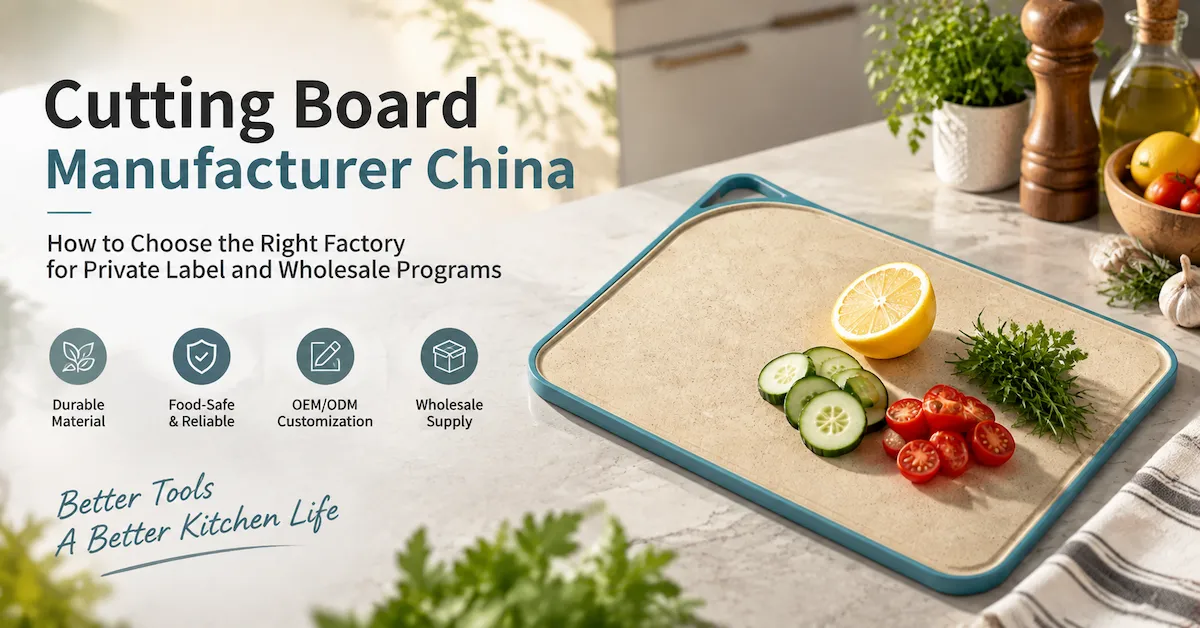
Introduction: Why a Cutting Board Is More Than a Simple Slab
Cutting boards look uncomplicated in a catalog photograph. A flat shape, a few rounded corners and a color accent can make one board appear interchangeable with another. Buyers discover the difference when the product is placed on a real counter, used with a real knife, washed, stored, packed, shipped and reordered. A board that rocks, smells, stains, warps or arrives with rough edges can produce returns even when the image looked polished.
For retailers, importers, hospitality distributors, gift brands and private-label teams, the supplier therefore affects more than the unit price. Material choice changes the customer's care routine and the product story. Thickness changes weight, stability, storage and carton assumptions. A groove, handle opening, foot or colored edge introduces its own inspection points. Packaging must protect the surface and explain the intended use without making claims the product cannot support.
Many projects begin with an incomplete request: “Please quote a bamboo board with our logo,” or “We need 10,000 plastic chopping boards.” Neither sentence identifies the buyer, the food tasks, the channel, the size family, the acceptable variation, the pack format or the evidence required. Suppliers then fill the gaps with different assumptions. The resulting quotations may look comparable while describing different products.
This guide provides a nine-step method for selecting and developing boards for retail, wholesale and e-commerce programs. It focuses on use, material, geometry, hygiene communication, branding, packaging, samples, factory evidence and repeat orders. BONET HOUSEWARE product and service pages are used as public references. Their page-listed specifications apply to the named model; they do not automatically define every board or prove a claim for a customized version.
What Is a Cutting Board Manufacturer China Partner?
A cutting board manufacturer in China is a production partner that turns a defined board concept into a repeatable item. Depending on the construction, the work can include plastic forming or molding, wood or bamboo preparation, surface finishing, edge rounding, groove or handle machining, assembly of feet or inserts, printing or engraving, inspection and packaging. The exact route depends on the material and design.
The category includes prep boards for vegetables and meat, carving boards with liquid-management features, serving boards for bread or cheese, compact boards for small kitchens, color-coded plastic boards and gift-ready boards. Some are designed primarily for chopping. Others move between preparation and presentation. The intended role determines what the supplier should optimize and what the buyer should test.
Commercial routes vary as well. An existing model can receive a private label, new color or revised pack. A modified model may change dimensions, edge profile, groove, handle or feet. A new board may start from a drawing, a physical reference or a customer problem. These routes involve different tooling, sampling, artwork, material and approval decisions. Name the route before requesting a quotation.
An OEM cutting board manufacturer should explain which route applies to your brief and what evidence will be supplied at each gate. Ask whether the quoted board is an existing construction, a controlled modification or a new development, then keep that classification on the RFQ and sample record.
Boards are sold through supermarkets, homeware stores, kitchen specialists, hospitality supply, online marketplaces, gift programs and wholesale distribution. A manufacturer is a good fit when its product architecture, manufacturing evidence, customization process, packaging support and communication match the channel and project risk. A generic claim that a factory makes “all kitchenware” is not enough to approve a board.
Step 1: Define the Food Task and Sales Channel
Start by describing the food and action. Chopping vegetables, portioning raw meat, carving cooked food and arranging a cheese board place different demands on a work surface. Note whether the board must catch liquid, support repeated knife strokes, move easily to the sink, double as a serving piece or fit a compact drawer. A short job statement creates a testable boundary.
Then describe the channel. A supermarket board may need a hanging hole, visible surface, barcode and a compact retail pack. An e-commerce board needs accurate dimensions, edge protection and a parcel-ready outer package. A hospitality buyer may want a clear identification system, repeatable sizes and an easy-to-follow cleaning routine. A gift program may value a presentation surface and coordinated packaging more than a low shipping cube.
Destination market matters because labeling and food-contact expectations differ. The buyer should determine which requirements apply and obtain qualified advice where needed. A factory can provide material information, samples and agreed documents; it should not be asked to guess every obligation for every market. Keep any legal or performance claim tied to the exact product and evidence.
Before contacting a cutting board factory China, prepare a one-page brief. Include target customer, foods, actions, surface role, channel, destination, estimated quantity, size range, material direction, branding, packaging and desired timing. Mark each line fixed, preferred or open. The supplier can then recommend a model or development route without silently changing the buyer's priorities.
| Brief field | Buyer question | Decision controlled |
|---|---|---|
| Food and action | What is cut, carved, served or separated? | Material, surface and groove direction |
| User | Home cook, chef, gift buyer or staff member? | Size, handling and instructions |
| Channel | Retail, e-commerce, hospitality or wholesale? | Pack, labeling and carton |
| Storage | Drawer, rack, wall, countertop or display? | Handle, hole, feet and footprint |
| Project status | Existing, modified or new development? | Tooling, sample rounds and quotation scope |
Step 2: Choose the Board Material by Use, Care and Positioning
Material selection should begin with how the board will be used and maintained. Plastic can support lightweight handling, visible color coding and straightforward washing. Wood can provide a warm surface and a knife-friendly feel, but the care story may be more involved. Bamboo is often selected for a firm, light presentation, while composite directions may be chosen for a low-maintenance design. None is automatically right for every food, user or channel.
For a China cutting board manufacturer project, ask the supplier to identify the material of every component. A board may combine a working surface with an edge, foot, insert or handle. Request the material name, component location, finish direction and any available documentation for the exact SKU. Do not carry one model's material statement over to a new size or construction without confirmation.
The BONET C101 product page lists product dimensions of 24.8 × 14.8 × 0.8 cm, PP in the plastic-material field and no metal material value. The page is a useful SKU-level reference for a compact board with a contrasting border and handle opening. Those values belong to C101. A private-label version, a different board or a different material direction requires its own specification and sample.
Material also affects the sales promise. A plastic board may support a color-coded program, but deep knife grooves still matter. A wood or bamboo board may need drying and care instructions. A composite board may look low-maintenance while still needing confirmation of heat, cleaning and food-contact claims. The buyer should align the material, care wording, photography and pack hierarchy before approval.
| Material direction | Where it may fit | Buyer checks |
|---|---|---|
| Plastic | Color-coded prep, frequent washing, lightweight retail | Exact polymer, flatness, scoring, odor and care guidance |
| Bamboo | Firm prep, serving, natural-looking gift ranges | Material source, glue or finish direction, moisture and drying |
| Wood | Knife-conscious prep, bread, cheese and presentation | Species, grain, finish, seams, care and storage |
| Composite | Designed appearance and lower-maintenance positioning | Exact build, heat, cleaning and food-contact evidence |
Step 3: Specify Size, Thickness, Flatness and Edge Geometry
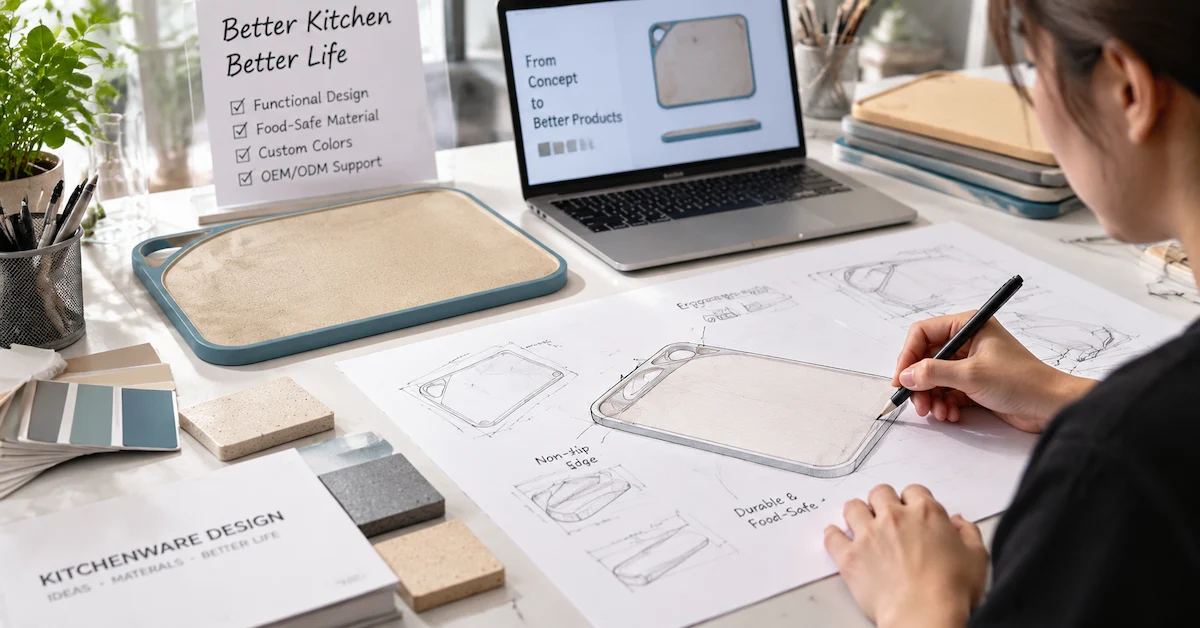
Size is a use decision and a logistics decision. A large board offers working area but takes more storage, material and carton space. A compact board may suit small kitchens but force ingredients toward the edge. Define overall length and width from named reference points, then record thickness. If several sizes are planned, decide what remains common and where each size needs a different head, handle or pack.
Thickness affects stiffness, weight and the customer's sense of quality. It can also change the fit of a groove, handle cutout or foot. Ask the custom cutting board manufacturer to identify critical dimensions and realistic tolerances. Not every number needs the same precision. The dimensions that affect stability, pack fit, hanging balance and user comfort deserve clear acceptance limits.
Flatness is easy to underestimate. A board can look flat against a white background and rock on a counter. Check it on a defined surface, in more than one orientation, with the expected load or hand pressure. Record whether the board slides, twists or lifts at a corner. If feet or a contrasting edge are added, inspect their contact and height across more than one sample.
Edges are a frequent source of returns and negative reviews. Rounded corners should be consistent. Handle openings need a smooth inner edge. A groove must be cleanly formed and free from rough transitions. If a board has a juice channel, state its path, depth direction and relationship to the cutting area. Do not use “premium finish” as a substitute for an edge and surface standard.
Step 4: Build Hygiene and Care Communication Around Evidence
Hygiene is both a product matter and a communication matter. The board's surface, grooves, joints and storage condition affect how a user cleans and dries it. A color system may help separate food groups, but the buyer should decide how the system will be explained and whether the intended audience will use it consistently. The packaging should make the care route understandable without implying that a color alone prevents contamination.
Inspect the surface after representative cutting and washing. Look for deep scoring, raised fibers, staining, persistent odor, open seams, cracks and deformation. A plastic board may be easy to wash while still needing replacement when grooves become difficult to clean. A wood or bamboo board may require a different care instruction. A composite board may need its own confirmation rather than a generic promise.
Do not publish “food grade,” “antibacterial,” “dishwasher safe,” “BPA free” or a universal heat statement unless the exact SKU and destination market have supporting evidence. The C101 page uses marketing language about food preparation, but the page-listed material fields remain the more precise SKU data. A supplier's public description is not a substitute for a project record or qualified compliance review.
Ask the cutting board manufacturer China team to show how the product, cleaning instructions, replacement guidance and packaging claim will stay aligned. The answer should identify the sample, artwork revision and any document or test that supports the wording. When a claim changes, reopen the product and pack approval together.
Have a board drawing, size family or material idea?
Have a board drawing, size family or material idea?
Send Your Cutting Board BriefStep 5: Decide on Handles, Grooves, Feet and Storage Features
Small features change the board's use and its manufacturing risk. A handle opening may support carrying and hanging, but the inner edge must be comfortable and consistent. A juice groove may help contain liquid, but it reduces the flat working area and creates a surface that needs careful cleaning. Feet can improve stability while adding height, assembly and pack questions. A colored border may strengthen brand identity while introducing a second material or process.
Write each feature as an action and an acceptance observation. For a handle, define the opening, load, inner-edge finish and hanging orientation. For a groove, define its route, transition, depth direction and cleanability. For feet, define location, height, adhesion or assembly and the condition of the counter used for the stability check. For an insert or logo area, define surface, position, contrast and acceptable variation.
Storage is part of the buyer's decision. A board can hang, stand, lie in a drawer or remain on a counter. The storage route changes the handle, thickness, pack, photography and instructions. A board with a hole may need a larger retail card. A thick board may require a different carton. Decide where the product lives after purchase before finalizing the geometry.
A private label cutting boards program should identify which features are common to the family and which vary by size or role. One handle language can create a recognizable range, but forcing identical proportions can make a small board awkward or a large board difficult to lift. Approve the family as a system, not as a collage of unrelated samples.
Step 6: Control Brand, Color and Customization
Branding should be designed around the board's real surface. Printing, laser marking, embossing, an inlaid accent or a colored edge each interacts with texture, grain, curvature and washing. Ask for the proposed method on a physical sample. Review the mark at the size and orientation a shopper will see, not only on a flat digital mockup.
BONET's public OEM/ODM page describes production by drawing or sample, material and color customization, logo printing, laser engraving and packaging customization. It also presents concept development, structural optimization, material recommendation, feasibility assessment, samples and mass-production support. These are published service categories. The practical method, setup, tooling, minimum quantity, cost and timing remain specific to the selected board.
For a bamboo cutting board manufacturer project, color may be expressed through a finish, border, handle, insert or package rather than the working surface itself. Confirm the physical reference and how variation will be judged. For plastic, identify the color standard and molding appearance. For wood or bamboo, discuss grain, tone and finish variation before the brand team approves photographs.
Keep product artwork, instruction files, barcode data and packaging dielines under revision control. List what changes and what stays fixed. A new logo position should not unintentionally alter a groove. A new finish should not silently change the care statement. A new color should not be shown in product photography before the physical sample is approved.
Step 7: Design Packaging for Protection, Explanation and Shipping
Packaging protects a board's surface and corners, but it also communicates size, material, use and care. A sleeve, hanging card, open tray, color box, gift box and e-commerce mailer each make a different promise. Choose the format after the channel and board role are defined. Put the real board into the proposed package and review how it is displayed, lifted, opened, returned and shipped.
Check for movement, corner impact, surface abrasion, moisture exposure and contact with printed areas. A handle opening can snag an insert. A groove can collect dust if the pack leaves it exposed. A large board can bow a thin carton. A stacked set can rub finished surfaces together. Record the packed condition and include the outer carton, labels, count and orientation in the approval.
Packaging language should match the evidence. If the board is intended for general preparation, say so clearly. If the range uses color coding, explain the buyer's system rather than implying that color alone solves food safety. If care is hand washing, do not show a dishwasher icon. If a material or food-contact document is pending, do not place an unsupported badge on the front panel.
BONET's OEM/ODM page lists retail packs, color boxes, gift boxes, barcode labels and export cartons among its public support. Ask who supplies the dieline, how color is approved, how obsolete artwork is controlled and which packed sample is the reference. Treat the package as part of the product cost and lead-time conversation. A new carton can change dimensions, quantity, freight assumptions and timing even when the board does not change.
| Pack gate | Inspection | Record |
|---|---|---|
| Surface protection | Scratches, dust, moisture and corner contact | Packed sample photographs |
| Retention | Movement, stack order and removal | Pack-out method and contents list |
| Consumer explanation | Size, use, material, care and claims | Artwork and instruction revision |
| Carton | Quantity, orientation, labels and handling | Carton specification |
Step 8: Approve Samples with Surface, Stability and Care Checks
Give every board sample an identity. Record the model, revision, dimensions, material direction, finish, color, features, logo and package status. Photograph the full face, back, edge, groove, handle, feet and any join. If the factory sends a new thickness or finish, issue a new revision. An attractive sample without an ID is difficult to use as a production reference.
Test the board on a defined counter or work surface. Check flatness in more than one orientation and apply the ordinary hand pressure associated with the task. Move the board, lift it, hang it or store it as the intended user would. Inspect the edge and corners by hand and sight. Run the representative cutting or serving task with the intended knife and food category, while recording observation rather than marketing language.
Review cleaning and drying according to the proposed instructions. Look at grooves, seams, feet, handles and textured areas after the method. Note any odor, stain, swelling, raised fibers, loose insert or change in stability. If the pack or listing uses a claim, connect that claim to the sample and evidence. Do not add a stronger statement merely because a competitor uses one.
For sets, check every board in the same session. A color-coded collection should have a clear color reference and piece identity. A board family should show consistent corner radius, finish and logo treatment. A sample approval should name the product, artwork and packaging revisions together, plus any condition that must be resolved before mass production.
Step 9: Compare Factory Evidence and Protect the Repeat Order
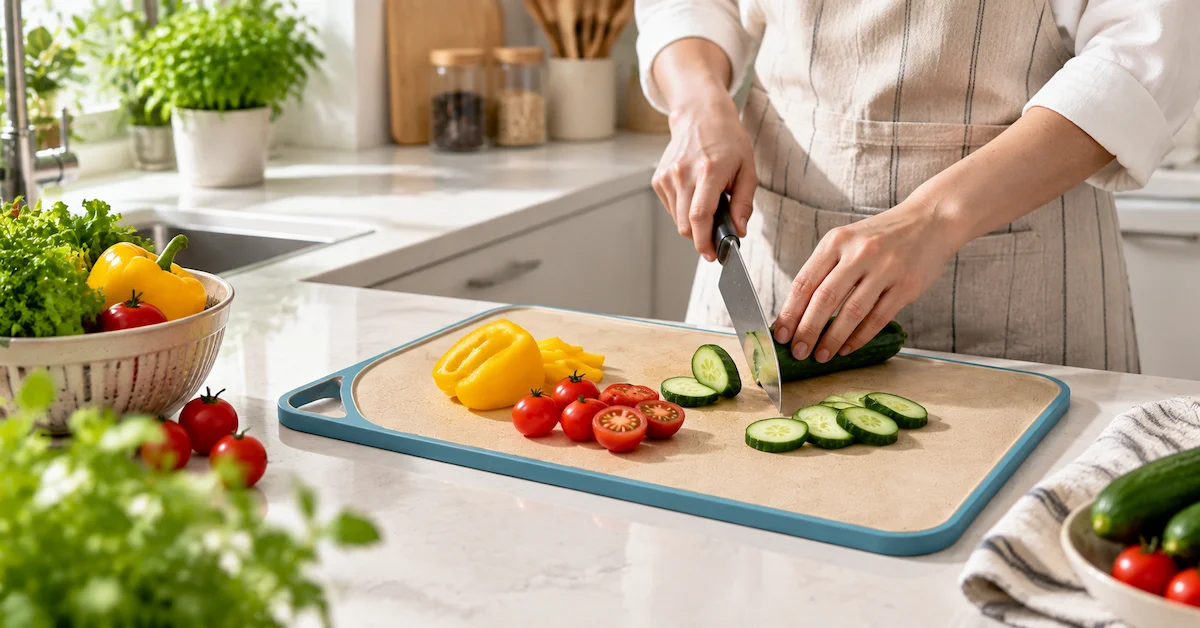
A quotation only becomes useful when its assumptions are visible. Compare the board model, material, dimensions, thickness, finish, features, logo, package, carton, quantity and delivery basis. Separate unit price from tooling, artwork setup, samples, testing and other project charges. Mark exclusions and provisional values. A lower number may simply leave out the pack or use a different thickness.
For buyers comparing wholesale cutting boards China offers, normalize the same board revision, pack count, carton arrangement and delivery destination before judging unit cost. A wholesale offer is useful only when the commercial basis and product evidence are stated together.
Ask the plastic cutting board supplier China team to identify where the relevant board characteristics are checked. BONET's public manufacturing description includes process stages such as stamping, straight adjustment, heat treatment, grinding, polishing, injection molding, ultrasonic cleaning, setting, assembly, quality checks, final cleaning and packing. A particular board may use only some of these stages. The buyer should ask which stages apply and what is verified for the selected model.
Do not treat MOQ, price, sample timing, production timing or delivery as universal factory figures. Board material, size, tooling, color, logo, pack, quantity, testing and schedule can change the project values. Request written figures after the brief is complete. Reconfirm them if the approved revision changes the construction or package.
Build an item master for the repeat order. Include model, revision, dimensions, material by component, finish, color standard, logo artwork, care wording, barcode, packaging dieline, pack contents, carton arrangement, retained sample ID and inspection basis. Before each reorder, compare the purchase order and current files with this record. A board should not depend on a person remembering last season's groove, thickness or color.
When a complaint appears, describe the observed condition, affected quantity, order or batch reference and photographs before suggesting a cause. Ask for containment, cause review, corrective action and verification suited to the issue. The record should make it possible to tell whether a surface, edge, flatness, pack or artwork change solved the actual problem.
Ready to compare one board project on the same revision?
Ready to compare one board project on the same revision?
Send Your Cutting Board RFQCutting Board Manufacturer China FAQ
What should I include in my first cutting board inquiry?
Include the target user, food tasks, sales channel, destination market, material direction, size and thickness, handle or groove requirements, estimated quantity, logo files, packaging idea, required documents and timing. Mark fixed, preferred and open decisions. Add an annotated photograph or drawing when a feature cannot be described clearly in words.
Which material is best for a private-label cutting board?
There is no universal best material. Plastic may suit lightweight, color-coded preparation; bamboo or wood may suit a firm, natural-looking prep or serving range; composite directions may suit a particular appearance or care position. Match the board to the food task, knife use, cleaning routine, storage, price role and destination requirements, then approve the exact construction and evidence.
Is bamboo better than plastic for wholesale?
It depends on the channel and use. Bamboo can support a firm, natural presentation, while plastic can make color separation and replacement easier. Compare the full product and care story, not a single material advantage. Confirm surface, thickness, finish, flatness, packaging and any food-contact or cleaning statement for the exact SKU.
How should a buyer test a board sample?
Identify the sample and revision first. Check dimensions, flatness, edge finish, groove or handle, feet, surface, logo and color. Use it on a defined counter with the intended knife and representative food task. Review cleaning, drying, storage and package retention. Record observations and stop conditions instead of relying on “looks good.”
Can a China cutting board manufacturer customize size, color and logo?
Customization may include dimensions, edge, groove, handle, feet, color, logo method and packaging. BONET's public OEM/ODM page describes material and color customization, logo printing, laser engraving and packaging support. Feasibility, tooling, MOQ, cost, samples and timing must be confirmed for the selected design.
What claims should not be printed without evidence?
Do not print food-contact, antibacterial, dishwasher, BPA-free, heat or universal hygiene claims unless the exact board and destination market have supporting evidence. A product page description can guide a discussion, but it does not replace a model-specific record or qualified compliance review.
How do I compare cutting board quotations?
Normalize material, dimensions, thickness, finish, features, branding, packaging, carton, quantity, quality basis, currency and delivery term. Separate tooling, samples, artwork setup and testing from recurring unit cost. Record exclusions and provisional assumptions. Reopen the comparison when the product or pack revision changes.
What is the MOQ and lead time?
The public pages reviewed do not establish one universal MOQ or lead time. These values can change with material, size, tooling, color, logo, packaging, quantity, testing and factory schedule. Send a complete brief and request written project-specific values for sample, approval, production and delivery.
RFQ Checklist for a Cutting Board Supplier in China
- Target user, food task, cookware, channel and destination market are stated.
- Material direction is linked to the exact board and component.
- Length, width, thickness and critical tolerances are defined.
- Surface, flatness, edge, groove, handle, feet and storage route are described.
- Care, hygiene, replacement and food-contact wording is supported or clearly pending.
- Logo method, color standard, position and artwork revision are controlled.
- Individual pack, labels, barcode, retention and outer carton are included.
- Sample checks use a defined counter, knife, food task, cleaning method and storage route.
- Product, artwork, instruction and packaging revisions are approved together.
- Relevant manufacturing stages and in-process quality checks are understood.
- MOQ, tooling, sample cost and timing, production timing, tests and delivery are confirmed for the project.
- An item master and change log protect repeat orders.
Conclusion: Buy a Controlled Work Surface, Not a Generic Board
The strongest cutting board programs start with the food task and channel, then make each decision visible. Choose the material by use and care. Define size, thickness, flatness and edge geometry. Treat grooves, handles and feet as functional features. Connect hygiene wording to evidence. Approve branding and packaging with the physical sample. Normalize quotations and preserve the final version in an item master.
BONET HOUSEWARE publicly presents a Chopping Board category, the C101 board page, manufacturing information and OEM/ODM services. The C101 page lists 24.8 × 14.8 × 0.8 cm and PP in its plastic-material field, with no metal material value. That information is useful for identifying a reference model, but a private-label or custom order still requires project-specific confirmation.
To begin a sourcing review, send BONET the target customer, food tasks, channel, destination, board drawing or reference, material direction, dimensions, features, logo files, packaging idea, estimated quantity and requested timing. The team can then distinguish an existing-model route from a modification or new development project and return the commercial details for that exact specification.
Turn your cutting board idea into one quote-ready specification.
Turn your cutting board idea into one quote-ready specification.
Contact BONET HOUSEWARE