




Quick Answer
A reliable cutting board manufacturer in China should help buyers match the board material, thickness, surface finish, edge design, size, packaging and intended food-preparation environment before quoting. Retail and foodservice buyers should evaluate raw-material consistency, flatness, surface condition, moisture or chemical resistance where relevant, cleaning instructions, logo feasibility, packaging protection, inspection records and reorder traceability. Buyers should request a production-intent sample and an itemized quotation that separates the board, branding, tooling, packaging, inspection and shipping assumptions. Review the BONET product catalog, identify suitable kitchenware formats, and send your specification through Contact Us for a project-specific response.
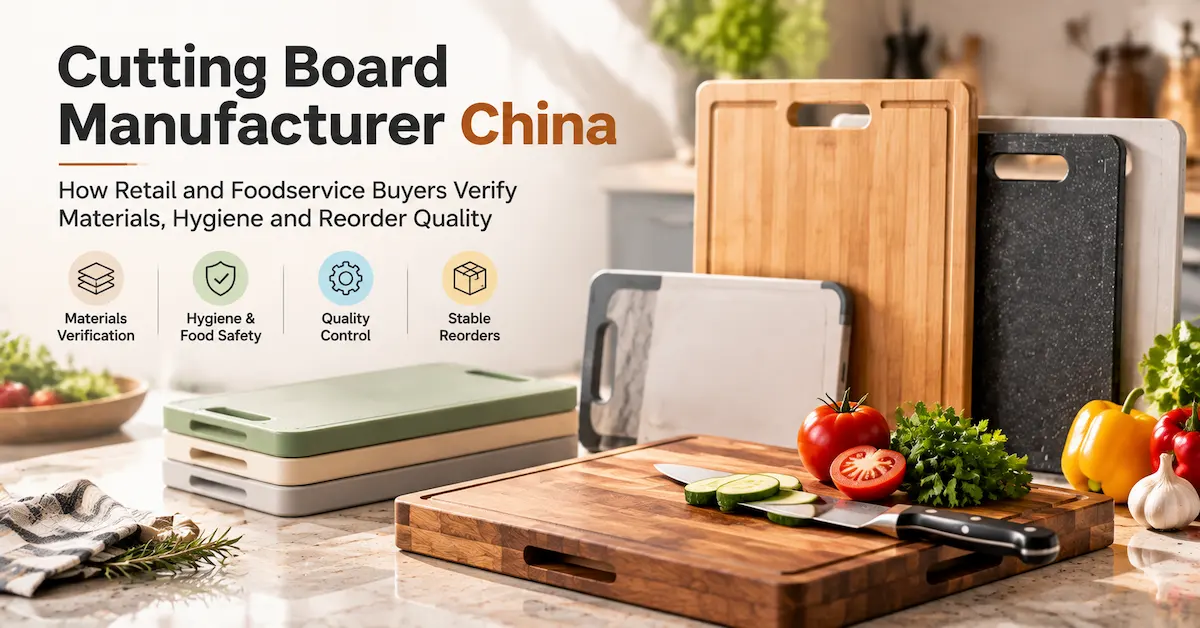
Introduction: Why Choosing the Right Cutting Board Manufacturer Matters
Cutting boards are used every day, but the purchase decision is rarely simple. A retail buyer may need a board that looks attractive, fits a packaging concept and remains stable in a consumer kitchen. A foodservice distributor may need a board that can withstand repeated preparation, cleaning and storage. A private label brand may want a specific shape, color, logo, material story and package size. A hospitality buyer may need several board colors or sizes to support a kitchen workflow.
The wrong supplier can create problems that are not visible during the first quotation:
- The board arrives with inconsistent thickness or flatness.
- A surface that looked smooth in photographs feels rough or uneven in hand.
- The board has an odor, color variation or finish that does not match the approved sample.
- Different sizes in one range do not share a consistent visual identity.
- A logo is placed too close to the working surface or loses clarity.
- A package allows the board to move, bend or become damaged during transport.
- A second order uses different material or finishing conditions.
- The quotation excludes packaging, tooling, inspection or setup charges.
- The supplier cannot explain the acceptance standard for scratches, warping or edge defects.
For that reason, “cutting board manufacturer China” should be treated as a sourcing and quality-control question, not only as a price search. Buyers need to know what the manufacturer makes, how the board is constructed, what evidence is available, what can be customized and how the product will be controlled after the first order.
This guide is written for importers, kitchenware brands, supermarket suppliers, restaurant-equipment distributors, hospitality buyers, online retailers, gift-set companies and private label product managers. Its primary search intent is commercial investigation combined with RFQ intent. It is designed to help a buyer move from a general supplier search to a clear, testable product brief.
What Is a Cutting Board Manufacturer China Supplier?
A cutting board manufacturer in China is a company that produces cutting boards for domestic or international buyers under an agreed product specification. The manufacturer may offer standard models, OEM customization, ODM development, private label packaging or a combination of these services.
A complete cutting board specification normally includes:
- Board material or material category.
- Board length, width and thickness.
- Surface finish and working texture.
- Edge profile and corner radius.
- Handle, hole, groove or storage detail.
- Color and visual tolerance.
- Logo position and marking method.
- Packaging format and carton quantity.
- Intended application and care instructions.
- Inspection criteria and reorder reference.
A product photo is useful for starting a discussion, but it does not fully define the product. A photo cannot confirm the exact material, thickness tolerance, flatness, surface treatment, packaging protection or inspection method. A professional supplier should convert the photo or concept into a written specification and then provide a physical sample for approval.
Who Buys Cutting Boards from China?
Retail Kitchenware Brands
Retail brands often need cutting boards that are visually consistent across multiple sizes and colors. The board may be sold as a single item, a multi-size set or part of a broader kitchenware range. The buyer normally cares about shelf presentation, package dimensions, barcode space, color consistency and a clear product story.
Private Label Importers
Private label importers may start with a standard board and customize the logo, color, handle, sleeve or retail box. Their main concern is repeatability. The second shipment needs to match the approved first shipment closely enough for customers, retailers and internal quality teams to recognize the same product.
Foodservice and Hospitality Distributors
Foodservice buyers may require boards for restaurants, catering operations, hotels, central kitchens or food-preparation facilities. The emphasis may be on practical cleaning, storage, size differentiation, workflow and replacement availability. The supplier should understand the operating environment before recommending a household-oriented design.
Supermarket and Houseware Chains
Large retail programs often require several sizes, colors or pack configurations. The manufacturer must be able to manage variant codes, artwork, inner packs, cartons, labels and quality records. A small error in one variant can affect an entire shipment, so the buyer should establish a clear SKU and packing system early.
Promotional and Gift-Set Buyers
A cutting board can be included in housewarming gifts, wedding gifts, corporate packages or cooking-themed promotions. In these projects, packaging and logo visibility may be as important as the board itself. The buyer should still define the intended food-preparation use and care information rather than treating the item as decoration only.
Start with the Application, Not the Material
Buyers often begin by saying, “We need a bamboo cutting board,” “We need a plastic cutting board” or “We want a wooden board.” That is useful, but incomplete. The application should be defined first because it determines which material, thickness, finish, edge and care instructions are appropriate.
Ask the following questions:
- Is the board for household cooking, professional food preparation, gifting or display?
- Will it be used for vegetables, bread, meat, fish, fruit or general preparation?
- Will the buyer offer one board or several boards for different tasks?
- Will the board be washed frequently, stored vertically or transported between locations?
- Does the user need a lightweight board, a stable heavy board or a flexible board?
- Is the board intended for a premium, mid-market or value price position?
- Should the board match other utensils, cookware or kitchen storage products?
- Does the package need to show the working surface clearly?
- Is the logo required on the board, the package or both?
- What claims can be supported by actual product evidence?
A clear application statement might look like this:
“This board is intended for retail customers who need a medium-size everyday preparation surface. It should have a stable profile, smooth edges, a restrained private label mark and a recyclable retail package. The product should be easy for the buyer to understand and simple for the retailer to display.”
A commercial statement might be:
“This board is intended for foodservice distribution. The buyer needs several sizes for different preparation stations, clear identification by variant, practical cleaning instructions, bulk packing and a reorder system that preserves the approved material and dimensions.”
The more clearly the buyer describes the use, the more accurately the manufacturer can recommend a product structure.
Material Comparison for Cutting Boards
Material selection affects appearance, weight, surface feel, care instructions, packaging and cost. No material should be selected only because it is popular in a catalog. The buyer should evaluate whether the material fits the application, target customer and sales channel.
| Material category | Typical advantages | Points to verify | Suitable buying context |
|---|---|---|---|
| Bamboo | Natural visual story, relatively light and suitable for many retail concepts | Moisture control, surface finish, bonding, grain variation and care instructions | Retail, gift sets and natural-style kitchen ranges |
| Solid wood | Warm appearance and premium positioning | Grain variation, moisture response, finish, weight and maintenance wording | Premium retail and gifting |
| Plastic or polymer | Color flexibility, lightweight handling and easy assortment planning | Material declaration, surface marks, deformation, odor and cleaning limits | Retail, value programs and selected foodservice uses |
| Composite material | Can combine design, strength or color goals | Construction, edge finish, surface wear and end-of-life information | Differentiated private label programs |
| Flexible mat or sheet | Easy storage and light shipping | Cutting resistance, stability, roll memory and care information | Compact kitchens, travel or space-saving concepts |
| Mixed construction | Allows different functions or visual effects | Compatibility, assembly, cleaning and inspection across materials | Coordinated product families |
The table is a buying framework, not a substitute for product-specific testing. A supplier should disclose the proposed material category and any relevant component information for the exact model. If the buyer needs a claim about food contact, dishwasher suitability, heat or chemical resistance, the claim should be connected to appropriate evidence and destination-market requirements.
Bamboo Cutting Boards: What Buyers Should Confirm
Bamboo boards are often selected for their natural appearance and renewable-material story. However, the buyer should not assume that every bamboo board behaves the same way. Construction, moisture control, surface treatment, bonding, sanding and storage conditions can influence the final product.
Confirm:
- The bamboo material category and construction.
- Whether the board is made from strips, layers or another structure.
- Surface smoothness and edge finishing.
- Flatness and acceptable warping limits.
- Moisture or storage requirements.
- Care instructions for the end user.
- Color and grain variation tolerance.
- Packaging protection against moisture and impact.
- Logo placement relative to the working surface.
- Whether the approved sample represents the production process.
If the product is marketed as a natural-material board, the packaging should explain acceptable variation honestly. Natural grain variation is not automatically a defect, but the buyer should distinguish acceptable variation from cracks, lifting, rough areas or structural damage.
Plastic Cutting Boards: What Buyers Should Confirm
Plastic or polymer boards provide flexibility in color and shape, which can be useful for private label assortments. They may be offered in several sizes or colors for visual organization. The buyer should still confirm the actual material category, thickness, surface condition, edge quality and cleaning instructions.
Important points include:
- Surface hardness and cutting marks under the intended use.
- Flatness after storage and transport.
- Edge rounding and user comfort.
- Color uniformity between batches.
- Odor and surface condition when unpacked.
- Resistance to the cleaning environment expected by the target buyer.
- Handle strength, hanging-hole strength or grip detail.
- Package support to prevent bending.
- Logo contrast and durability.
- Variant identification on the product and carton.
A plastic board should not be described as suitable for every application without clear evidence. Household use, professional use, hot food contact, chemical cleaning and long-term storage can create different requirements.
Product Specification Framework
The following table can be used as the starting point for an OEM cutting board RFQ.
| Specification area | Buyer should state | Manufacturer should confirm |
|---|---|---|
| Intended use | Household, foodservice, gift, retail or promotional | Suitable use and limitations |
| Material | Bamboo, wood, plastic, composite or flexible sheet | Exact material category and component information |
| Dimensions | Length, width and thickness | Tolerance and production method |
| Surface | Smooth, textured, grooved, reversible or patterned | Finish process and acceptance standard |
| Edges | Rounded, beveled, framed or straight | Edge safety, consistency and visual limit |
| Features | Handle, hole, juice groove, feet or storage detail | Feasibility, strength and packing compatibility |
| Color | Natural, solid, multi-color or custom reference | Color tolerance and batch control |
| Logo | Location, size, method and artwork format | Marking area, sample result and process |
| Packaging | Sleeve, card, box, band, tray or bulk pack | Insert, label, barcode and carton method |
| Quality | Flatness, surface, dimensions, logo and packing | Inspection stages and records |
| Commercial terms | Quantity, variants and destination | MOQ layers, tooling, setup and lead-time assumptions |
The buyer should identify which values are fixed and which are open for recommendation. This allows the manufacturer to suggest a better process without changing the commercial objective.
Surface, Edge and Thickness Requirements
The working surface is where the user interacts with the board. The buyer should examine smoothness, visible marks, texture, flatness and the relationship between the surface and intended food preparation. A surface that looks attractive but is difficult to clean or uncomfortable to use may create returns or negative reviews.
The edge is equally important. A sharp or uneven edge can make the board feel unfinished. A very thin edge may be easy to handle but less stable. A thicker edge may create a premium feel but increase weight and shipping volume. The correct choice depends on the application and price position.
Thickness should be specified with a tolerance rather than a single nominal number. The manufacturer and buyer should agree how thickness is measured and which points are critical. If the board includes a groove, feet or handle, those features may affect the usable surface and packing orientation.
For a reversible board, confirm whether both sides have the same finish and whether the feature layout permits safe use on either side. If only one side is intended for food preparation, the package and instructions should make that clear.
Branding and Customization Options
A custom cutting board program can be differentiated through the product itself, the packaging or both.
Laser or Engraved Branding
Engraving may support a natural or premium visual direction on selected board materials. The buyer should confirm depth, contrast, logo complexity, position and whether the mark affects the working or cleaning surface. A physical sample is essential because different materials and finishes produce different results.
Printed Branding
Printing can create stronger color visibility on a suitable surface or package. Confirm ink or coating compatibility, surface preparation, curing, abrasion expectations and acceptance limits. The final logo should be approved on the production-intent surface, not only on a digital proof.
Molded or Formed Branding
For polymer boards or custom handles, a logo or brand detail may be incorporated into the form. This may require tooling and can affect the minimum order, development schedule and future change process. Ask who owns the tooling and how revisions are approved.
Package-Only Branding
A package-only solution may be sufficient when the buyer wants to test the market, control product cost or use one package design across several colors. It can also provide more space for instructions, recipes, care information and brand storytelling.
Custom Shape and Feature
A custom outline, handle, hole, groove, feet or hanging detail can make the product more distinctive. Each feature should be evaluated for strength, cleaning, storage, tooling and package fit. A decorative detail should not make the board less practical.
For a current kitchenware starting point, review the BONET product catalog and ask which board formats or related products can support your private label concept.
Packaging and Retail Presentation
Packaging is part of the product specification because it affects protection, branding, logistics and user understanding. A cutting board may be packed with a paper band, sleeve, hanging card, window box, tray, gift box or bulk carton. The right solution depends on the channel.
Define:
- Package format and approximate dimensions.
- Whether the board is packed flat, nested or separated.
- Protection for corners, surfaces and handles.
- Barcode, batch code and country-of-origin information.
- Destination-market language and care instructions.
- Quantity per inner box and master carton.
- Carton marks and palletization requirements.
- Window, image or product visibility requirements.
- Recyclability or material information where required.
- Whether a pre-production packaging sample is needed.
A package should prevent movement that can cause scratches, bending, corner damage or logo contact. If several boards are nested, the buyer should check whether the surfaces rub during transport. If the board has a groove or raised feature, the insert should support it instead of placing stress on a narrow point.
Retail buyers should also consider how the board is displayed. A package that protects the product but hides its surface may reduce the customer's ability to judge quality. A package that shows the product but provides little protection may increase transit damage. The best solution balances visibility, information and protection.
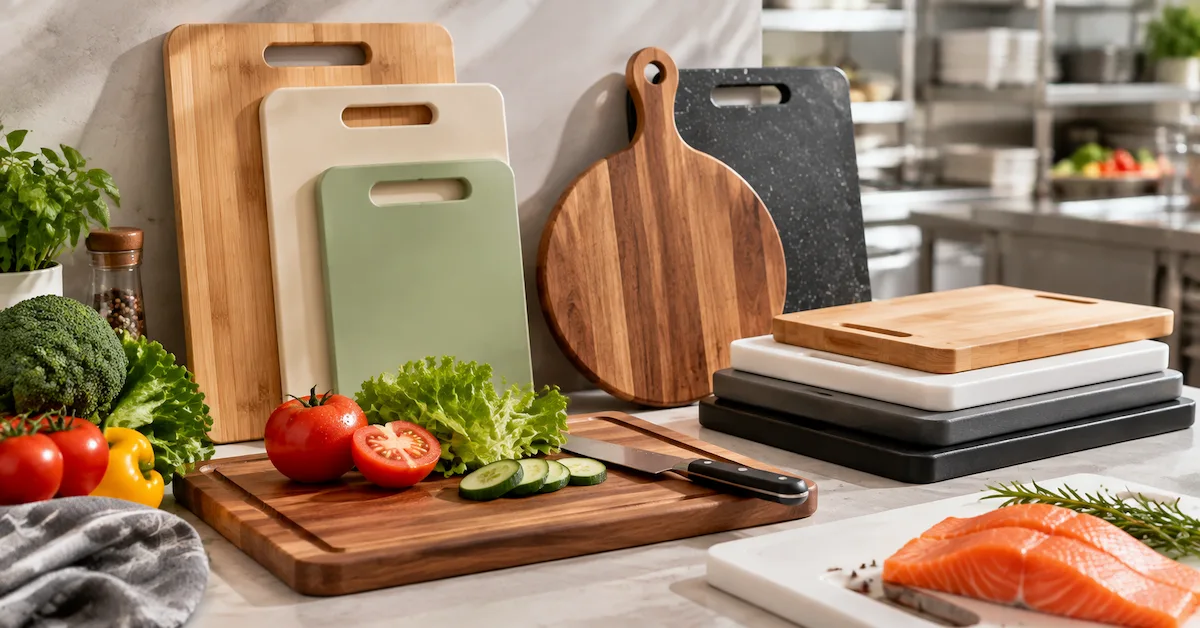
Quality Control and Original Evidence
Quality control should be described as a sequence of checks. A manufacturer should be able to explain what happens before production, during production, after finishing and during packing.
| Control stage | What to check | Useful evidence |
|---|---|---|
| Incoming material | Material category, color, moisture or component condition | Material declaration or incoming record |
| First piece | Dimensions, surface, edge, features and appearance | Approved sample and specification |
| In-process production | Cutting, forming, sanding, coating, printing or assembly | Process checklist |
| Functional inspection | Flatness, stability, handle strength, groove or feature usability | Agreed test method |
| Visual inspection | Scratches, cracks, stains, rough edges, color and logo | Visual standard and defect limits |
| Packing inspection | Correct board, quantity, package, label and carton | Packing checklist |
| Final review | SKU, variant, carton marks and shipment condition | Final inspection record or photographs |
| Corrective action | Root cause and resolution for defects | Corrective-action record |
Original evidence should be relevant to the actual order. A general brochure may describe a company, but it does not confirm that a specific board meets a specific requirement. Useful project evidence may include the approved sample, material information, dimensional record, logo proof, packaging sample, inspection checklist and batch identification.
The buyer should also distinguish company capability from product evidence. A supplier may have experience with kitchenware, but the exact cutting board model must still be approved. Do not rely on a catalog photograph to confirm flatness, edge quality, surface condition or package protection.
MOQ, Sampling, Lead Time and Cost
Cutting board projects can have several MOQ layers:
| Quantity layer | Why it matters |
|---|---|
| Sample quantity | Allows the buyer to check product, branding and packaging physically |
| Base model MOQ | Applies to the selected board design |
| Size MOQ | Different sizes may require separate production planning |
| Color MOQ | Each color may have its own threshold |
| Logo setup quantity | Depends on engraving, printing or forming method |
| Packaging MOQ | Custom sleeves, boxes and inserts may have separate minimums |
| Mixed-set MOQ | A set may require a minimum quantity per variant |
| Reorder quantity | Shows whether approved materials and packaging can be reused |
Lead time should be divided into sampling, artwork approval, tooling, packaging proof, production, inspection and shipping. Ask which milestone starts the production clock. A quotation that says “delivery in X days” without defining the starting point is difficult to compare.
An itemized quotation should identify:
- Board unit price.
- Material or finish differences.
- Logo setup or marking cost.
- Tooling or mold cost.
- Custom size or feature cost.
- Packaging and insert cost.
- Sampling and revision cost.
- Inspection or testing cost.
- Export carton and labeling cost.
- Freight and destination charges.
This structure protects the buyer from comparing an incomplete low price with a complete price from another supplier. It also helps the buyer understand which costs are one-time and which costs will apply to each reorder.
Comparing a Cutting Board Factory, Trading Company and Reseller
A direct factory is not automatically the right partner for every project, and a trading company is not automatically unsuitable. The buyer should compare who controls the critical steps.
| Evaluation point | Direct manufacturer | Trading or sourcing intermediary | Catalog reseller |
|---|---|---|---|
| Material discussion | Can review production and material limits directly | Coordinates with an upstream supplier | Usually provides catalog information |
| Custom size or feature | Can evaluate tooling and process changes | Depends on the partner factory | Often limited to fixed models |
| Logo control | Can check marking at production stage | May add an extra communication layer | Usually limited to standard options |
| Packaging | Can coordinate packing sequence and carton design | May use another packing supplier | Often stock or basic packaging |
| Quality evidence | Can link records to the production order | Depends on what the factory shares | May have limited records |
| Reorders | Can retain the approved specification | Depends on the business relationship | Availability may change |
Ask these questions:
- Who owns the board specification?
- Who approves the production-intent sample?
- Who controls material or component substitutions?
- Who checks the board before packing?
- Who handles a complaint or reorder variation?
- Who owns a custom mold, fixture or packaging file?
- Who can provide order-linked evidence?
The purpose is to identify a stable owner for the product program.
Nine-Step Development Process
Step 1: Define the user and channel
State whether the board is for retail, foodservice, hospitality, gifting, promotional use or e-commerce. Explain the price position and expected user.
Step 2: Define the food-preparation tasks
List the main tasks and materials the board will support. Decide whether one model is enough or whether several sizes, colors or surfaces are needed.
Step 3: Select a base model or concept
Use a supplier catalog, reference product, drawing or sample. Record the model, dimensions, material category and available features.
Step 4: Confirm the material and construction
Define the proposed material, surface, edge, thickness, handle, groove, feet and other features. Ask the supplier to identify technical limitations.
Step 5: Select the branding method
Choose engraving, printing, molded branding or package-only identity. Review logo size, position, contrast and surface compatibility.
Step 6: Build the packaging brief
Define package format, protection, labels, barcode, language, carton quantity and display requirements.
Step 7: Approve the production-intent sample
Check material, flatness, thickness, edges, surface, features, logo, color and package fit. Approve the complete product, not only a photo.
Step 8: Confirm the quotation and inspection plan
Separate product, branding, tooling, packaging, inspection and shipping costs. Write down acceptance standards and change-control rules.
Step 9: Control production and reorders
Keep the approved sample, specification, artwork, packaging file, inspection record and batch information together. Require written approval for changes.
What to Include in a Cutting Board RFQ
A clear RFQ helps a cutting board manufacturer in China provide a useful response.
Product: Cutting board
Primary keyword or project type: OEM, private label, wholesale or custom development
Target channel: Retail, foodservice, hospitality, gift, promotional or online
Intended use: Vegetable, bread, meat, fish, general preparation or serving
Material: Bamboo, wood, plastic, composite or another proposed category
尺寸: Length, width and thickness for each size
Surface: Smooth, textured, grooved, reversible or patterned
Features: Handle, hole, feet, groove, edge shape or storage detail
Branding: Logo file, marking method, size and position
Color: Natural finish, solid color or custom reference
Packaging: Sleeve, band, box, card, tray, gift pack or bulk carton
Quantity: First order by size, color and variant
Destination: Country, sales channel and required language
Evidence: Material information, sample, inspection method or test requirement
Commercial request: Itemized price, MOQ, tooling, packaging, lead-time assumptions and shipping
Approval process: Sample approver, artwork approval and change control
Attach vector artwork where possible. If the logo needs to appear on several sizes, request a placement drawing for each size. If the logo can be placed on the package instead of the board, ask the supplier to quote both options so the buyer can compare cost and brand effect.
You can send this type of request through BONET's Contact Us page. Include the phrase “cutting board manufacturer China RFQ” in the subject and identify the planned market.
Common Risks and Practical Controls
The Board Warps After Transport or Storage
Control this risk by defining flatness expectations, storage conditions, packaging support and an inspection method. Do not approve only from a photograph.
The Surface Is Too Rough or Inconsistent
Control this risk with a surface standard and physical sample. Define acceptable marks, rough areas, stains and finish variation.
The Edge Feels Unfinished
Control this risk by specifying edge shape, rounding and visual limits. Inspect the full perimeter, not only the front face.
Natural Grain Variation Is Confused with Defects
Control this risk by distinguishing acceptable variation from cracks, lifting, structural damage or roughness. Show examples in the visual standard.
The Logo Is Too Close to the Working Area
Control this risk with a placement drawing and a production-intent sample. Confirm that the mark remains legible without interfering with use or care.
The Package Does Not Protect the Corners
Control this risk through a real packing test. Check nested boards, inserts, movement, compression and carton handling.
The Second Order Uses a Different Material
Control this risk with order-linked material information and written substitution approval. Keep the approved sample and specification available for every reorder.
The Quote Excludes Packaging or Setup
Control this risk with an itemized quotation. Separate the product, branding, packaging, tooling, inspection and shipping assumptions.
The Supplier Makes a Sample but Cannot Support a Reorder
Control this risk by asking how specifications, artwork, materials and inspection records are stored. Confirm who owns the reorder process.
FAQ: Cutting Board Manufacturer China Sourcing
1. What should I look for in a cutting board manufacturer in China?
Look for a supplier that can explain material selection, dimensions, finishing, customization, packaging, inspection and reorders. Ask for a production-intent sample and a written specification rather than relying only on catalog images.
2. Is bamboo better than plastic for a cutting board?
Neither material is universally better. The correct choice depends on appearance, use, cleaning expectations, weight, storage, price position and destination-market requirements. Compare the exact construction and evidence for the intended application.
3. Can a manufacturer make custom sizes and shapes?
Many projects can support custom sizes or features, but feasibility depends on the process, tooling, material and quantity. Ask whether the change requires a mold, fixture, setup or only a revised cutting pattern.
4. Can I add my private label logo?
A logo may be engraved, printed, molded or placed on the package. The method depends on the board surface, material, finish and logo size. Always approve the mark on a physical production-intent sample.
5. What is the difference between OEM and ODM cutting boards?
OEM usually means the buyer starts with an existing model or defined specification and requests controlled customization. ODM usually involves a broader product-development role where the supplier helps develop the shape, features, material or complete solution.
6. What information should I send when requesting a quote?
Send the intended use, material preference, dimensions, features, logo artwork, packaging format, quantity by variant, destination market and required evidence. Ask for product, setup, packaging, tooling, inspection and shipping costs separately.
7. How should I inspect a cutting board sample?
Check dimensions, thickness, flatness, edge smoothness, surface finish, color, odor, logo placement, handle or hole strength, feature usability and package fit. Compare the sample with the written specification.
8. What MOQ should I ask about?
Ask separately about the base board, size, color, logo setup, packaging, holder and mixed set. The MOQ for the finished product may not be the same as the MOQ for a custom box or color.
9. How can I reduce reorder variation?
Retain the approved sample, material information, artwork, color reference, packaging file and inspection standard. Confirm any substitution or design change in writing before production.
10. How important is packaging for cutting boards?
Packaging protects the surface and corners, supports retail presentation and communicates care or use information. It should be tested with the real product before the artwork and carton quantity are finalized.
11. Can one supplier provide several board materials?
Some suppliers can coordinate multiple material categories, but the buyer should confirm who controls each process and how the complete product range will be inspected. Different materials may need different care instructions and quality standards.
12. Where can I review BONET's current kitchenware products?
Start with the BONET product catalog. Product availability, customization feasibility, MOQ and commercial terms should be confirmed for the exact cutting board project.
Final Buyer Checklist
Before approving an order, confirm the following:
| Check | Approval question |
|---|---|
| Intent | Is the target user, application and sales channel clear? |
| Material | Is the exact material category documented? |
| Dimensions | Are size, thickness and tolerances defined? |
| Surface | Are finish, flatness and acceptable defects documented? |
| Edges | Are edge shape, rounding and safety expectations clear? |
| Features | Are handles, grooves, feet, holes or storage details approved? |
| Branding | Are logo method, size, position and artwork controlled? |
| Packaging | Has the real board been tested in the final package? |
| Quality | Are inspection stages and acceptance criteria written down? |
| Commercials | Are MOQ, tooling, setup, packaging and shipping separated? |
| Timing | Are sample, approval, production and shipping milestones clear? |
| Reorders | Can the approved sample and specification be retrieved later? |
| Ownership | Is a named supplier contact responsible for questions and corrective action? |
If several items remain unclear, the project may be ready for sampling but not for an uncontrolled production commitment. A professional supplier should help convert open questions into measurable requirements.
Request a Cutting Board Manufacturer China Proposal
For a retail, foodservice, hospitality, wholesale or private-label program, send BONET your intended application, preferred material, dimensions, features, logo artwork, packaging concept, first-order quantity and destination market. Ask for a production-intent sample, an itemized quotation and written confirmation of the material, branding, packaging and inspection assumptions.
Review the BONET kitchenware product catalog, then use the Contact Us page to begin your cutting board sourcing discussion.
The right cutting board manufacturer in China is not simply the supplier with the lowest initial price. It is the partner that can connect material, function, branding, packaging, quality evidence and reorder control into one specification your purchasing team can approve with confidence.
