




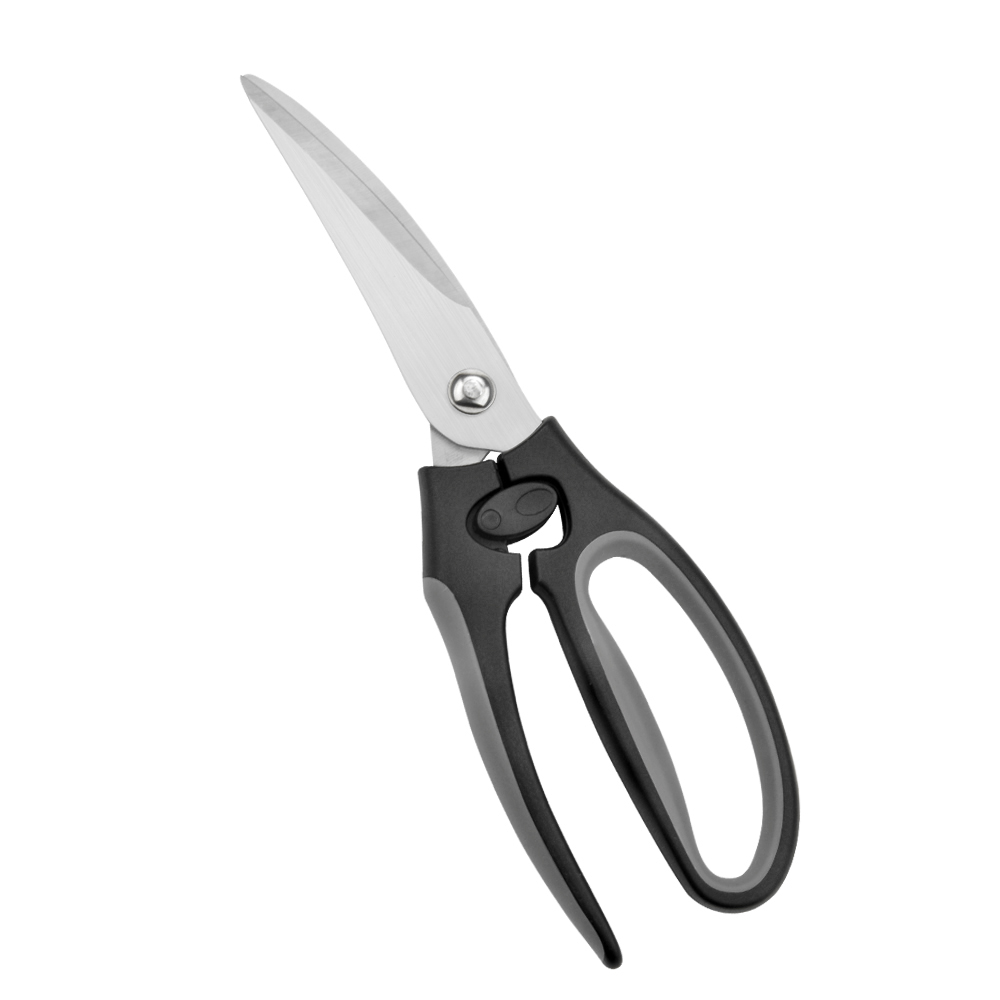
OEM Poultry Scissors: Practical Sourcing Guide for Kitchen Shears
For retailers, importers, promotional distributors and kitchenware brands, OEM poultry scissors can be a small product with important sourcing details. Buyers are not only looking for scissors that cut poultry; they also need a product that feels safe in the hand, cleans easily, presents well in packaging and can be adapted to a target market. The original product review highlighted several useful features: stainless steel blades, a micro-serrated edge, an ergonomic soft-grip handle, a pivot lock and detachable blades. This rewritten guide turns those points into practical selection criteria for B2B buyers comparing suppliers or preparing an OEM inquiry.
Key Takeaways
- Confirm the actual blade material, thickness, hardness and finish with the supplier instead of relying only on general terms such as stainless steel.
- Micro-serrated blades can help grip slippery food, but buyers should test cutting performance on poultry skin, herbs, vegetables and packaging.
- Detachable blades may improve cleaning, but the mechanism should feel secure and simple for end users.
- For OEM projects, ask early about handle colors, logo methods, retail packaging, carton details, samples and production lead time.
What Makes Poultry Scissors Different from General Kitchen Scissors?
Poultry scissors are usually expected to handle tougher kitchen tasks than basic household scissors. They may be used for cutting chicken joints, trimming fat, snipping herbs, opening food bags and cutting small vegetables. For that reason, buyers should consider leverage, blade geometry and handle comfort together, not as separate features.
The original article describes the product as multi-functional kitchen shears with sharp stainless steel blades and a micro-serrated edge. These are relevant points, but a sourcing team should go further by requesting measurable details. Ask the supplier what stainless steel is used, whether the blade is hardened, how the edge is sharpened and whether the serration is on one blade or both. If the supplier cannot provide a clear answer, request production samples and compare them through repeat-use testing.
Blade Design and Cutting Performance Checks
A poultry scissors sample should be evaluated with realistic kitchen tasks. A blade that feels sharp on paper may still slip on poultry skin or struggle with small bones. The micro-serrated edge mentioned in the source can be useful because it grips slippery ingredients and helps guide the cut. However, it should not feel rough, uneven or difficult to clean.
When testing samples, prepare a simple checklist. Cut raw poultry skin, cooked chicken, herbs, thin vegetable stems, plastic packaging and food twine. Observe whether the blades twist, jam, leave ragged edges or require too much hand force. Also inspect the pivot area after use. A secure pivot point is important because looseness can reduce cutting accuracy and make the product feel low quality.
Handle Comfort, Safety and User Experience
The original review notes an ergonomic soft-grip handle designed to reduce fatigue. For wholesale and private label buyers, this is especially important because handle fit can affect product reviews and return rates. A handle should be comfortable for different hand sizes, not only for the person approving the sample.
Test the handle with dry hands and slightly wet hands. Check whether the grip feels stable and whether the inner edges create pressure points. If the scissors are intended for markets where users may wear gloves, include glove testing. The pivot lock described in the source is another useful feature because it keeps the blades closed when the scissors are stored. Buyers should check that the lock does not open accidentally in a drawer or during transport.
Cleaning, Detachable Blades and Hygiene Considerations
Kitchen shears used for poultry must be easy to clean. The source states that the blades are detachable, which can help users clean the pivot area where food residue may collect. When evaluating this feature, focus on both convenience and safety. The blades should separate without excessive force, but they should not detach unexpectedly while cutting.
Ask the supplier for care instructions that can be included on packaging or in an insert. Do not assume dishwasher suitability unless the supplier can confirm it for the specific product and finish. If your market expects dishwasher-safe claims, ask what tests or documentation the supplier can provide. If that information is unavailable, it is safer to provide conservative hand-wash guidance.
Comparison Checklist for OEM Poultry Scissors
| Evaluation Area | What to Check | Questions to Ask the Supplier |
|---|---|---|
| Blade material | Stainless steel type, thickness, finish and edge consistency | What exact steel is used, and can it be stated on packaging? |
| Cutting performance | Poultry skin, herbs, vegetables, packaging and twine | Can you provide samples from the same production process as bulk goods? |
| Micro-serrated edge | Grip on slippery food and ease of cleaning | Is the serration standard, or can it be adjusted for OEM orders? |
| Handle | Comfort, grip, color, fit for different hand sizes | What handle colors and logo options are available? |
| Safety lock | Closed-blade storage and lock stability | How is the lock inspected during quality control? |
| Packaging | Retail card, box, instructions and barcode needs | Can packaging artwork, carton marks and inserts be customized? |
OEM and Wholesale Sourcing Questions
Before placing a wholesale or OEM order, buyers should clarify commercial and technical details in writing. Avoid assuming production capacity, minimum order quantity, certifications, price levels or compliance status unless the supplier confirms them for the exact item and destination market.
- What customization options are available for handle color, logo placement and retail packaging?
- What is the sample lead time, sample cost policy and expected production lead time?
- What quality checks are performed for blade sharpness, pivot strength, lock function and appearance?
- What carton size, gross weight and packing method will be used for export orders?
- Can the supplier provide documents required by your importer, retailer or local regulations?
How to Build a Better Product Brief
A clear product brief reduces delays and misunderstandings. Include the target retail channel, expected price position, packaging style, logo requirements and whether the scissors will be sold as poultry scissors, kitchen shears or multi-purpose scissors. If you need a specific claim, such as dishwasher safety or a particular material grade, ask the supplier to verify it before artwork is printed.
For product positioning, be specific but realistic. Instead of using broad phrases, describe the use cases: cutting poultry, trimming herbs, opening food packaging and preparing vegetables. This makes the product page more credible and helps customers understand where the scissors fit in their kitchen routine.
Practical FAQ
Are OEM poultry scissors only for cutting chicken?
No. They are commonly marketed for poultry, but many buyers also position them as multi-functional kitchen shears for herbs, vegetables, food packaging and general meal preparation.
Should I choose detachable blades?
Detachable blades can make cleaning easier, especially around the pivot. However, buyers should test whether the mechanism is secure during cutting and simple for consumers to reassemble.
What should I ask before adding a private label logo?
Ask about logo methods, printable area, color limitations, artwork format, setup costs, sample approval and whether the logo will withstand normal cleaning and handling.
Can I claim the scissors are dishwasher safe?
Only use that claim if the supplier confirms it for the exact product and can provide appropriate support for your market. Otherwise, provide hand-wash care instructions.
How many samples should a buyer test?
Test more than one sample when possible. Check cutting consistency, handle comfort, lock function and packaging condition. If the order is large or brand-sensitive, request a pre-production sample before bulk manufacturing.
