




Household Scissors Manufacturer: How to Source the Right Everyday Cutting Tool
Household scissors look simple, but for retailers, importers, promotional buyers, and private-label brands, they require careful sourcing. A pair that feels comfortable in the hand, cuts cleanly, and holds up during normal home, office, or craft use can support repeat sales and reduce complaints. A poor pair can create returns even if the price looks attractive.
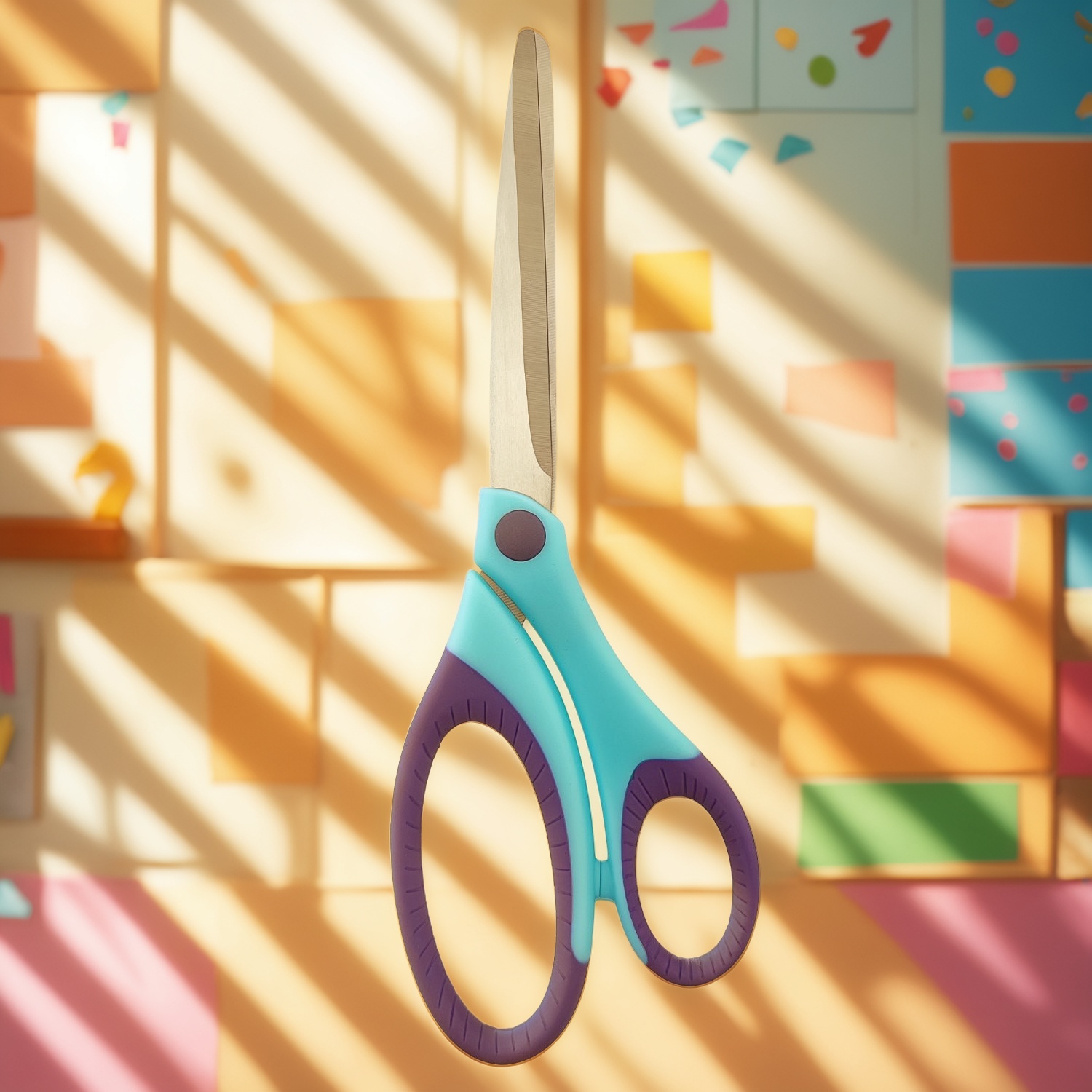
This guide rewrites the original product introduction into practical B2B sourcing guidance for buyers evaluating household scissors, OEM scissors, and Chinese factory scissors. The product shown below features a bright aqua and purple handle, a soft-touch rubber grip, ambidextrous use, and stainless steel blades described as durable and corrosion-resistant in the source material. Buyers should still verify exact specifications, test reports, packaging details, and commercial terms directly with the supplier before placing an order.

Key Takeaways
- Household scissors should be evaluated for blade performance, handle comfort, safety, packaging, and consistency across batches.
- The pictured model highlights visible consumer-friendly features: aqua and purple styling, soft-touch rubber handle areas, ambidextrous design, and stainless steel blades.
- For OEM or wholesale programs, ask suppliers about customization scope, sample approval, inspection methods, lead time, MOQ, and carton packing.
- A sourcing decision should not rely on photos alone; request physical samples and test them on the actual materials your customers will cut.
What Buyers Should Look for in Household Scissors
Household scissors are general-purpose tools used for paper, packaging, light craft work, office tasks, and sometimes fabric. Because the use case is broad, the best product is not always the sharpest or cheapest option. It is the pair that balances cutting performance, user comfort, durability, safety, and shelf appeal for the target market.
For a supermarket, discount store, e-commerce listing, or stationery range, customers may compare scissors by size, handle feel, color, and perceived quality. For an OEM buyer, the priorities often expand to include logo placement, packaging artwork, barcode requirements, carton strength, product consistency, and the ability to repeat the same item across future orders.
Handle Comfort and Everyday Usability
The original product description highlights an ergonomic handle with bright aqua and purple tones and soft-touch rubber. These details matter because scissors are operated by pressure and repeated hand movement. A rigid or poorly shaped handle can create discomfort, especially during school projects, gift wrapping, craft sessions, or office preparation work.
The ambidextrous design mentioned in the source is also useful for general household ranges. If a product can be used comfortably by both left-handed and right-handed users, it may reduce the need for separate SKUs in a basic retail assortment. However, buyers should test grip comfort with different hand sizes. A handle that works well for one market segment may feel too large, too small, or too flexible for another.
Blade Material, Cutting Performance, and Verification
The source states that the scissors use stainless steel blades described as durable and corrosion-resistant. Stainless steel is common in household scissors because it can support everyday use and is easier to maintain than many untreated materials. Still, buyers should avoid assuming grade, hardness, coating, or edge life unless the supplier provides written specifications.
During sample evaluation, test the scissors on the materials your customers are likely to use. For household and office channels, include copy paper, thin cardboard, plastic packaging film, ribbon, and common craft materials. If fabric cutting is part of your product claim, include lightweight fabric samples and assess whether the blade catches, slips, or frays the edge. Record results so different suppliers can be compared consistently.
Comparison Checklist for Supplier Evaluation
Use a structured checklist before choosing a household scissors manufacturer or wholesale scissors supplier. The table below focuses on practical questions that can be answered during sampling and supplier communication.
| Evaluation Area | What to Check | Questions to Ask the Supplier |
|---|---|---|
| Handle design | Grip comfort, opening size, surface feel, left/right-hand usability | Can the handle color, material finish, or logo area be customized? |
| Blade performance | Clean cutting on paper, packaging, craft materials, and stated use cases | What blade material and edge process are used, and can specifications be provided? |
| Consistency | Sample-to-sample cutting feel, alignment, screw tension, and finish | How is in-process and final inspection handled before shipment? |
| Packaging | Retail card, blister, hang hole, safety coverage, carton protection | Can packaging artwork, barcode, carton mark, and language requirements be supported? |
| OEM program | Branding options, color matching, sample approval, repeat-order reliability | What are the MOQ, lead time, tooling needs, and sample fees if customization is required? |
OEM, Wholesale, and Private-Label Considerations
When sourcing OEM household scissors, define the product brief before asking for a quotation. Include intended retail channel, target price range, preferred size, handle colors, packaging type, logo position, carton quantity, and any country-specific labeling requirements. A clear brief helps the supplier quote the same product you expect to receive.
Buyers should not assume that every factory can support every type of customization. Some suppliers may offer simple color changes or logo printing, while others may require new tooling for handle shape changes. Ask what is available from existing molds and what requires additional development. Also ask whether pre-production samples can be approved before mass production, and whether retained samples will be kept for comparison.
Quality Control Points Before Shipment
Household scissors should be inspected both visually and functionally. Visual checks may include blade finish, handle color consistency, logo placement, packaging alignment, and the absence of sharp burrs where users hold the product. Functional checks should include opening and closing smoothness, blade alignment, screw tightness, and cutting performance.
- Approve a golden sample before bulk production begins.
- Define acceptable and unacceptable defects in writing.
- Test cutting performance on agreed materials, not only standard paper.
- Confirm packaging strength for e-commerce or retail distribution needs.
- Ask how nonconforming goods are handled before shipment.
If third-party inspection is required by your company, discuss access, timing, and inspection standards early. This avoids delays when goods are already packed and ready to ship.
How to Position Household Scissors for Retail Customers
For consumer-facing listings, avoid vague claims and focus on practical benefits that are visible or verified. In this case, the aqua and purple handle can be positioned as easy to identify in a drawer or craft box. The soft-touch rubber handle can be described as designed for a comfortable grip. The ambidextrous feature can be explained as suitable for both left-handed and right-handed users, based on the original information.
Claims about blade life, corrosion resistance, or professional performance should be supported by supplier documentation or your own testing. Accurate descriptions build trust and reduce the risk of customer disappointment.
Practical FAQ for B2B Buyers
What materials should household scissors be tested on?
Test them on the materials your customers are likely to cut, such as paper, light cardboard, plastic packaging, ribbon, and craft materials. If you plan to mention fabric use, test fabric performance before making that claim.
Can household scissors be customized for OEM orders?
Many suppliers may offer OEM options, but the scope varies. Ask about handle color, logo placement, packaging artwork, mold changes, sample approval, MOQ, and production lead time.
What should I ask a scissors manufacturer before ordering?
Ask for blade specifications, handle material details, packaging options, inspection process, sample availability, lead time, MOQ, carton dimensions, and any documents required for your market.
Is an ambidextrous handle useful for wholesale programs?
Yes, it can simplify assortment planning because one SKU may serve both left-handed and right-handed users. Buyers should still test comfort with different hand sizes before committing to volume orders.
How can I reduce quality risk on repeat orders?
Keep an approved reference sample, document specifications, confirm inspection criteria, and compare future production against the approved sample. Clear communication is especially important for private-label and retail programs.
