




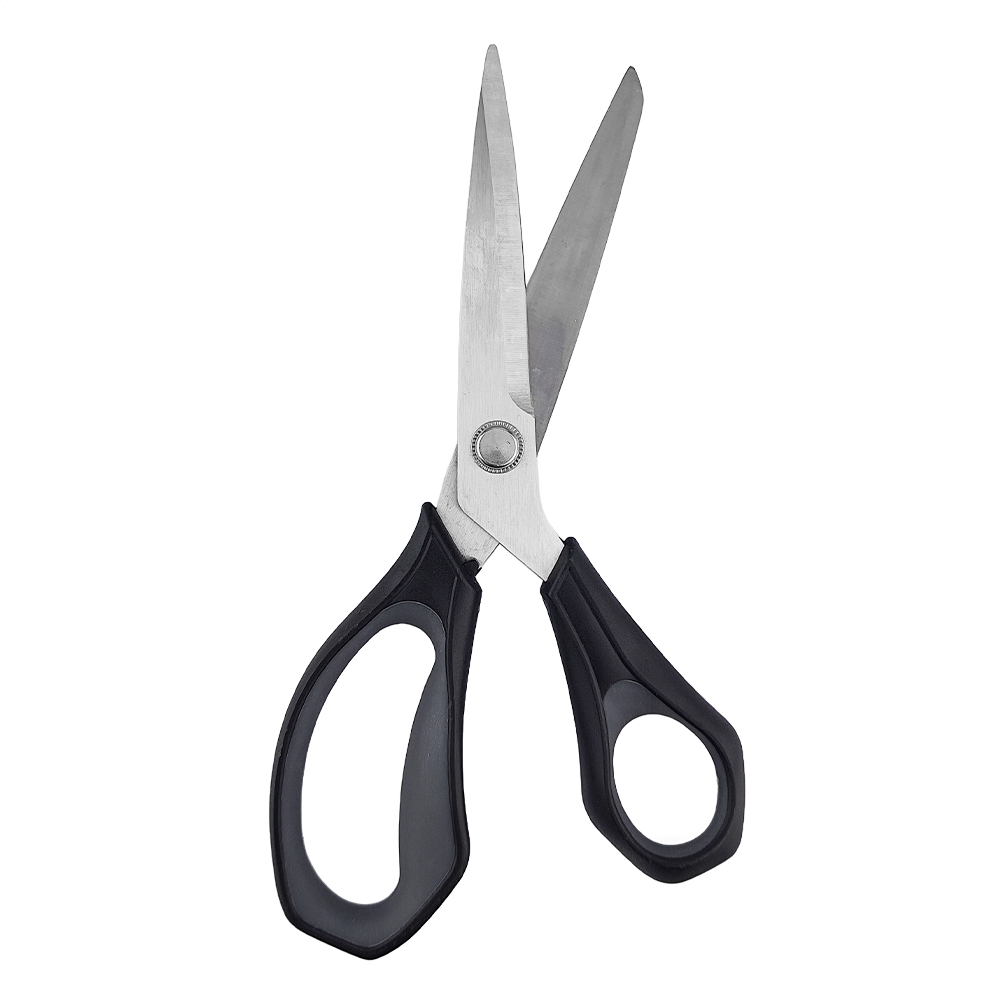
Discover the Best OEM Tailor Scissors for Precision Cutting
OEM tailor scissors are not just a catalog item for apparel brands, sewing tool distributors, craft retailers, or private-label buyers. They are a working tool that must cut accurately, feel stable in the hand, and remain consistent across repeat orders. For buyers comparing a professional scissors manufacturer or scissors factory, the real question is not only whether a sample looks good, but whether the supplier can deliver dependable cutting performance, finishing quality, packaging, and communication over time.

The original product discussion highlighted several useful points: sharp stainless steel blades, smooth cutting action, durability, an ergonomic black handle, comfortable grip, and suitability for professional applications such as tailoring and office work. Those details provide a good starting point. However, a strong sourcing decision should go further by checking specifications, sample consistency, quality controls, customization options, and the supplier's ability to answer technical questions clearly.
Key Takeaways
- Evaluate OEM tailor scissors by cutting performance, comfort, finish quality, and order consistency, not appearance alone.
- Ask the supplier to confirm blade material, hardness, edge treatment, handle material, packaging options, and inspection steps.
- Use fabric-based sample testing before placing larger wholesale, OEM, or private-label orders.
- A reliable scissors factory should explain tolerances, defect handling, customization limits, and lead-time variables before production.
What Makes Tailor Scissors Suitable for OEM Sourcing?
For OEM sourcing, tailor scissors must meet two needs at once: they should perform well for the end user and be practical for repeat commercial production. A buyer may need branded packaging, a specific handle color, barcode labels, carton marks, or a consistent look across several product lines. These requests are normal, but they should not come at the expense of cutting quality.
The most important performance factor is how the scissors move through fabric. Good tailor scissors should open and close smoothly, maintain blade alignment, and cut from the base to the tip without snagging. The original article described a smooth and precise cutting action on delicate fabrics and tougher materials. When evaluating a sample, buyers should repeat that test using fabrics relevant to their market, such as cotton, denim, felt, lining fabric, or synthetic blends. If the scissors are intended for craft or office channels, also test paper, ribbon, and lightweight packaging materials.
Blade Quality: Questions Buyers Should Ask
The original article states that the reviewed scissors used stainless steel blades. That is a useful detail, but buyers should still request full confirmation from the supplier before ordering. Stainless steel can vary in composition, hardness, corrosion resistance, edge retention, and finish. Do not assume a specific grade unless the supplier states it clearly and can support the claim.
Useful questions include: What blade material is used? Is heat treatment applied? How is sharpness inspected? Is there a target hardness range? What edge finish is standard? Can the factory provide a pre-shipment inspection report? How are blade alignment and screw tension checked? These questions help separate general marketing language from practical production control.
Sharpness retention is another important point mentioned in the original article. For B2B buyers, this should be verified through sample testing rather than accepted as a broad promise. Ask whether the factory has internal cutting tests and whether those tests can be adapted to your target material. If your customers are professional tailors, cutting endurance matters more than if the scissors are positioned for light household use.
Handle Comfort and User Experience
The reviewed scissors featured an ergonomic black handle designed for a secure and comfortable grip. This is important because tailor scissors are often used for repeated cuts over long periods. A poor handle shape can create pressure points, reduce control, and lead to hand fatigue. Even if the blade is sharp, uncomfortable scissors may result in negative customer feedback.
When checking samples, hold the scissors for several minutes rather than making only one or two cuts. Test whether the handle edges feel smooth, whether the finger openings fit the target user group, and whether the grip remains stable during long cutting strokes. If the product will be sold in different markets, consider hand size differences and whether the same handle design suits both professional and home users.
The original article also noted a versatile design suitable for both left- and right-handed users. If this is important for your sales channel, confirm it directly with the supplier and test it with actual left-handed and right-handed users. Some scissors can be held by either hand, but true cutting comfort and blade visibility may still differ.
OEM Supplier Evaluation Checklist
| Evaluation Area | What to Check | Why It Matters |
|---|---|---|
| Blade performance | Cut fabric from heel to tip; check snagging and alignment | Confirms real cutting quality before bulk orders |
| Material details | Ask for blade material, handle material, and finish options | Prevents unclear claims and mismatched expectations |
| Comfort | Test grip shape, handle edges, and long-use feel | Reduces end-user fatigue and returns |
| OEM options | Confirm logo, color, packaging, labeling, and carton marks | Supports private-label and wholesale requirements |
| Quality control | Request inspection steps for sharpness, screws, surface defects, and packaging | Improves consistency across repeat shipments |
| Commercial terms | Ask about MOQ, lead time, sample fees, payment terms, and defect handling | Clarifies risk before production begins |
How to Test Samples Before a Wholesale Order
Sample testing should be simple, repeatable, and based on real customer use. Start by comparing several pairs from the same sample batch, not just one pair. Open and close each pair to feel screw tension and smoothness. Cut straight lines and curves through fabrics your customers are likely to use. Then inspect the fabric edge. A clean cut usually indicates better sharpness and alignment, while fraying, dragging, or skipped sections may indicate problems.
- Prepare several fabric types and record how each sample performs.
- Cut from the base, middle, and tip of the blade to check full-length performance.
- Inspect handle comfort after repeated cutting, not only during first use.
- Check surface finish, printing, packaging, and any customized branding.
- Share written feedback with the supplier and request improvements before confirming production.
If the supplier claims improved durability or special edge retention, ask how that claim is verified. A professional manufacturer should be able to explain its inspection method in practical terms, even if formal third-party testing is not part of the order.
Customization, Packaging, and Private-Label Details
OEM tailor scissors often require more than the scissors themselves. Buyers may need retail cards, blister packaging, kraft boxes, instruction inserts, warning labels, or export carton requirements. Before requesting a quotation, prepare a clear specification sheet. Include the target size, handle color, logo position, packaging format, order quantity, destination market, barcode needs, and any required language on packaging.
Avoid assuming that every customization is available at the same cost or lead time. Ask the factory which elements are standard, which require tooling, and which may affect production scheduling. If color matching is important, provide a reference such as a Pantone number and request a pre-production sample. If packaging durability matters, ask how cartons are packed and whether drop resistance or transit protection is considered.
Choosing a Scissors Factory for Long-Term Supply
A top scissors factory is valuable because it can support repeatability. For B2B buyers, one successful sample is only the beginning. The more important question is whether the next shipment, and the one after that, will match the approved sample. This requires clear records, production standards, and responsive communication.
When comparing suppliers, evaluate how they respond to detailed questions. Do they provide specific answers, or only general statements? Can they explain what happens if defects are found? Will they keep an approved sample for comparison? Can they confirm production photos, packaging details, and inspection timing before shipment? These operational details often matter as much as the product itself.
Practical FAQ
What should I ask before buying OEM tailor scissors?
Ask about blade material, handle material, size options, sharpness checks, logo methods, packaging choices, MOQ, lead time, sample policy, and defect handling.
Are stainless steel tailor scissors always better?
Not automatically. The original product description mentions stainless steel blades, but buyers should still confirm the exact material, heat treatment, edge quality, and intended use.
How can I judge sharpness from a sample?
Cut several fabrics from the base to the tip of the blade. Look for clean edges, smooth motion, and consistent performance across multiple pairs.
Can one tailor scissors design suit both professional and household users?
Sometimes, but it depends on size, weight, handle comfort, and cutting demand. Professional users may need stronger endurance and comfort during longer sessions.
What is the safest way to place a first OEM order?
Start with approved samples, written specifications, confirmed packaging artwork, agreed inspection criteria, and clear communication about lead time and defect resolution.
Final Sourcing Advice
OEM tailor scissors should be selected through structured evaluation, not only by product photos or broad claims. The most useful approach is to combine hands-on sample testing with careful supplier questions. Confirm the materials and customization details, test cutting performance on real fabrics, review comfort, and document the approved standard before production. This gives buyers a better chance of receiving scissors that meet customer expectations and remain consistent across future wholesale or private-label orders.
