




Textile Cutting Tools and Custom Tailor Scissors: A Practical Sourcing Guide
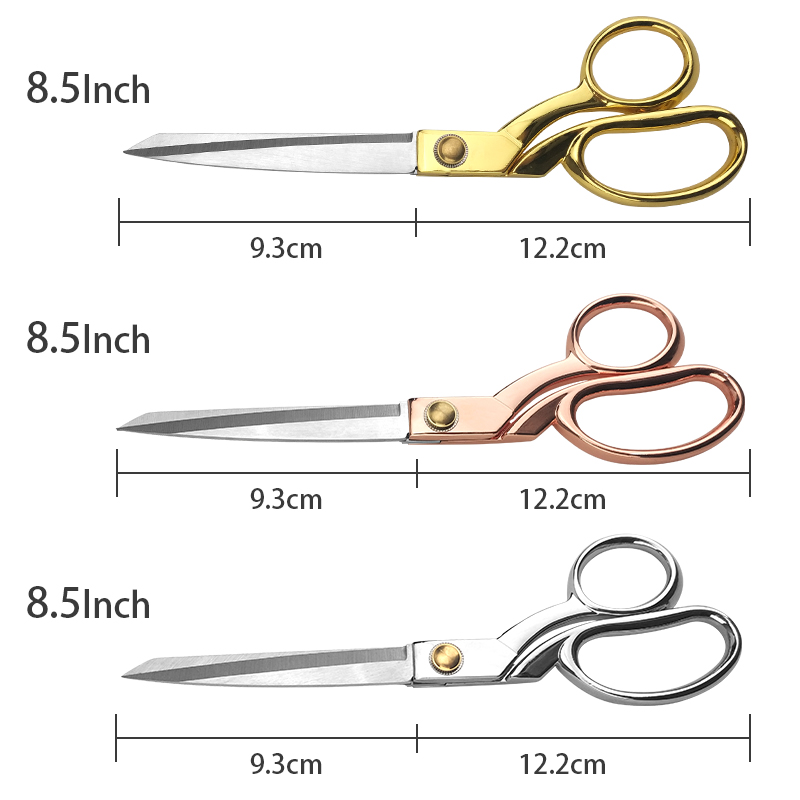
Textile cutting tools are basic equipment for sewing studios, craft retailers, garment workshops, alteration shops, upholstery teams, and promotional gift buyers. A good pair of scissors does not simply look attractive on a workbench; it should help users cut fabric cleanly, control curves, trim threads, and work comfortably through repeated tasks.
This guide rewrites the key information from the original Bonet Houseware article into practical buying advice for businesses evaluating custom fabric scissors and tailor scissors for wholesale or OEM projects. The featured product is an 8.5-inch tailor scissors design offered in Gold, Rose Gold, and Silver finishes, with blade length listed as 9.3 cm and handle length listed as 12.2 cm. The original description also states that the scissors use carbon steel blades with a coating and are intended for fabric, paper, and a variety of materials.
Key Takeaways
- Choose textile cutting tools according to use case: garment cutting, craft kits, retail resale, or promotional programs.
- Confirm blade material, coating, edge sharpness, handle comfort, packaging, and inspection standards before placing bulk orders.
- For custom fabric scissors, ask suppliers which details can be customized and which require extra tooling, sampling, or artwork approval.
- Do not rely only on appearance; request samples and test cutting performance on the materials your customers actually use.
What Makes Textile Cutting Tools Different?
Textile cutting tools need to perform differently from general office scissors. Fabric can shift, stretch, fray, or snag, so the cutting edge must be suitable for smooth continuous cuts. For a sewing user, poor cutting performance can waste material and slow production. For a retailer, inconsistent scissors can lead to returns and customer complaints.
Common textile cutting tools include tailor scissors, dressmaking shears, embroidery scissors, thread snips, rotary cutters, and craft scissors. Tailor scissors are often selected because they are familiar, versatile, and suitable for many cutting tasks. When sourcing for wholesale, the best option is not always the heaviest or most decorative model. It is the model that fits the target buyer, price point, packaging channel, and expected workload.
Featured 8.5-Inch Tailor Scissors: Details to Note
The original product information highlights an 8.5-inch tailor scissors model available in three finishes: Gold, Rose Gold, and Silver. These finish choices are useful for retail display, gift sets, sewing kits, and brands that want a more coordinated product line. The listed blade length is 9.3 cm, while the handle length is 12.2 cm. The source also describes the scissors as having carbon steel blades with a coating.
For buyers, these details should be treated as a starting point for evaluation. Before confirming a purchase order, ask the supplier to verify the current product drawing, total length tolerance, blade thickness, coating type, handle finish process, and packing method. If the scissors will be sold in multiple countries, also ask what product labeling, carton marks, and documentation can be provided for your market.
Comparison Checklist for Bulk Scissor Buyers
| Evaluation point | Why it matters | Questions to ask the supplier |
|---|---|---|
| Cutting use | Fabric, paper, and craft materials place different demands on the blade. | Which materials has this model been designed to cut? Can samples be tested on cotton, felt, denim, or paper? |
| Size and dimensions | Length affects control, reach, and perceived value. | Can you confirm the 8.5-inch size, 9.3 cm blade length, and 12.2 cm handle length on the latest specification sheet? |
| Blade material | Material influences sharpness, maintenance, and price position. | The source states carbon steel blades; what grade or internal material standard is used, if available? |
| Finish options | Gold, Rose Gold, and Silver can support different retail assortments. | Are all finishes available for the same order, and are there color variation controls? |
| Customization | OEM buyers may need logos, packaging, or color assortments. | What can be customized: logo, hang card, sleeve, box, barcode, or carton label? |
| Quality inspection | Consistent cutting feel is essential in repeat orders. | What inspection steps are used for sharpness, alignment, surface finish, and packing quantity? |
How to Select Custom Fabric Scissors for Your Market
Different buyers need different product choices. A sewing supply wholesaler may prioritize durability and consistent cutting. A craft kit brand may need attractive finishes and safe, compact packaging. A promotional distributor may focus on logo placement and gift presentation. A garment workshop may care most about comfort during repeated use.
When comparing custom fabric scissors, review these points:
- Target user: Decide whether the scissors are for professional tailoring, home sewing, school craft use, retail gifting, or light office and fabric tasks.
- Cutting material: Test the scissors on the exact fabrics or materials your customers will use, not only on thin paper.
- Handle comfort: Check whether the handle opening and grip shape fit the intended user group.
- Finish durability: Ask whether decorative coatings may show scratches, fingerprints, or color changes under normal handling.
- Packaging: Confirm whether the scissors need a blister card, paper card, protective sleeve, inner box, or retail-ready carton.
Wholesale and OEM Sourcing Questions
If you are sourcing from a scissors manufacturer or wholesale supplier, clear questions reduce risk. Avoid assuming that every visual detail can be changed without cost or lead time. Custom finishes, printed logos, private-label packaging, and special assortments may require sample approval. Commercial details such as MOQ, production time, unit price, payment terms, and shipping method should be confirmed directly with the supplier for the current order.
Useful questions include: What is the available assortment for Gold, Rose Gold, and Silver finishes? Can mixed colors be packed in one carton? Is logo customization available on the blade, handle, packaging, or only on the outer box? What artwork format is required? Can pre-production samples be supplied? How are defects handled if the shipment does not match the approved sample?
Buyers should also request clear photos or samples showing both sides of the scissors, the pivot area, handle finish, blade edge, packaging, and carton marks. For online retail, ask whether the supplier can provide product dimensions and packaging dimensions so listings can be prepared accurately.
Use and Care Guidance for End Customers
Even well-selected textile cutting tools need proper use. If your business resells scissors, include simple care instructions to reduce complaints and help customers get better results. Recommend using fabric scissors mainly for fabric and sewing tasks if that is the intended use. Cutting rough cardboard, wire, adhesive materials, or abrasive surfaces may reduce sharpness faster.
After use, customers should wipe the blades clean and store the scissors in a dry place. If the product includes a protective sleeve or retail pack, encourage users to keep it for storage. For safety, scissors should be kept away from children unless supervised and should not be left open on a work surface.
Practical FAQ
Are 8.5-inch tailor scissors suitable for professional sewing?
They can be suitable for many sewing and tailoring tasks, depending on blade sharpness, alignment, handle comfort, and the fabric being cut. Professional buyers should test samples before bulk purchasing.
What finishes are mentioned for this tailor scissors model?
The original product information lists Gold, Rose Gold, and Silver finishes. Availability for bulk orders should be confirmed with the supplier before purchase.
Can these scissors be used for both fabric and paper?
The source states that the scissors can cut fabric, paper, and a variety of materials. However, frequent paper cutting may affect performance for fabric over time, so many sewing users keep separate scissors for fabric and paper.
What should OEM buyers confirm before ordering?
Confirm current specifications, customization options, sample process, packaging, inspection criteria, MOQ, price, lead time, shipping terms, and after-sales handling. These details should be agreed in writing before production.
Is carbon steel the only material option?
The original article describes this model as using carbon steel blades. If you need another material, ask the supplier whether alternative models or custom options are available.
Final Buying Advice
Textile cutting tools should be evaluated with both the end user and the sourcing process in mind. The 8.5-inch tailor scissors described here offer a practical size, three decorative finish choices, and stated carbon steel blades with coating. For wholesalers, retailers, and OEM buyers, the next step is to request samples, test real cutting performance, and confirm all commercial and customization details with the supplier. A careful specification check before ordering is the simplest way to build a more reliable scissors product line.
