




OEM Kitchen Scissors: Practical Sourcing and Use Guide
OEM kitchen scissors are a common choice for retailers, distributors, promotional buyers, and kitchenware brands that need a practical cutting tool with private-label potential. Unlike a single-purpose knife, kitchen scissors can handle many everyday tasks, from snipping herbs to cutting food packaging and trimming poultry. For business buyers, the main question is not simply whether the scissors look attractive. The better question is whether the design, materials, packaging, and supplier process match the intended market and customer expectations.
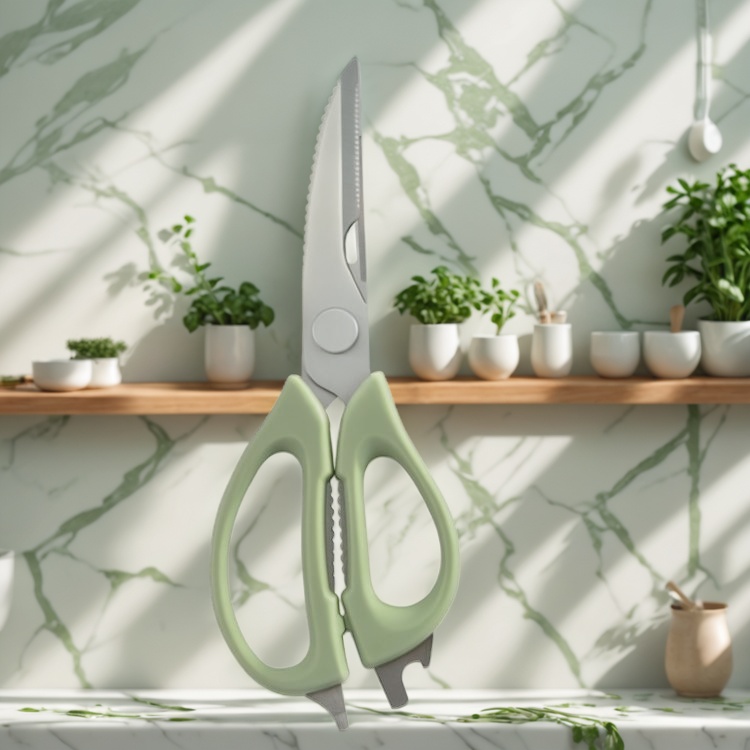
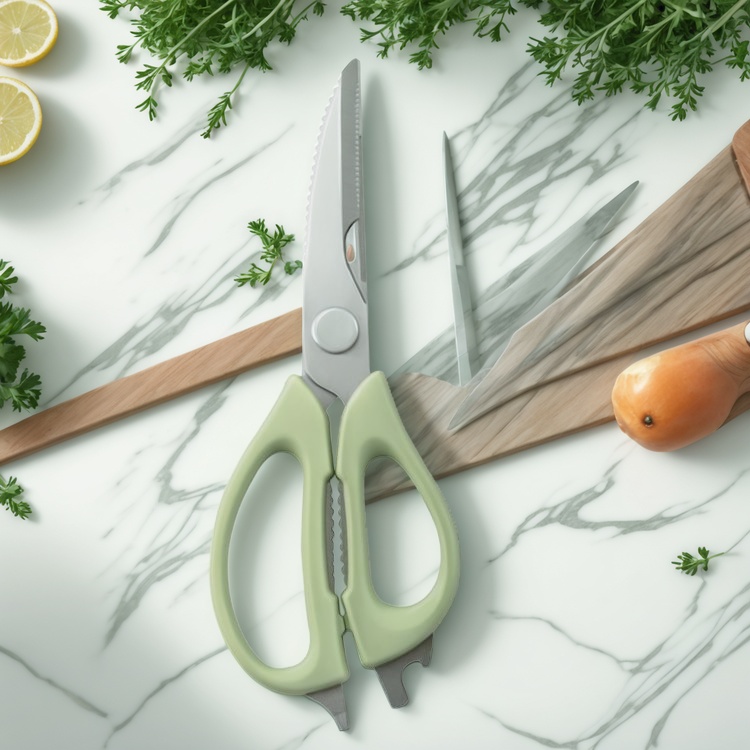
The original product information highlights several useful features: stainless steel blades, a finely serrated top blade, micro-serrations on the lower blade, a built-in nutcracker, bottle opener, screwdriver tip, and a pastel green soft-touch handle. Those details make the product relevant to buyers looking for multi-functional kitchen scissors. However, before placing an OEM or wholesale order, buyers should still verify specifications, compliance needs, and quality-control procedures directly with the supplier.
Key Takeaways
- OEM kitchen scissors should be evaluated by cutting performance, comfort, cleaning method, safety, packaging, and supplier reliability.
- Multi-functional features can add value, but only if they are durable, easy to understand, and relevant to the target customer.
- Business buyers should ask suppliers for confirmed material details, sample availability, packaging options, quality checks, and export documentation.
- For end users, proper washing, drying, and storage are important for maintaining blade performance and reducing corrosion risk.
What Makes OEM Kitchen Scissors Useful?
Kitchen scissors are useful because they combine control, speed, and convenience. A pair of scissors can cut small ingredients directly over a bowl, trim meat in a controlled way, or open sealed food packaging without reaching for several tools. For many households, this makes kitchen scissors a frequently used drawer item rather than a specialty accessory.
In an OEM context, the product also offers room for customization. Buyers may ask about handle color, logo placement, retail packaging, instruction inserts, barcode labels, carton markings, and bundle options. These details matter because the same basic tool may be sold through supermarkets, online stores, gift sets, restaurant supply channels, or private-label kitchenware collections. Each channel has different expectations for presentation, price positioning, and after-sales support.
Feature Review: Blades, Grip, and Multi-Tool Functions
The stated stainless steel blades are an important starting point because kitchen scissors are exposed to moisture, food acids, and frequent washing. The original article also describes a finely serrated top blade and micro-serrations on the lower blade. Serrations can help grip slippery foods and reduce sliding during cutting, especially when trimming poultry skin, herbs, or packaging film.
The built-in nutcracker, bottle opener, and screwdriver tip make the scissors a multi-functional kitchen tool. These features can be attractive in retail listings because they are easy to demonstrate. Still, buyers should test whether each function is genuinely practical. A feature that looks useful in photos but feels awkward in the hand may lead to complaints. The pastel green soft-touch handle is another explicit feature from the source. For buyers, comfort should be tested with different hand sizes, wet hands, and repeated cutting tasks.
Supplier and OEM Sourcing Questions
When sourcing Chinese factory kitchen tools or any OEM kitchen scissors, avoid relying only on product photos. Request samples and confirm the details that affect quality, safety, and market fit. If the supplier has not published a specification, treat it as unconfirmed until it appears in writing.
- What is the confirmed blade material and handle material?
- Can the supplier provide physical samples before bulk production?
- Which logo methods are available, and where can branding be placed?
- What packaging formats are offered for retail, e-commerce, or wholesale cartons?
- What quality checks are performed for sharpness, assembly, handle bonding, and surface finish?
- Which documents can be provided for the destination market if required?
- What are the lead time, order quantity, payment terms, and sample approval process?
These questions help separate a general product inquiry from a sourcing-ready conversation. They also reduce the risk of misunderstandings after artwork approval or mass production.
Comparison Checklist for Buyers
| Evaluation Point | What to Check | Why It Matters |
|---|---|---|
| Blade performance | Test herbs, packaging, poultry skin, and thin plastic film | Shows whether the scissors perform in realistic kitchen tasks |
| Serration design | Confirm whether serrations grip slippery foods cleanly | Helps reduce slipping and uneven cutting |
| Handle comfort | Try the soft-touch handle with dry and damp hands | Affects customer satisfaction during repeated use |
| Multi-tool features | Test nutcracker, bottle opener, and screwdriver tip | Confirms that added functions are practical, not only decorative |
| Cleaning and storage | Ask whether blades separate or require hand washing | Influences hygiene, care instructions, and returns |
| OEM packaging | Review logo, insert, barcode, and carton options | Supports channel requirements and brand presentation |
How to Choose for Different Sales Channels
For supermarket or home goods retail, shoppers often compare products quickly on the shelf. Clear packaging, visible blade design, and simple feature icons may help customers understand the value. For e-commerce, the product page should show the scissors in use, explain care instructions, and avoid unsupported claims. For restaurant supply or professional kitchen channels, buyers may focus more on durability, cleaning, replacement consistency, and carton-level purchasing.
Promotional and gift-set buyers may prioritize color, packaging, and perceived versatility. In that case, the pastel green handle can support a softer home-kitchen appearance, but the final decision should still depend on sample testing. If the scissors are bundled with other kitchen tools, confirm that the packaging protects the blade tips and prevents movement during shipping.
Use and Care Tips for End Users
Good care improves the user experience and helps maintain cutting performance. After cutting food, wash the scissors promptly with mild detergent, especially after contact with meat, fish, or acidic ingredients. Dry them fully before storage. If the design allows blade separation, follow the supplier's instructions for safe removal and reassembly. If not, pay close attention to the hinge area, where food residue can collect.
- Use the scissors only for appropriate kitchen tasks, not heavy hardware cutting.
- Keep the blades dry between uses to reduce the chance of spotting or corrosion.
- Store them in a drawer organizer, sheath, or safe location away from children.
- Do not force the nutcracker or opener beyond its intended use.
- Replace the scissors if the hinge loosens, the handle cracks, or the blades no longer align.
Practical FAQ
Are OEM kitchen scissors suitable for private-label projects?
Yes, they can be suitable if the supplier supports branding, packaging, and documentation requirements. Buyers should confirm logo placement, artwork files, sample approval, and carton labeling before production.
What features should buyers test first?
Start with cutting performance, blade alignment, handle comfort, and cleaning. Then test the built-in nutcracker, bottle opener, and screwdriver tip to confirm they add real value.
Can the material grade be assumed from the phrase stainless steel?
No. Stainless steel is a broad description. Buyers should ask the supplier to confirm the exact blade material and provide written specifications where needed.
Are multi-functional kitchen scissors better than standard scissors?
They can be better for customers who value convenience, but only if the additional features are sturdy and easy to use. For some channels, a simpler design may be preferred.
What should be included in a supplier inquiry?
Include target market, expected order quantity, branding needs, packaging style, sample request, compliance questions, and any testing or documentation required by the sales channel.
Final Buying Guidance
OEM kitchen scissors can be a practical product for kitchenware sourcing when buyers balance visible features with verified performance. The stainless steel blades, serrated cutting edges, multi-tool functions, and soft-touch pastel green handle described in the source give this product a clear starting point. The next step is careful confirmation: request samples, test real kitchen tasks, review packaging, and ask the supplier direct questions before committing to bulk production. A disciplined sourcing process helps ensure the final product is useful, understandable, and appropriate for the intended customer.
