




OEM Left-Handed Scissors: A Practical Sourcing Guide for Buyers
Left-handed scissors are not simply right-handed scissors with different packaging. For left-handed users, the blade orientation, handle shape, cutting visibility, and grip comfort all affect control and cutting quality. This is especially important for children, schools, craft brands, stationery distributors, and retailers that need products suited to real daily use.
For B2B buyers, OEM left-handed scissors can be a useful product category when the supplier understands left-handed design rather than treating it as a minor variation. The goal is to source a safe, consistent, and commercially viable product while confirming every important detail before production. This guide explains what to check when evaluating a children’s scissors factory, a scissors manufacturer in Yangjiang, or any OEM supplier offering left-handed models.
Key Takeaways
- Left-handed scissors require blade and handle decisions that support left-hand cutting, not just a left-hand label.
- For children’s scissors, buyers should review safety design, grip comfort, sample performance, packaging, and age-use positioning.
- Yangjiang is widely associated with scissors and cutting tools manufacturing, but buyers should still verify each factory’s capabilities case by case.
- Do not rely only on catalog images. Request samples, compare cutting feel, and ask clear OEM questions before confirming an order.
Why Left-Handed Scissors Need Different Design Thinking
When a left-handed user cuts with ordinary right-handed scissors, the cutting line may be harder to see and the blades may not close against the material in the same natural way. This can lead to paper tearing, hand strain, or uneven cuts. For adult craft users, that affects accuracy. For children, it may affect confidence and classroom participation.
OEM buyers should therefore ask whether the product is designed specifically for left-handed use or simply sold as suitable for either hand. Ambidextrous handles can be useful in some settings, but they are not always the same as true left-handed scissors. If your market specifically asks for left-handed children’s scissors, confirm the blade orientation, handle molding, and actual cutting experience with left-handed sample testers.
What to Check in Left-Handed Children’s Scissors
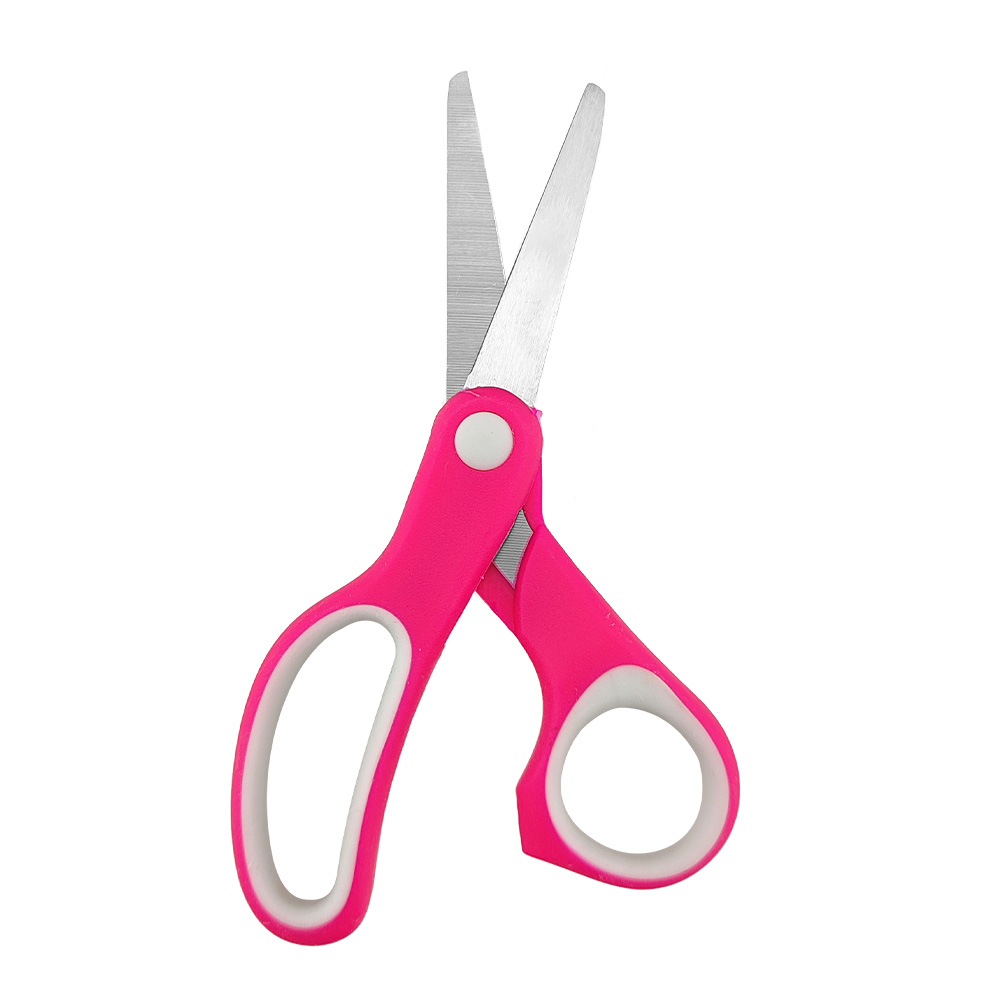
Children’s scissors require extra attention because the user group has smaller hands, developing motor skills, and different safety needs from adults. The original product discussion highlights common expectations such as rounded tips, colorful handles, lightweight use, and suitability for school projects or home crafts. Those are useful starting points, but buyers should turn them into measurable sample checks.
- Tip design: Ask whether the model uses rounded or blunt tips, and review whether the shape matches your target age group.
- Handle comfort: Check whether the finger loops fit small hands and whether the grip encourages a natural left-hand position.
- Cutting performance: Test paper, classroom craft materials, and any materials stated in your product brief.
- Opening and closing force: Children should be able to cut smoothly without excessive hand pressure.
- Visual appeal: Colors such as pink or other bright options may support retail presentation, but confirm color availability and consistency with the supplier.
Comparing OEM Supplier Options
Many buyers compare suppliers by price first, but scissors are tactile products. Poor alignment, uncomfortable handles, or inconsistent edges can create returns and complaints. The table below shows a practical way to compare a children’s scissors factory, a trading supplier, and an experienced scissors manufacturer.
| Evaluation Area | What to Ask | Why It Matters |
|---|---|---|
| Left-handed design | Is the blade orientation and handle shape made for left-handed users? | Prevents sourcing a product that is only labeled as left-handed. |
| Children’s use | What age range is the model intended for, and what safety features are included? | Helps match the product to school, retail, or home craft channels. |
| OEM customization | Can the supplier support logo, handle color, packaging, or set configuration? | Clarifies what can be customized before artwork and quotations are prepared. |
| Sample quality | Are pre-production samples available for cutting tests and packaging review? | Reduces risk before confirming bulk production. |
| Commercial terms | What are the MOQ, lead time, payment terms, and carton details? | These details affect buying plans, freight, and inventory timing. |
Questions to Ask a Scissors Manufacturer in Yangjiang
Yangjiang is known as a manufacturing center for knives, scissors, and related cutting tools. That reputation can make it a useful sourcing region, but buyers should still evaluate each supplier individually. A location alone does not prove a factory’s quality level, product consistency, or OEM management process.
When speaking with a scissors manufacturer in Yangjiang or any other manufacturing area, prepare a structured request instead of asking only for a catalog. Ask which left-handed models are available, whether children’s versions are already developed, and what aspects can be customized. Request product photos, sample terms, packaging options, and a clear quotation based on your expected order quantity.
It is also reasonable to ask how the supplier controls blade alignment, handle appearance, and packaging accuracy during production. Avoid assuming certifications, testing results, or compliance status. If your market requires specific safety or import documentation, ask the supplier to provide current documents for review and confirm whether additional third-party testing is needed.
Building a Clear OEM Brief
A good OEM project starts with a clear brief. This saves time and helps suppliers quote accurately. For left-handed children’s scissors, your brief should include intended users, sales channel, preferred colors, packaging type, branding requirements, and the materials the scissors should cut. If you are comparing a pink-handled model or another colorful option, provide a reference image or sample and ask what can be matched.
- Define the product: left-handed, children’s size, school or craft use.
- Specify visual needs: handle color, logo placement, packaging language, and barcode requirements.
- Request samples: include both unpacked product samples and final-style packaging if available.
- Test internally: ask left-handed users to check comfort, visibility, and cut smoothness.
- Confirm order details: MOQ, lead time, inspection method, carton packing, and shipping documents.
Sample Review Checklist Before Wholesale Orders
Before placing a wholesale or OEM order, review more than appearance. Open and close each sample repeatedly. Cut along straight and curved lines. Compare several pieces from the same sample batch if possible. Look for handle roughness, uneven color, loose pivots, blade gaps, or packaging errors. For children’s scissors, also check whether the product feels manageable for smaller hands.
If you plan to sell through schools, stationery distributors, online marketplaces, or retail chains, the sample should represent the final product as closely as possible. If the first sample is a handmade or modified sample, ask when a production-line sample can be provided. This distinction matters because mass production may differ from a prototype.
Practical FAQ
Are left-handed scissors necessary for children?
For many left-handed children, yes. A true left-handed design can make the cutting line easier to see and may feel more natural than using right-handed scissors. Buyers should test samples with left-handed users before ordering.
Can one scissors model be sold for both hands?
Some models are designed for general or ambidextrous use, but that does not always replace a dedicated left-handed model. Ask the supplier to explain the design and provide samples for comparison.
What OEM details should buyers confirm first?
Confirm blade orientation, handle size, color options, logo method, packaging style, MOQ, lead time, sample process, and any documentation required for your target market.
Should buyers source from a factory or trading company?
Both can work. A factory may offer closer production control, while a trading company may help manage multiple products. The key is to verify sample quality, communication, documentation, and order follow-through.
What should not be assumed from a product photo?
Do not assume material grade, safety compliance, exact size, sharpness level, MOQ, or certification status from a photo. Ask the supplier to confirm these details in writing and provide samples or documents where relevant.
Final Thoughts
OEM left-handed scissors can serve a clear market need, especially in children’s stationery, school supply, and craft categories. The best sourcing approach is practical: define the user, check the design, test samples, and ask suppliers direct questions before committing to production. Whether evaluating a children’s scissors factory or a scissors manufacturer in Yangjiang, buyers should focus on usability, safety-oriented design, consistent manufacturing, and transparent OEM communication.
