




Discover Top Household Scissors from Yangjiang
Household scissors are simple products, but sourcing them well requires more than choosing a bright handle color or a low unit price. Buyers need to consider cutting performance, comfort, packaging, repeatability, and whether a supplier can support private-label or OEM programs without creating avoidable quality risks. This guide rewrites the original product introduction into a practical B2B article for importers, distributors, retailers, and brand owners evaluating household scissors from Yangjiang.

Key Takeaways
- Household scissors should be assessed by cutting comfort, blade alignment, handle finish, packaging, and batch consistency.
- Yangjiang is associated with scissors and houseware production, but each supplier should still be verified individually.
- For OEM scissors, buyers should ask about logo methods, handle color options, packaging artwork, samples, lead time, and inspection standards.
- Do not rely only on product photos; request samples and test them on common household materials before confirming an order.
What Makes a Good Household Scissors Product?
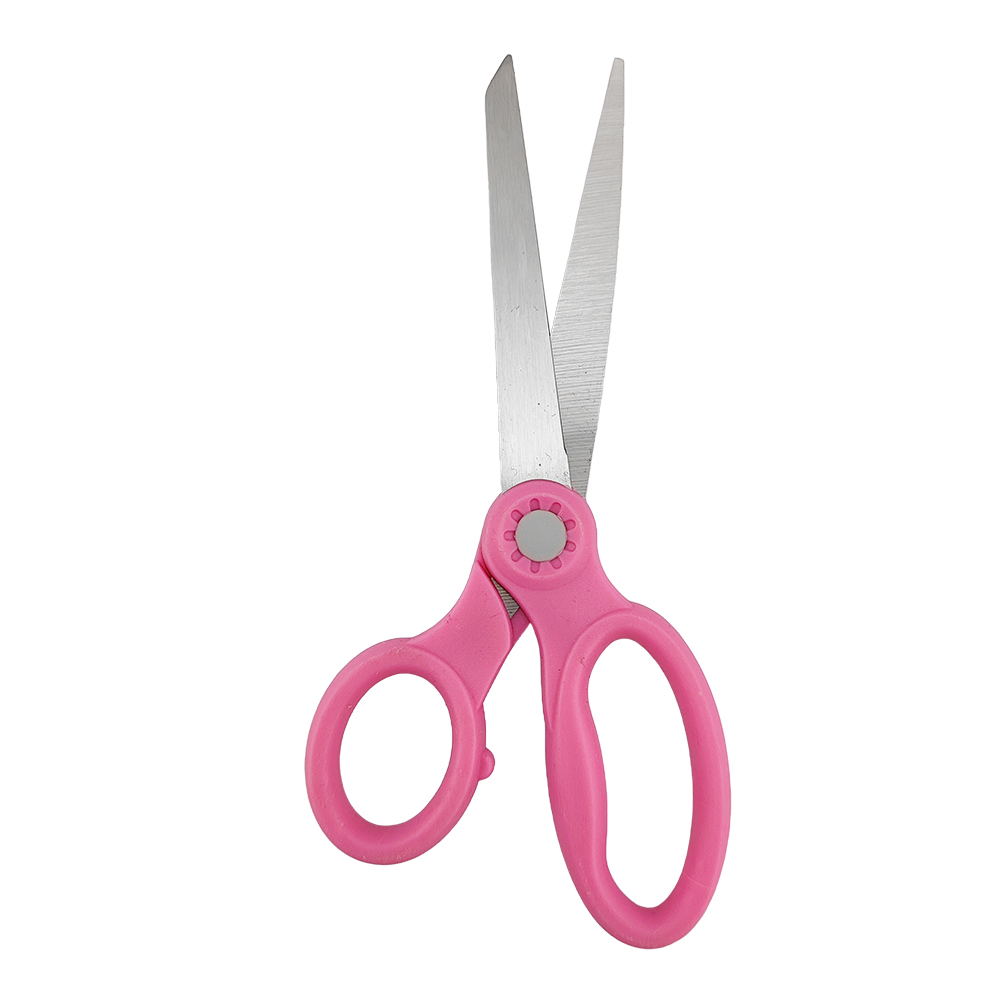
A dependable pair of household scissors should perform everyday cutting tasks cleanly and comfortably. Typical home uses include trimming paper, opening packaging, cutting craft materials, and preparing light DIY projects. The original article describes a pink craft-style household scissors with comfortable rounded handles, a precise cutting action, and blades made from stainless steel. Those are useful starting points, but buyers should confirm the details through samples rather than assuming every batch will match one promotional description.
For retail or wholesale programs, consistency matters as much as first impressions. A sample may look attractive, but the production run also needs stable blade alignment, smooth opening and closing, safe edge finishing, and packaging that protects the product in transit. If the item is positioned for household and craft use, the product should feel comfortable during repeated cutting, not just during a quick showroom demonstration.
Reviewing the Pink Precision Craft Scissors
The product in the original article is presented as a pink household scissors model for home and craft tasks. Its visible value is clear: the color helps it stand out on a shelf or in a household drawer, while the rounded handle design is intended to make regular use more comfortable. The article also states that the scissors are suitable for both left- and right-handed users and can cut materials such as paper and cardstock.
When evaluating this type of product, buyers should test it in realistic use cases. Try cutting thin paper, folded paper, cardstock, plastic packaging, and light craft materials. Check whether the blades meet cleanly from pivot to tip, whether the handle edges feel smooth, and whether the screw or pivot remains stable after repeated use. A product that looks attractive but loosens quickly may lead to returns, complaints, or poor reviews.
Household Scissors Buying Checklist
| Evaluation Area | What to Check | Questions to Ask the Supplier |
|---|---|---|
| Cutting performance | Clean cutting on paper, cardstock, and common packaging | What materials are used for routine sample testing? |
| Handle comfort | Rounded edges, stable grip, no sharp plastic flash | Can the handle color or shape be customized? |
| Blade and pivot | Smooth opening, firm alignment, no wobble | What inspection standard is used before shipment? |
| OEM options | Logo placement, color matching, packaging artwork | What files, approvals, and sample steps are required? |
| Packaging | Retail display, barcode space, shipping protection | Can packaging be supplied according to buyer artwork? |
| Commercial terms | MOQ, lead time, payment terms, after-sales handling | What terms apply to the exact model and order quantity? |
OEM Scissors and Customization Considerations
OEM household scissors can support private-label ranges, promotional sets, craft assortments, or general houseware lines. However, customization should be managed carefully. A change in handle color, logo position, packaging board, or blister design may affect cost, lead time, and sample approval. Buyers should ask the supplier to separate confirmed product features from optional customization ideas.
Useful OEM questions include: Can the handle color be matched to a Pantone reference? What logo methods are available? Is custom packaging possible? Will a pre-production sample be provided? How are color differences handled between sample and mass production? What inspection process is used for blade alignment, appearance, and packaging? These questions help turn a general product inquiry into a controlled sourcing project.
Working with a Scissors Factory in Yangjiang
Yangjiang is widely known as a production base for knives, scissors, and related houseware items. That reputation can help buyers identify potential suppliers, but it should not replace supplier due diligence. A buyer should confirm whether the company is a manufacturer, trading company, or combined operation; each model can work, but the communication, pricing structure, and production control may differ.
Before placing a wholesale or OEM order, request product samples, packaging photos, factory or production information, and clear quotations based on the exact model. Ask what is included in the quoted price and what is not. For example, tooling, logo setup, special packaging, carton marks, spare parts, inspection, and freight handling may be treated differently by different suppliers. Clear written confirmation reduces misunderstandings later.
Quality Control Points Before Shipment
Quality control for household scissors should focus on practical user experience. A buyer or third-party inspector can check appearance, opening and closing smoothness, cutting performance, handle finish, blade cleanliness, screw tightness, packaging condition, and carton labeling. If the scissors are marketed for craft or household use, test them on the same materials mentioned in the sales description.
- Approve a physical sample before mass production.
- Define acceptable and unacceptable defects in writing.
- Confirm packaging artwork, barcode placement, and carton marks.
- Request production photos or inspection reports when appropriate.
- Keep one approved sample as a reference for future orders.
Buyers should avoid assuming that terms such as “durable,” “premium,” or “high quality” have the same meaning for every supplier. Instead, connect quality expectations to observable checks: cutting result, surface finish, handle comfort, packaging strength, and consistency across cartons.
How Retailers Can Position Household Scissors
For retailers, household scissors are often purchased as practical utility items rather than high-involvement products. The product page or packaging should therefore explain the most relevant uses clearly: home office, crafting, school projects, gift wrapping, and general household cutting. If the product is pink, that color can help shoppers identify it quickly, but the copy should still focus on use, comfort, and reliability.
Do not overload consumer-facing text with factory language. End users usually care about whether the scissors feel comfortable, cut cleanly, and are easy to find in a drawer. Wholesale buyers, in contrast, need details about customization, packaging, order handling, and inspection. Strong product content separates those two audiences while keeping claims accurate.
Practical FAQ
Are these household scissors suitable for OEM projects?
The original article presents the model as suitable for OEM scissors programs. Buyers should confirm the available customization options, including handle color, logo method, packaging style, sample approval process, MOQ, and lead time directly with the supplier.
What should I test before ordering household scissors in bulk?
Test cutting performance, blade alignment, handle comfort, pivot stability, appearance, packaging, and carton strength. Use realistic materials such as paper, cardstock, and common household packaging.
Can I claim the scissors are stainless steel?
The source article states that the blades are made from stainless steel. If this claim will appear on retail packaging or a marketplace listing, ask the supplier to confirm the exact material description and provide any supporting documentation they can offer.
Why source scissors from Yangjiang?
Yangjiang is known for scissors and houseware manufacturing, which makes it a relevant sourcing location. However, buyers should still verify the individual supplier, product samples, inspection process, and commercial terms.
What information should be included in an RFQ?
Include the target model, order quantity, packaging requirements, logo needs, destination market, inspection expectations, requested delivery schedule, and whether you need retail-ready or bulk packaging.
Conclusion
Household scissors from Yangjiang can be a practical product category for retailers, wholesalers, and private-label buyers when the sourcing process is specific and evidence-based. The pink household scissors described in the original article offers a clear visual identity and everyday use case, but buyers should confirm all commercial and technical details before ordering. The best approach is simple: request samples, test real performance, define packaging and OEM requirements, and document quality expectations before production begins.
