




How to Choose a Trusted Knife Sharpener Supplier
Finding the right knife sharpener supplier is not only about buying a product that looks good on a shelf. For retailers, distributors, kitchenware brands, hospitality buyers and procurement teams, the real goal is to source sharpeners that are appropriate for the user, consistent in quality, easy to explain and practical to reorder. A knife sharpener may seem simple, but poor selection can lead to customer complaints, unsuitable inventory or products that do not match the intended market.
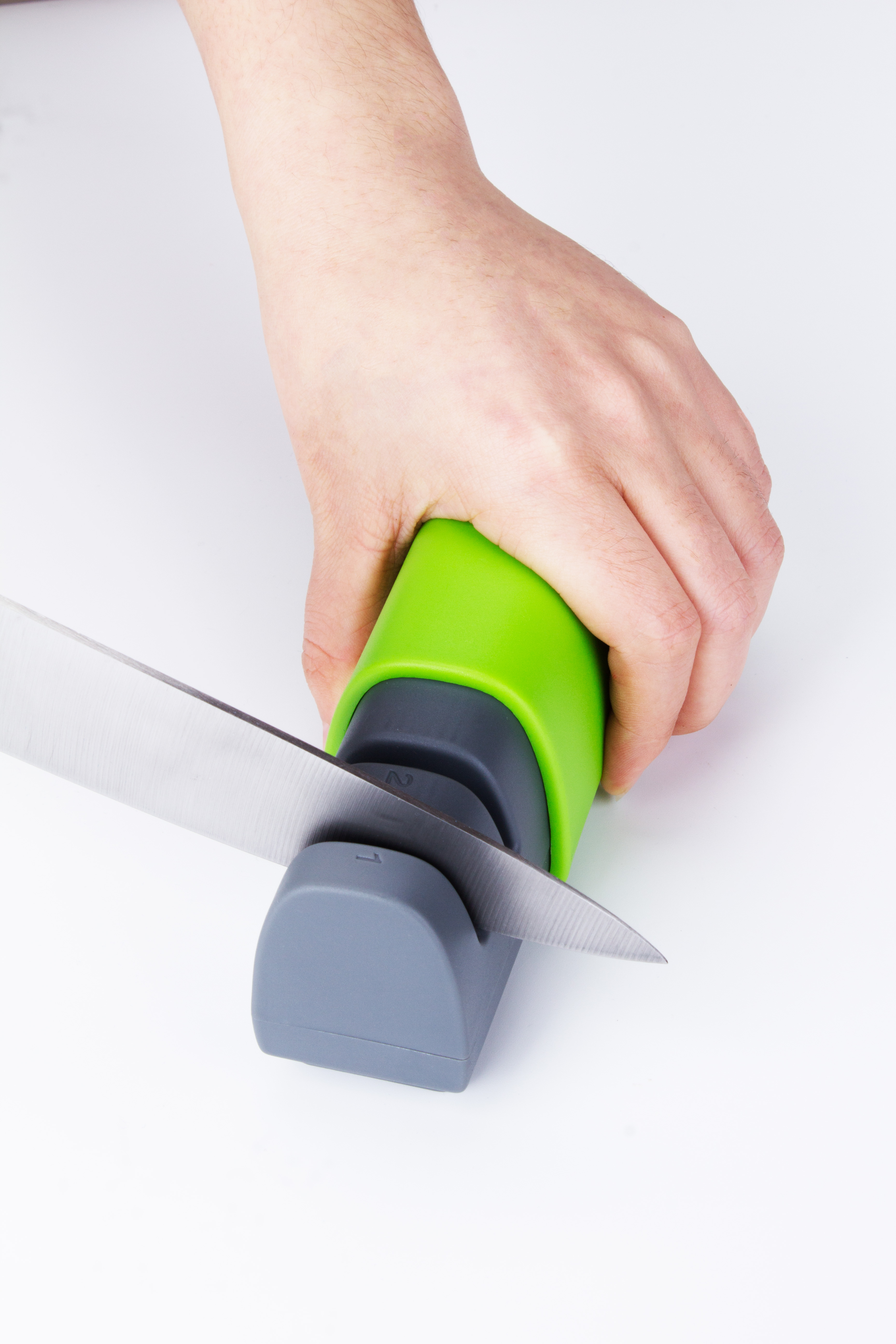
The original product description highlights a compact dual-slot manual knife sharpener in electric green and gray, with a two-stage system using coarse stones for initial shaping and fine stones for honing. It also mentions an ergonomic handle and visual guidance arrows. These are useful features to consider, but buyers should still verify commercial details, performance expectations and packaging requirements directly with the supplier before placing wholesale or OEM orders.
Key Takeaways
- Match the sharpener type to the target user: home kitchen, retail, food service or industrial use.
- Confirm the sharpening stages, abrasive materials, handle design and usage instructions before ordering.
- For wholesale and OEM purchasing, ask about packaging, branding, samples, lead time and after-sales support.
- Do not assume compliance, testing, MOQ or capacity unless the supplier provides written confirmation.
Understand the Search Intent: Supplier, Not Just Product
When a buyer searches for a knife sharpener supplier, they are usually comparing potential partners rather than browsing a single consumer product. The supplier must be able to answer sourcing questions clearly: What models are available? Can the product be customized? Is bulk packaging possible? Are instructions included? How is product consistency controlled? Can replacement orders match the original shipment?
For a manual sharpener such as a dual-slot model, the supplier should explain how the two sharpening slots are intended to be used. The coarse stage is typically for reshaping or restoring a dull edge, while the fine stage is used for honing and finishing. Clear instructions reduce misuse and help distributors, store staff and end users understand the product.
Manual, Wholesale and Industrial Knife Sharpeners Compared
Not every buyer needs the same type of sharpener. A compact manual sharpener may suit kitchenware retail, promotional programs or home-use product lines. Industrial buyers may require heavier-duty sharpening systems for high-volume environments, while food service buyers may prioritize safety, speed and training simplicity. The table below can help clarify the sourcing direction before contacting suppliers.
| Buying Scenario | Best-Fit Sharpener Type | Supplier Questions to Ask |
|---|---|---|
| Retail kitchenware range | Compact manual sharpener with clear instructions | Can you provide retail packaging, user guidance and product photos? |
| Wholesale distribution | Repeatable models suitable for bulk orders | What are the carton details, sample policy, lead time and reorder process? |
| Private label or OEM | Manual sharpener with possible color, logo or packaging options | Which customization options are available, and what files or approvals are needed? |
| Commercial kitchen use | Durable, easy-to-train sharpening solution | How should staff use the coarse and fine stages safely and consistently? |
| Industrial sharpening needs | Purpose-built industrial sharpener or specialist equipment | Is the model designed for the blade type, frequency and working environment? |
Product Features Buyers Should Verify
A supplier may describe a sharpener as durable, convenient or professional, but B2B buyers should translate those claims into verifiable product details. For the featured manual sharpener, explicit details include a dual-slot design, an electric green and gray appearance, a two-stage sharpening system, an ergonomic handle and visual guidance arrows. These features can make the product easier to position for consumer retail or kitchen use.
Before committing to a bulk purchase, request a sample and evaluate:
- Whether the coarse and fine slots are clearly labeled and easy to use.
- Whether the handle feels stable and comfortable during normal sharpening.
- Whether the visual arrows reduce confusion for first-time users.
- Whether the product size and color match your intended sales channel.
- Whether the packaging includes accurate use and safety instructions.
If you need information about abrasive material, suitable knife types, cleaning instructions or expected service life, ask the supplier directly. These details should not be assumed without confirmation.
Questions to Ask a Knife Sharpener Supplier
A good supplier conversation should go beyond price. Procurement teams should prepare questions that reveal whether the supplier can support stable sourcing, product education and repeat business. Important questions include:
- What knife sharpener models are currently available for wholesale orders?
- Can you provide samples for evaluation before bulk purchasing?
- Are OEM color, logo or packaging options available for this model?
- What information is included in the user instructions?
- What are the recommended use cases and any limitations of the sharpener?
- How are products packed for export or domestic distribution?
- What should buyers know about maintenance, cleaning and storage?
- Are any compliance documents, test reports or certificates available for review?
The final question is especially important. Do not rely on general statements such as “high quality” or “safe to use.” Ask for documents relevant to your market and product category, and review them before purchase.
Wholesale and OEM Sourcing Considerations
Wholesale knife sharpeners are often purchased for resale, bundled kitchen sets, promotional channels or distributor inventory. In these cases, consistency is critical. A buyer should confirm whether the same color combination, packaging format and user instructions will be maintained across repeat orders. If a product is described as electric green and gray, confirm the acceptable color tolerance and whether photos represent the final production version.
For OEM or private label projects, ask what customization is practical. Some suppliers may support logo printing, packaging design, color changes or instruction sheet adjustments, but these services may depend on order quantity, tooling, approval time or printing method. Instead of assuming, request a written quotation that separates unit cost, packaging cost, customization charges, sample fees and shipping terms.
Industrial Buyers Need a Different Evaluation
The phrase industrial knife sharpener supplier can cover many needs, from commercial kitchen maintenance to sharpening blades used in production environments. A small manual sharpener may be useful in some kitchen contexts, but it may not be suitable for machinery blades, specialty cutting tools or high-frequency industrial operations. Industrial buyers should provide the supplier with blade type, usage frequency, working environment and safety requirements before requesting a recommendation.
If the supplier offers both manual and heavy-duty options, ask them to identify the correct model for your use case. Also ask whether training guidance, spare parts, maintenance instructions or technical support are available. For demanding environments, suitability matters more than appearance.
Practical FAQ
What makes a knife sharpener supplier reliable?
A reliable supplier gives clear product information, supports sample evaluation, explains suitable use cases and provides written answers about packaging, customization, lead time and documentation.
Is a two-stage manual sharpener suitable for wholesale retail?
It can be, especially when the coarse and fine stages are easy to understand and the product includes clear instructions. Buyers should test samples before placing bulk orders.
Can I use one supplier for both consumer and industrial sharpeners?
Possibly, but the supplier should confirm which models are designed for each use case. Industrial applications may require different equipment and technical guidance.
What should I check before ordering OEM knife sharpeners?
Confirm logo options, packaging artwork requirements, color choices, sample approval process, lead time, carton details and any available compliance documents.
Should I ask for certifications or testing reports?
Yes. Ask what documents are available for your market and product category, then review them before purchasing. Do not assume a claim is valid without written support.
Final Sourcing Advice
A good knife sharpener supplier should help you choose the right product for the channel, not simply offer the lowest price. For a compact dual-slot manual sharpener, focus on user clarity, handling comfort, packaging accuracy and consistent reorder support. For wholesale, OEM or industrial sourcing, document every requirement before confirming an order. The best purchasing decision is one that balances product fit, supplier communication and verifiable details.
