




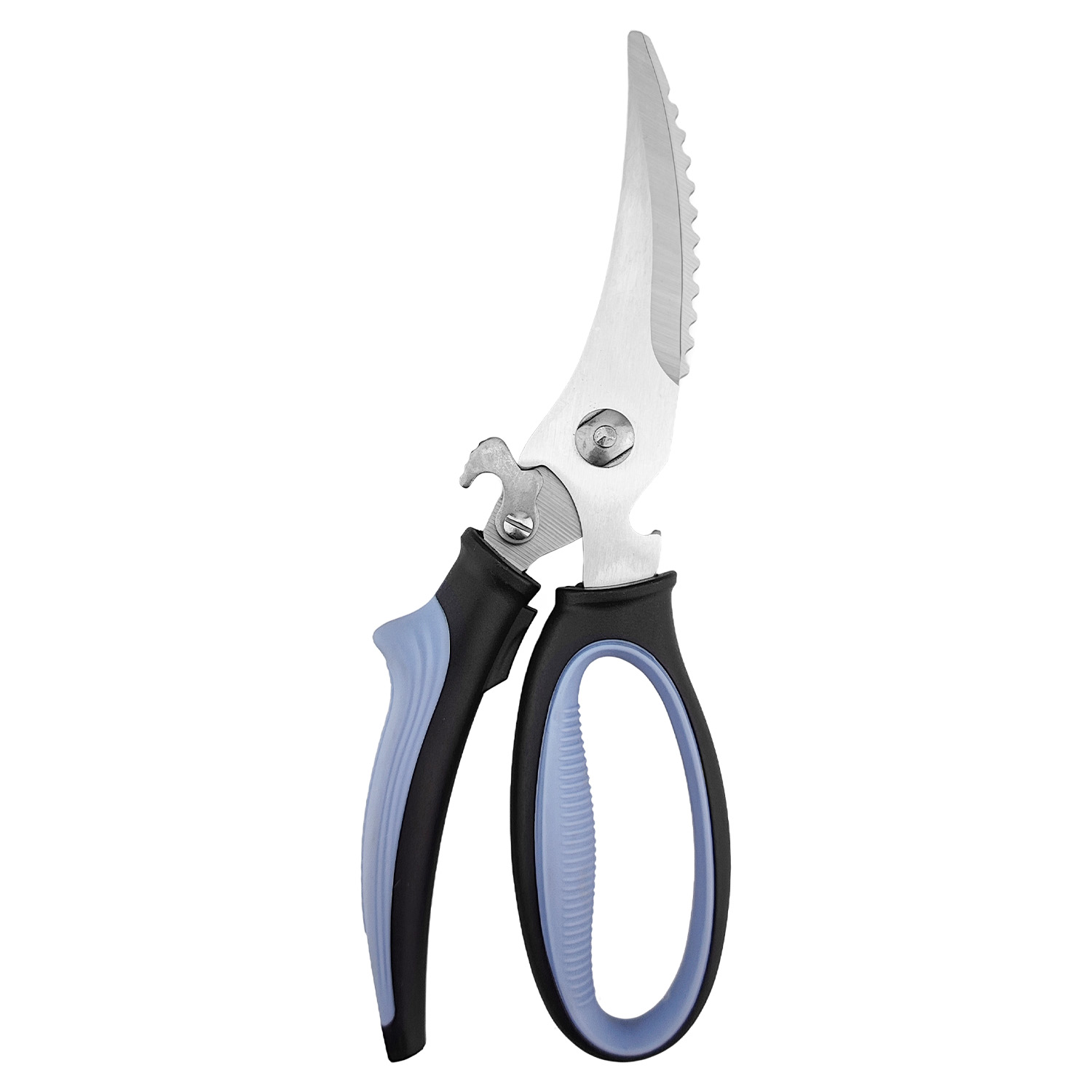
Dynamic Multifunctional Kitchen Shears: OEM Poultry Scissors Buying Guide
For kitchenware importers, private-label brands, distributors, and hospitality suppliers, OEM poultry scissors are not just another accessory. They sit in a practical category where performance, comfort, safety, packaging, and repeatable quality all matter. A buyer may be sourcing for retail shelves, e-commerce bundles, restaurant supply, or promotional kitchen sets, but the core question is the same: will the shears cut reliably, feel secure in the hand, and meet the expectations of the target market?
The Dynamic Multifunctional Kitchen Shears described in the original product article are positioned as stainless steel poultry scissors with kitchen bone cutting capability, a serrated blade section, ergonomic soft non-slip handles, and additional functions such as nut cracking and bottle cap opening. Those are useful features, but B2B buyers should evaluate them carefully through samples, supplier questions, and clear specifications before placing an OEM or wholesale order.

What Makes Poultry Scissors Different from Regular Kitchen Scissors?
Standard kitchen scissors are often used for herbs, paper packaging, light food prep, or trimming thin cuts of meat. Poultry scissors need to handle more demanding work, including cutting through joints, skin, cartilage, and small bones. That difference affects blade geometry, pivot strength, handle shape, and overall balance.
For OEM sourcing, the word “poultry” should not be treated as a simple marketing label. Ask the supplier what cutting tasks the model is designed for and what limitations should be communicated to end users. If the shears are intended for chicken, duck, fish, vegetables, and general kitchen prep, the product page and packaging should describe those uses accurately without overstating performance.
Core Product Features to Evaluate
The original article highlights several explicit features: stainless steel blades, a serrated section on one blade, ergonomic soft non-slip grip, and multifunctional use for cracking nuts and opening bottle caps. These can be valuable, but the details should be confirmed in writing when sourcing from any poultry scissors manufacturer or bone scissors supplier.
- Blade material: The source states stainless steel. Buyers should ask the exact steel type, hardness range, surface finish, and corrosion-resistance expectations.
- Serrated blade section: A serrated area can help grip slippery foods such as poultry skin or fish. Request close-up photos and samples to assess the tooth pattern.
- Pivot construction: The pivot must remain stable under repeated cutting pressure. Ask whether the screw or rivet can be adjusted, serviced, or replaced.
- Handle comfort: Soft non-slip handles can reduce fatigue, but buyers should test grip comfort with different hand sizes and wet conditions.
- Multifunction design: Nut cracking and bottle cap opening features are convenient, but they should not weaken the cutting structure or create difficult-to-clean crevices.
Comparison Checklist for OEM Poultry Scissors
Use the following checklist when comparing samples from different suppliers. It is designed for buyers who need consistent quality rather than a one-time purchase.
| Evaluation Area | What to Check | Questions to Ask the Supplier |
|---|---|---|
| Cutting performance | Clean cutting through poultry joints, skin, herbs, and packaging | What food materials was the sample tested on, and can the test method be shared? |
| Blade construction | Stainless steel finish, edge consistency, serration quality | What stainless steel grade and hardness range are used? |
| Handle design | Comfort, grip security, left/right-hand usability | Can handle color, texture, or logo placement be customized? |
| Cleaning | Food residue traps, pivot area, detachable or non-detachable design | What care instructions should appear on packaging? |
| Packaging | Retail card, box, insert, barcode area, private label space | What packaging formats are available for OEM or wholesale orders? |
| Quality control | Sharpness consistency, alignment, opening/closing smoothness | What inspection points are used before shipment? |
OEM and Private Label Sourcing Guidance
When the buying intent is OEM poultry scissors, the conversation should move beyond appearance. A strong supplier discussion should cover specification control, production consistency, packaging, and after-sales responsibility. Avoid relying only on catalog photos. Request production samples, not only showroom samples, and test them in the same conditions your customers will use them.
Important sourcing questions include:
- Can the supplier provide the exact blade material specification and surface treatment options?
- What customization is available for handle color, logo, packaging, instruction inserts, or bundle sets?
- How are blade sharpness, alignment, handle bonding, and pivot strength inspected?
- What are the lead time, minimum order quantity, sample cost, and payment terms?
- Can the supplier support replacement parts, spare packaging, or defect handling procedures?
- What compliance documents or test reports are available for the destination market, if required?
Do not assume certifications, food-contact compliance, or market-specific documentation unless the supplier provides current records. Requirements may differ by country and selling channel, so buyers should confirm the exact documents needed for their market.
Use Cases for Wholesale and Retail Buyers
Kitchen bone scissors can serve several sales channels. For retail, they may be packaged as a premium kitchen prep tool. For e-commerce, the product listing can focus on practical tasks such as cutting poultry, trimming meat, preparing seafood, cutting vegetables, opening bottles, or cracking nuts. For restaurant supply, durability and cleaning convenience may be more important than decorative packaging.
Private-label brands should define the end user before finalizing design. A household user may prioritize comfortable handles and easy storage. A foodservice user may care more about repeated cutting performance and fast cleaning. A gift set buyer may require attractive packaging, but the tool still needs to perform well after the first use.
Quality, Safety, and Care Considerations
Because poultry scissors are used on raw meat, care instructions are important. Even when blades are stainless steel, buyers should provide practical guidance to reduce rust risk, odor, and cross-contamination. If dishwasher use is claimed, it should be confirmed by the supplier and supported by the product design. If not confirmed, hand washing and immediate drying are safer recommendations.
Useful care guidance for end users may include washing after contact with raw poultry, drying before storage, keeping the pivot clean, and storing the shears away from children. If the blades are very sharp, packaging should include a protective cover or clear warning language where appropriate. For B2B buyers, these details can reduce complaints and improve customer satisfaction.
Key Takeaways
- OEM poultry scissors should be evaluated by cutting performance, comfort, cleaning ease, and supplier quality control.
- The product features explicitly noted include stainless steel blades, serration, ergonomic soft non-slip handles, nut cracking, and bottle cap opening.
- Buyers should confirm material grade, testing, packaging, MOQ, lead time, and compliance documents directly with the supplier.
- Samples should be tested with realistic kitchen tasks before any private-label or wholesale order.
FAQ
Are poultry scissors the same as kitchen scissors?
No. Poultry scissors are usually designed for tougher food-prep tasks such as cutting poultry joints, skin, cartilage, and small bones. Regular kitchen scissors may not have the blade strength, grip, or pivot stability needed for those uses.
What should buyers ask a poultry scissors manufacturer first?
Start with blade material, hardness range, pivot construction, handle customization, packaging options, quality inspection process, sample availability, MOQ, lead time, and any documents required for your destination market.
Can these shears be sold as multifunctional kitchen scissors?
The original product description includes functions such as cutting, nut cracking, and bottle cap opening. Buyers should verify each function on physical samples and ensure packaging claims match actual performance.
How should OEM poultry scissors be tested before ordering?
Test sample shears on poultry joints, slippery skin, herbs, packaging, and the additional functions claimed. Check comfort, alignment, sharpness consistency, cleaning difficulty, and whether the handles remain secure under pressure.
Should commercial buyers request certifications?
Yes, when required by the sales market or channel. Do not assume certification or compliance status. Ask the supplier what documents are available and verify whether they meet your importing and retail requirements.
