




EcoFlex Shears: OEM Scissors Sourcing Guide for Buyers
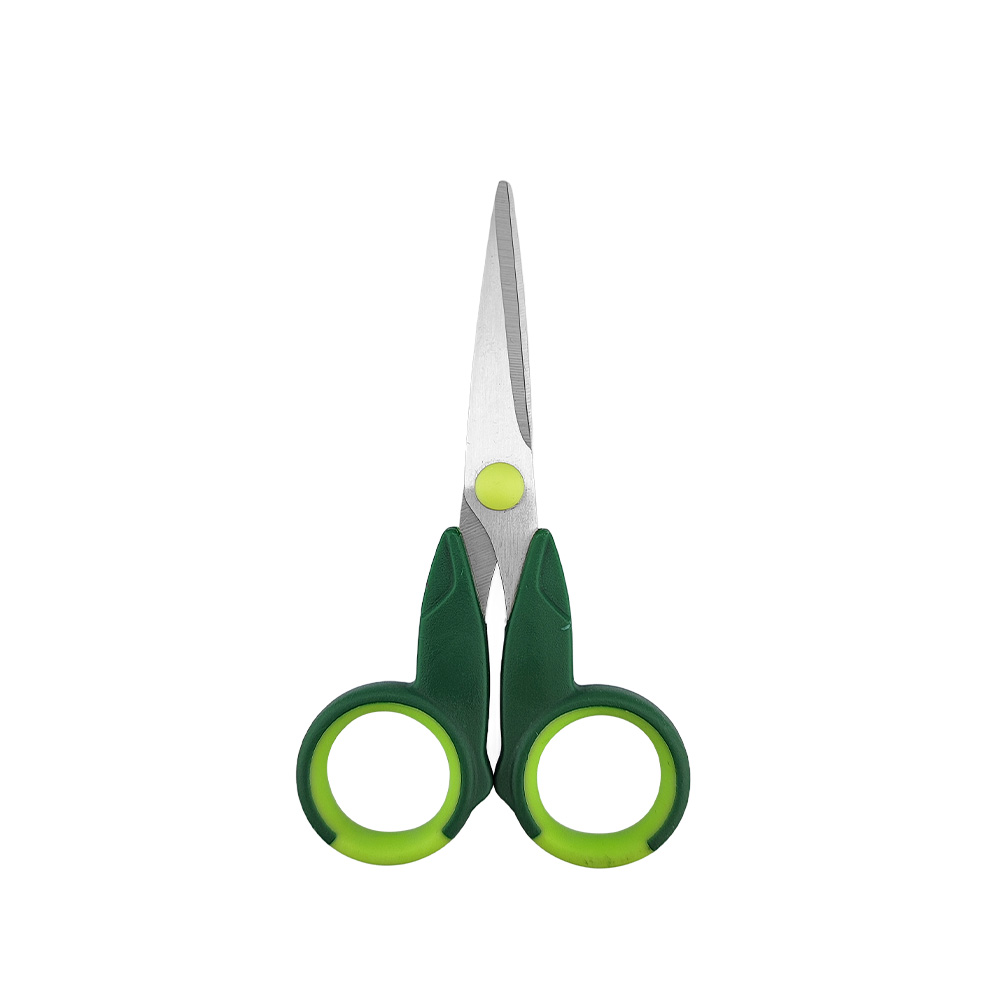
For retailers, importers, promotional product companies, and household goods brands, sourcing OEM scissors is not just about finding a sharp blade. The right product has to feel comfortable, cut consistently, fit the intended retail position, and be supported by a supplier that can answer technical and commercial questions clearly. EcoFlex Shears are presented as a household scissors option with a dual-tone green design, soft-touch handle material, lime green handle cushioning, and stainless steel blades with precision-ground edges. Those are useful starting points, but B2B buyers should still evaluate samples, documentation, packaging, and quality controls before placing an order.
Key Takeaways
- Assess OEM scissors by handle comfort, cutting consistency, blade alignment, packaging suitability, and supplier responsiveness.
- Do not rely on claims such as eco-friendly materials without asking for the exact material description and supporting documentation.
- Request pre-production samples and define inspection criteria before confirming bulk production.
- For custom scissors manufacturing, clarify logo placement, color matching, packaging artwork, lead time, and approval steps in writing.
What Makes EcoFlex-Style Shears Relevant for OEM Programs?
EcoFlex Shears are positioned as household scissors that combine comfort-focused handles with practical cutting performance. The original product description highlights a dual-tone green look, a soft-touch handle, a bright lime green cushion inside the handle rings, and stainless steel blades. These features make the product relevant for buyers developing private-label kitchen, office, craft, or general household cutting tools.
For an OEM program, however, the question is not only whether the scissors look appealing. Buyers should determine whether the design supports their target user. A craft retailer may prioritize smooth cutting through paper and fabric. A household brand may care more about safe storage, user comfort, and packaging clarity. A promotional buyer may focus on logo visibility and color consistency. Define the intended use first, then evaluate whether the sample supports that use.
Handle Comfort and Ergonomics to Check
The handle is often the first thing end users notice. The EcoFlex description emphasizes a soft-touch material and cushioned handle rings intended to reduce finger strain during prolonged use. In sample evaluation, buyers should test whether the handle remains comfortable during repeated opening and closing, not just during a quick first impression.
Ask several testers with different hand sizes to use the scissors for common tasks. Check whether the rings create pressure points, whether the cushion stays firmly in place, and whether the grip feels secure when hands are dry or slightly damp. The source article states that the design is suitable for both left- and right-handed users. Buyers should confirm this with actual users, especially if the final market includes schools, offices, or mixed household users.
Blade Performance and Material Questions
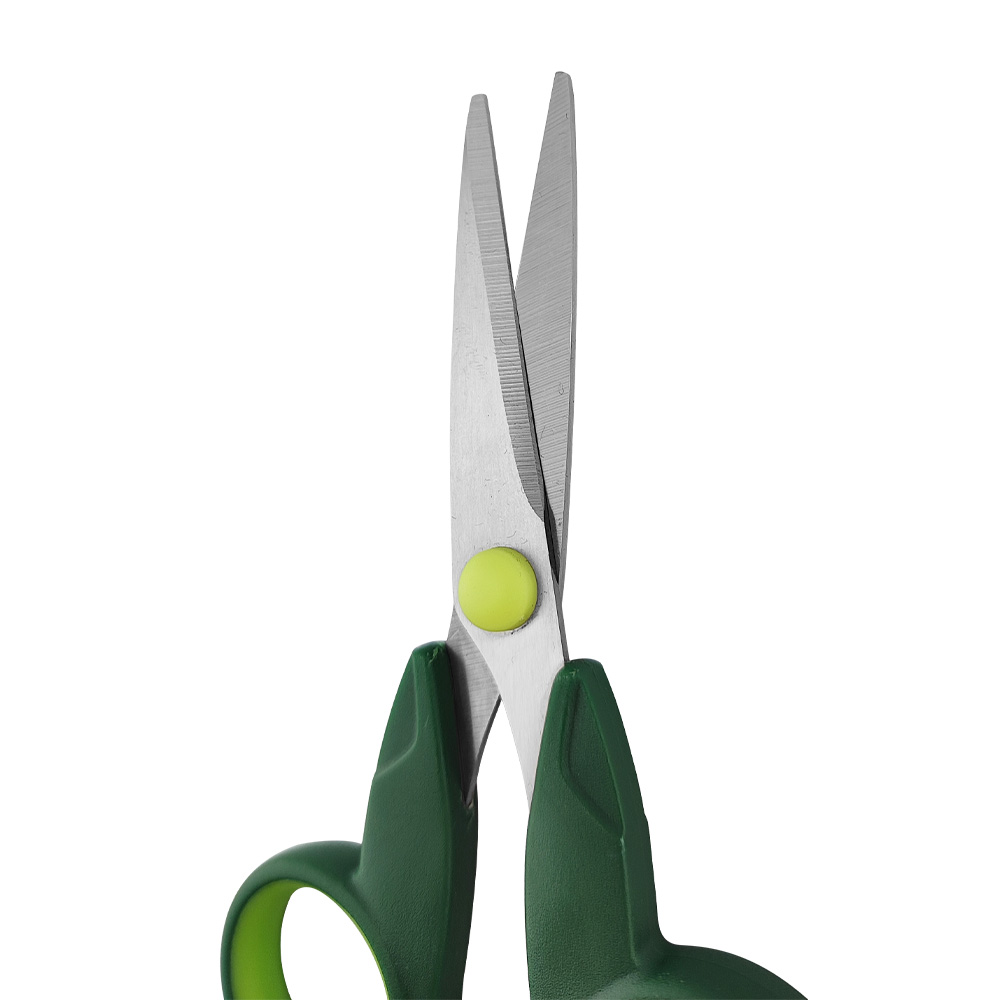
The original description states that the blades are made from high-quality stainless steel and have precision-ground edges. For sourcing purposes, buyers should translate that into testable questions. What stainless steel type is used? How is the edge ground and finished? What cutting tests does the supplier recommend? How should the scissors be maintained by consumers?
Samples should be tested on materials that match the product positioning. If the scissors are marketed for household use, test paper, food packaging, thin cardboard, thread, and common craft materials. If the product is intended for heavier craft use, test thicker cardstock and fabric swatches. Look for smooth cutting, clean edges, no blade separation, and no excessive hand force. Also check whether the pivot screw or rivet remains stable after repeated use.
Comparison Checklist for OEM Scissors Buyers
| Evaluation Area | What to Check | Questions to Ask the Supplier |
|---|---|---|
| Handle design | Comfort, grip security, cushion fit, left- and right-hand usability | Can handle colors, cushion colors, or materials be customized? |
| Blade quality | Cutting smoothness, alignment, edge consistency, pivot stability | What stainless steel type is used, and what blade finish options are available? |
| Branding | Logo visibility, print durability, placement limits | Which logo methods are supported, and can samples be made before approval? |
| Packaging | Retail display fit, barcode area, safety information, shipping protection | Can the supplier provide dielines, artwork requirements, and packaging samples? |
| Quality control | Inspection criteria, defect definitions, sample retention | What in-process and final inspection steps are used for scissors orders? |
Customization Options to Clarify Early
OEM scissors projects often involve more than choosing a color. Buyers may need private-label packaging, a printed logo, an adjusted handle color, a different blade finish, or assortment packaging. Before requesting a quotation, prepare a specification sheet that separates required features from optional preferences.
- Confirm the target market and intended cutting tasks.
- List the preferred handle color, cushion color, and branding position.
- Ask whether the existing shape can be customized or only decorated.
- Request packaging options, including retail card, blister pack, or bulk packing if applicable.
- Clarify artwork format, approval process, sample cost, lead time, and revision limits.
If sustainability language is important to your brand, ask the supplier to define the soft-touch or eco-friendly material precisely. Request any available material information or supporting documents rather than using broad environmental claims without verification.
Quality Control Points Before Mass Production
A good-looking sample does not guarantee a consistent shipment. Buyers should agree on inspection standards before production starts. For scissors, practical checks include blade alignment, sharpness, handle molding quality, cushion placement, opening and closing smoothness, surface scratches, rust spots, logo accuracy, and packaging condition.
It is also useful to keep approved reference samples. One sample can remain with the buyer and one with the supplier, helping both sides compare production output against an agreed standard. If third-party inspection is planned, provide the inspector with measurable criteria and photos of approved samples. Avoid vague instructions such as “good quality” because they leave too much room for interpretation.
Packaging, Shipping, and Retail Readiness
Packaging should protect the scissors and communicate their intended use clearly. For retail, consider whether the consumer can see the handle shape, blade length, and color. Packaging should also have enough space for branding, barcodes, warnings, care instructions, and any market-specific labeling the buyer requires. Do not assume the supplier knows your destination market requirements; provide them in writing or consult a qualified compliance professional.
For shipping, ask how the scissors will be packed to reduce blade movement, handle rubbing, and carton damage. If the order includes display packaging, request transit testing information or conduct your own drop and vibration checks where appropriate. A product that looks excellent at the factory can still disappoint customers if it arrives with bent cards, scratched blades, or loose packaging.
Practical FAQ
Are EcoFlex Shears suitable for private-label household scissors lines?
They may be suitable if the sample meets your target cutting tasks, comfort expectations, packaging needs, and price position. Ask the supplier which customization options are available before building your assortment around the design.
What should buyers test before approving OEM scissors?
Test cutting performance, blade alignment, pivot stability, handle comfort, cushion durability, logo quality, and packaging protection. Use materials that match the intended consumer use, such as paper, fabric, packaging film, or cardstock.
Can buyers claim the scissors are eco-friendly?
Only use environmental claims that can be supported. The product description mentions an eco-friendly soft-touch handle material, but buyers should ask for the exact material details and any supporting documentation before using sustainability claims in marketing.
What information is needed for an accurate quotation?
Provide target quantity, customization requirements, packaging type, destination market, artwork needs, sample expectations, and any inspection requirements. Also ask about lead time, payment terms, and how changes are handled after sample approval.
How can importers reduce quality disputes?
Approve reference samples, define inspection criteria in writing, confirm packaging artwork carefully, and document acceptable defect limits. Clear specifications are the best way to align expectations with the supplier before production begins.
Final Sourcing Advice
EcoFlex-style OEM scissors offer a practical base for household, craft, office, or promotional product programs when the design matches the end user’s needs. The dual-tone green handle, cushioned grip, and stainless steel blades give buyers useful features to evaluate, but purchasing decisions should be based on samples, documentation, and clear production requirements. Treat every claim as something to verify, every customization as something to document, and every shipment as something that needs defined quality checks. That approach helps turn a promising scissors design into a reliable private-label product.
