




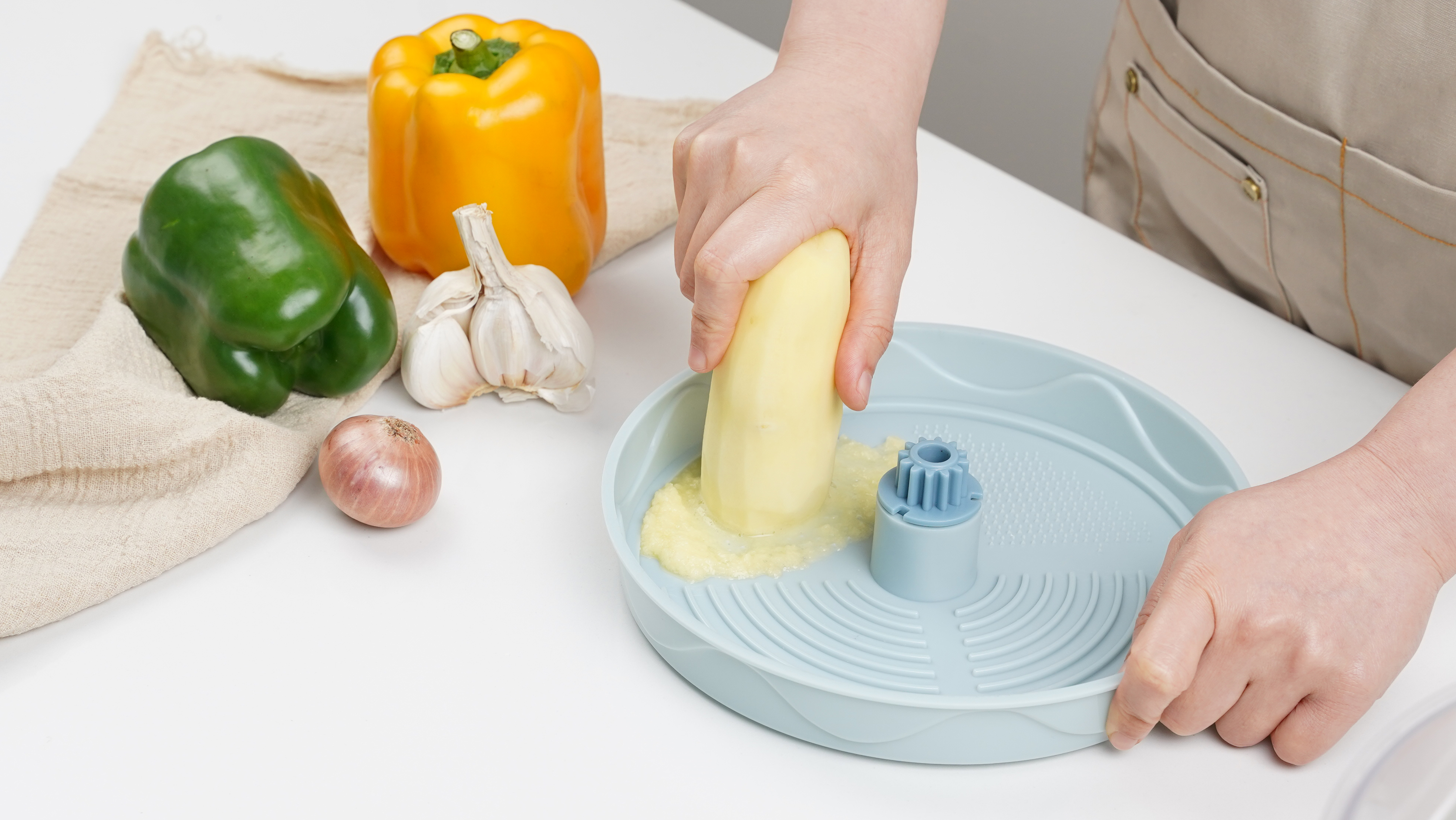
Multi-Functional Vegetable Cutting Basket Buying Guide
A multi-functional vegetable cutting basket is designed to simplify everyday vegetable preparation by combining holding, slicing support, rinsing, and compact storage in one kitchen accessory. For home cooks, small food-service teams, and kitchenware buyers, the right choice depends less on broad promises and more on practical details: how stable it feels in use, how evenly it helps guide cuts, how quickly it cleans, and whether it fits the kitchen workflow.
The original Slice-Master Plus description highlights several explicit product points: a vegetable cutting basket concept, uniform slicing support, food-safe plastic, a gray smooth finish with a light blue base, supportive grip, easy cleaning, dishwasher-safe use, and compact storage. This guide explains how to assess those claims in a useful way before purchase or sourcing discussions.
Key Takeaways
- Choose a vegetable cutting basket based on stability, cleaning access, storage size, and the type of vegetables you prepare most often.
- Food-safe plastic is a useful starting point, but buyers should ask suppliers what standard or declaration supports that claim.
- Dishwasher-safe cleaning can save time, but confirm temperature limits and whether the part should be placed on the top rack.
- For wholesale, OEM, or factory sourcing, request samples and written answers on materials, packaging, quality checks, and replacement-part policy.
What a Vegetable Cutting Basket Is Used For
A kitchen cutting basket is generally used to hold vegetables while they are rinsed, positioned, or cut into more consistent pieces. It can be especially helpful when preparing cucumbers, carrots, potatoes, onions, leafy vegetables, or other ingredients that need repeated handling. Instead of moving food between several tools, the basket can reduce unnecessary transfer steps.
It is important to view this kind of tool as preparation support, not as a replacement for safe knife skills or a stable cutting board. A good vegetable cutting basket should make prep more controlled. It should not encourage rushed cutting, awkward hand placement, or excessive force.
Design Details That Matter in Daily Use
The Slice-Master Plus is described as having a gray smooth finish and a light blue base. Color and finish are not only visual details; they can also affect how easy the product is to inspect for leftover food. Smooth surfaces are usually easier to rinse than heavily textured areas, while color contrast may help users see residue after cutting darker or lighter vegetables.
A supportive grip is another useful feature because vegetable preparation often happens with wet hands. When evaluating a cutting basket, check whether the grip remains comfortable when the basket is full, rinsed, or slightly slippery. If the tool shifts under pressure, the user may need to slow down or switch to a different setup.
Comparison Checklist for Selection
| Selection Point | Why It Matters | What to Check Before Buying |
|---|---|---|
| Slicing support | Helps produce more uniform pieces during prep | Test common vegetables and check whether the guide position feels natural |
| Grip and stability | Reduces slipping and awkward handling | Try holding it with dry and wet hands, with both light and heavier contents |
| Cleaning access | Food can collect in corners or slots | Look for reachable surfaces and ask whether it is dishwasher-safe |
| Material statement | Food contact products need suitable materials | Ask what supports the food-safe plastic claim and request documentation if sourcing |
| Storage footprint | Compact kitchens need tools that store easily | Measure cabinet, drawer, or shelf space before ordering in quantity |
Use-and-Care Guidance for Home Kitchens
To get the most from a multi-functional vegetable cutting basket, use it for tasks where guided positioning and quick rinsing are genuinely helpful. Wash vegetables first when appropriate, trim hard ends, and avoid forcing oversized pieces through any cutting area. If the basket is being used with a knife, keep fingers away from the cutting path and work at a controlled pace.
- Rinse the basket before first use and after each preparation session.
- Cut large vegetables into manageable sections before placing them in the basket.
- Use a stable surface so the basket does not rock or slide.
- Clean immediately after sticky, starchy, or strongly colored foods.
- Allow the basket to dry fully before storage to reduce trapped moisture.
The original article states that the product is dishwasher-safe. Even so, users should check care instructions from the seller because dishwasher temperatures, rack placement, and drying cycles vary. If guidance is unclear, hand washing with mild detergent is the safer default.
Questions for Wholesale, OEM, or Factory Buyers
Because the original article mentions vegetable cutting basket factory design, B2B buyers should treat sourcing as a verification process. Do not rely only on product photos or short descriptions. Ask direct questions and compare answers across suppliers before placing a larger order.
- What exact material is used, and what documentation supports food-contact suitability?
- Is the dishwasher-safe claim tested internally or by a third party, and under what conditions?
- Can the supplier provide pre-production samples for grip, finish, color, and packaging review?
- What quality checks are performed for sharp edges, warping, fit, surface defects, and color consistency?
- What are the available packaging options, carton details, lead times, MOQ, and after-sales handling process?
These questions help buyers avoid misunderstandings without requiring the supplier to make unsupported claims. They also create a clearer basis for comparing a standard order, a private-label order, or an OEM customization request.
How to Judge Value Without Overbuying
A vegetable cutting basket is valuable when it solves repeated prep problems. If a kitchen often prepares salads, stir-fry vegetables, soup ingredients, or meal-prep portions, a compact tool that supports rinsing and cutting can save handling time. If vegetables are prepared only occasionally, easy cleaning and storage may matter more than advanced features.
For retailers and distributors, value also includes shelf presentation, packaging clarity, instruction quality, and return risk. A concise instruction insert can reduce misuse and customer complaints. Clear care language is especially important when dishwasher-safe cleaning is promoted.
Practical FAQ
Is a multi-functional vegetable cutting basket the same as a slicer?
Not necessarily. A cutting basket may support slicing or positioning, but buyers should check the actual design and included components before assuming it works like a standalone slicer.
Can it replace a cutting board?
It should not be treated as a complete replacement for a stable cutting board. Use the basket only in ways recommended by the seller and keep cutting motions controlled.
What vegetables work best?
Common prep items such as cucumbers, carrots, potatoes, onions, and leafy vegetables may be suitable, depending on size and firmness. Very hard or oversized items should be trimmed first.
How should B2B buyers verify quality?
Request samples, inspect grip and finish, test cleaning, confirm packaging, and ask for written material and care information. For food-contact products, documentation should be discussed before bulk purchase.
What should consumers check before purchase?
Look for stable handling, reachable cleaning areas, compact storage, clear care instructions, and a design that matches the vegetables you prepare most often.
