




Engaging and Safe OEM School Scissors for Kids
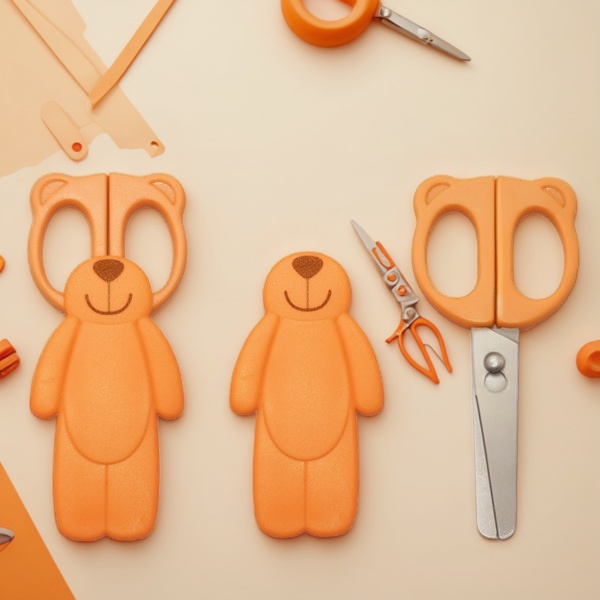
OEM school scissors are small classroom tools, but they carry important responsibilities. For schools, stationery distributors, promotional buyers, and children’s product brands, the right scissors need to support cutting practice while reducing avoidable risk. The original product example features a bear-shaped design, vibrant orange handles, and a secure blade cover, giving it a playful appearance that can help children feel more comfortable during arts and crafts activities.
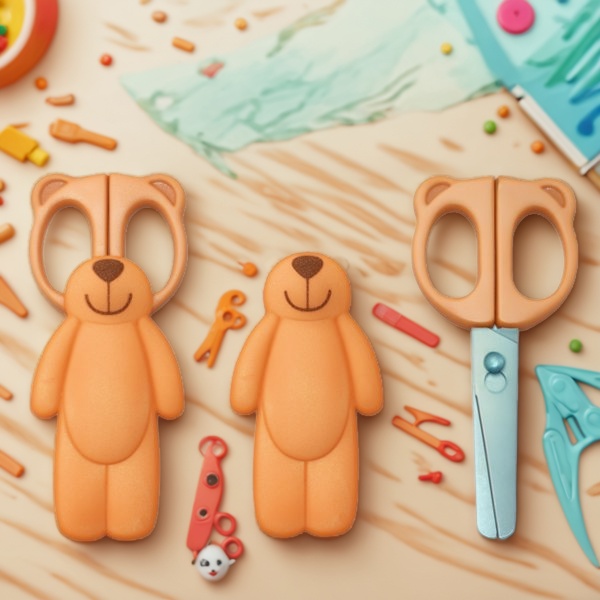
For OEM sourcing, however, appearance is only one part of the decision. Buyers should review safety structure, handle comfort, packaging, labeling, production consistency, and how the item fits the intended age group and sales channel. This guide explains how to evaluate OEM school scissors for kids without relying on vague claims or assumptions.
What Makes OEM School Scissors Different?
OEM school scissors are typically developed for a brand, retailer, school supply program, or distributor that needs a customized product. Customization may involve color, handle shape, cover design, packaging, logo placement, or assortment planning. In the featured example, the bear-shaped cover and orange handles are the most visible design elements.
Because these scissors are intended for children, the sourcing process should be more careful than for general office scissors. A buyer should not only ask, “Does it look attractive?” but also, “Can children hold it comfortably, can teachers manage it in bulk, and what safety information can the supplier provide?”
Child-Friendly Design: Fun Should Support Usability
A playful design can encourage children to participate in paper cutting, craft lessons, and fine motor skill practice. The bear-shaped detail in this product gives the scissors a friendly character, while the bright orange handles make the tool easy to spot in a classroom tray or stationery kit.
Still, design should not interfere with control. When reviewing samples, buyers should check whether the handle openings suit the target age group, whether the scissors open and close smoothly, and whether the cover stays in place during storage. If adults may also assist children, the handle should be practical enough for quick guidance during classroom activities.
- Check whether the shape attracts children without adding awkward bulk.
- Confirm that the handle grip is comfortable for the intended users.
- Test whether the blade cover is easy for adults to use but not loose in storage.
- Review color options if the product will be sold as part of a stationery set.
Safety Considerations Buyers Should Verify
The source product highlights an enclosed blade and bear-shaped cover designed to help prevent accidents. That is useful, but B2B buyers should still request detailed information instead of assuming suitability for every market. Children’s products are often subject to different requirements depending on destination country, sales channel, age grading, and packaging claims.
Before placing an OEM order, ask the supplier what safety documentation, test reports, or compliance information is available for the specific model and packaging. Do not rely on general factory statements. The exact product, materials, decoration, and packaging should match the item being tested or supplied.
OEM Sourcing Checklist for School Scissors
| Review Area | What to Check | Questions to Ask the Supplier |
|---|---|---|
| Safety structure | Blade enclosure, cover fit, edge exposure, pinch points | What safety tests or reports are available for this exact model? |
| Age suitability | Handle size, opening force, classroom supervision needs | What age range is the product designed for, and how is that supported? |
| Materials | Handle, cover, and blade material information | Can you provide material details and any related documentation? |
| OEM customization | Color, logo, packaging, character shape, label language | Which parts can be customized, and what are the artwork requirements? |
| Quality consistency | Sample-to-bulk matching, cover retention, cutting performance | How is bulk production inspected before shipment? |
| Commercial terms | MOQ, lead time, carton packing, payment terms | What are the current order terms for this product and packaging option? |
Comparing Classroom, Retail, and Promotional Use
Not every buyer needs the same version of children’s scissors. A school distributor may prioritize durability, clear labeling, and bulk packaging. A retail brand may focus on shelf appearance, barcode placement, and multilingual instructions. A promotional buyer may need a compact item that fits into a back-to-school kit.
For classroom use, the most important points are easy identification, safe storage, and consistent performance across many units. For retail, packaging must explain the product clearly and avoid unsupported claims. For OEM branding, artwork should be checked carefully because small handles and covers may limit logo size or printing methods.
Sample Evaluation Before Bulk Orders
Samples are essential for OEM school scissors. A photo can show the bear shape and orange handles, but it cannot confirm hand feel, cover security, or cutting performance. Buyers should request pre-production samples when customization is involved, especially if colors, packaging, or logo placement change from the standard item.
- Inspect the sample visually for sharp edges, burrs, loose parts, and color consistency.
- Test the opening and closing action repeatedly to see whether movement remains smooth.
- Try the scissors on typical classroom materials such as paper and craft sheets, if appropriate for the design.
- Check whether the blade cover attaches securely after repeated use.
- Compare the final sample with the approved artwork, packaging layout, and labeling.
Packaging and Labeling Questions
Packaging is often overlooked, but it affects both safety communication and market acceptance. For children’s scissors, packaging may need age information, warnings, importer details, barcode requirements, recycling symbols, or local language content depending on the market. Buyers should ask the supplier what packaging formats are available and whether custom packaging can be produced for the target channel.
If the scissors are sold online, clear product images and accurate descriptions are also important. Avoid unsupported statements such as guaranteed safety or unverified material claims. Instead, describe visible features accurately, such as the bear-shaped cover, orange handles, and child-oriented design.
Use and Care Guidance for Schools and Parents
Even safety-focused scissors should be used with supervision when children are learning. Teachers and parents can help children cut in a seated position, keep fingers away from the cutting path, and return the cover after use. Scissors should be stored in a container, pouch, or classroom organizer when not in use.
Regular checks are also useful. If a cover becomes loose, a handle cracks, or cutting action becomes difficult, the scissors should be removed from use. For schools managing many pairs, a simple inspection routine at the start or end of a craft unit can prevent damaged tools from remaining in circulation.
Key Takeaways
- OEM school scissors should be evaluated for safety, comfort, packaging, and consistency, not only appearance.
- The featured design includes a bear-shaped cover and vibrant orange handles that may appeal to children.
- Buyers should ask suppliers for product-specific safety, material, customization, MOQ, and inspection details.
- Samples should be tested before bulk production, especially for customized OEM orders.
FAQ
Are bear-shaped school scissors suitable for all children?
Not automatically. Suitability depends on the child’s age, hand size, supervision level, and the product’s tested safety information. Buyers should ask the supplier for the intended age range and supporting documentation.
What should OEM buyers confirm before ordering?
Confirm available customization, sample approval process, packaging options, MOQ, lead time, inspection method, and any product-specific safety or material documents relevant to the destination market.
Can the handles, cover, or packaging be customized?
OEM customization may be possible, but buyers should verify which elements can be changed, whether tooling is required, and how logo or artwork placement will affect cost and lead time.
How should schools maintain children’s scissors?
Schools should store scissors with covers attached, inspect them regularly for damage, and remove any pair with loose parts, cracked handles, or poor cutting action.
