




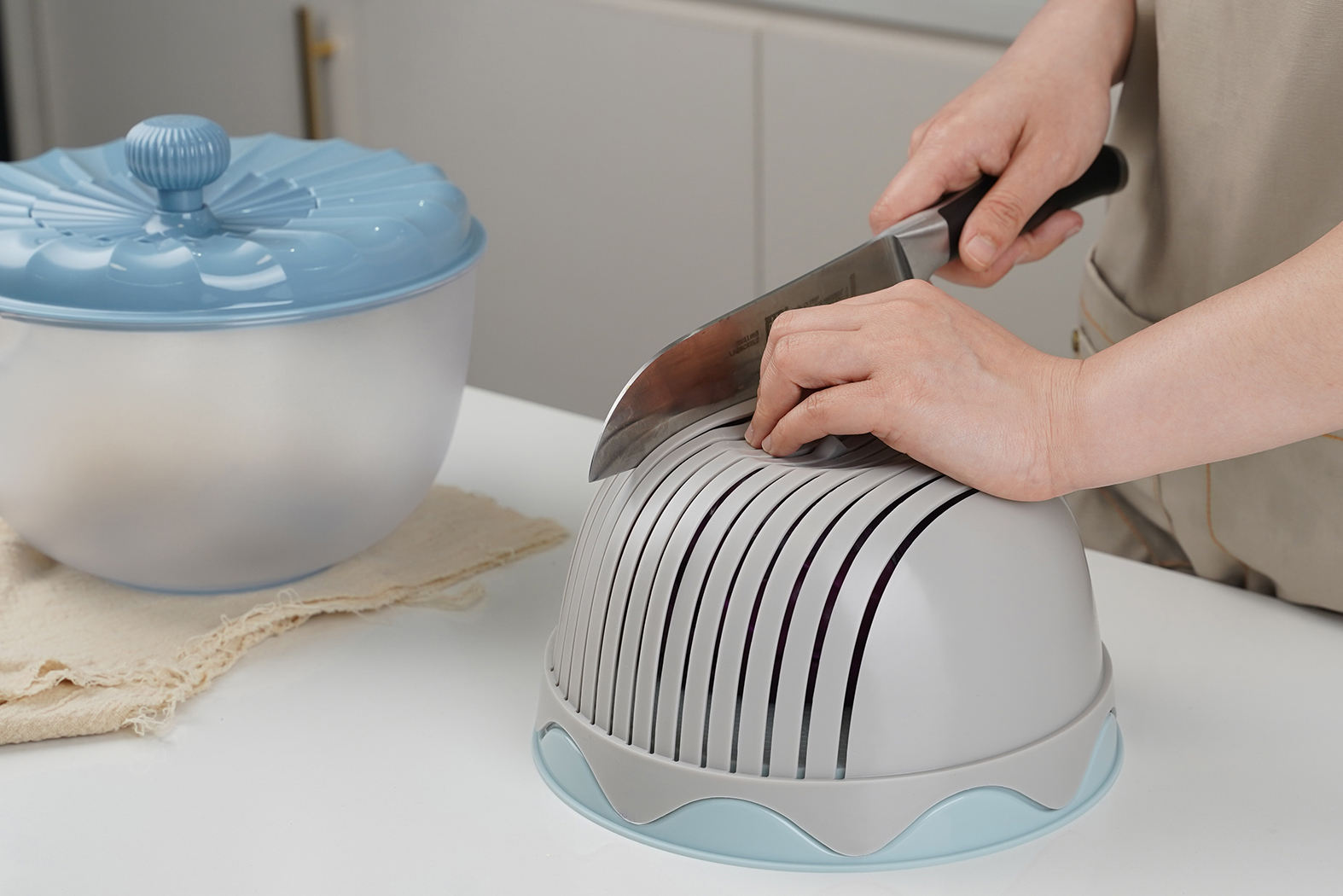
Enhance Your Kitchen with a Multi-functional Vegetable Cutting Basket
A multi-functional vegetable cutting basket is designed for people who prepare salads, sliced vegetables, and quick side dishes often. Instead of moving produce between a bowl, cutting board, and colander, this type of basket can help hold vegetables in place while you cut through guided slots. The original product description highlights a dome-like structure, curved shape, sturdy base, pastel blue wave design, and food-grade materials. Those details make it especially relevant for home cooks who want a compact prep aid, but the real value depends on how well it fits your habits, knife skills, and cleaning routine.
What Is a Multi-functional Vegetable Cutting Basket?
A vegetable cutting basket is a kitchen prep tool that combines a holding basket with cutting guides. The basket shape supports ingredients such as leafy greens, cucumbers, bell peppers, and other salad vegetables. Slots in the body of the basket create channels where a knife can pass through, helping the user make repeated cuts with more control. This can reduce the need to hold slippery vegetables directly on a flat board.
It is not a replacement for every cutting task. Hard root vegetables, large produce, herbs requiring fine mincing, or ingredients that need precise chef-style cuts may still be better handled on a stable cutting board. However, for rinsed salad vegetables and quick meal prep, the basket format can make the process more organized.
How the Cutting Basket Helps with Everyday Prep
The main benefit is workflow. A basket can hold vegetables in a curved form, keeping them gathered while you slice. For leafy greens, this helps prevent pieces from scattering across the counter. For firm cucumbers and bell peppers, the slots can guide the knife and create more even pieces than freehand chopping in a bowl.
The dome-like, ergonomic structure described in the original article is also useful because grip matters. A basket that feels secure in the hand is easier to position, while a sturdy base helps reduce movement on the countertop. These details are important for comfort and consistency, especially when preparing several portions at once.
- Use it for quick salad prep, sandwich toppings, and simple vegetable sides.
- Keep ingredients centered in the basket before cutting.
- Use a sharp knife so you press less forcefully through the slots.
- Work slowly at first until you understand the slot spacing and basket stability.
Features to Check Before You Buy
Product pages often describe vegetable cutting baskets in broad terms, so it is worth checking practical details before ordering. The source article refers to food-grade materials, but consumers and bulk buyers should still look for clear material information from the seller. If a listing does not state the exact material, cleaning guidance, heat limits, or dishwasher suitability, ask before purchase.
| Checklist item | Why it matters | Question to ask |
|---|---|---|
| Material description | Helps you judge food-contact suitability and durability | What material is used, and is it intended for food contact? |
| Slot design | Affects cutting control and piece size | How wide are the slots, and what knife types fit comfortably? |
| Base stability | Reduces slipping during cutting | Does the basket sit flat on a countertop during use? |
| Grip and shape | Improves comfort for repeated prep tasks | Is the dome-like shape easy to hold with wet hands? |
| Cleaning method | Prevents trapped food and odor buildup | Is it dishwasher safe, or should it be hand washed? |
Best Uses and Reasonable Limits
A multi-functional vegetable cutting basket works best when the food already fits the basket’s curve. Leafy greens can be layered loosely, cucumbers can be placed lengthwise, and bell pepper sections can be positioned so the knife passes cleanly through the slots. It is especially helpful when preparing a simple salad because the basket can keep ingredients contained before they are transferred to a serving bowl.
There are limits. Avoid forcing oversized or very hard ingredients into the basket. Excessive pressure can make the tool unstable and may damage the basket or your knife edge. For dense vegetables, use a cutting board first to create smaller pieces. Also, do not assume that the basket alone protects your fingers completely. Guided slots can help keep hands away from the blade path, but safe knife technique is still required.
Use and Care Tips for Longer Service
Good results depend on simple handling habits. Before first use, wash the basket according to the seller’s care instructions. During prep, place it on a dry, stable surface. If the base becomes wet, wipe the counter to reduce slipping. After cutting, rinse away vegetable fibers from the slots before they dry, because dried fragments can be harder to remove later.
- Rinse produce and shake off excess water before placing it in the basket.
- Arrange vegetables evenly so the knife does not hit a crowded or uneven pile.
- Cut with controlled downward strokes instead of twisting the blade.
- Wash the basket promptly, paying attention to the slots and base.
- Store it where the shape will not be crushed by heavier cookware.
For Retailers, Wholesalers, and Sourcing Teams
If you are evaluating a vegetable cutting basket for resale, gifting programs, or private-label kitchenware assortments, focus on verifiable product information rather than promotional wording. Ask the supplier for exact material details, packaging options, carton information, available colors, care instructions, and whether customization is offered. Do not assume minimum order quantity, production lead time, compliance documents, or testing results unless the supplier provides them in writing.
For OEM or wholesale inquiries, request a physical sample and test it with common vegetables such as leafy greens, cucumbers, and bell pepper pieces. Review slot smoothness, edge finishing, stability, grip comfort, color consistency, and cleaning performance. If the pastel blue wave design is important to your market, confirm the actual color under normal kitchen lighting and ask whether other color options are available.
Key Takeaways
- A multi-functional vegetable cutting basket is most useful for quick salad and vegetable prep.
- Guided slots can support more controlled slicing, but safe knife handling remains essential.
- Check material, cleaning instructions, slot spacing, grip, and base stability before buying.
- Bulk buyers should verify specifications, packaging, customization, and documentation directly with the supplier.
Practical FAQ
Can a vegetable cutting basket replace a cutting board?
Not completely. It can simplify certain salad-prep tasks, but a cutting board is still better for large, hard, or precision-cut ingredients.
What vegetables work well in this type of basket?
Leafy greens, cucumbers, and bell peppers are good examples because they can sit naturally in the curved basket and be sliced through the guide slots.
Is it safe for beginners?
It may help keep vegetables contained and guide the knife, but beginners should still use a sharp knife carefully, keep fingers away from the slots, and cut slowly.
How should I clean it?
Follow the seller’s instructions. In general, rinse the slots soon after use and wash away trapped vegetable pieces before storing it dry.
What should wholesale buyers confirm?
Ask about exact material, packaging, available colors, sample policy, MOQ, lead time, care instructions, and any available compliance or testing documents.
