




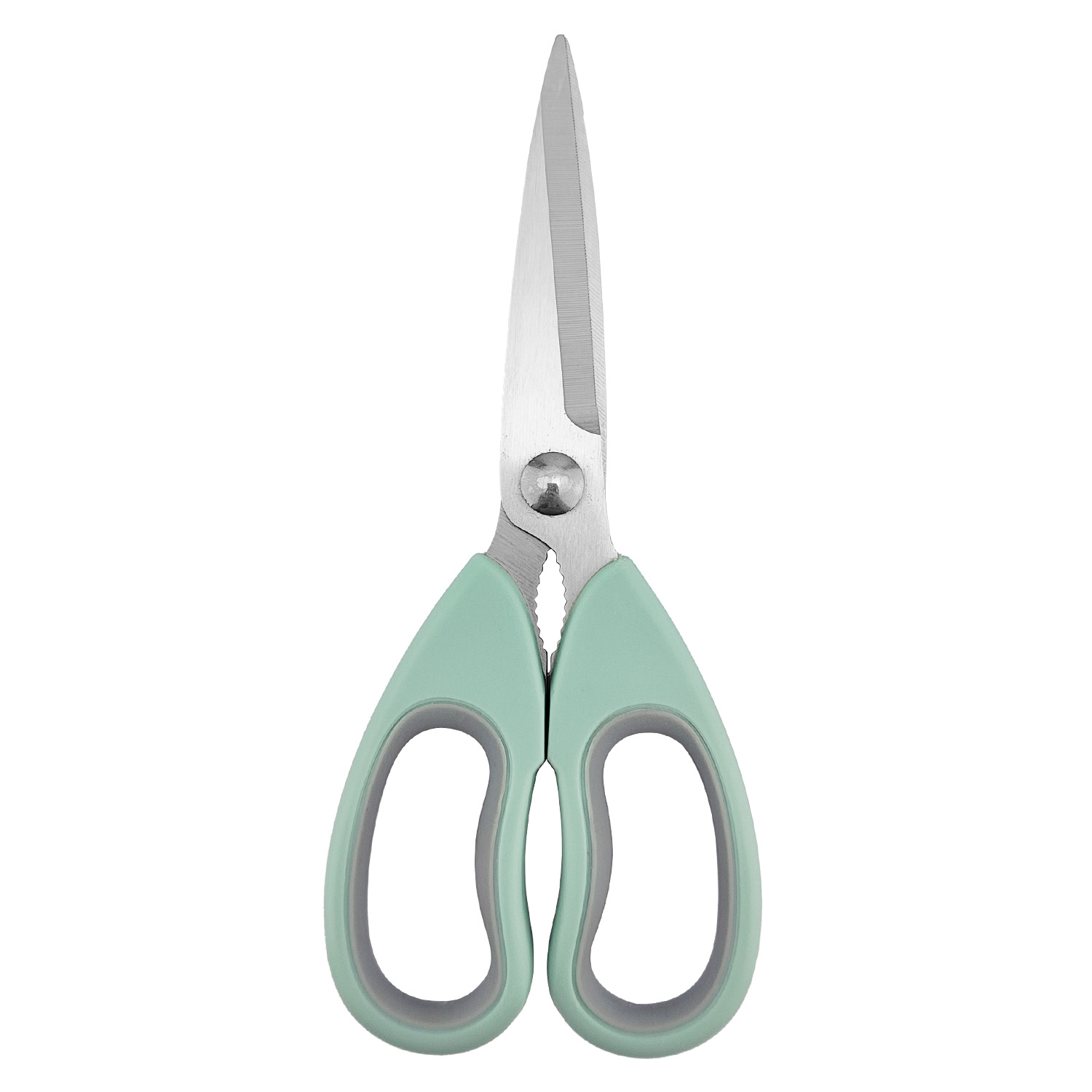
Enhance Your Kitchen with Multi-functional Scissors
Kitchen scissors are one of those practical tools that often become part of daily food preparation once you start using them well. A good pair can trim herbs, cut open food packaging, portion flatbreads, snip cooked noodles, prepare poultry pieces, and handle many light household tasks. Multi-functional kitchen scissors are designed to reduce the need to switch between a knife, cutting board, and utility scissors for every small job.
The original Bonet Houseware article introduced multi-functional kitchen scissors as a convenient household tool and highlighted a new design with a mint-green handle, a comfort grip, stainless steel construction, and a pivot joint intended to support stable cutting. This expanded guide explains how shoppers can evaluate those details in a practical way, what to look for before buying, and how to keep kitchen scissors performing safely over time.

Key Takeaways
- Multi-functional kitchen scissors are useful for quick cutting jobs in food preparation, packaging, crafting, office work, and home projects.
- For kitchen use, prioritize a comfortable handle, controlled blade movement, easy cleaning, and secure storage.
- Stainless steel is a common blade material, but buyers should ask the supplier about the exact grade, corrosion resistance, and care instructions.
- A pivot joint affects cutting feel, stability, and maintenance; it should open and close smoothly without wobbling.
- Do not rely on appearance alone. Check whether the scissors fit your hand, your cutting tasks, and your cleaning routine.
What Makes Kitchen Scissors Multi-functional?
Multi-functional kitchen scissors are designed to do more than simple paper cutting. In the kitchen, they help with tasks that are awkward with a knife, especially when the item is small, slippery, thin, or flexible. For example, scissors can be easier than a knife for cutting herbs directly over a pan, trimming fat from meat, opening seasoning packets, cutting dried fruit, or dividing soft foods into smaller portions.
The word “multi-functional” can mean different things depending on the product. Some models include added features such as bottle openers, nutcrackers, bone notches, detachable blades, serrated sections, or built-in grips for opening caps. The source article does not list these extra functions for this product, so buyers should confirm the actual feature set on the product page or with the supplier before assuming any specific function is included.
For most households, the most important function is still controlled cutting. A good pair of kitchen scissors should feel balanced in the hand, open wide enough for common food tasks, and close cleanly without forcing the user to squeeze excessively. If the scissors are uncomfortable, difficult to clean, or too heavy, they are less likely to be used regularly.
Design Details to Check Before Buying
The original article describes a new design kitchen scissors model with a mint-green handle and a premium comfort grip. Color can help the tool stand out in a drawer, but handle shape matters more for real use. A comfortable grip can reduce hand fatigue when trimming multiple items or preparing ingredients for a larger meal.
When evaluating handle design, consider the size of the finger openings, the softness or firmness of the grip, and whether the scissors suit both quick snipping and longer cutting sessions. A handle that feels good for one person may not fit another, especially if users have large hands, small hands, or reduced hand strength. If purchasing in quantity for a shared kitchen, it is useful to test samples with several users.
The pivot joint is another important detail. The source article mentions a unique pivot joint that supports tension, performance, and stability. In practical terms, a good pivot should allow the blades to move smoothly while keeping them aligned. If the joint is too loose, food may bend instead of cut. If it is too tight, the user may need extra force. Buyers should check whether the pivot is adjustable, how it should be cleaned, and whether food debris can become trapped around it.
Blade Material, Sharpness, and Durability
The original article states that these scissors are made from high-grade stainless steel. Stainless steel is commonly used for kitchen cutting tools because it can resist corrosion better than many carbon steels when properly cared for. However, “high-grade” is a broad description. It is better to ask for the exact stainless steel grade if that information matters for your purchasing decision.
Sharpness is also more than an initial impression. Kitchen scissors should cut cleanly through herbs without bruising them, packaging without slipping, and cooked foods without tearing excessively. Blade geometry, edge quality, and alignment all affect performance. A smooth cut usually requires both sharp edges and a stable pivot.
Durability depends on use and care. Even stainless steel scissors can stain, dull, or develop rust spots if left wet, exposed to salt or acidic foods, or cleaned with harsh materials. If the scissors will be used heavily, ask whether replacement, sharpening, or maintenance guidance is available. For consumer use, it is usually better to choose a tool that is easy to rinse, dry, and store safely than one with unnecessary extras that are difficult to maintain.
Common Uses in Food Preparation and Around the Home
Multi-functional kitchen scissors can support many routine tasks. They are especially useful when speed and control matter more than a perfect knife cut. Common kitchen uses include trimming herbs, cutting scallions, portioning cooked bacon, opening bags, snipping dough edges, cutting parchment, trimming fins, or dividing soft foods for children.
The original article also mentions crafting, office work, and home projects. While the same pair may be capable of cutting various materials, it is best to avoid using kitchen scissors interchangeably for food and non-food tasks unless they are cleaned thoroughly. Adhesive, cardboard dust, tape residue, or craft materials can contaminate food-contact surfaces or dull the blades. Many households prefer to keep one pair dedicated to food and another pair for general use.
If you plan to use scissors for tougher foods such as poultry joints, fish bones, or thick packaging, confirm that the model is designed for that purpose. Not all kitchen scissors are suitable for heavy cutting, and forcing them can damage the pivot, chip the edge, or create a safety risk.
Comparison and Selection Checklist
Before buying multi-functional kitchen scissors, compare practical details instead of relying only on product photos. The checklist below can help consumers, retailers, or purchasing teams evaluate options consistently.
| Selection Point | What to Check | Why It Matters |
|---|---|---|
| Handle comfort | Grip size, shape, texture, and hand fit | Improves control and reduces fatigue during repeated cutting |
| Blade material | Ask for the exact stainless steel grade and care guidance | Helps assess corrosion resistance, durability, and maintenance needs |
| Pivot joint | Smooth movement, blade alignment, and tension stability | Affects cutting performance and safety |
| Cleaning method | Whether blades separate, dishwasher guidance, and drying instructions | Supports hygiene and long-term performance |
| Intended tasks | Food prep, packaging, herbs, poultry, crafting, or office use | Prevents misuse and premature wear |
| Storage | Blade cover, drawer space, hanging hole, or protective packaging | Reduces accidental cuts and protects blade edges |
How to Use Kitchen Scissors Safely
Scissors are simple tools, but kitchen safety still matters. Always cut away from your body and keep fingers clear of the blade path. Use steady pressure rather than sudden force, especially when cutting slippery food. If the scissors struggle, stop and choose a more suitable tool rather than twisting the blades.
For food preparation, place large or unstable items on a cutting board before trimming. When cutting packages, avoid pointing the blade toward the contents, particularly with liquid pouches or vacuum-packed foods. If the scissors become greasy, pause to wash and dry them so your hand does not slip on the handle.
- Inspect the blades and pivot before use.
- Use the scissors only for tasks within their design range.
- Wash after contact with raw meat, seafood, or sticky foods.
- Dry completely before storage.
- Store with blades closed and out of children’s reach.
Cleaning and Care for Longer Service Life
Kitchen scissors need more frequent cleaning than ordinary household scissors because they touch food and moisture. Rinse them soon after use, especially after cutting salty, acidic, oily, or protein-rich ingredients. Use warm water, mild dish soap, and a soft sponge to remove residue. Pay close attention to the pivot area because small particles can collect there.
If the manufacturer allows dishwasher cleaning, follow the stated instructions. If no guidance is available, hand washing is the safer default because dishwasher heat, detergent, and prolonged moisture can affect handles, edges, and pivot parts. After washing, open the scissors carefully and dry both sides of the blades and the joint area. A dry tool is less likely to stain or develop corrosion marks.
Do not use kitchen scissors as a screwdriver, can opener, pry tool, or wire cutter unless the product is specifically designed for those tasks. Misuse can deform the blades or loosen the pivot. If cutting performance declines, check for food buildup first. If the edge is dull, ask whether the product can be sharpened or whether replacement is recommended.
Questions to Ask Before Purchasing
For consumers, the main question is whether the scissors match your cooking habits. For retailers or sourcing teams, the questions should be more detailed. Since the source article does not provide commercial specifications such as MOQ, certifications, test reports, or packaging options, those details should be confirmed directly before placing any order.
- What is the exact blade material and stainless steel grade?
- Is the pivot adjustable, fixed, or designed for disassembly?
- Are the scissors intended for food-contact use, general household use, or both?
- What cleaning method does the supplier recommend?
- Are there available product samples for fit, cutting performance, and durability checks?
- What packaging, labeling, and after-sales support options are available?
- Are there any test reports or compliance documents relevant to the target market?
These questions help avoid misunderstandings. They also allow buyers to compare products based on verifiable information rather than broad marketing phrases.
Practical FAQ
Can kitchen scissors replace a chef’s knife?
No. Kitchen scissors are excellent for quick trimming and snipping, but a chef’s knife is still better for chopping, slicing, dicing, and precision cuts on a board. The two tools work best together.
Are stainless steel kitchen scissors rust-proof?
Stainless steel can resist corrosion, but it is not immune to staining or rust spots. Wash and dry the scissors promptly, especially after contact with salt, acidic foods, or moisture.
Should I use the same scissors for food and crafts?
It is better to keep separate pairs. Craft materials, tape adhesive, paper fibers, and household residues can affect hygiene and blade performance. If you do share one pair, clean it thoroughly before food use.
What makes the pivot joint important?
The pivot controls blade alignment and cutting feel. A stable pivot helps the blades meet properly, while a poor pivot can cause wobbling, tearing, or extra hand strain.
How do I know if the handle is comfortable?
Check whether your fingers fit naturally, whether the grip feels secure when wet, and whether your hand feels strained after repeated cuts. If buying for a team or store, request samples for testing.
Final Thoughts
Multi-functional kitchen scissors can make everyday preparation faster and cleaner when they are chosen carefully. The mint-green handle, comfort grip, stainless steel construction, and pivot design described in the original article are all useful starting points for evaluation. The best choice, however, depends on the tasks you perform most often, how the scissors feel in your hand, and how easy they are to clean and store.
Whether you are buying one pair for home cooking or comparing options for resale, focus on verifiable details: blade material, handle comfort, pivot stability, cleaning guidance, and intended use. A well-selected pair of kitchen scissors is not just an accessory; it is a practical cutting tool that can earn a regular place in daily food preparation.
