




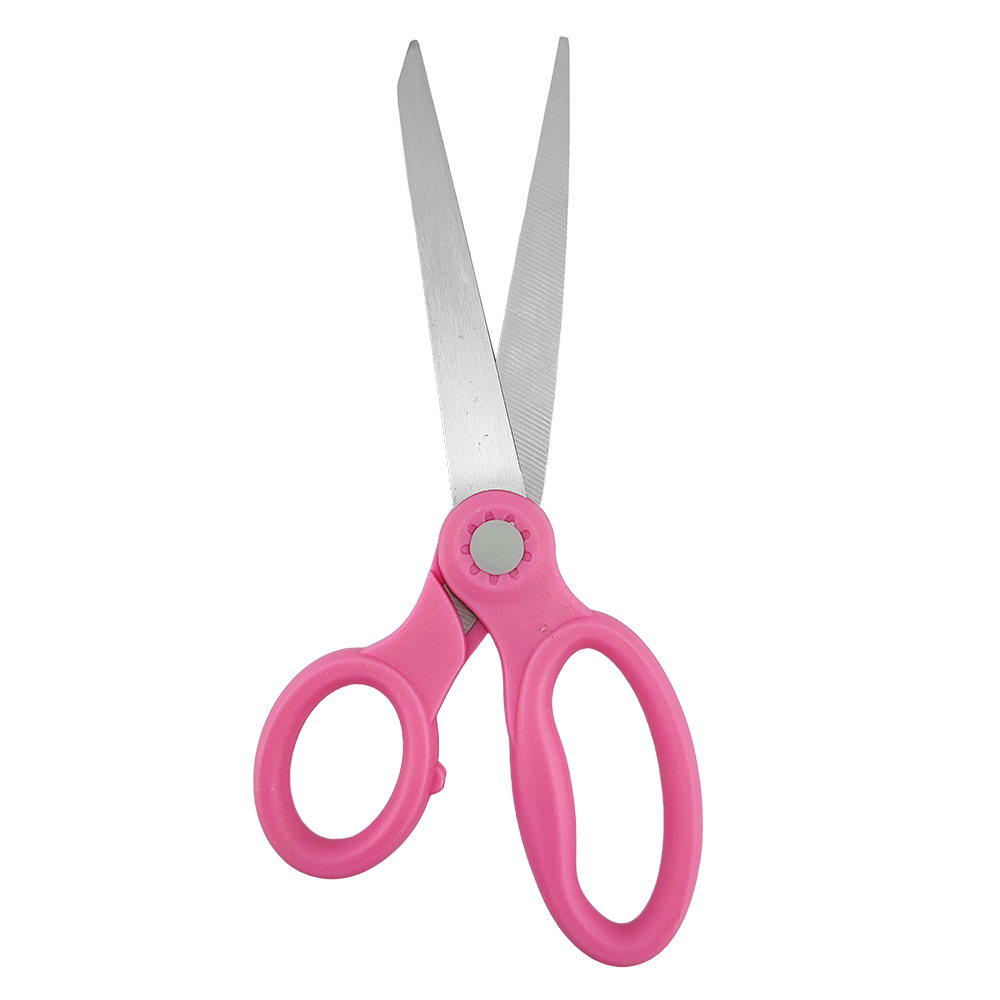
Enhance Your Toolkit with OEM 8in Household Scissors

OEM 8in household scissors sit in a practical category: they are simple enough for daily home use, but important enough that poor quality quickly becomes obvious. Buyers sourcing for retail, promotional programs, private label ranges, or wholesale tool assortments should look beyond appearance and ask how the scissors perform in repeated everyday tasks. The original product information highlights stainless steel blades, ergonomic handles, and reliable cutting for paper, fabric, crafting, gardening, and kitchen prep. Those are useful starting points, but a strong sourcing decision also depends on consistency, packaging options, quality checks, and clear supplier communication.
For B2B buyers, the goal is not just to find scissors that cut well once. The goal is to select a household scissor design that can be produced consistently, packed correctly, and positioned honestly for the intended market. This guide explains what to review before ordering OEM household scissors and what questions to ask a Yangjiang scissors manufacturer or other supplier.
Key Takeaways
- OEM household scissors should be assessed for practical cutting performance, not only handle color or packaging design.
- The stated stainless steel blades and ergonomic handles are useful product points, but buyers should verify grade, finish, and comfort through samples.
- For wholesale or private label projects, ask about customization scope, inspection process, packaging choices, and lead time before confirming an order.
- Use samples to test paper, fabric, light packaging, and other realistic household tasks.
- A good supplier discussion should include safety, labeling, cartons, spare samples, and after-sales handling.
What Makes an 8in Household Scissor Practical?
An 8in household scissor is often chosen because it balances reach, control, and versatility. It is large enough for common cutting jobs, yet still manageable for drawers, toolkits, office desks, craft boxes, or utility areas. In household settings, scissors may be used for opening packaging, trimming paper, cutting fabric, preparing craft materials, or handling light garden and kitchen tasks. That broad use profile means the design must feel stable and predictable.
The original article notes high-quality stainless steel blades and ergonomic handles. These are important because blade material affects corrosion resistance and edge retention, while handle shape affects comfort and control. However, buyers should not rely on broad claims alone. Ask the supplier what stainless steel type is used, how the blade surface is finished, and whether the edge can be adjusted for different market levels.
Design and Build Quality to Review
Build quality is most visible in three areas: blade alignment, pivot stability, and handle comfort. When the two blades close, they should meet cleanly from pivot to tip. If there is wobble, uneven contact, or a loose pivot, the scissors may chew material instead of cutting it. This is especially important for fabric and thin paper, where poor alignment leaves ragged edges.
Handle comfort is also worth testing with different hand sizes. Ergonomic handles can reduce strain during longer use, but comfort is subjective. A buyer should request samples and have several people use them for repeated cutting tasks. If the scissors will be sold for general household use, the grip should not feel too narrow, slippery, or sharp around the inner edges.
Everyday Performance Tests for Samples
Before placing a wholesale or OEM order, create a simple sample test plan. It does not need to be complicated, but it should reflect real customer use. The original article mentions smooth cutting through paper, fabric, and thicker materials, as well as use in crafting, gardening, and kitchen prep. These examples can guide practical testing.
- Cut standard printer paper in straight and curved lines to check smoothness and tip control.
- Cut lightweight fabric to see whether the blades grip or push the material away.
- Open light cardboard or product packaging to evaluate cutting strength.
- Use the scissors repeatedly for several minutes to test handle comfort.
- Wipe the blades after use and check whether the finish is easy to clean.
Record results by sample number, not just by supplier name. This makes it easier to compare options and avoid choosing based only on first impressions.
Comparison Checklist for OEM Buyers
| Review Area | What to Check | Questions to Ask the Supplier |
|---|---|---|
| Blade material | Stainless steel is stated, but grade and finish should be confirmed. | What steel grade is used, and can it be specified in the quotation? |
| Cutting performance | Paper, fabric, packaging, and repeated household tasks. | Can samples be provided from the same production process as bulk goods? |
| Handle design | Comfort, grip shape, surface feel, and fit for different users. | What handle colors, materials, or logo options are available? |
| OEM packaging | Retail card, blister, carton quantity, barcode area, and instruction text. | Can packaging artwork be customized, and what files are required? |
| Quality control | Blade alignment, pivot tightness, appearance defects, and packing accuracy. | What inspection steps are used before shipment? |
| Commercial terms | MOQ, lead time, payment terms, and sample cost. | What are the current order requirements for this 8in household scissor model? |
OEM and Wholesale Sourcing Guidance
Yangjiang is widely associated with knife and scissors production, and the original article connects the product with a Yangjiang scissors manufacturer. For sourcing teams, that heritage can be a useful indicator of manufacturing experience, but it should not replace due diligence. Evaluate the specific supplier, product sample, and production process.
When discussing OEM household scissors, be clear about the final sales channel. A supermarket program may require different packaging from an online multipack. A craft-focused product may need stronger emphasis on fabric and paper cutting, while a general household product may need broader utility positioning. Share target retail price, expected packaging format, labeling requirements, and any market-specific documentation needs with the supplier early.
Do not assume that all customization is included. Ask whether logo printing, handle color matching, packaging design, barcode placement, carton marks, and instruction inserts are available. Also ask which details affect cost or lead time. If the supplier cannot confirm a specification, treat it as an open item until verified in writing.
Packaging, Labeling, and Buyer Communication
Packaging should protect the scissor tips and present the product clearly. For retail, the package must help shoppers understand size, intended use, and care guidance. For wholesale distribution, carton strength and packing accuracy matter just as much as front-facing design. Ask for packing photos, carton dimensions, gross weight, and inner pack details before shipment.
Labeling should avoid unsupported claims. If a product page or package states stainless steel blades, comfortable ergonomic handles, or household use, those statements should match the actual item. Avoid adding claims about certifications, test results, or special performance unless the supplier provides documentation that your business has reviewed.
Use and Care Guidance for End Customers
Even a well-made pair of household scissors will perform better when used appropriately. For consumer-facing product pages, include practical care advice rather than exaggerated promises. Customers should wipe blades dry after contact with moisture, avoid cutting hard wire or materials beyond the product’s intended use, and store scissors safely away from children. If the scissors are used around kitchen prep, customers should clean them before and after use according to the care instructions provided with the product.
Clear use guidance can reduce complaints and returns. It also helps customers understand that household scissors are versatile tools, but not substitutes for specialized cutters, pruning shears, or heavy-duty industrial tools.
Practical FAQ
What does OEM mean for household scissors?
OEM usually means the product can be supplied for another brand or buyer, often with agreed packaging, logo, color, or specification details. The exact scope depends on the supplier.
Are these scissors suitable for paper and fabric?
The original information states that the scissors cut paper and fabric smoothly. Buyers should still test samples with the specific materials their customers are likely to use.
What should I ask before ordering from a scissors manufacturer?
Ask about blade material, handle options, sample availability, MOQ, lead time, packaging choices, inspection process, and whether commercial details can be confirmed in writing.
Can I claim the scissors are rust-free?
The source describes the stainless steel blades as rust-free over time, but buyers should be careful with wording. For packaging or listings, confirm material details and care conditions with the supplier before making durability claims.
How can I compare two OEM scissor samples?
Use the same test materials, repeat the same number of cuts, check blade alignment, inspect the pivot, and ask several users to comment on handle comfort.
Final Sourcing Recommendation
OEM 8in household scissors can be a reliable addition to a retail or wholesale product range when the buyer verifies the details behind the product description. The most useful features from the source are the stainless steel blades, ergonomic handles, and broad everyday cutting use. To turn those points into a successful sourcing project, request samples, run practical cutting tests, confirm packaging requirements, and ask direct questions about production and inspection. A careful process helps ensure the final product is not only attractive in a catalog, but dependable in daily household use.
