




Ergonomic OEM School Scissors: Safety & Style for Kids
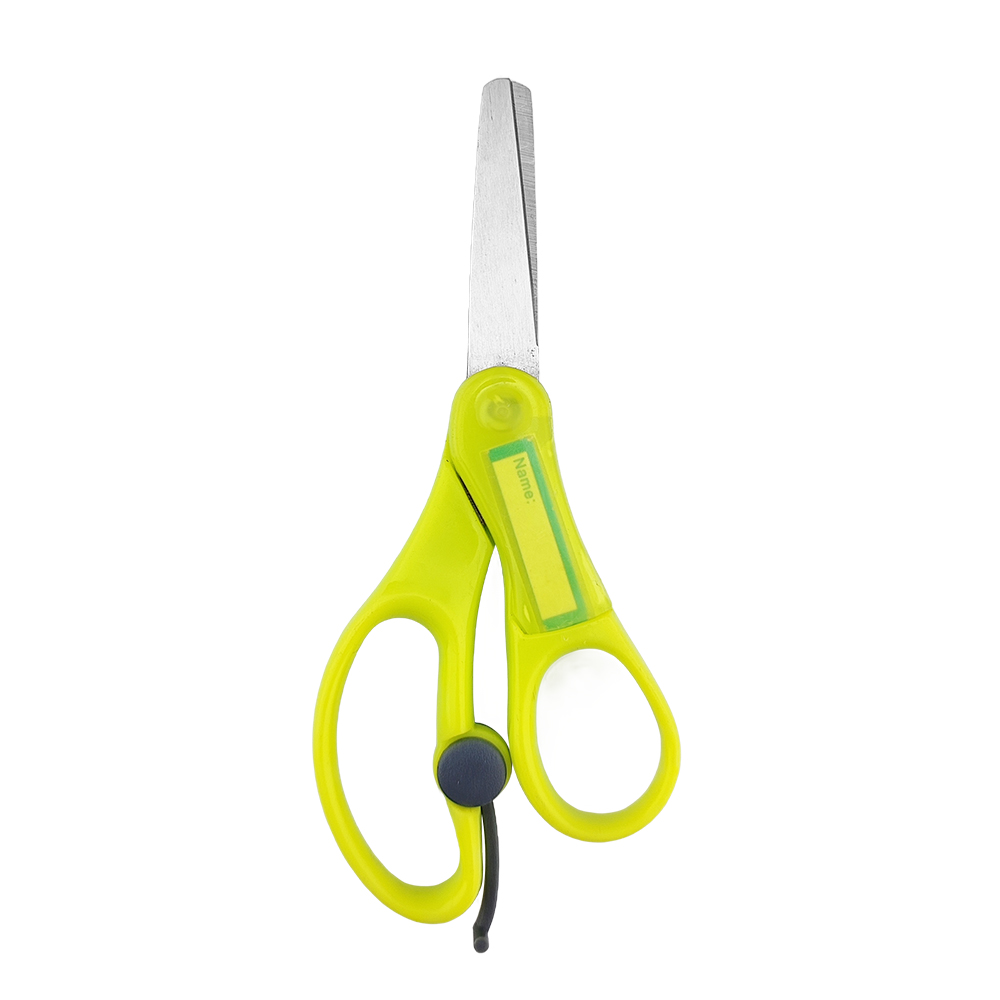
School scissors look simple, but for distributors, stationery brands, classroom supply buyers, and OEM sourcing teams, the details matter. A child-friendly pair must cut paper and craft materials effectively while reducing common classroom risks such as sharp tips, uncomfortable grips, and product mix-ups. The 5 inch OEM school scissors shown here are designed around those needs, with a neon yellow handle, rounded blade tips, soft-touch ergonomic handles, an ambidextrous grip, a name tag area, and a blade lock for closed storage.
This article explains how to evaluate this type of product for wholesale, private label, school tender, or retail stationery programs. It is not enough to choose scissors that look bright on a shelf. Buyers should check how the design supports children, teachers, parents, and inventory managers from daily use through storage and replenishment.
Key Takeaways
- For school use, rounded tips, comfortable handles, and controlled storage are practical safety considerations.
- A 5 inch format is suitable for many children’s classroom and craft applications, but buyers should confirm the target age range with the supplier.
- Name tag space helps reduce mix-ups in shared classroom environments.
- OEM buyers should request details on customization options, packaging, labeling, testing, MOQ, lead time, and documentation before ordering.
Why School Scissors Require More Careful Sourcing
Children’s scissors are different from general office scissors because the user is still developing hand strength, coordination, and safe tool habits. In classrooms, scissors may be shared, stored in bins, carried in pencil cases, or used during fast-moving craft lessons. That means the buyer should evaluate more than blade sharpness.
The product needs to be comfortable enough for repeated short tasks, visible enough to locate quickly, and safe enough for supervised use. The neon yellow handle on this model supports visibility, which can be useful in crowded supply drawers or classroom tables. However, color alone should not drive a purchase decision. For OEM and wholesale buyers, the stronger purchasing case comes from the combination of ergonomic shape, rounded blade tips, name card space, and closed-storage lock.
Safety Features to Review Before Placing an OEM Order
The original product description identifies stainless steel blades with blunted, rounded tips. Rounded tips are an important feature for school scissors because they reduce the likelihood of accidental pokes during handling, storage, and classroom movement. They do not remove the need for supervision, but they make the product more appropriate for children than pointed craft or office scissors.
The blade lock is another practical design point. When scissors are stored closed, they are easier to manage in bulk and less likely to snag on bags or supply organizers. Buyers should ask the supplier how the lock works, whether it is easy for adults and children to operate, and whether the mechanism remains secure after repeated use.
Before committing to a custom order, sourcing teams should request samples and evaluate them under realistic conditions. Test paper cutting, construction paper cutting if relevant, opening and closing smoothness, and whether the rounded tips still allow children to complete common classroom tasks. If the scissors are intended for a specific school district, retail market, or age group, ask what safety documentation or compliance information is available rather than assuming any certification.
Comfort, Fit, and Left-Hand Use
Comfort is a major factor in whether children use scissors successfully. The soft-touch ergonomic handles described in the original article are intended to reduce strain and support longer creative sessions. For procurement teams, the key question is whether the handle size and opening fit the intended users. A 5 inch scissor can be a good size for school and craft kits, but hand size varies widely across age groups.
The ambidextrous handle is useful for classrooms because teachers may not know in advance how many left-handed students will use the supplies. A design that works for both right- and left-handed users can simplify purchasing and reduce the need to stock separate versions. Still, buyers should test with actual left-handed users when possible. Ambidextrous handles can improve accessibility, but the cutting experience should be verified during sampling.
Name Card Area and Classroom Organization
The integrated name tag space is a small but valuable feature for school environments. In classrooms, scissors often look similar and are easily misplaced. A name card area helps students identify their own supplies and helps teachers return tools to the right owner. For retail or kit assembly, it can also create a more personal experience without requiring complex customization.
For OEM projects, ask whether the name card area can be adapted for private label needs, classroom pack numbering, or simple write-on identification. If the product will be sold as customized school scissors, clarify what “customized” means in the supplier’s process. It may refer to color, packaging, logo placement, labeling, or other order-specific details. Do not assume all customization options are available until confirmed in writing.
Comparison Checklist for OEM Buyers
| Evaluation Point | Why It Matters | Questions to Ask the Supplier |
|---|---|---|
| Blade design | Rounded tips support safer school handling. | What blade material, edge finish, and tip design are used? |
| Handle comfort | Soft-touch ergonomic handles may reduce fatigue during craft tasks. | Can samples be tested by the target age group? |
| Ambidextrous use | One model can serve right- and left-handed students. | Has the design been checked with left-handed users? |
| Name tag space | Helps prevent mix-ups in classrooms and shared supply kits. | Can the name area be printed, labeled, or left blank? |
| Blade lock | Closed storage improves classroom organization. | How durable is the lock after repeated opening and closing? |
| OEM packaging | Packaging affects retail display, school bids, and shipping protection. | What packaging formats, labeling options, and carton details are available? |
Customization and Packaging Considerations
OEM school scissors are often purchased for back-to-school promotions, educational supply programs, craft kits, stationery retail lines, or branded classroom packs. The product’s visible handle color and name card feature make it suitable for differentiation, but buyers should manage customization carefully.
- Confirm which elements can be customized, such as handle color, logo placement, label, or packaging.
- Request artwork guidelines before preparing brand files.
- Ask for pre-production samples when custom printing or packaging is involved.
- Clarify MOQ, lead time, payment terms, packing method, and shipping dimensions.
- Request available compliance documents for the destination market, especially for children’s products.
These questions help prevent misunderstandings. They also make comparison between suppliers easier because each quotation can be reviewed on the same basis: product design, customization scope, packaging, quality controls, and total landed cost.
Use and Care Guidance for Schools and Retail Customers
Although this is a sourcing-focused product, clear user guidance can reduce complaints after sale. Schools and parents should remind children to use scissors only for appropriate materials, such as paper and supervised craft items. Scissors should be stored closed, preferably with the blade lock engaged when not in use. The name tag area should be filled in before classroom use so the pair can be identified easily.
Retail brands and wholesalers can include basic care instructions on packaging or inserts: keep away from very young children unless supervised, avoid cutting hard materials that may damage the blades, wipe clean after messy craft use, and store in a dry place. These simple instructions support longer product life and safer classroom routines.
FAQ: OEM School Scissors
What makes these scissors suitable for school use?
The described design includes a 5 inch size, rounded blade tips, ergonomic soft-touch handles, ambidextrous use, a name tag space, and a blade lock. These features are practical for supervised classroom and craft settings.
Can these be used for both right- and left-handed children?
The original product information states that the handles are ambidextrous. Buyers should still test samples with both right- and left-handed users before placing a large order.
Are these scissors customizable for OEM projects?
They are described as OEM and customized school scissors, but the exact customization scope should be confirmed with the supplier. Ask about colors, logo options, name card treatment, packaging, MOQ, and sample approval.
What should buyers verify before bulk purchasing?
Request samples, confirm blade and handle details, check the blade lock, review packaging options, ask about available compliance documentation for your market, and clarify commercial terms in writing.
Do rounded tips mean scissors are risk-free?
No. Rounded tips can reduce poke hazards, but scissors are still cutting tools. Children should use them with appropriate supervision and store them closed after use.
