





Exceptional Soft Grip Kitchen Scissors
Soft grip kitchen scissors are a small tool with a wide range of everyday uses, from trimming meat to cutting vegetables, opening packaging, and handling quick prep tasks that do not require a knife and cutting board. For retailers, wholesalers, and private-label buyers, they are also a product category where comfort, perceived quality, safety, and multipurpose design strongly influence repeat orders and customer reviews.
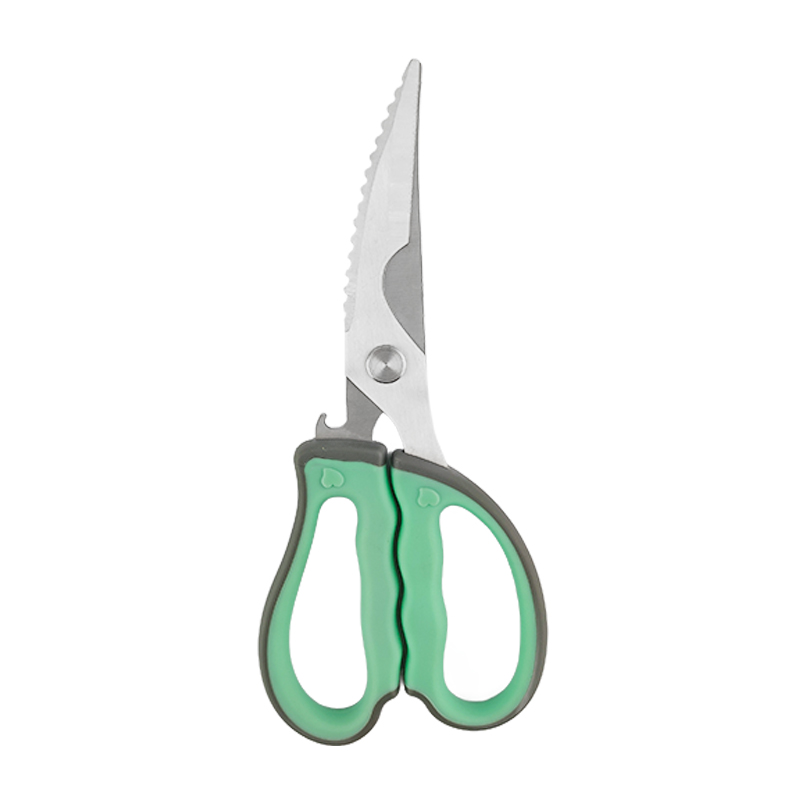
The original product article highlights a pair of soft grip kitchen scissors made with stainless steel blades, ergonomic mint green rubber handles, and added functions such as a built-in bottle opener and nutcracker. Those facts are useful starting points, but buyers need a deeper framework: how should the tool feel in the hand, what questions should be asked of an OEM scissors factory in China, and what details should be confirmed before placing an order?
Key Takeaways
- Soft grip kitchen scissors should be assessed for comfort, blade performance, cleaning convenience, and multipurpose functions.
- The original article states that the scissors use stainless steel and mint green rubber handles, with bottle opener and nutcracker functions.
- B2B buyers should confirm material grade, blade hardness, coating, packaging, inspection process, and compliance requirements directly with the supplier.
- For private-label or OEM projects, request samples and compare them under realistic cutting tasks before approving bulk production.
- A good sourcing decision balances unit cost with durability, hand comfort, packaging quality, and after-sales expectations.
What Makes Soft Grip Kitchen Scissors Useful?
Kitchen scissors are often chosen because they are faster than a knife for certain repetitive tasks. A cook can snip herbs, cut poultry portions, trim fat, open food pouches, cut twine, or slice cooked vegetables directly into a bowl. In commercial kitchens, catering environments, and busy households, that convenience matters.
The soft grip design adds another benefit: it reduces the hard contact pressure that can occur with bare metal or rigid plastic handles. While the actual comfort level depends on handle shape, size, and material thickness, rubberized handle areas generally provide a more secure feel, especially when hands are damp. The source article specifically describes ergonomic handles with mint green rubber and notes that they are intended to reduce hand fatigue.
For B2B buyers, the important point is not simply whether the scissors look comfortable in photos. The grip should be tested by different users, including people with small and large hands. The opening span should not feel excessive, the finger loops should not pinch, and the handle surface should not become slippery during basic food-prep use.
Core Product Features to Evaluate
The article states that the scissors are crafted with stainless steel and designed for cutting meats, vegetables, and tougher items such as crusty bread. It also notes built-in bottle opener and nutcracker functions. These are meaningful features, but each one should be verified during sourcing.
| Feature | Why It Matters | Questions to Ask a Supplier |
|---|---|---|
| Stainless steel blades | Supports durability and kitchen suitability when properly specified. | What stainless steel grade is used? What is the blade thickness? Is the blade heat-treated? |
| Soft rubber grip | Improves comfort and control during repeated cutting tasks. | What handle material is used? Is it overmolded or assembled? Can color be customized? |
| Ergonomic handle shape | Helps reduce strain and makes the tool easier to control. | Are samples available for hand-feel testing? Are there left-hand or universal-use options? |
| Bottle opener | Adds convenience and supports multipurpose positioning. | Where is the opener located? Has the function been tested for repeated use? |
| Nutcracker function | Expands utility beyond standard cutting tasks. | What nut sizes can it handle? Does nutcracking affect hinge stability over time? |
| Packaging | Influences retail presentation, shipping protection, and barcode readiness. | What packaging formats are available? Can instructions and private label branding be added? |
Stainless Steel Blades: What Buyers Should Confirm
Stainless steel is a broad term. It tells buyers that the product is positioned for resistance to staining and kitchen use, but it does not define the exact grade, edge retention, corrosion resistance, or hardness. Because the source article does not state a material grade, buyers should not assume one.
Before ordering, ask the kitchen scissors manufacturer for material details in writing. Important questions include: What grade of stainless steel is used for the blades? Is the steel magnetic? What blade thickness is standard? Is there a heat-treatment process? Can the supplier provide internal inspection records or third-party test reports if required by the buyer’s market?
Practical testing is equally important. Samples should be used to cut raw meat, cooked meat, leafy vegetables, food packaging, kitchen twine, and crusty bread if that use is part of the marketing claim. The edge should cut cleanly without excessive force. The blades should meet evenly, and the screw or rivet area should not feel loose after repeated use.
Comfort, Grip, and Daily Handling
For soft grip kitchen scissors, the handle is not an afterthought. It is central to the product promise. A comfortable grip can make the difference between a tool that is used daily and one that stays in a drawer.
The original product description mentions mint green rubber handles. For retail buyers, color can help a product stand out, but comfort and durability should come first. A grip material that feels good at first can become sticky, stained, cracked, or loose if it is poorly selected or poorly bonded. If the scissors are being sourced for private label, ask the supplier whether the handle color can be matched to a Pantone reference and whether color variation is controlled between batches.
During sample review, check the handle edges carefully. The inner loops should be smooth. There should be no sharp plastic seams, burrs, or uneven rubber flashing. Open and close the scissors repeatedly to confirm that the motion is not too stiff. If the tool is intended for a wide customer base, test it with both right-handed and left-handed users and ask whether the design is ambidextrous or right-hand oriented.
Multipurpose Functions: Useful or Just Decorative?
Multipurpose kitchen shears often include secondary functions such as a bottle opener, nutcracker, jar grip, scale scraper, or herb stripper. The scissors described in the source article include a built-in bottle opener and nutcracker. These can add genuine value, but only when they are easy to use and do not compromise the main cutting function.
A bottle opener should be positioned so the user can apply leverage safely. A nutcracker area should hold the nut securely without forcing the user’s hand into an awkward position. Most importantly, the hinge and handle structure must tolerate the extra pressure created by these functions. If the nutcracker is promoted on retail packaging, buyers should ask the supplier how that function is tested and what usage limitations should be communicated to customers.
For online listings, avoid overstating multipurpose claims. It is better to describe the actual functions clearly than to promise that one tool can replace every kitchen accessory. Accurate claims reduce returns and help preserve customer trust.
B2B Sourcing Guidance for OEM and Wholesale Buyers
When sourcing from an OEM scissors factory in China or any kitchen scissors supplier, buyers should move beyond photos and general product descriptions. A structured sourcing process reduces risk and makes negotiations more precise.
- Define the target market. A budget supermarket item, a premium kitchenware line, and a professional kitchen tool may require different blade thickness, packaging, finish, and inspection standards.
- Request product specifications. Ask for dimensions, weight, blade material, handle material, surface finish, packing method, and available customization options.
- Order samples before confirming a bulk order. Test cutting performance, grip comfort, hinge stability, and packaging strength.
- Clarify branding options. Ask whether logo placement is available on the blade, handle, hang tag, retail card, or box, and request artwork requirements.
- Discuss quality control. Ask what inspections are performed for blade sharpness, opening and closing action, handle appearance, and carton packing.
- Confirm commercial details. Ask about MOQ, lead time, payment terms, sample cost, mold or setup fees, and shipping options instead of assuming standard terms.
- Check market requirements. If selling in a regulated market, ask what documentation or testing can be provided and verify whether it matches your local obligations.
This approach is especially important for private-label buyers. Small differences in handle material, blade finish, or packaging can significantly change the final product perception. A clear specification sheet and approved pre-production sample help prevent misunderstandings.
Use and Care Tips for End Customers
Retailers and wholesalers can improve customer satisfaction by including simple use-and-care instructions. Even durable kitchen scissors benefit from proper handling.
- Wash the scissors before first use and after contact with raw meat.
- Dry the blades and hinge area after washing to reduce moisture buildup.
- Use the scissors for food and light kitchen tasks, not for cutting metal, wire, or other hard non-food materials.
- Avoid forcing the nutcracker function on items that are too large or too hard for the tool.
- Store the scissors in a dry drawer, knife block, or protective sleeve if provided.
- If the hinge becomes loose, damaged, or difficult to clean, stop using the product for food preparation.
If the product is dishwasher safe, that should be stated only when confirmed by the supplier. If it is not confirmed, hand washing is the safer instruction for retail content and packaging drafts.
Checklist Before Placing an Order
Before approving soft grip kitchen scissors for wholesale, OEM, or retail distribution, use this checklist to confirm that the product matches your customer expectations:
- Do the blades cut meat, vegetables, packaging, and bread cleanly during sample testing?
- Is the stainless steel grade clearly identified by the supplier?
- Does the soft grip remain secure and comfortable after repeated use?
- Are the bottle opener and nutcracker functions practical and safely positioned?
- Is the hinge smooth, stable, and free from wobble?
- Are there visible burrs, sharp handle seams, stains, or uneven finishes?
- Does the packaging protect the product during shipping and suit the retail channel?
- Are logo, color, labeling, and instruction requirements confirmed in writing?
- Have MOQ, lead time, payment terms, and inspection arrangements been clarified?
FAQ
What are soft grip kitchen scissors best used for?
They are useful for common kitchen cutting tasks such as trimming meat, cutting vegetables, snipping herbs, opening food packaging, and cutting kitchen twine. The exact performance depends on blade sharpness, hinge quality, and handle comfort.
Are these scissors made from stainless steel?
The source article states that the scissors are crafted with stainless steel. Buyers should still ask the supplier to confirm the exact stainless steel grade, blade thickness, and any heat-treatment or finishing process.
Can soft grip kitchen scissors be customized for OEM orders?
Customization may be possible, but it should not be assumed. Ask the supplier about logo placement, handle color, packaging design, MOQ, sample approval, and any tooling or setup costs.
Do the bottle opener and nutcracker functions affect quality?
They can be useful additions when properly designed. During sourcing, test whether these functions are comfortable, stable, and safe to use, and confirm whether the supplier performs durability checks.
Should kitchen scissors be washed by hand?
Unless dishwasher suitability is confirmed by the supplier, hand washing and thorough drying are prudent care instructions. This helps protect the blades, hinge, and handle over time.
What should wholesalers check before buying in bulk?
Wholesalers should review samples, confirm material details, test cutting performance, inspect packaging, clarify commercial terms, and ask what quality-control process is used before shipment.
Final Thoughts
Soft grip kitchen scissors are practical, familiar, and easy to understand, but sourcing them well requires attention to detail. The combination of stainless steel blades, mint green rubber handles, and added bottle opener and nutcracker functions creates a clear multipurpose concept. To turn that concept into a reliable product for retail or wholesale channels, buyers should verify materials, test real cutting performance, and document every customization and quality requirement before production.
For B2B buyers comparing kitchen scissors manufacturers, the best choice is not simply the lowest quoted price. It is the supplier that can answer technical questions clearly, provide consistent samples, communicate limitations honestly, and support the quality level your market expects.
