




Explore Top OEM School Scissors for Young Creators
School scissors look simple, but buyers know they affect classroom safety, supply management, and the everyday experience of young students. For distributors, school supply brands, stationery wholesalers, and education procurement teams, the right OEM school scissors should be easy for children to control, practical for teachers to organize, and consistent enough for repeat purchasing.
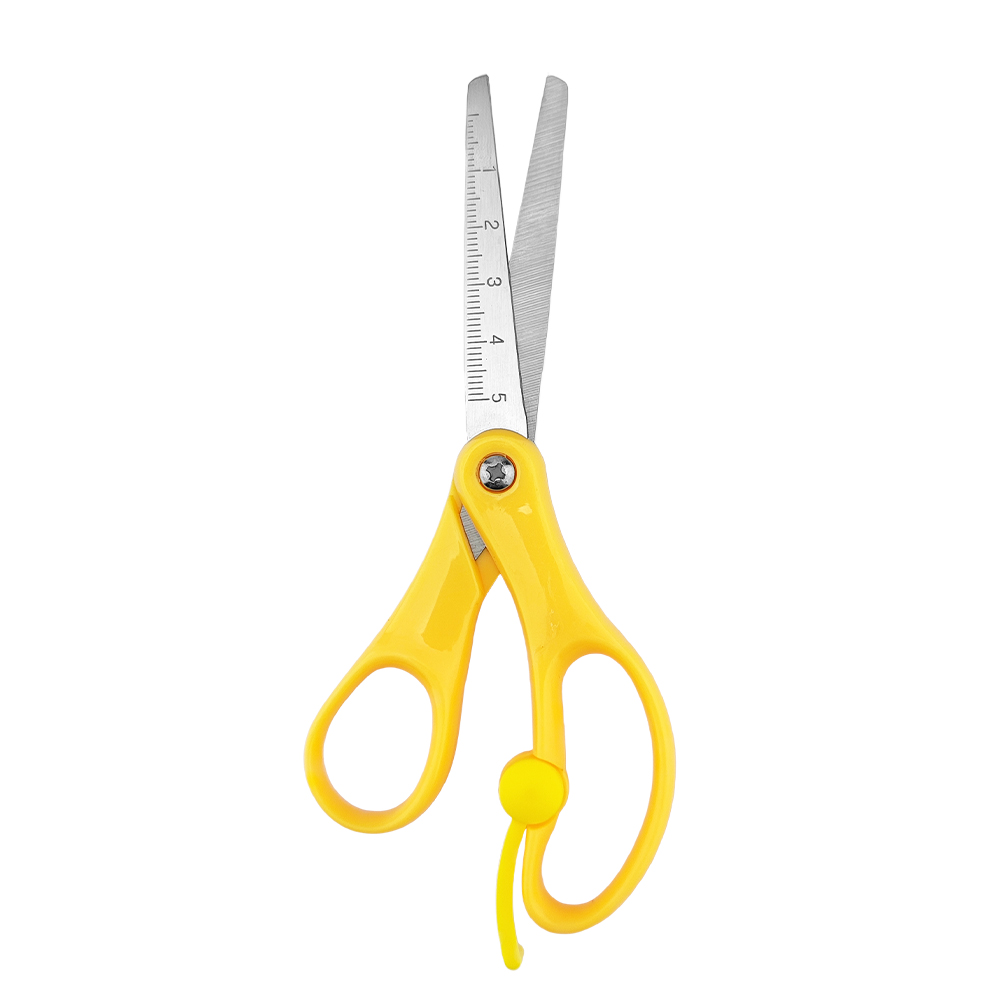
The original product example is a vibrant yellow pair of 6 inch student scissors designed with stainless steel rounded-tip blades, a safety point, contoured finger loops for smaller hands, and a built-in name tag holder. Those features make it a useful reference point for evaluating classroom scissors, especially when the goal is to source a kid-friendly cutting tool rather than an adult craft scissor in a smaller package.

Key Takeaways
- For school use, rounded-tip blades and a controlled handle shape matter more than aggressive cutting performance.
- A 6 inch student scissor format can suit many classroom and craft-kit applications, but buyers should confirm the target age range with the supplier.
- Built-in name tag holders help reduce lost supplies in shared classrooms and student kits.
- OEM buyers should ask clear questions about customization, packaging, quality checks, lead time, and documentation instead of assuming details.
What Makes School Scissors Different from Regular Scissors?
School scissors are designed around supervised learning, repetitive classroom use, and developing hand control. A child may use scissors for paper shapes, art projects, worksheets, or basic craft materials. Unlike office scissors, the goal is not maximum cutting force. The priorities are predictable handling, an appropriate blade tip, and a grip that supports smaller hands.
The referenced pair uses rounded-tip stainless steel blades with a safety point. That combination is important because the tip area is often where classroom accidents happen. Rounded tips do not remove the need for supervision, but they are better suited to children than pointed office blades. Stainless steel is also a common material choice for blades because it is used widely in school and stationery tools; buyers should still ask the supplier how the blades are finished, checked, and protected during shipment.
Safety and Comfort Features to Review
When comparing OEM school scissors, do not rely only on color or catalog photos. Ask for samples and test them with realistic classroom tasks: cutting construction paper, standard printer paper, simple craft shapes, and straight lines. A good school scissor should open and close smoothly without requiring excessive force. The handle should not pinch, flex awkwardly, or feel slippery in a child’s hand.
The product described in the source includes contoured finger loops designed for smaller hands and snug finger openings that support control. This is useful for students who are still developing coordination. If sourcing for multiple grades, buyers should consider whether one size is suitable for all users or whether different versions are needed for younger and older students.
Classroom Organization: Why Name Tag Holders Matter
One feature that separates these personalized name card scissors from basic student scissors is the built-in name tag holder. In a busy classroom, supplies are frequently misplaced, mixed into shared bins, or taken home by mistake. A simple name card area can reduce confusion and help teachers return tools to the correct student.
For wholesale or school supply programs, this feature can also support kit assembly. If scissors are sold as part of a back-to-school bundle, classroom box, or art set, a place for student identification makes the item feel more practical. Buyers should ask whether the name tag area can accept standard paper labels, whether inserts are included, and how the name card area is protected from falling out during normal use.
OEM Sourcing Checklist for School Scissors
OEM purchasing involves more than approving a product photo. Before placing an order, confirm the details that affect compliance with your market, packaging quality, and end-user satisfaction. The table below gives a practical checklist for school factory scissors sourcing discussions.
| Review Area | What to Check | Questions to Ask the Supplier |
|---|---|---|
| Blade design | Rounded tips, safety point, cutting smoothness | How are blade edges inspected before packing? |
| Handle comfort | Contoured loops, fit for smaller hands, grip control | Which age range is this handle designed for? |
| Size | 6 inch student format from the source product | Is the measured size total length, blade length, or package size? |
| Identification | Built-in name tag holder | Are name cards or blank inserts included? |
| OEM options | Color, logo, packaging, labeling | Which customizations are available and what artwork files are required? |
| Order planning | Sampling, production timing, packing method | What are the current MOQ, lead time, carton details, and sample policy? |
Customization Options Buyers Should Clarify
Because this topic concerns OEM school scissors, customization is often part of the buying process. However, buyers should avoid assuming that every element can be changed. Ask the supplier which parts are fixed and which can be adjusted. Common discussion points include handle color, printed or labeled branding, retail packaging, bulk classroom packaging, barcode placement, and carton markings.
If the product is intended for a private-label school supply line, packaging consistency matters. A scissor may pass the sample review but still create problems if retail cards bend during shipping, labels are placed inconsistently, or cartons are not marked clearly for warehouse receiving. Request packing photos or pre-shipment images when possible, and define how approved artwork should be used.
How to Evaluate Samples Before Bulk Ordering
Sample testing should be structured. Instead of simply opening and closing the scissors once, test several pairs from the same sample batch. Check whether the blades align, whether the pivot feels consistent, and whether the handle edges are smooth. Cut several common school materials and note whether the child-safe design still performs well enough for classroom tasks.
- Inspect the blade tips and confirm they match the rounded-tip design you expect.
- Check handle comfort for both small and average student hand sizes.
- Test straight cuts and curved cuts on paper used in classrooms.
- Insert and remove a name card if the holder is part of the design.
- Review packaging for shipping protection, labeling accuracy, and shelf presentation.
- Record questions before confirming the production order.
Practical Buying Guidance for Wholesalers and Schools
For school distributors, the best choice is not always the cheapest pair. A low-cost scissor that is uncomfortable, difficult to track, or inconsistent in quality can lead to returns and complaints. At the same time, buyers should avoid over-specifying features that do not matter to the end user. Focus on the actual classroom use case: safe paper cutting, easy storage, clear ownership, and dependable repeat supply.
If buying for a specific market, ask the supplier what documents, labels, or test reports are available for review. Do not assume compliance claims unless the supplier provides current, relevant documentation. If your customer requires particular testing or labeling, state that requirement early and confirm whether the supplier can support it before sampling.
FAQ: OEM School Scissors
Are 6 inch student scissors suitable for all ages?
Not necessarily. The source product is described as 6 inch student scissors with a design for smaller hands, but buyers should confirm the intended age range with the supplier and test samples with the target user group.
Why choose rounded-tip blades for classrooms?
Rounded-tip blades are generally more appropriate for young students than pointed office scissors. They support supervised classroom cutting while reducing the risk associated with sharp tips.
What is the advantage of a built-in name tag holder?
A name tag holder helps teachers and students identify ownership. This is useful in classrooms, school kits, and shared supply environments where scissors are often misplaced.
Can OEM buyers customize these school scissors?
Customization may be possible, but buyers should ask the supplier directly about available handle colors, branding methods, packaging options, artwork requirements, MOQ, and lead time.
What should be checked before placing a wholesale order?
Review samples, blade safety, handle comfort, name tag function, packaging, carton markings, commercial terms, and any required documentation for your sales market.
