




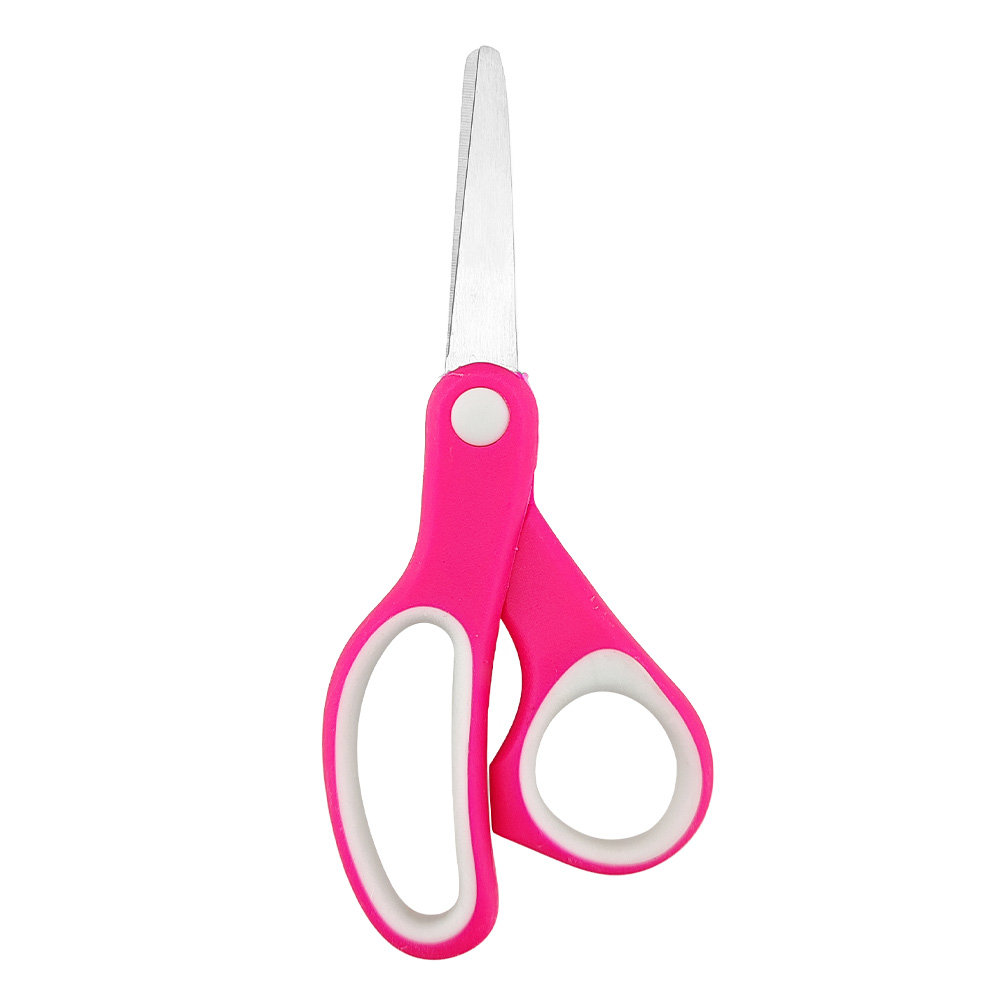
OEM 5 Inch Left-Handed Scissors: A Practical Sourcing Guide
For brands, distributors, school suppliers, craft kit companies, and promotional product buyers, 5 inch left-handed scissors fill a focused but important product need. Standard scissors are often designed around right-handed blade orientation and handle use, which can make cutting awkward for left-handed users. An OEM left-handed option helps buyers serve a more inclusive market while keeping size, packaging, handle color, and product positioning aligned with their own range.
This guide explains how to evaluate OEM 5 inch left-handed scissors without relying on vague claims. It focuses on sourcing questions, product-selection criteria, and communication points to discuss with a scissors manufacturer or children’s scissors factory, including suppliers in Yangjiang, a well-known scissors manufacturing area in China.

Key Takeaways
- Left-handed scissors should be evaluated for blade orientation, hand comfort, and cutting visibility, not only handle shape.
- A 5 inch size is commonly considered for school, craft, stationery, and compact retail sets, but buyers should confirm the intended user age and use case.
- For children’s scissors, discuss rounded tips, handle comfort, packaging warnings, and applicable market requirements with the supplier.
- OEM buyers should request samples, drawings, material details, packaging options, and inspection criteria before confirming production.
Why Left-Handed Scissors Need Separate Attention
Left-handed users may struggle with ordinary right-handed scissors because the blade arrangement can block the cutting line or push materials apart instead of holding them together cleanly. A true left-handed design should make it easier for the user to see the cut line and apply pressure naturally. For B2B buyers, this means the product should not be treated as a simple color variation of an existing right-handed model.
When discussing an OEM project, ask the factory to explain exactly what makes the scissors left-handed. Is the blade orientation reversed? Is the handle molded for left-hand use? Has the product been checked by left-handed users during sampling? These questions help separate genuine left-handed designs from generic scissors marketed with a left-handed label.
Where 5 Inch Left-Handed Scissors Fit in the Market
The 5 inch format is compact and suitable for many light cutting tasks, especially paper, craft materials, school projects, and stationery sets. It can also work well in activity kits, back-to-school assortments, office drawers, and private label craft ranges. Because the size is not large, it is important to match the product to realistic cutting expectations rather than presenting it as a heavy-duty tool.
For children’s use, the buyer should confirm whether the model is designed for a specific age range and what safety features are available. The original product context refers to children’s scissors and child-friendly designs, so the sourcing conversation should include questions about blunt or rounded tips, grip size, blade exposure, and packaging language. Do not assume that all small scissors are automatically appropriate for children in every market.
OEM Customization Points to Confirm
OEM sourcing is useful when a buyer needs a product aligned with a retail range, school supply line, or brand program. However, customization should be handled through clear specifications. Instead of asking only for “colorful handles” or “safe scissors,” provide details that the factory can quote and sample accurately.
- Blade configuration: Confirm that the blade orientation is suitable for left-handed use and request a sample for practical cutting checks.
- Size: State that the required size is 5 inch and ask how the factory measures overall length.
- Tip style: Ask whether rounded, blunt, or other tip options are available for school or children’s ranges.
- Handle design: Review grip shape, finger hole size, material feel, and whether the handle is symmetrical or left-hand specific.
- Color and branding: Discuss handle colors, logo placement, label design, and packaging artwork requirements.
- Packaging: Compare bulk pack, blister card, paper card, or retail display options based on your sales channel.
Factory Evaluation Checklist for B2B Buyers
Yangjiang is widely associated with scissors and knife manufacturing, and many buyers look there for OEM production. Location alone, however, does not guarantee that a supplier is suitable for a left-handed children’s scissors project. The best approach is to evaluate communication, sampling, documentation, and quality control before placing a production order.
| Evaluation Area | What to Ask the Supplier | Why It Matters |
|---|---|---|
| Left-handed design | Can you show the blade orientation and explain how it differs from a right-handed model? | Prevents relabeling of a standard product as left-handed. |
| Sample process | Can we receive pre-production samples in the requested 5 inch size, color, and packaging? | Allows cutting, handling, and packaging checks before bulk production. |
| Materials | What blade and handle materials are used, and can they be documented in the quotation? | Helps buyers compare offers accurately and avoid unclear specifications. |
| Children’s use | What tip styles and packaging warnings are available for school or craft use? | Supports safer product selection and clearer retail presentation. |
| Quality control | What inspection points are used for sharpness, alignment, handle finish, and packaging? | Reduces the risk of inconsistent cutting performance or cosmetic issues. |
| Commercial terms | What are the MOQ, lead time, sample cost, payment terms, and carton details? | These details affect planning, landed cost, and launch schedules. |
Quality Checks Before Approving Production
Before confirming an OEM order, buyers should test samples under conditions similar to the end user’s daily use. For school or craft scissors, test ordinary paper, light card, and simple craft materials if those uses match your product positioning. Check whether the scissors cut smoothly from the base of the blade to the tip, whether the blades meet cleanly, and whether the handle remains comfortable after repeated cuts.
Also inspect non-cutting details. Look for rough handle edges, uneven color, loose pivot action, blade stains, excessive oil, unclear packaging print, or inconsistent logo placement. These issues can affect customer perception even when the scissors technically cut. If the product is intended for children, ask the supplier which market requirements may apply and confirm what documentation is available. Buyers should obtain their own compliance advice for the countries where the product will be sold.
How to Write a Clear RFQ for OEM Left-Handed Scissors
A strong request for quotation saves time and helps suppliers respond with comparable prices. Include the product name, 5 inch size requirement, left-handed design requirement, expected use, target market, estimated order quantity, packaging preference, branding needs, and required sample schedule. If you have artwork, reference images, or a benchmark product, share them with clear notes about what should and should not be copied.
It is also useful to ask the supplier to separate costs for tooling, handle color changes, logo printing, packaging, and any special inspection. If commercial details are not listed publicly, do not assume them. Ask directly about MOQ, production lead time, sample lead time, export carton size, and available shipping documents.
FAQ
Are all small scissors suitable for left-handed children?
No. Small size alone does not make scissors left-handed or child-appropriate. Confirm blade orientation, handle comfort, tip style, and intended user guidance with the supplier.
What should I check first in an OEM sample?
Start with left-handed cutting performance, blade alignment, handle comfort, tip finish, and packaging accuracy. Then compare the sample against your written specification.
Can handle color and branding be customized?
Many OEM scissors projects include handle color, logo, and packaging customization, but availability depends on the supplier’s tooling and order terms. Ask for confirmed options and sample proof.
Is Yangjiang a relevant sourcing location for scissors?
Yes, Yangjiang is known as a scissors manufacturing area in China. Buyers should still evaluate each manufacturer individually through samples, documentation, and quality control discussions.
What commercial details should buyers request?
Ask about MOQ, sample cost, lead time, packaging options, carton information, payment terms, and inspection procedures. These should be confirmed in writing before production.
