





Find Your Perfect Household Scissors Manufacturer
Choosing a household scissors manufacturer is not only about finding a sharp tool. For retailers, distributors, promotional buyers, and private-label brands, the better question is whether a supplier can deliver scissors that match the intended user, sales channel, packaging expectations, and quality standard. A pair of household scissors may be used for paper, light fabric, packaging, craft work, office tasks, and everyday home repairs, so comfort and consistency matter as much as appearance.
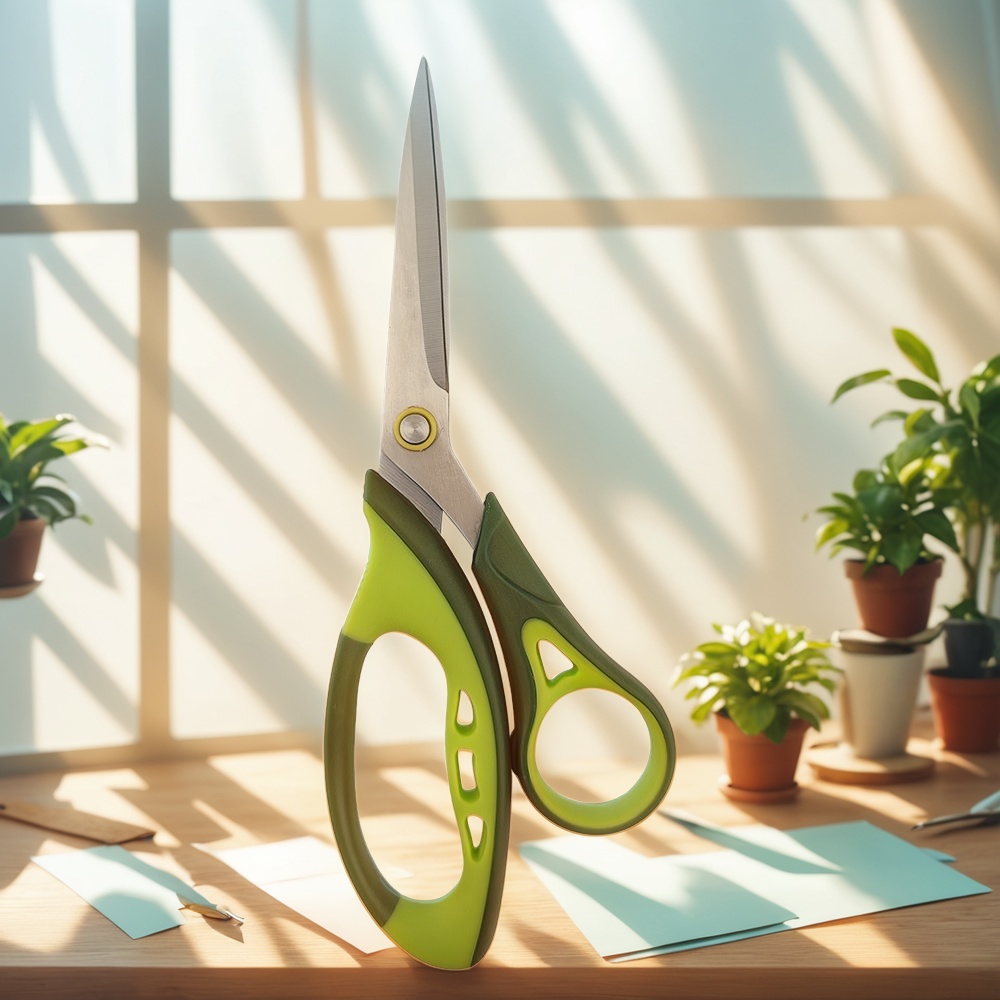
The original product highlighted ergonomic household scissors with lime green and deep forest green handles, a soft textured grip, stainless steel blades, and an adjustable tension screw. Those are useful product cues, but a responsible sourcing decision should go further. Buyers should verify materials, samples, packaging, customization options, and quality control before placing an order.
Key Takeaways
- Start with the end user: home, office, craft, sewing, or promotional use may require different handle comfort and blade performance.
- Ask suppliers to confirm blade material, handle material, tension adjustment, packaging, and any available customization in writing.
- Evaluate samples with practical cutting tests instead of relying only on product photos.
- For OEM scissors, clarify logo placement, color matching, packaging artwork, sample lead time, production lead time, and inspection process.
What Makes a Household Scissors Manufacturer Worth Shortlisting?
A reliable household scissors manufacturer should be able to explain the product clearly and answer sourcing questions without vague claims. Buyers should ask for product drawings or specification sheets where available, including total length, blade length, blade material, handle material, screw type, finish, packaging format, and available colors. If the supplier cannot confirm basic details, comparing samples from multiple manufacturers becomes even more important.
Household scissors are often purchased in volume, so consistency is critical. A good sample is helpful, but buyers should also ask how the supplier checks blade alignment, handle finishing, screw tightness, cutting smoothness, and packaging condition during production. Avoid assuming that every production batch will match the first sample unless the approval standard is documented.
Design and Ergonomics: Comfort Is a Quality Factor
The reviewed scissors stand out visually because of the vibrant lime green and deep forest green handles. Color is useful for shelf appeal and brand identity, but comfort is the more important long-term factor. Household scissors are used by people with different hand sizes and cutting habits, so the handle shape should feel stable without creating pressure points.
The original product description notes an ergonomic shape and a soft, textured grip. These features can help improve control during repeated cutting tasks. When evaluating a manufacturer, ask whether handle colors, grip texture, and packaging can be customized for your market. If left- and right-handed usability is important for your customer base, request samples and have users test them in both hands rather than relying on a catalog statement alone.
Blade Performance: What to Check Before Ordering
The source article states that the scissors use stainless steel blades and include an adjustable tension screw. These are meaningful features for everyday use. Stainless steel is commonly chosen for household cutting tools because it can provide clean cutting performance with practical corrosion resistance, depending on the exact grade and finish. However, buyers should not assume a specific steel grade unless the supplier states it clearly.
The adjustable tension screw is especially useful because it allows the blade feel to be fine-tuned. If the screw is too loose, cutting may feel unstable; if it is too tight, the scissors can feel stiff and tiring. Before confirming a purchase, test whether the screw remains secure after repeated opening and closing. Also check whether the blades cut cleanly from base to tip, because many low-quality scissors perform acceptably near the pivot but fail near the point.
Practical Sample Testing Checklist
For B2B buyers, a sample test should be simple, repeatable, and documented. The goal is not to create a laboratory report, but to compare suppliers using the same practical criteria. Use the same paper, fabric, and packaging material for every sample you receive.
| Check Item | What to Test | Questions to Ask the Supplier |
|---|---|---|
| Handle comfort | Grip stability, pressure points, texture, hand fit | Can handle color or grip finish be customized? |
| Blade sharpness | Clean cuts through paper, light fabric, and common household materials | What blade material and finish are used? |
| Tension screw | Smooth opening and closing; no looseness after repeated use | Is the screw adjustable on all production units? |
| Alignment | Blades meet evenly from pivot to tip | How is blade alignment checked during production? |
| Packaging | Retail appearance, barcode space, protection in transit | What packaging options and artwork requirements are available? |
| OEM readiness | Logo, color, label, insert, or card customization | What details affect MOQ, lead time, and sample cost? |
OEM and Private-Label Sourcing Questions
If you are sourcing OEM scissors, customization should be discussed early. The original article mentions OEM scissors options, but commercial details such as MOQ, pricing, production time, and packaging methods should be confirmed directly with the supplier. Do not rely on assumptions from a product page or a sample photo.
Useful questions include:
- Which parts can be customized: handle color, logo, blade marking, packaging card, label, or carton?
- What files are required for artwork, logo printing, and packaging approval?
- Can the supplier provide pre-production samples before mass production?
- How are color differences controlled between approved sample and bulk production?
- What inspection steps are used before shipment?
- Are there any destination-market requirements the buyer must specify in advance?
These questions help prevent misunderstandings. For example, a buyer may want a specific green handle shade to match brand colors, while the supplier may treat the product as a standard color unless a color reference is provided. Clear documentation reduces risk.
Matching Scissors to the Right Sales Channel
Not every household scissors product should be positioned the same way. A supermarket item may need strong retail packaging and a competitive price point. A craft-focused product may need smoother control and a comfortable grip for longer cutting sessions. A stationery distributor may prioritize consistent carton packing, barcode labeling, and repeat availability.
The ergonomic scissors described in the original article are suitable to consider for general household, office, crafting, and light fabric tasks. Still, buyers should define the exact use case before ordering. If your market includes sewing users, test fabric cutting carefully. If your market includes school or family use, discuss packaging warnings and age-appropriate positioning with the supplier and your compliance adviser.
How to Compare Household Scissors Suppliers
When several suppliers appear similar, compare how they communicate. A stronger supplier usually provides clear answers, consistent sample quality, and realistic timelines. Ask the same set of questions to every potential manufacturer so the comparison is fair. Keep notes on response speed, technical clarity, willingness to provide samples, and how they handle customization requests.
Price matters, but the lowest quote may not be the best value if it results in uneven cutting, poor packaging, or inconsistent handle finishing. For repeat wholesale or OEM programs, the best supplier is often the one that can maintain stable quality over multiple orders and communicate problems before they become shipment issues.
FAQ
What should I ask a household scissors manufacturer first?
Start with product specifications, available customization, sample process, packaging options, MOQ, lead time, and quality inspection steps. Ask for written confirmation before comparing quotes.
Are stainless steel blades always the best choice?
Stainless steel is common for household scissors, but performance depends on the exact material, blade finish, heat treatment, edge quality, and assembly. Request samples and confirm the stated blade material with the supplier.
Why is an adjustable tension screw useful?
It allows the blade feel to be adjusted for smoother cutting. Buyers should test whether the screw stays secure after repeated use and whether the blades remain properly aligned.
Can household scissors be customized for private label?
Often, yes, but the available options vary by supplier. Ask about handle colors, logo placement, packaging design, artwork requirements, sample approval, MOQ, and production lead time.
How do I avoid quality issues in bulk orders?
Approve a final sample, document specifications, define packaging requirements, and ask the supplier how they inspect blade sharpness, alignment, handle finish, screw tightness, and carton condition before shipment.
