




Food Prep Board Supplier Guide: What Buyers Should Look For
Choosing a food prep board supplier is not only about finding a board that looks acceptable in a product photo. For retail, wholesale, food service, and private-label buyers, the real question is whether the board will fit everyday kitchen workflows, remain consistent across batches, and be easy to explain to end users.
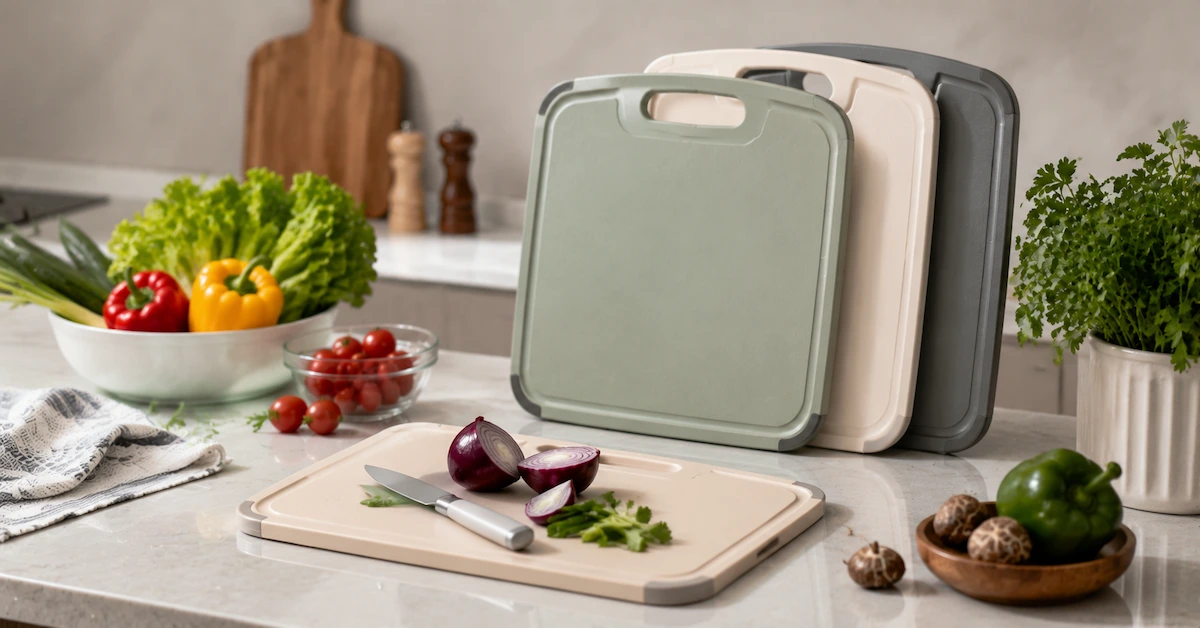
The product shown in the source material is a rectangular food preparation board with rounded corners, a smooth matte-looking surface, an integrated handhold, muted color options, and a shallow perimeter edge. These visible features suggest a board designed for everyday cutting, chopping, slicing, ingredient staging, and movement around the kitchen. Exact material, care method, compliance status, and performance limits are not confirmed, so buyers should verify those details directly with the supplier before placing an order.
Key Takeaways
- Do not judge a food prep board supplier by appearance alone; verify material, finish, use case, and batch consistency.
- Visible features such as a handle slot, rounded corners, and shallow edge can improve daily usability.
- Ask for written details on material, cleaning guidance, packaging, customization, and quality control before buying.
- Evaluate samples in realistic kitchen conditions, not only on a desk or in a showroom.
Why Board Design Matters in Sourcing
A food prep board is a simple product, but small design choices affect how it performs. A rectangular format gives users predictable working space for vegetables, fruit, bread, or general prep. Rounded corners make the board easier to handle and reduce the sharp, unfinished feel that can make a product seem lower quality.
The integrated handhold is also important. It helps users lift, carry, hang, or reposition the board, especially when moving chopped ingredients from the counter to a pan, bowl, sink, or storage container. If the board is sold in retail channels, the handle also makes the product easier to understand visually.
The shallow perimeter edge shown in the image may help contain light juices or reduce ingredient movement, but buyers should not treat it as a guaranteed spill-control feature unless the supplier provides clear functional claims. For sourcing teams, the right approach is to test whether the edge helps in practical use without making it harder to scrape ingredients off the surface.
Supplier Questions Buyers Should Ask
A reliable food preparation board supplier should be able to answer more than basic price and color questions. Before approving a product, ask questions that reveal whether the supplier understands real use conditions.
- What is the exact board material, and can it be documented in writing?
- What cleaning method is recommended for this product?
- Is the board intended for home kitchens, light food service, retail sets, or another use case?
- Can the supplier maintain the same surface finish, color tone, and edge quality across production batches?
- What packaging options are available, and what information should appear on care labels?
- Are color, size, logo, or packaging changes possible, and what limitations apply?
- What claims should not be printed unless separately verified?
Important claims such as dishwasher safety, heat resistance, antimicrobial properties, food-contact compliance, material grade, or third-party certification should not be assumed from appearance. Ask for documents if those claims are important to your market.
Comparison Checklist for Food Prep Board Buyers
| Evaluation Area | What to Check | Why It Matters |
|---|---|---|
| Material clarity | Ask for the exact material and written care guidance | Prevents unsupported claims and helps set user expectations |
| Surface finish | Review matte smoothness, scuff visibility, and cutting feel | Affects cleanability, appearance, and perceived quality |
| Handle design | Test comfort, grip size, and balance when lifted | Improves movement during prep and storage |
| Edge profile | Check rounded corners and shallow perimeter edge | Influences safety, comfort, and ingredient control |
| Color consistency | Compare all colors in a sample set under normal light | Important for retail presentation and color-coded use |
| Batch repeatability | Ask how production quality is controlled | Reduces problems when reordering or scaling supply |
How to Evaluate Samples Before Ordering
Sample testing should be simple but realistic. Start by using the board as a cook would. Lift it with one hand, carry it with chopped ingredients, place it on a counter, and check whether it sits flat. A board that rocks or slides too easily can frustrate users even if the material is acceptable.
Next, inspect the surface under ordinary kitchen lighting. A matte-looking surface may hide fingerprints better than a glossy one, but it may also show scuffs differently. Check whether the finish is even across all colors and whether edges feel smooth instead of sharp or unfinished.
Test the handle slot with different hand sizes if possible. A handle that looks neat in a photo may feel awkward if the opening is too small or if the board feels unbalanced when carried. Also test whether the shallow edge helps with chopped ingredients or gets in the way when transferring food into a pan.
If the supplier offers multiple colors, place the boards side by side. Color-coded boards can help users separate prep tasks, but inconsistent color, thickness, or surface texture across the set may weaken retail appeal.
Selection Guidance for Different Buyer Types
Retail buyers should focus on visual clarity, packaging communication, and user-friendly features. A rectangular board with muted colors, rounded corners, and a handle slot is easy for shoppers to understand. However, retail copy should stay accurate and avoid unverified performance claims.
Wholesale and distributor buyers should pay close attention to repeatability. If the board will be reordered regularly, ask how the supplier manages color matching, finish consistency, and defect checks. A good first shipment is not enough if later batches vary noticeably.
Food service and institutional buyers may care less about decorative appeal and more about cleanability, storage, and workflow separation. Multiple colors can support organized prep routines, but only if the intended use is clear and staff are given proper handling and cleaning guidance.
Private-label buyers should confirm what can be customized without changing the product’s reliability. Color, packaging, and branding may be possible, but every change should be sampled and reviewed before production. Do not assume that a supplier can modify size, thickness, surface texture, or handle shape without affecting cost, lead time, tooling, or performance.
Common Sourcing Mistakes to Avoid
One common mistake is specifying only dimensions and color. A food prep board also needs defined surface finish, edge feel, handle position, intended use, packaging, and care instructions. Without those details, two products that look similar online may perform very differently.
Another mistake is treating a smooth-looking surface as proof of hygiene or durability. Appearance can suggest easy wiping, but it does not prove resistance to staining, deep scoring, heat, or repeated washing. If these points matter, ask the supplier for documentation and test samples under conditions that match your customers’ use.
A third mistake is overloading product copy with claims. Buyers should avoid printing phrases such as antibacterial, dishwasher safe, heat resistant, commercial grade, or certified unless the supplier provides suitable evidence and those claims are reviewed for the target market.
Practical FAQ
What makes a good food prep board supplier?
A good supplier provides clear material information, consistent samples, practical care guidance, realistic claims, and stable production quality. They should be willing to answer detailed sourcing questions before an order is placed.
Are color-coded food prep boards useful?
Yes, they can help users organize prep tasks or create a simple visual system. Buyers should confirm that colors remain consistent across batches and that any use recommendations are accurate.
Should buyers require a handle slot?
A handle slot is useful when the board needs to be lifted, carried, hung, or repositioned often. For fixed workstation use, it may be less important than board size, stability, and surface behavior.
What details should be verified before printing packaging?
Verify the exact material, recommended cleaning method, intended use, warnings, and any performance or compliance claims. Do not print unsupported claims based only on product appearance.
Final Buying Advice
When evaluating a food prep board supplier, focus on how the product will be used, cleaned, stored, displayed, and reordered. The visible board design offers practical features: a rectangular work area, rounded corners, a handhold, muted colors, and a shallow edge. Those details are useful, but they still need supplier confirmation and sample testing.
The best sourcing decision comes from combining product handling with clear supplier questions. Ask for material details, review samples carefully, confirm care guidance, and keep claims accurate. That approach helps buyers choose a board that fits real kitchen use without depending on vague promises.
