








Why sourcing a fruit scooping tool supplier is harder than it looks
A fruit scooping tool supplier is easy to underestimate until a kitchen, catering line, or private-label buyer actually has to choose one. On paper, a melon baller or fruit scooper seems simple: a small bowl on a handle, used to lift round portions of fruit or soft foods. In practice, the difference between a tool that works smoothly and one that frustrates staff shows up in speed, appearance, waste, and repeat purchases.
That matters because buyers are rarely sourcing just a utensil. They are buying consistency for plating, portion control for desserts, and a finish that looks clean enough for front-of-house service. For sourcing managers, the decision is not only about price or appearance; it is about whether the supplier can deliver a useful, repeatable product that fits foodservice reality. A fruit scoop supplier that understands that difference will usually ask better questions, offer more sensible options, and avoid overpromising on details that cannot be verified from a sample photo alone.
What the tool is meant to do
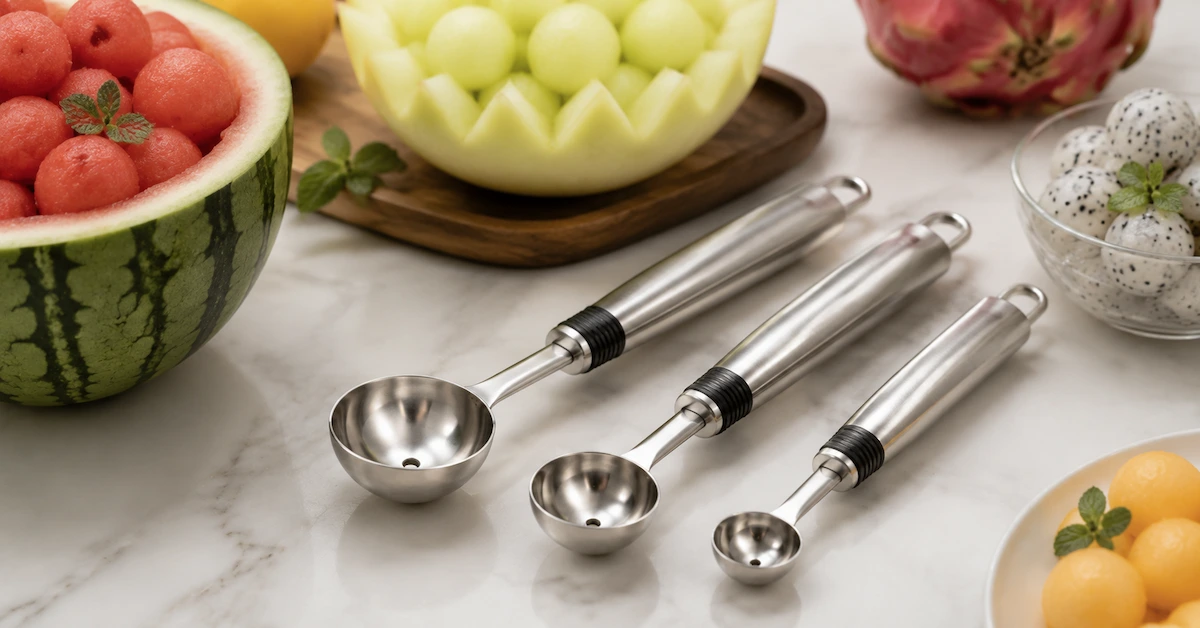
The product category here is a handheld fruit scooping tool set, typically used for melon balls and similar garnish work. The visible configuration shows three separate scoop tools in different sizes, each with a long straight handle, a short neck, and a hemispherical scoop bowl with a small drainage or release hole at the bottom.
That hole is not decorative. In practical use, it helps the scoop release the formed portion more cleanly. On soft fruit, that small design detail can reduce tearing and keep the ball looking round enough for buffet trays, dessert cups, fruit salads, and plated service. The visible black ribbed grip section near the handle head also suggests an effort to improve handling control, which matters when a prep cook is working quickly or with wet hands.
For buyers, the real question is whether the product supports the kind of food presentation they need. A catering team may value the larger scoop for melons and ice cream, while a dessert station may prefer the smaller sizes for precise garnishing. One tool rarely covers every use case well, which is why a three-piece set is often the more flexible option.
Quick buyer takeaway: what to compare first
When evaluating a fruit scooping tool supplier, a short comparison checklist usually saves time:
- Scoop size range: does the set offer clearly different portions for varying fruits and plating styles?
- Handle comfort: is there enough grip texture or shaping for wet, repetitive use?
- Material appearance: does the stainless steel finish look clean and professional?
- Bowl shape and release hole: does the design support smoother release of soft fruit?
- Hanging loop: can the tools be stored or displayed neatly in a busy kitchen?
- Consistency across pieces: do the tools look like a matched set, not a mixed assortment?
These are simple checks, but they are the ones buyers notice after the first service rush. A scoop that looks fine in a catalog can still feel awkward in hand if the neck is too short or the handle is slippery.
Materials and construction: what can be said with confidence
Based on the visible product information, the tools appear to be stainless steel with a brushed or polished metallic finish. That is a sensible material choice for food-contact utensils because it generally supports a clean look and is familiar in commercial kitchens. The black ribbed section near the head looks like a grip element rather than a decorative flourish, and the handles appear long and cylindrical, which is common in hand tools designed for repeated motion.
The exact manufacturing process is not verifiable from the image, so it is better to treat any guess cautiously. Still, a fruit scooper manufacturer in this category would typically rely on metal forming for the scoop head, tube or rod forming for the handle, and assembly where the parts join. Buyers do not need a factory lecture, but they do need enough information to ask the right follow-up questions.
One practical caution: if a supplier cannot clearly explain how the scoop head is formed or joined to the handle, that does not automatically mean the product is poor. It does mean the buyer should request a sample and inspect the joint area, because that is where cheap utensils often reveal themselves.
Why three sizes can be more useful than one
The visible set includes three sizes, which is a real advantage for kitchens that use fruit as part of presentation rather than as a bulk ingredient. A larger scoop works well for melons and larger fruit portions. A medium size may suit fruit salads, and a smaller one can be handy for dessert garnishes, shaped butter, or other soft items where visual uniformity matters.
This flexibility also helps reduce waste. Not every fruit is the same texture, and not every dish benefits from the same portion size. A sourcing manager looking at a fruit scooper manufacturer should ask whether the sizes are distinct enough to matter in operation. If all three bowls are too close in capacity, the set may look complete but function like one tool with two near-duplicates.
Selection criteria for foodservice and retail buyers
The right supplier should make it easier to answer a few basic purchasing questions.
First, who is the end user? A hotel kitchen, a café, a dessert bar, and a home-kitchen retail customer do not prioritize the same thing. Foodservice buyers often care about grip and ease of cleanup, while retail buyers may care more about visual appeal and the promise of versatility.
Second, how will the tool be used day after day? If the scoops are for occasional garnish work, a visually attractive finish may be enough. If they are going into a high-use prep environment, the handle shape and release behavior become more important than packaging polish.
Third, what matters more: portion consistency or presentation speed? A fruit scoop supplier that understands both will usually position the product more honestly. Some tools are built for neat presentation, others for faster production, and there is often a tradeoff between the two.
Common mistakes buyers make
A frequent mistake is assuming all melon ballers behave the same. They do not. Bowl profile, edge shape, handle length, and release hole design all affect usability.
Another common mistake is buying on appearance alone. A brushed stainless finish can look premium, but the real test is how the tool feels after twenty or thirty repetitions.
A third issue is overlooking storage. The hanging loop at the handle end may seem minor, but in a busy kitchen it can make tool organization much easier. Small details like that tend to matter more after delivery than they do during the quote stage.
What to ask a fruit scoop supplier before placing an order
A practical buyer will want straightforward answers, not marketing language.
Ask whether the three sizes are sold together or separately. The available information suggests a set, but that should still be confirmed.
Ask for material details in plain language. If the supplier says stainless steel, ask whether any other materials are used in the grip or handle area.
Ask how the tools are intended to be cleaned and stored. Do not assume dishwasher safety or corrosion resistance unless it is explicitly supplied.
Ask for photos or samples that show the bowl edge, the release hole, and the handle joint. These are the spots that tell you the most about production quality.
Finally, ask whether the supplier has experience with foodservice, retail packaging, or bulk industrial procurement. A fruit scooping tool supplier that understands your channel can usually package and present the item more appropriately.
Where the product fits in the market
This type of utensil sits at the intersection of utility and presentation. It is not a heavy-duty machine component, yet it still needs to perform consistently. In that sense, it is closer to a restaurant-grade hand tool than a novelty kitchen gadget. Buyers sourcing through a fruit scoop supplier are often balancing three things at once: visual appeal, everyday usability, and enough durability to avoid frequent replacement.
That balance is especially important for caterers and dessert operators, where fruit decoration is part of perceived quality. A clean melon ball or evenly portioned fruit scoop can make a tray look deliberate rather than improvised. The difference is subtle, but customers notice it.
FAQ for sourcing teams
Is a three-piece set necessary?
Not always, but it is often the better commercial choice if the tools will be used for different fruits or presentation styles.
Does the release hole matter?
Yes. It can help the scoop release fruit more cleanly, especially with softer produce.
Is stainless steel enough information for a purchase decision?
It is a starting point, not a full specification. Buyers should still ask about finish, joining method, handle design, and any available cleaning guidance.
Should the supplier be evaluated like a larger foodservice equipment vendor?
In a smaller way, yes. Even simple tools affect labor efficiency and presentation quality, so supplier reliability still matters.
What a good next step looks like
If you are comparing a fruit scooping tool supplier, start with a sample request and a few direct questions rather than a long pricing exercise. Confirm the three sizes, inspect the grip and bowl geometry, and see whether the tools suit the way your team actually works. That small amount of due diligence usually tells you more than a polished product page ever will.
For sourcing teams, the useful decision is not whether a fruit scooper looks attractive in a photo. It is whether the supplier can provide a sensible, repeatable tool that helps produce better portions with less fuss. In this category, that is the difference between a harmless utensil and a small but useful piece of kitchen efficiency.
