




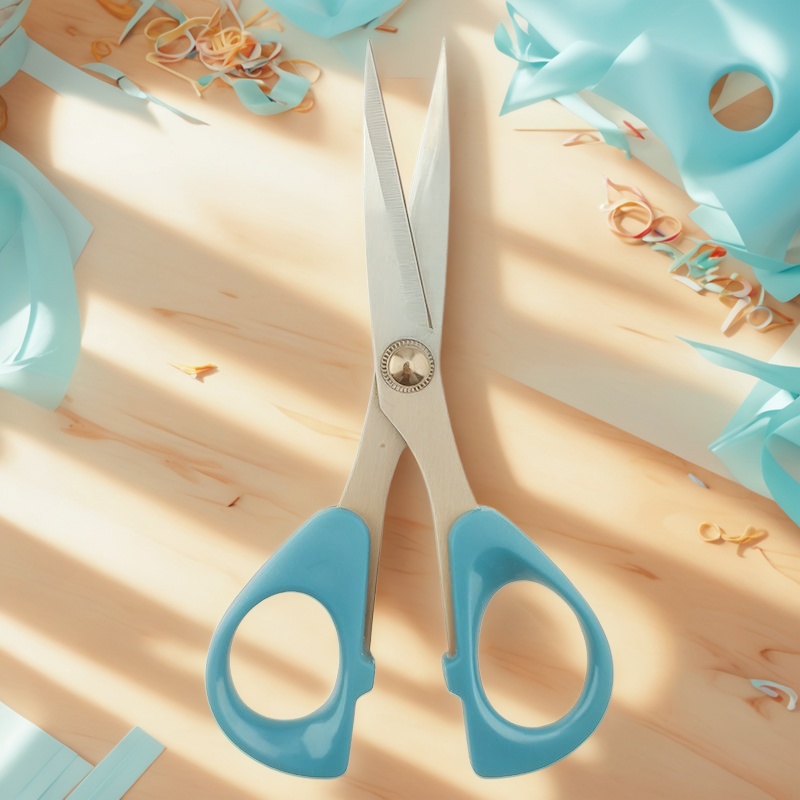
Get Precision with Fabric Cutting Scissors for Professionals
Fabric cutting scissors are one of the most important tools in sewing, quilting, tailoring, sample making, and craft production. A pattern can be drafted correctly and the fabric can be high quality, but poor cutting often leads to uneven seams, frayed edges, wasted material, and extra correction work. For professionals and serious makers, choosing the right scissors is not about appearance alone. It is about control, clean cutting action, comfort during repeated use, and consistency across different fabrics.
The original article introduced these scissors as professional tailor tools with stainless steel blades, a robust pivot point, a polished rivet, and a light blue ergonomic handle. Those are useful details, but buyers should still evaluate how the tool fits their actual cutting tasks. Delicate fabrics, denim, lining, quilting cotton, and layered material do not all behave the same under the blade.

Key Takeaways
- Dedicated fabric cutting scissors help produce cleaner edges than general-purpose scissors.
- Stainless steel blades, a stable pivot, and comfortable handles can support more precise work.
- Fit, balance, and cutting smoothness matter as much as blade sharpness.
- Use fabric scissors only on textiles and maintain them regularly to protect performance.
- Before buying in quantity, test samples on the fabrics and workloads you actually use.
Why Fabric Cutting Scissors Matter
Fabric does not cut like paper. Woven, knit, slippery, thick, and layered materials can shift, stretch, or snag if the scissors are not suited to the job. Professional fabric cutting scissors are designed to move through textile fibers with minimal drag. A clean cut helps pattern pieces remain accurate, which supports better sewing alignment and reduces trimming later.
For a tailor, designer, sewing studio, or craft workshop, poor cutting can become a hidden cost. Small inaccuracies may create mismatched seams, uneven hems, or inconsistent product sizing. For home users, the same issue can turn a simple project into a frustrating one. A dedicated pair of scissors helps protect both time and material.
What Defines Professional Quality?
Professional quality is not defined by one feature. It comes from how the blades, handle, pivot, and overall balance work together. The scissors described in the source article use stainless steel blades, which is a practical choice for a cutting tool because it supports sharp edges and general durability. However, buyers should not assume all stainless steel scissors perform the same. Edge geometry, blade alignment, and finishing quality also affect cutting feel.
The robust pivot point and polished rivet mentioned in the original article are also important. If the pivot is too loose, fabric may fold or slip between the blades. If it is too tight, the scissors may cause hand fatigue during long sessions. A stable pivot helps the blades remain aligned while opening and closing smoothly.
Comparison Checklist for Selection
| Selection Factor | What to Check | Why It Matters |
|---|---|---|
| Blade material | Confirm the material stated by the supplier, such as stainless steel in this model. | Affects sharpness, durability, and maintenance needs. |
| Cutting smoothness | Test on single layers, folded fabric, and common workshop materials. | Shows whether the scissors cut cleanly without chewing or dragging. |
| Pivot stability | Open and close the scissors fully; check for wobble or uneven resistance. | Good alignment supports accurate cutting. |
| Handle comfort | Assess grip size, contour, and pressure points during repeated cutting. | Reduces fatigue and improves control. |
| Intended use | Ask whether the scissors are recommended for light fabric, heavy fabric, or general tailoring. | Prevents using one tool beyond its practical range. |
Comfort and Control During Long Cutting Sessions
Comfort is more than a pleasant extra. It directly affects accuracy. When hands become tired, the cutting line can wander and pressure may become uneven. The source article notes that these scissors have a light blue ergonomic handle designed for comfort and control. An ergonomic handle can be especially useful for long cutting sessions, pattern preparation, and repetitive workshop tasks.
Before selecting scissors for daily use, consider how they feel in the hand. The handle should allow a secure grip without forcing the fingers into an awkward position. The tool should feel balanced, not overly blade-heavy or handle-heavy. If several people in a studio will use the same model, test whether the handle works for different hand sizes.
How to Use Fabric Scissors for Cleaner Results
Even good scissors perform poorly when used incorrectly. The first rule is to reserve fabric cutting scissors for textile work. Cutting cardboard, plastic packaging, wire, or paper can dull the edge and reduce fabric performance. It is better to keep a separate pair of general-purpose scissors nearby so the fabric tool is not misused.
- Lay fabric flat on a stable cutting surface before starting.
- Smooth wrinkles without stretching the fabric out of shape.
- Use long, steady cuts on straight lines instead of short chopping motions.
- Keep the lower blade close to the cutting surface for better stability.
- For curves and notches, slow down and cut with smaller controlled movements.
If you are cutting multiple layers, test first. Some scissors may handle light layers well but struggle with heavier stacked fabrics. For accurate professional work, do not force the tool through material if the blades begin to separate or the fabric shifts.
Care and Maintenance Tips
Durable tailor scissors can last longer when they are treated as precision tools. After use, wipe the blades with a dry soft cloth to remove lint and fine fibers. Store them closed in a drawer, pouch, or protected tool area so the edges do not knock against hard objects. Avoid dropping them, because impact can affect blade alignment or the pivot.
If cutting becomes rough, do not continue forcing the scissors through fabric. Check whether lint is trapped near the pivot, whether the blades are dirty, or whether sharpening is needed. Sharpening should be done carefully; if you do not have experience, use a qualified sharpening service. Ask the supplier whether they provide care guidance for the specific model.
Buying Guidance for Studios, Schools, and Workshops
For individual users, one good pair may be enough. For sewing classes, alteration shops, craft studios, or small production teams, purchasing decisions should be more systematic. Request a sample before placing a larger order, and test it with the actual fabric categories used in your work. Do not rely only on product photos.
Useful questions to ask a supplier include: What blade material is used? Is the pivot adjustable or fixed? What fabrics is the model intended for? Are replacement or sharpening recommendations available? How should the scissors be packaged for storage and transport? If purchasing for a team, also ask whether consistent quality can be maintained across a batch.
Practical FAQ
Can I use fabric cutting scissors on paper?
It is not recommended. Paper can dull the edge over time. Keep fabric scissors dedicated to textiles and use separate scissors for paper patterns or packaging.
Are stainless steel blades always better?
Stainless steel is a useful blade material, and this model is described as using stainless steel blades. However, cutting performance also depends on sharpening, alignment, blade shape, and pivot stability.
What causes fabric to fray while cutting?
Fraying can result from dull blades, poor blade alignment, unstable fabric, or a material that naturally unravels easily. Clean, sharp cuts reduce the problem but may not eliminate it for all fabrics.
How do I know if the handle is comfortable enough?
Test the scissors for several minutes, not just one cut. Look for pressure on the fingers, slipping, awkward wrist angle, or fatigue. The light blue ergonomic handle described in the original product information is intended to support comfort, but fit is personal.
When should scissors be sharpened?
If the scissors push fabric, leave uneven edges, or require extra force, sharpening or inspection may be needed. Clean the blades first, then seek professional sharpening if performance does not improve.
Final Thoughts
Precision fabric cutting scissors are a practical investment for anyone who values accurate sewing and efficient preparation work. The right pair should cut cleanly, feel stable at the pivot, and remain comfortable through repeated use. When assessing this type of tool, focus on real cutting performance rather than broad claims. Test the scissors on your own fabrics, care for them properly, and reserve them for textile work. With the right selection and habits, fabric cutting becomes more controlled, consistent, and reliable.
