




Household Scissors Manufacturer: How to Source Reliable Precision Shears
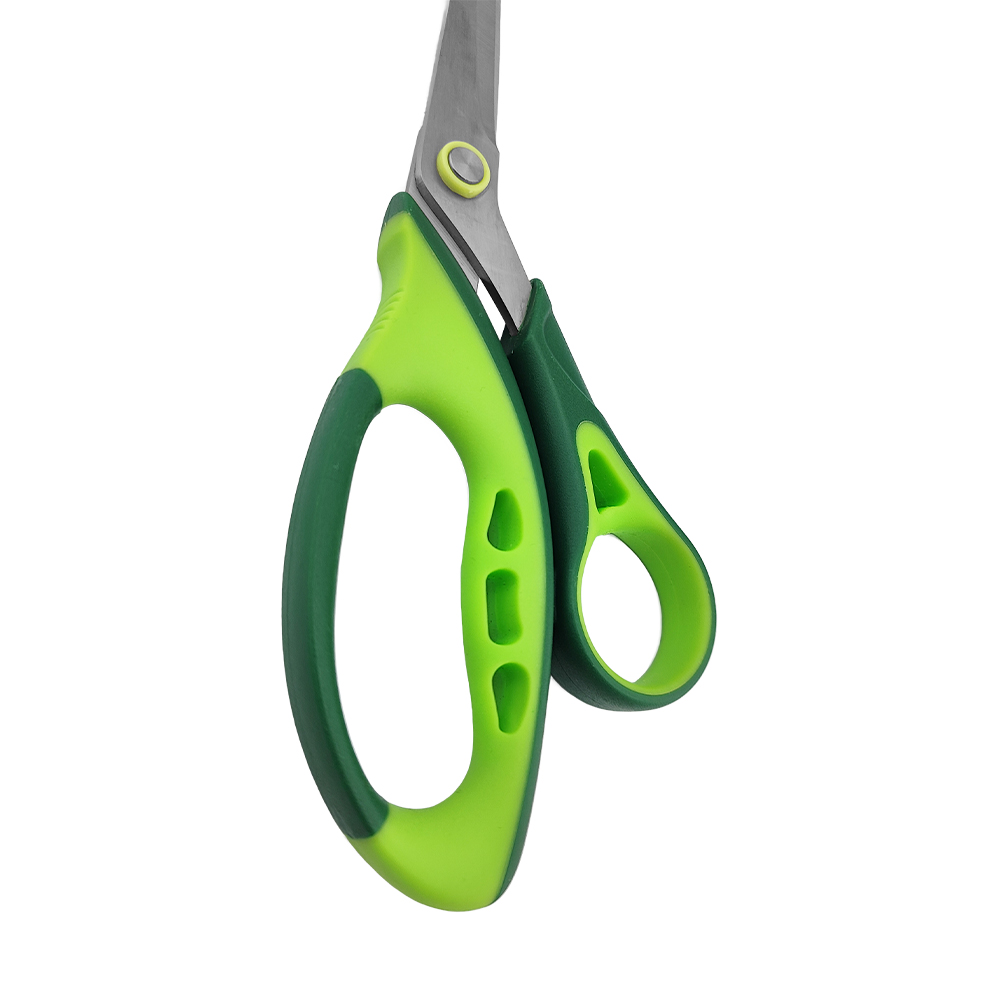
Choosing a household scissors manufacturer is not only about finding a sharp pair of scissors. For importers, distributors, retailers, and private-label buyers, the decision affects product consistency, customer complaints, packaging quality, and repeat orders. The original Vibrant Precision Shears concept highlights several important buying points: a dual-toned green handle, a non-slip thermoplastic rubber grip, larger contoured finger holes, and stainless steel blades designed for clean cutting through common materials such as paper, cardboard, and fabric. Those details are useful, but B2B buyers also need a structured way to compare suppliers and confirm what is suitable for their market.

Key Takeaways
- Evaluate household scissors by cutting performance, handle comfort, safety, finish consistency, and packaging readiness.
- Do not rely only on product photos; request samples and compare several production pieces, not just one display item.
- For OEM scissors, confirm customization options, artwork requirements, lead time, minimum order quantity, and approval steps directly with the supplier.
- Ask for clear material, testing, and compliance documentation when your sales market requires it.
What Makes Household Scissors Suitable for Daily Use?
Household scissors are used for many small tasks: opening packages, cutting paper, trimming tags, preparing craft materials, and handling light fabric jobs. A good product should feel controlled in the hand and cut smoothly without requiring excessive force. In the original product description, the shears are positioned for home, office, and craft room use. That broad use case is typical for general-purpose scissors, but it also means the product must satisfy different users with different hand sizes and cutting habits.
For sourcing teams, the goal is to define the use case before comparing quotations. A low-cost promotional scissor, a retail kitchen drawer scissor, and a craft-focused scissor may all look similar online, but they can differ in handle shape, blade thickness, packaging, and quality-control requirements. Clear positioning helps avoid overpaying for unnecessary features or under-specifying a product that will face demanding daily use.
Blade Material and Cutting Performance
The source article states that the blades are made from stainless steel and are intended to deliver clean cuts through paper, cardboard, and fabric. Stainless steel is commonly chosen for household scissors because it can support daily cutting tasks and is associated with corrosion resistance. However, buyers should still ask the manufacturer for the exact material information, blade hardness range if available, edge-grinding process, and recommended use limitations.
During sample evaluation, test more than one material. Cut thin paper to check edge alignment, cardboard to evaluate cutting force, and fabric to see whether the blades push or snag. Also inspect the pivot area. If the screw or rivet is too loose, the blades may separate during cutting; if too tight, the scissors may feel tiring. A professional scissors supplier should be able to explain how blade alignment and final inspection are controlled before shipment.
Handle Comfort, Grip, and User Control
The original description highlights a dual-toned green handle made with non-slip thermoplastic rubber, commonly abbreviated as TPR. It also mentions larger, contoured finger holes designed to fit different hand sizes and reduce strain during longer use. These are useful product-selection points because comfort is one of the main reasons customers keep or reject a pair of scissors.
When reviewing samples, consider both appearance and feel. The handle surface should be clean, without sharp molding edges where fingers rest. The finger holes should not pinch the knuckles, and the handle should provide enough control when cutting thicker materials. Color consistency also matters if the product will be sold as part of a branded range. For OEM scissors, ask whether handle colors, logo placement, and packaging artwork can be customized, and request pre-production samples before approving mass production.
Supplier Comparison Checklist
A structured checklist makes it easier to compare multiple factories or trading partners. The table below can be used during sourcing, sample review, or quotation discussions.
| Evaluation Area | What to Check | Questions to Ask the Supplier |
|---|---|---|
| Blade performance | Clean cut, smooth opening, stable pivot | What blade material and edge process are used? |
| Handle design | Comfort, grip, molding finish, color consistency | Can the handle color or logo be customized? |
| Product consistency | Multiple samples perform the same way | How is in-process and final inspection handled? |
| Packaging | Retail-ready appearance, barcode space, protection | What packaging formats are available? |
| OEM process | Artwork approval, sample approval, production timeline | What are the MOQ, lead time, and sample costs? |
| Market requirements | Documentation needed for your destination market | Can required test reports or declarations be provided? |
OEM and Wholesale Buying Considerations
If your search intent is to find a household scissors manufacturer for OEM or wholesale supply, product quality is only part of the decision. You also need to understand how the supplier manages communication, documentation, artwork, and repeat orders. Do not assume that every factory offers the same customization scope. Some may support handle color changes, printed logos, or private-label packaging, while others may only offer existing stock designs.
- Request a quotation that separates product cost, packaging cost, sample cost, and tooling or artwork charges if applicable.
- Ask for the minimum order quantity for standard items and for customized versions.
- Confirm whether the approved sample will be treated as the production reference.
- Clarify carton details, labeling requirements, and shipping marks before production begins.
- Define acceptable quality limits or inspection criteria in writing when placing larger orders.
These steps reduce misunderstandings and help both sides work from the same expectations. They are especially important when sourcing scissors for retail shelves, promotional programs, supermarket supply, or online marketplace sales.
Quality Control Before Shipment
Household scissors may seem simple, but small defects can quickly affect customer satisfaction. Common issues include uneven blade contact, rough handle edges, loose pivot screws, inconsistent color, stained blades, and damaged packaging. Before shipment, buyers should consider a final inspection that includes function testing, visual inspection, carton count, and packaging verification.
For cutting tests, use materials that match the product promise. If the scissors are described for paper, cardboard, and fabric, include those materials in the inspection plan. For packaging, check that the barcode, logo, product name, warnings, and destination-market language are correct where required. If the product will be sold under your brand, keep approved artwork files and supplier confirmations together for future reorders.
How to Position Household Scissors for Retail Buyers
Retail buyers usually want a clear reason why a product belongs in their assortment. The Vibrant Precision Shears concept offers several positioning angles without relying on exaggerated claims: a visible green dual-tone handle, a non-slip TPR grip, larger contoured finger holes, and stainless steel blades for general household cutting. These features can support listings for home use, office drawers, school supply sections, craft areas, or general hardware assortments.
However, product copy should stay accurate. Avoid promising professional tailoring performance unless the scissors have been designed and tested for that use. A better approach is to describe the intended materials and daily tasks clearly. Accurate positioning reduces returns and builds trust with distributors and end users.
Practical FAQ
What should I ask a household scissors manufacturer first?
Start with the intended use, blade material, handle material, available packaging, MOQ, lead time, and whether OEM customization is available. Then request samples for hands-on testing.
Are stainless steel blades enough to judge quality?
No. Stainless steel is only one factor. Edge sharpness, blade alignment, pivot stability, finishing, and inspection control all influence cutting performance.
Can household scissors be customized for private label sales?
Many suppliers may offer OEM options, but the exact scope varies. Ask whether handle colors, logos, cards, blister packs, or cartons can be customized, and confirm artwork requirements.
How many samples should a buyer test?
Testing several samples is better than judging one piece. Compare cutting feel, opening and closing smoothness, handle finish, and packaging consistency.
What documentation should importers request?
Ask for product specifications, packaging details, material information, and any compliance or test documents required by your destination market. Do not assume documentation is available unless the supplier confirms it.
Final Sourcing Advice
A reliable pair of household scissors combines clean cutting, comfortable handling, stable construction, and consistent presentation. For B2B buyers, the best sourcing result comes from matching the product to the sales channel, testing samples carefully, and asking precise commercial and quality-control questions before ordering. The dual-toned green handle, TPR grip, contoured finger holes, and stainless steel blades described in the original product information provide a useful starting point. The next step is supplier verification: confirm specifications, review samples, document requirements, and make sure the final product matches what your customers expect.
