




Houseware Manufacturer China: How to Source Kitchen Sets with Confidence
Sourcing a coordinated kitchen houseware set from China can be efficient, but it should not be treated as a simple catalog purchase. A set that includes utensils, a countertop holder, colanders, bowls, prep containers or a cutting board may look cohesive in a product photo, yet each component can involve different materials, tooling, assembly methods and packaging risks. For importers, retailers and private label teams, the goal is not just to find a low quote. The goal is to identify a houseware manufacturer in China that can explain how the set will be made, controlled and packed consistently.
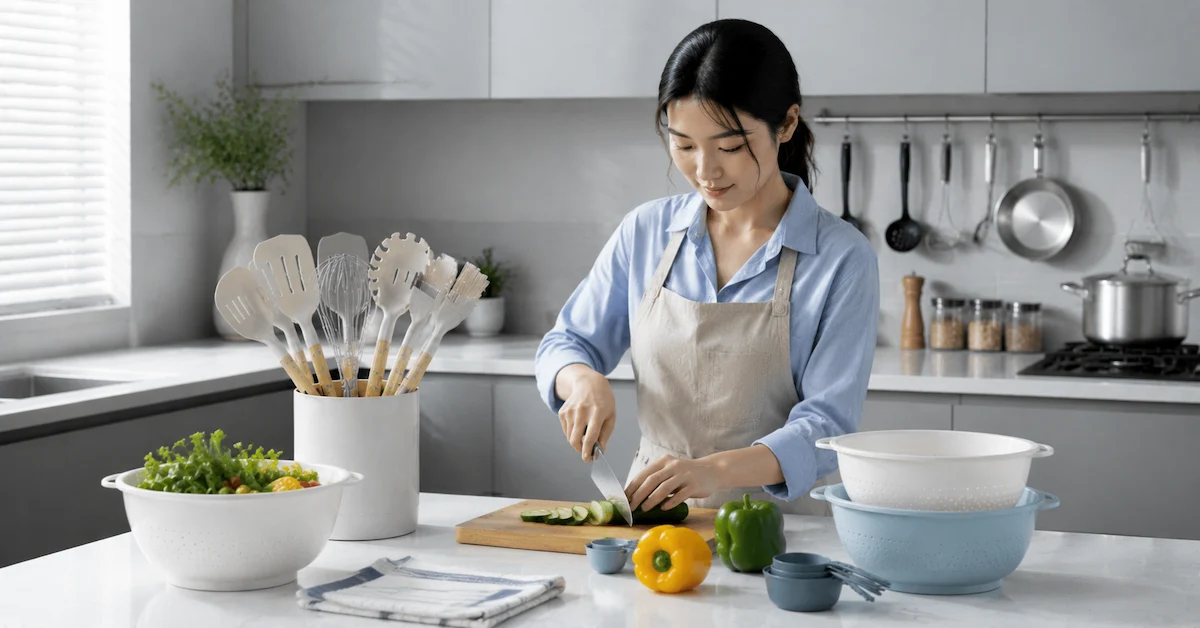
The product type shown here appears to be a coordinated home kitchen assortment for everyday food preparation and countertop storage. Visible items include cooking utensils such as spatulas, slotted spoons and whisks, a white cylindrical utensil holder, light-colored colanders or mixing bowls with handles, smaller prep containers and a wooden cutting board. The exact materials are not confirmed by the image, so buyers should verify them directly with any supplier before approving samples or purchase orders.
Key Takeaways
- A kitchen set is a bundle of separate components, not one simple SKU.
- Material descriptions, assembly methods and color matching should be confirmed in writing.
- Production samples matter more than polished showroom samples.
- Packaging should be tested for nesting parts, surface scuffing and ecommerce handling.
- A suitable manufacturer should answer process questions clearly, not only provide photos.
Why China Remains a Practical Source for Kitchen Sets
China remains a practical sourcing base for mixed houseware programs because many suppliers are familiar with multi-item retail assortments, private label packaging and export coordination. That does not mean every supplier is suitable for every program. A kitchenware manufacturer may be strong in molded utensils but less experienced with bowls, holders or bundled gift packaging. A household goods manufacturer may have broader product coordination capability, while a trading company may offer speed and variety but less direct control over production details.
Buyers should start by defining the channel. A supermarket promotion, an ecommerce bundle, a hospitality supply order and a private label home starter kit each require different decisions on packaging strength, appearance, cost structure and component count. Without that context, suppliers may quote a set that looks similar but performs differently in real use and shipping.
What This Type of Kitchen Set Usually Includes
A coordinated kitchen houseware set often combines food preparation, serving and storage-adjacent items. In the original product image, the assortment suggests a practical home-use bundle rather than specialized professional cookware. The main value is coordination: pieces share a similar visual language, color palette and countertop presentation.
Common items in this category may include:
- Cooking utensils such as spatulas, ladles, spoons, turners or whisks.
- A countertop holder designed to keep utensils upright and accessible.
- Mixing bowls, colanders or draining baskets with handles.
- Small measuring, prep or storage containers.
- A cutting board or other complementary preparation accessory.
Because the exact material of each item is not stated in the source, buyers should avoid assumptions. If an item looks like silicone, nylon, bamboo, wood, coated metal or molded plastic, request confirmation. A good specification should identify the material used for every component, not just describe the set as durable, safe or eco-friendly.
Where Multi-Piece Houseware Sets Commonly Fail
The main sourcing risk is fragmentation. A buyer may approve a beautiful sample, then discover during production that the utensil heads, handles, bowls and holder are made on different lines or sourced from different workshops. This is not automatically unacceptable, but it must be managed. Responsibility for color consistency, assembly strength and final packing should be clear.
Typical failure points include loose handles, uneven finish, visible mold marks, poor nesting between bowls, color mismatch between white or neutral components, rough edges, weak packaging inserts and cartons that allow parts to rub during transit. A holder also needs practical balance: if utensils make it tip over easily, the set may disappoint customers even if the individual pieces look fine.
For private label buyers, visual inconsistency can be just as damaging as functional failure. A coordinated set relies on the impression that all parts belong together. Slight differences in tone, gloss, texture or handle shape can make a product look assembled from leftovers rather than designed as a range.
Supplier Comparison Checklist
Use the same checklist for each shortlisted houseware manufacturer China option. This keeps the discussion factual and prevents a glossy sample from hiding production weaknesses.
| Check Area | What to Ask | Why It Matters |
|---|---|---|
| Materials | What is each component made from, and can the supplier provide written material descriptions? | Prevents assumptions based on appearance and supports accurate costing. |
| Assembly | How are handles, heads and multi-part items joined? | Weak joints can lead to wobble, breakage and returns. |
| Color and finish | How will matching be controlled across utensils, bowls and holders? | Coordinated sets depend on visual consistency. |
| Production source | Which parts are made in-house and which are outsourced? | Clarifies lead time control and quality responsibility. |
| Packaging | How are nesting parts separated and protected? | Reduces scuffing, dents and ecommerce damage. |
| Samples | Will the approved sample represent mass production? | Helps avoid approving a hand-finished sample that cannot be repeated. |
Questions to Ask Before Placing a Purchase Order
Before issuing a PO, buyers should ask direct questions and record the answers in the specification file. Important questions include:
- Can you list the material of every item in the set?
- Are all components manufactured by your factory, or are some sourced externally?
- What sample stage best represents mass production?
- How do you inspect handle attachment, utensil shape and bowl finish?
- How do you prevent color variation across different production batches?
- What packaging is used to stop nested bowls or stacked items from scratching?
- Can the carton and inner packing be adjusted for retail display or ecommerce shipment?
- What information do you need from us to quote OEM or private label packaging accurately?
These questions do not require the supplier to make unsupported claims. They simply reveal whether the supplier understands the practical risks of a multi-piece kitchenware program.
Manufacturer, Supplier or Trader: Which Fit Is Better?
A general trader can be useful when buyers need a broad range quickly or want to test a market with a small assortment. However, for coordinated kitchen sets, a direct manufacturer or a supplier with strong factory control is often easier to manage. More decisions are closer to the production line, especially around tooling, assembly, color control and packing.
The best option depends on program complexity. If the set has many custom colors, private label packaging and several components that must match, buyers should prioritize process transparency. Ask who owns the molds, who approves materials, who performs final inspection and who is responsible if one component fails. If the answer is vague, the supplier may still be able to ship goods, but the buyer carries more risk.
Practical Sampling and Approval Guidance
Do not approve the set only by reviewing the most attractive piece. Test the whole bundle as a consumer would. Place the utensils in the holder. Nest the bowls. Open and repack the box. Check whether the cutting board and prep containers fit naturally into the assortment. Look for scuffing after parts touch each other. If the program is for ecommerce, ask how the product survives courier-style handling, not just palletized transport.
For private label projects, define acceptable variation before production. If white tones, wood tones or matte finishes are important to your brand, provide reference samples or measurable color targets where possible. If commercial details such as MOQ, lead time, packaging options or compliance documentation matter to your channel, ask the supplier directly and verify them before final approval.
FAQ: Sourcing Kitchen Sets from China
Is a houseware manufacturer in China only suitable for large orders?
Not always. Order suitability depends on the supplier, the number of components, packaging complexity and customization requirements. Buyers should ask about MOQ instead of assuming one standard answer.
Can one supplier handle utensils, bowls, holders and prep items?
Sometimes. Some suppliers may make several items in-house, while others coordinate parts from partner factories. The key is to know who makes each component and who is responsible for final quality.
What should buyers verify first?
Start with material descriptions, assembly methods and packaging. These three areas affect cost, quality and customer satisfaction more than the catalog image.
Are showroom samples reliable?
They are useful for initial screening, but they may not represent mass production. Ask for production-intent samples before confirming a private label or wholesale order.
What makes a supplier easier to work with?
Clear answers, written specifications, transparent sourcing of components and willingness to discuss inspection points are strong signs of a more reliable sourcing partner.
Final Sourcing Advice
When evaluating a houseware manufacturer China option, focus on repeatability rather than appearance alone. A coordinated kitchen set succeeds when materials, finish, fit, packaging and presentation remain consistent across the full order. Shortlist suppliers that can explain their production path, provide realistic samples and answer practical questions before the PO is placed. That discipline will reduce surprises and help buyers build kitchen houseware programs with more confidence.
