




How Retailers Should Choose the Right Cutting Board for Kitchen Sales
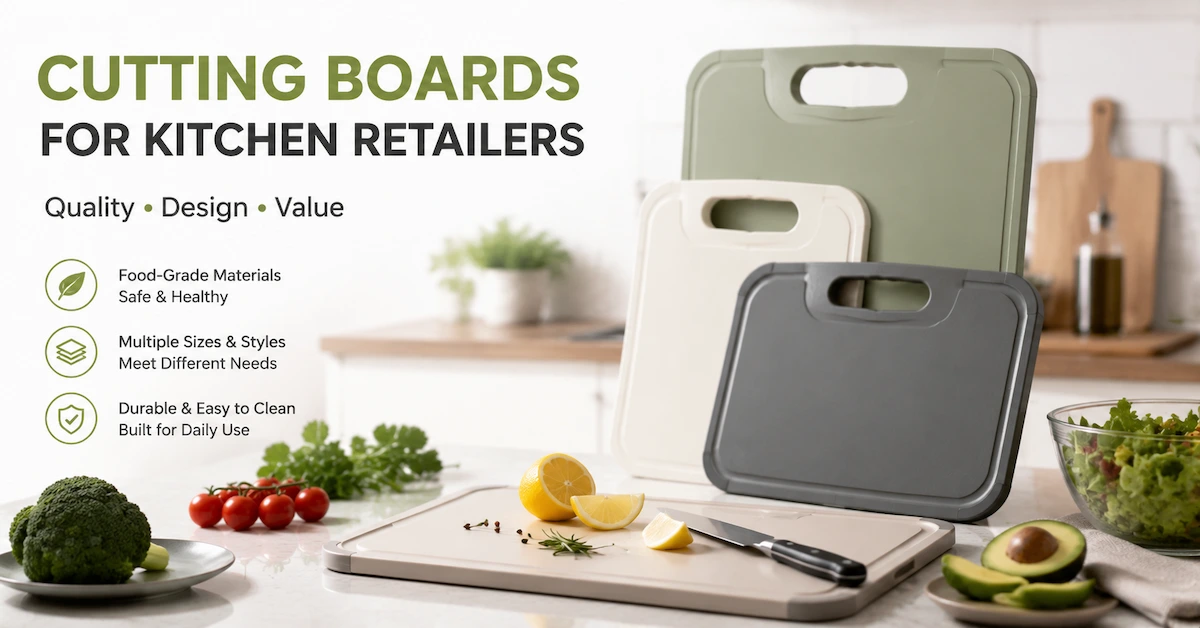
For kitchenware retailers, a cutting board is a high-frequency household product that can support repeat sales, bundled promotions, and private-label category growth. The challenge is that customers judge cutting boards quickly: they look at size, material, color, thickness, price, packaging, and whether the board seems practical for everyday food preparation.
A successful retail cutting board range is not built by choosing the cheapest available option. Buyers need to match products to their sales channels, understand how different materials affect customer expectations, and ask suppliers the right questions before placing wholesale or OEM orders.
Key Takeaways
- Retailers should plan a cutting board range by material, size, price tier, and sales channel rather than relying on one general-purpose item.
- Plastic, wooden, and composite boards each serve different customer needs and require different quality checks.
- Packaging, product photography, and consistency between batches are important for both store shelves and e-commerce listings.
- Before ordering, buyers should ask suppliers about customization options, inspection steps, lead times, packing methods, and documentation.
Why Cutting Board Selection Matters for Retailers
A cutting board may look simple, but it directly affects customer satisfaction. A board that warps, stains easily, feels unstable, or arrives with poor finishing can create returns and negative reviews. On the other hand, a well-chosen product can become a dependable kitchen category item for supermarkets, household stores, gift shops, and online retailers.
Retail buyers should evaluate cutting boards from two perspectives. First, the product must be useful for end users: easy to handle, easy to clean, appropriately sized, and suitable for common kitchen tasks. Second, the product must work commercially: consistent appearance, reliable packing, clear labeling, and a price structure that fits the target channel.
Understand What Customers Expect
Modern consumers often compare kitchen products online before buying, even when they later purchase in a physical store. That means appearance and product information matter. A cutting board should be easy to understand at a glance: what it is made for, how large it is, how it should be cleaned, and where it fits in the kitchen.
Common customer expectations include:
- Practical size: small boards for fruit or quick preparation, medium boards for daily cooking, and large boards for family meals.
- Comfortable handling: rounded corners, smooth edges, handles, or hanging holes can improve user experience when available.
- Easy maintenance: customers prefer products with clear cleaning and storage guidance.
- Good presentation: neutral colors, clean surfaces, and consistent finishing help products photograph well for online listings.
Retailers should avoid selecting only by visual appeal. A board that looks attractive but does not meet daily-use expectations may perform poorly after the first purchase cycle.
Compare Common Cutting Board Materials
Material choice determines product positioning. Retailers should select materials based on customer segment, price tier, care expectations, and merchandising strategy. The table below offers a practical comparison for sourcing discussions.
| Material type | Typical retail positioning | Advantages to consider | Questions to ask suppliers |
|---|---|---|---|
| Plastic | Entry-level to everyday household use | Lightweight, often affordable, available in many colors, simple to merchandise in sets | What material is used? Is the surface finish consistent? What cleaning instructions should be printed? |
| Wood | Premium, gift, serving, or specialty kitchen ranges | Natural appearance, strong shelf appeal, suitable for preparation and serving categories | How is moisture controlled? What surface treatment is used? How should customers maintain the board? |
| Composite | Mid-range or design-focused collections | Modern look, design flexibility, consistent appearance across batches when well controlled | What is the composition? How durable is the surface in normal use? What test reports or documents are available? |
No single material is best for every retailer. Supermarkets may prioritize price, weight, and shelf-ready packaging. Kitchen specialty stores may focus more on surface finish, gift packaging, and product storytelling. Online brands should pay special attention to photography consistency and accurate product descriptions.
Build a Balanced Product Range
Retailers usually achieve better category performance by offering a structured range instead of one isolated item. A balanced assortment helps customers trade up or choose according to task.
- Basic everyday boards: suitable for supermarkets, discount channels, marketplaces, and starter kitchen collections.
- Medium daily-use boards: a core retail item for household stores and general e-commerce shops.
- Large preparation boards: useful for families, meal-prep customers, and higher basket value promotions.
- Boards with added convenience: handles, hanging holes, juice grooves, or set combinations can support differentiated listings when those features are actually supplied.
- Premium or gift-oriented boards: suitable for wooden or design-led collections where packaging and finish are important.
When planning SKUs, consider whether customers will understand the difference between items. If two boards look similar but have very different prices, the packaging or online listing should clearly explain the size, material, finish, or use case.
Evaluate Supplier and OEM Capability
For wholesale, OEM, or private-label sourcing, supplier reliability is as important as the product sample. A sample can look acceptable, but retail orders require repeatable production and consistent packing. Buyers should ask suppliers direct questions before confirming an order.
Useful supplier questions include:
- Which material options are available, and what documentation can be provided for each?
- Can the supplier support custom colors, logo printing, packaging design, or product sets?
- How are dimensions, color, surface finish, and edge finishing checked during production?
- What packing methods are available for e-commerce, retail shelves, or bulk wholesale cartons?
- How are defects handled before shipment, and what inspection standard is used?
- What are the lead time, sample process, and order confirmation steps?
A reliable kitchen cutting board supplier should be able to explain the production and quality-control process clearly. If commercial details such as MOQ, pricing, certifications, or testing results are important for your market, ask for current written confirmation rather than assuming they apply.
Check Packaging and Retail Presentation
Packaging affects both customer perception and operational efficiency. For physical stores, the cutting board should be easy to display, scan, and identify. For online sales, packaging must help reduce shipping damage and support a professional unboxing experience.
Retail buyers should review packaging samples before bulk production. Check whether barcodes, product names, care instructions, country-of-origin marking, warning statements, and brand elements are placed correctly for the intended market. Requirements can vary by destination, so buyers should confirm compliance obligations with their own regulatory or import advisors.
For e-commerce, request drop-test or transport-related information if relevant, and ask how individual boards are protected from scratches during shipping. Poor packaging can damage an otherwise acceptable product.
Quality Checks Before Placing an Order
Before confirming a wholesale cutting board order, inspect both samples and pre-production details. Product consistency is especially important when selling through online marketplaces, where customer photos and reviews can reveal batch differences quickly.
A practical pre-order checklist includes:
- Confirm actual size, thickness, weight, and acceptable tolerance with the supplier.
- Check surface smoothness, edges, corners, and any handle or groove areas.
- Review color consistency across multiple samples, not just one photo.
- Test how the product fits into final packaging and shipping cartons.
- Confirm the final artwork, care label, barcode, and carton marks before production.
- Ask what inspection photos, reports, or shipment documents will be provided.
For private-label kitchenware, keep an approved reference sample. This helps compare future batches and reduce disputes about color, finish, or packaging details.
Practical FAQ for Retail Buyers
What is the best cutting board material for retailers?
There is no universal best material. Plastic boards often fit value and everyday ranges, wooden boards can work for premium or gift categories, and composite boards may suit mid-range design-led assortments. Choose based on target customer, channel, care expectations, and supplier capability.
How many cutting board sizes should a retailer offer?
Many retailers start with small, medium, and large options. This covers quick preparation, daily cooking, and family meal preparation without making the range too complex.
What should buyers ask a cutting board supplier?
Ask about material details, customization options, packaging, inspection steps, lead time, sample approval, documentation, and how the supplier controls batch consistency.
Are custom cutting boards suitable for private-label brands?
They can be, if the supplier can support logo application, packaging design, stable quality, and clear communication. Buyers should confirm artwork requirements, sample approval steps, and order details before production.
How can retailers reduce returns?
Provide accurate product descriptions, clear care instructions, reliable packaging, and consistent product quality. Also ensure product photos match the final batch customers will receive.
