




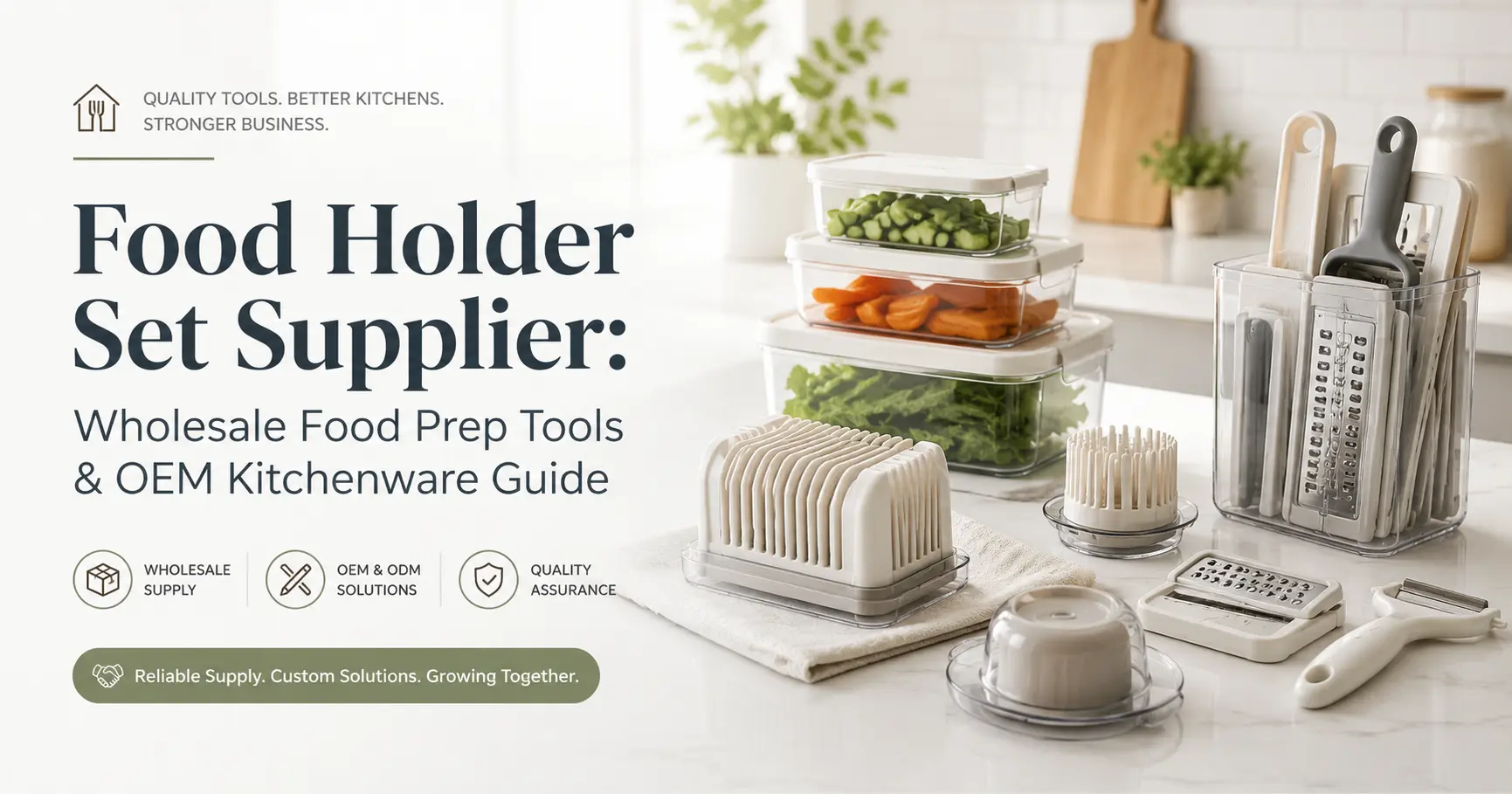
Food Holder Set Supplier: Wholesale Food Prep Tools & OEM Kitchenware Guide
Food holder sets are everyday kitchen tools used for food preparation, storage, serving, and organization. For B2B buyers, they are attractive because a set can create higher retail value than a single low-cost gadget while still remaining compact for shipping and shelf display.
Choosing the right food holder set supplier is not only about finding a low unit price. Importers, supermarket buyers, Amazon sellers, and distributors should evaluate material suitability, set logic, packaging, quality control, OEM options, and repeat supply reliability before placing bulk orders.
Key Takeaways
- A food holder set should have a clear use case, not a random mix of parts.
- Buyers should ask suppliers for food-contact material details and sample confirmation before bulk ordering.
- Packaging affects both retail conversion and shipping protection.
- OEM projects should start with realistic questions about logo method, color options, MOQ, lead time, and packaging files.
Why Food Holder Sets Work for Wholesale Channels
Food holder sets fit several sales channels because they solve simple kitchen tasks: holding ingredients during prep, organizing fruit or snacks, presenting small foods, or keeping countertops more orderly. They are easy for consumers to understand and can be positioned for home kitchens, dorms, apartments, gift bundles, or seasonal promotions.
For wholesale buyers, the set format offers practical advantages:
- Suitable for supermarkets, e-commerce, distributors, and promotional programs
- Easy to bundle with other kitchen gadgets or storage items
- More perceived value than a single small accessory
- Flexible packaging choices for retail shelves or online fulfillment
- Potential for private label branding through packaging and labels
The strongest products are usually those with a clear customer problem and a set combination that makes sense in daily use.
What to Check in a Food Holder Set Supplier
A capable supplier should help buyers compare product options, build practical set combinations, review packaging, and prepare samples for evaluation. Because a food holder set includes multiple pieces, even small inconsistencies can affect customer reviews and return rates.
Before selecting a supplier, ask:
- Which food holder set models are available for wholesale?
- Can the supplier explain the materials used for food-contact areas?
- Are samples available before bulk production?
- What logo, label, color, or packaging customization options are possible?
- What is the MOQ for standard packaging and for customized packaging?
- How are mixed SKUs, barcodes, cartons, and shipping marks handled?
- What quality checks are performed before shipment?
These questions help buyers avoid vague quotations and compare suppliers on more than price.
Common Food Holder Set Types
Food holder sets can be designed around preparation, storage, serving, or multi-purpose use. The best choice depends on the buyer’s target market and sales channel.
- Food prep holder sets: used during washing, cutting, peeling, slicing, or ingredient organization.
- Food storage holder sets: used for fruit, snacks, leftovers, or small kitchen items.
- Serving holder sets: used for fruit, desserts, party foods, or tabletop presentation.
- Multi-functional holder sets: designed for compact kitchens where users prefer space-saving tools.
- Gift or bundle sets: combined with related kitchen tools to create a higher-value retail package.
For Amazon or marketplace listings, the set should be easy to explain in product images. For supermarkets, shoppers should understand the function quickly from the packaging.
Material and Packaging Comparison Checklist
Food holder sets may use different materials depending on the design. Buyers should not assume a specific grade, safety standard, or test result unless the supplier provides documentation. The table below shows useful sourcing checks.
| Area to Compare | What Buyers Should Check | Why It Matters |
|---|---|---|
| PP or ABS plastic parts | Ask about intended use, odor, surface finish, and sample durability | Helps reduce complaints about weak structure or poor appearance |
| Silicone parts | Confirm flexibility, cleaning method, and heat-use limitations if relevant | Prevents incorrect product claims in retail listings |
| Stainless steel parts | Ask about rust resistance expectations and care instructions | Important for clips, supports, or contact points |
| Bamboo or wood parts | Check finish, moisture care guidance, and packaging protection | Natural materials may need clearer use-and-care instructions |
| Retail packaging | Compare color box, kraft box, window box, hanging card, or gift box | Affects shelf appeal, freight volume, and product protection |
| Carton packing | Confirm inner packing, carton strength, labels, and shipping marks | Reduces risk during export handling and warehouse receiving |
OEM and Private Label Planning
OEM customization can be useful for buyers building a kitchenware brand, but it should be planned carefully. Custom packaging is often a practical starting point because it can add brand identity without requiring a new mold. Product color, set combination, barcode label, insert card, and logo placement may also be discussed with the supplier.
Before committing to an OEM order, buyers should request clear answers about artwork format, sample approval, packaging mockups, MOQ, production lead time, and whether color differences may occur between samples and bulk goods. If the supplier cannot provide clear customization boundaries, the project may become difficult to control.
Quality Control Before Bulk Shipment
Quality control should cover both individual components and the complete set. A single missing piece, mismatched color, incorrect barcode, or weak package can create problems for retail buyers and online sellers.
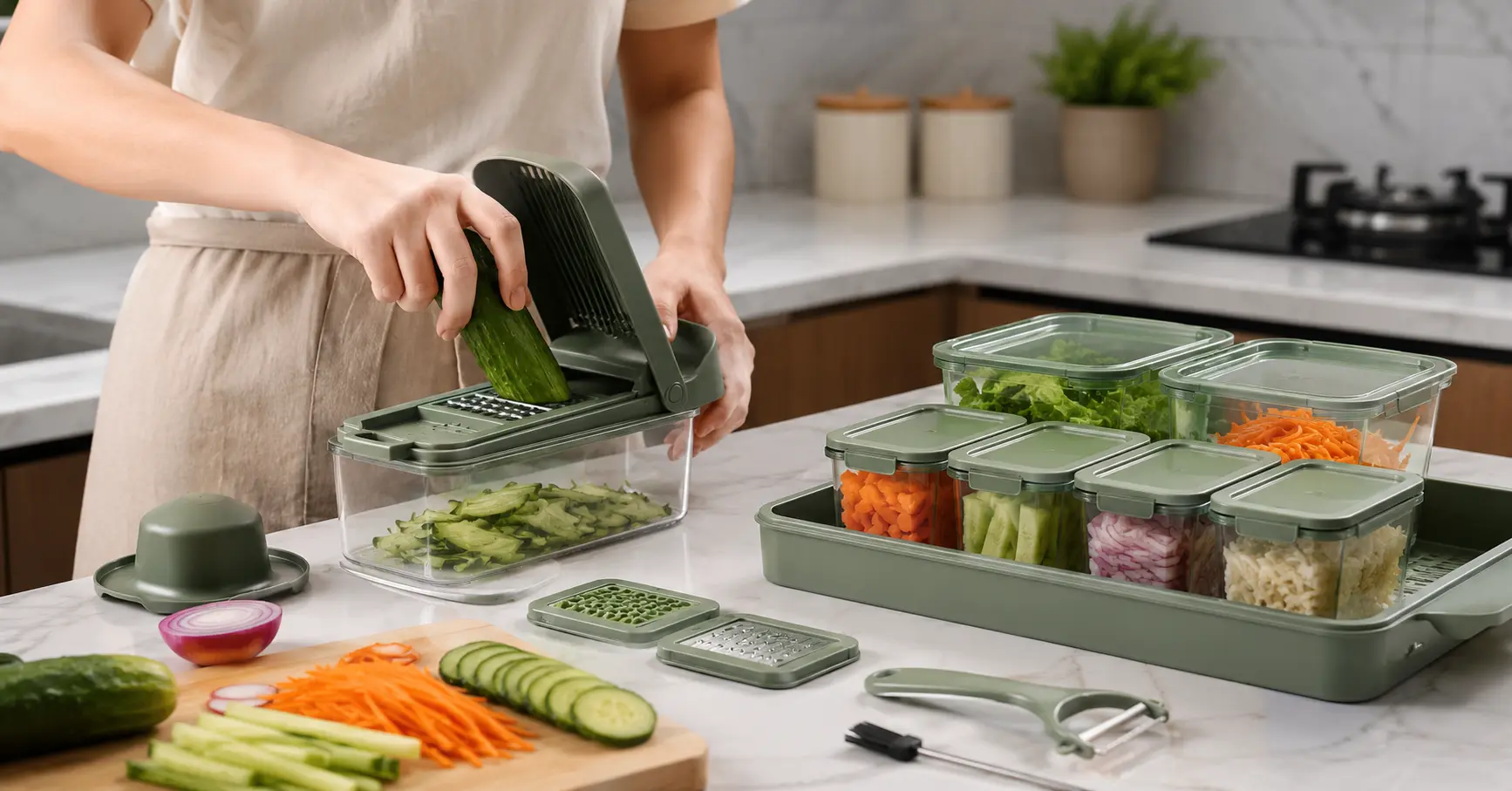
Useful QC points include appearance, surface smoothness, component quantity, size consistency, packaging completeness, carton labeling, and sample comparison. For food-contact items, buyers should ask what material documents or compliance information can be provided for the destination market instead of assuming universal approval.
How to Choose the Right Supplier
The right food holder set supplier should understand product selection, packaging, and bulk order communication. For trial orders, buyers may prioritize standard items and simple packaging. For mature retail programs, buyers may need more detailed work on private label packaging, set differentiation, and stable repeat production.
When comparing quotations, review the full commercial picture: sample quality, packaging method, carton quantity, customization cost, lead time, after-sales communication, and replacement policy for defects. A slightly higher unit price may be justified if the set is better designed, easier to sell, and less likely to generate customer complaints.
Practical FAQ
What is a food holder set used for?
It can be used for food preparation, storage, serving, or kitchen organization, depending on the design and included pieces.
Is a food holder set suitable for wholesale?
Yes. The category is lightweight, practical, and easy to package for supermarkets, online stores, distributors, and private label programs.
Can food holder sets be customized?
Often yes, but available options depend on the supplier. Ask about logo placement, packaging design, color options, set combinations, MOQ, and sample approval.
Should buyers request samples?
Yes. Samples help verify material feel, size, packaging, component matching, and overall value before a bulk order.
What packaging is best?
It depends on the channel. Window boxes can help supermarket shoppers understand the product, while compact protective boxes may be better for e-commerce fulfillment.
Final Sourcing Advice
A food holder set can be a strong wholesale product when the set design is useful, the materials are appropriate, and the packaging matches the sales channel. Buyers should treat supplier selection as a structured sourcing process: compare samples, confirm customization details, ask for food-contact material information, and document QC requirements before production.
