




Kitchen Knife Manufacturer: OEM Stainless Steel Knife Factory Guide
Choosing a kitchen knife manufacturer is a quality decision, not only a purchasing decision. For importers, wholesale distributors, retail brands, and private label kitchenware sellers, knives must be sharp, safe to handle, consistent in bulk production, and suitable for the intended price segment.
Unlike simple kitchen accessories, a knife depends on several controlled processes: steel selection, heat treatment, blade grinding, edge sharpening, handle assembly, polishing, inspection, and packaging. A strong sample is useful, but B2B buyers should focus on whether the supplier can repeat the same quality across production orders.
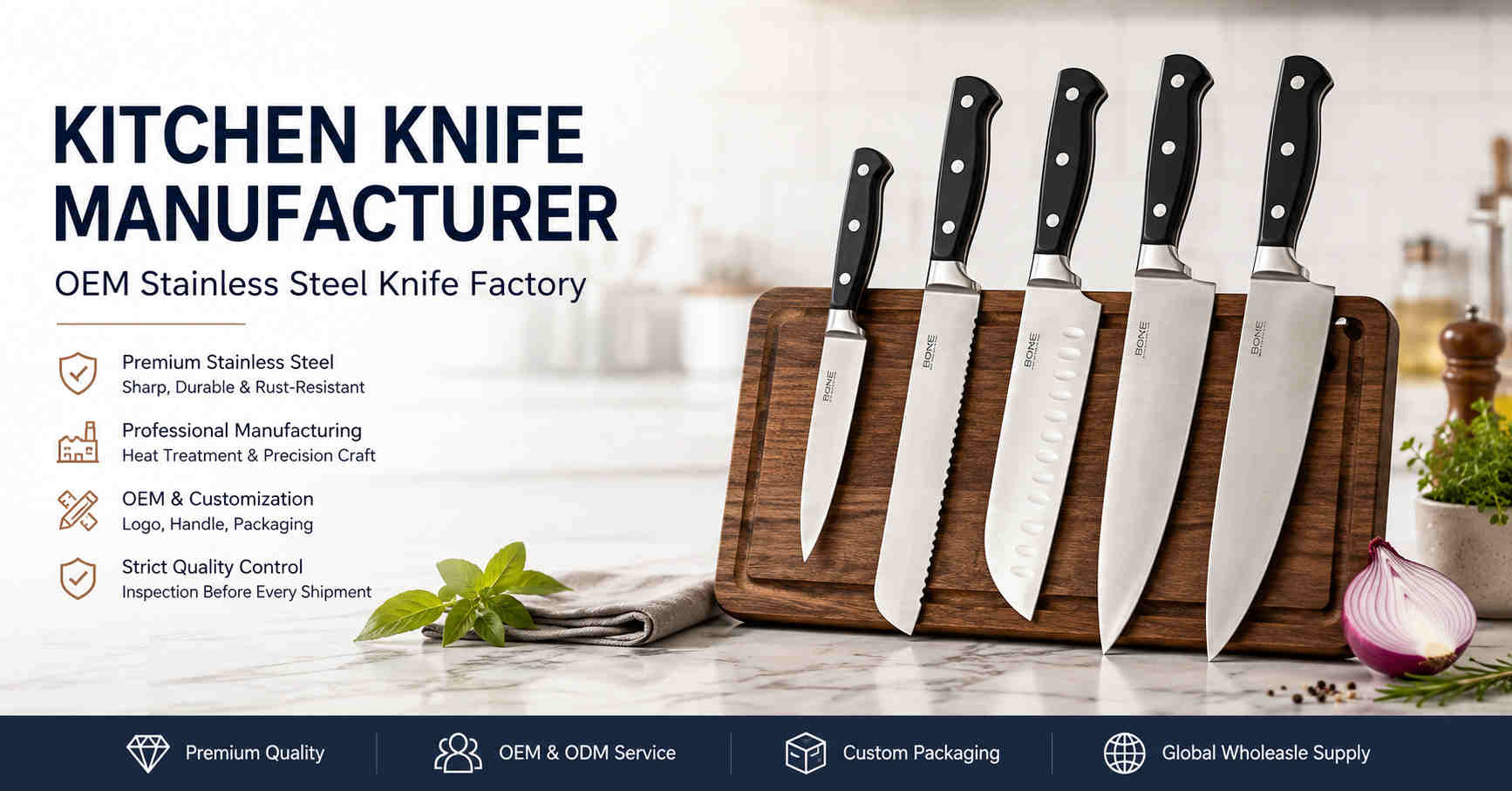
Key Takeaways
- Ask suppliers how they control steel material, heat treatment, edge angle, and finished sharpness.
- Evaluate the full knife, not just the blade: handle comfort, balance, packaging, and shelf presentation all affect market performance.
- Do not rely on one sample only; request pre-production confirmation and define inspection criteria before bulk orders.
- For OEM or private label projects, clarify logo methods, handle colors, retail packaging, carton marks, barcodes, and mixed set options early.
What a Reliable Kitchen Knife Manufacturer Should Control
A professional manufacturer should manage the main production steps from blade forming to final packing. Buyers should ask whether key work is performed in-house or through subcontracted partners, because this affects traceability, lead time, and consistency.
Important manufacturing capabilities to discuss include:
- Stainless steel blade forming and shaping
- Heat treatment and hardness control
- Blade grinding, polishing, and edge sharpening
- Handle assembly and balance checking
- Surface inspection before packing
- OEM logo, label, and retail packaging support
- Final shipment inspection and carton protection
For B2B sourcing, the goal is not simply to find the lowest quotation. The better question is whether the factory can produce knives that match the target market, retail price, packaging requirements, and repeat-order expectations.
Steel Material and Knife Positioning
Steel material affects cutting performance, corrosion resistance, durability, and cost. The original material choice should match the sales channel. A supermarket line may prioritize stable quality and competitive pricing, while a private label gift set may need better finishing and longer edge retention.
| Material Option | Common Positioning | Questions Buyers Should Ask |
|---|---|---|
| 3Cr13 stainless steel | Mass-market kitchen knives | What hardness range is targeted after heat treatment? |
| 5Cr15MoV stainless steel | Mid-range retail knives | How is edge retention checked during production? |
| High-carbon stainless steel | Higher-positioned knife lines | What care instructions are needed to reduce rust complaints? |
| Assorted knife set materials | Promotional or mixed sets | Are all knives in the set made from the same steel? |
Buyers should request material confirmation from the supplier and compare it with the final quotation. If a supplier offers several steel options, ask for differences in cost, corrosion performance, finishing, and recommended customer care.
Heat Treatment, Grinding, and Edge Sharpness
Heat treatment is one of the most important steps in knife production. If a blade is too soft, it may lose sharpness quickly. If it is too brittle, it may chip or fail under improper use. The supplier should be able to explain how hardness is monitored and whether checks are made during production.
Grinding and sharpening also require consistency. A knife set with uneven edge angles may create mixed customer feedback, even if the steel is acceptable. Before confirming a bulk order, ask for sample testing and define acceptance points such as edge appearance, burr removal, polish level, and cutting performance.
Useful supplier questions include:
- What hardness range is planned for this knife model?
- How is edge angle consistency controlled?
- Is sharpness checked before packing?
- How are scratches, stains, or polishing defects handled?
- Can the supplier keep a sealed reference sample for production comparison?
Handle Design, Balance, and User Safety
A knife is judged by how it feels in use. Handle shape, weight distribution, grip texture, and assembly strength all influence buyer satisfaction. A good-looking blade with an uncomfortable handle can still lead to returns or poor reviews.
Common handle material choices mentioned in sourcing discussions include PP for cost-effective models, ABS for a stronger structure, stainless steel for a premium appearance, wood for a traditional look, and TPR grip for anti-slip comfort. Buyers should not choose a handle only by appearance. It is important to test grip comfort with wet and dry hands, check whether edges feel sharp, and confirm that the handle connection is secure.
For retail programs, handle color and shape also affect shelf appeal and brand recognition. For food service or professional-style products, comfort and cleaning convenience may be more important than decorative details.
OEM and Private Label Customization
Many importers choose an OEM knife factory to create a product line that fits their own brand. Customization can include blade logo engraving, handle color, knife size, retail box design, gift box sets, barcodes, carton marks, and mixed knife combinations.
However, every custom detail should be confirmed before mass production. Ask whether the logo method works on the selected blade finish, whether packaging artwork templates are available, and whether the supplier can provide pre-production samples with final branding. If the order involves multiple knives in one set, confirm the exact assortment, blade lengths, handle colors, and packing layout.
Commercial terms such as MOQ, tooling cost, sample cost, lead time, and payment terms should be requested directly from the supplier. These details can vary by model and customization level, so they should not be assumed from a general product page.
Quality Control Before Shipment
Quality control should be agreed before production starts. This helps buyers avoid unclear disputes after goods are finished. The inspection plan may include blade sharpness, hardness, handle strength, surface polishing, rust-resistance checks, edge alignment, printing accuracy, packaging quality, and carton drop protection.
A practical checklist for buyers:
- Approve a reference sample before bulk production.
- Confirm material, handle, logo, and packaging in writing.
- Ask how many pieces are inspected during production and before shipment.
- Check whether defective goods are reworked, replaced, or separated.
- Review inner box, master carton, labels, and barcode placement.
- Consider third-party inspection if the order value or market risk is high.
Clear QC expectations protect both sides. The supplier understands the standard, and the buyer has a practical basis for accepting the finished order.
How to Compare Kitchen Knife Suppliers
When comparing factories, avoid judging only by unit price. A lower quotation may reflect different steel, simpler finishing, thinner packaging, fewer inspections, or less stable customization support. Instead, compare samples, written specifications, packing details, and communication quality.
Ask each supplier the same questions: Which materials are available? What heat treatment process is used? Can they support private label packaging? How are samples prepared? What information is needed for a quotation? What happens if production does not match the approved sample?
For more company background and product direction, buyers can review Bone Home information at https://bonethome.com/about-us. Additional kitchenware resources are available at https://bonethome.com/blog.
FAQ
What does a kitchen knife manufacturer provide?
A kitchen knife manufacturer typically produces blades, assembles handles, finishes and sharpens knives, supports packaging, and may offer OEM or private label services.
What material is best for kitchen knives?
There is no single best material for every market. Stainless steel is commonly used because it can provide practical durability and corrosion resistance, but the right grade depends on price point, use case, and care expectations.
Can kitchen knives be customized for private label?
Usually yes, depending on the supplier and model. Buyers should ask about logo placement, handle colors, blade sizes, packaging artwork, barcode labels, and mixed knife set options.
Why should buyers request samples before ordering?
Samples allow buyers to check sharpness, balance, handle comfort, surface finishing, packaging, and whether the product matches the intended market position.
What should be confirmed before mass production?
Confirm material, dimensions, handle details, logo method, packaging design, inspection standard, delivery schedule, and how approved samples will be used as production references.
Final Sourcing Advice
A reliable kitchen knife manufacturer should help buyers turn product requirements into consistent finished goods. The best sourcing process starts with clear specifications, sample testing, realistic packaging requirements, and written QC standards. For OEM, wholesale, or private label knife projects, contact the supplier directly to request current product options, samples, quotations, and customization details at https://bonethome.com/contact-us.
