




Vegetable Peeler Supplier: OEM and Wholesale Sourcing Guide
Vegetable peelers are small tools, but they move quickly in kitchenware retail. They are used in homes, restaurants, supermarkets, online stores, and promotional kitchen sets. For importers, distributors, Amazon sellers, and private label brands, choosing the right vegetable peeler supplier is less about buying the cheapest item and more about controlling quality, packaging, repeat supply, and user complaints.
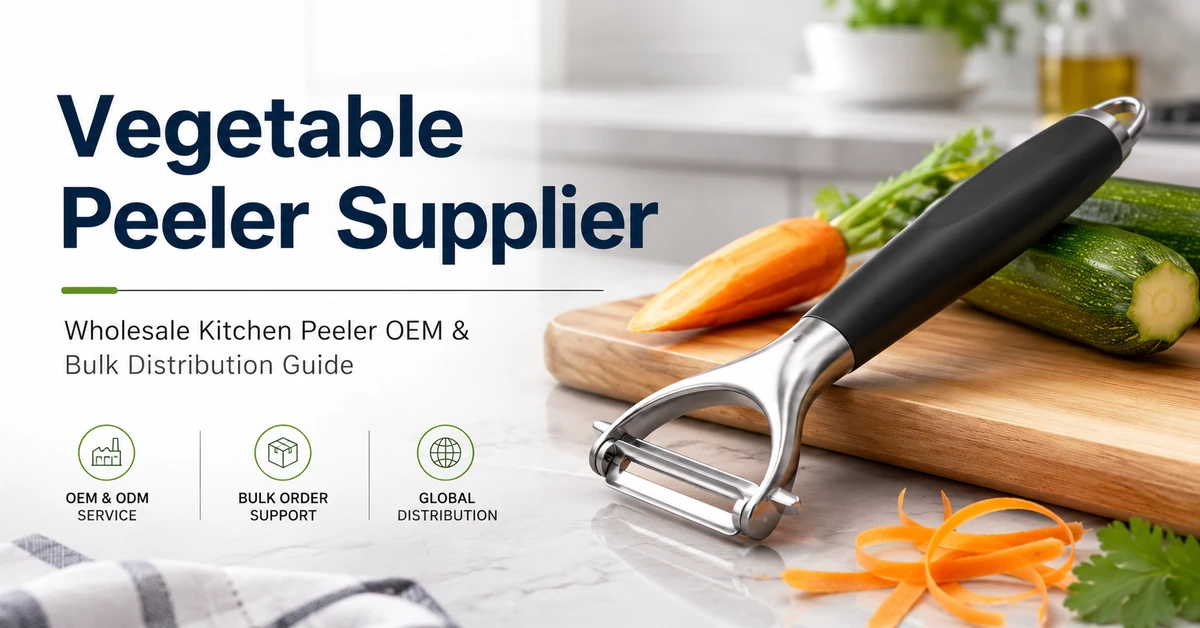
This guide explains how B2B buyers can evaluate wholesale kitchen peelers, compare product types, ask the right OEM questions, and prepare a more reliable bulk sourcing plan.
Key Takeaways
- Match peeler style to your retail channel, not only to the lowest unit price.
- Ask suppliers clear questions about blade material, handle material, packaging, and inspection process.
- For OEM projects, confirm logo method, packaging artwork requirements, barcode support, and sample approval steps.
- Bulk buyers should check consistency across repeat orders, not just the first shipment.
Why Vegetable Peelers Work Well for Wholesale
Vegetable peelers are practical daily-use products. Customers buy them as replacement tools, add-on purchases, supermarket shelf items, and parts of kitchen utensil sets. Their small size also makes them suitable for mixed-SKU shipments and e-commerce bundles.
For B2B buyers, the category has several advantages:
- Low storage space requirement compared with larger kitchen tools
- Easy to display on hanging cards, blister cards, or in compact boxes
- Suitable for supermarkets, discount stores, online marketplaces, and kitchenware distributors
- Can be sold individually or combined with graters, knives, slicers, or utensil sets
- Simple product function, making it easier for customers to understand
However, because peelers are inexpensive, customers are quick to complain if the blade feels dull, the handle breaks, or the packaging arrives damaged. That is why supplier selection matters.
Main Vegetable Peeler Types to Source
A professional supplier should help buyers choose suitable peeler models for different markets and price points. Common types include Y-shaped peelers, straight peelers, swivel peelers, julienne peelers, and multifunctional peelers.
Y-shaped peelers are popular for potatoes, carrots, cucumbers, apples, and other common produce. They are easy to control and often appeal to broad retail markets. Straight peelers are compact and familiar to customers who prefer a traditional design. Swivel peelers follow curved vegetable surfaces more easily, which can improve the user experience. Julienne peelers cut thin strips for salads, garnishes, and certain cooking styles. Multifunctional peelers may combine peeling, scraping, cutting, or eye-removing functions, depending on the exact model.
Before ordering, buyers should request samples and test them with the foods most common in the target market. A peeler that works well for potatoes may not perform the same on thin-skinned fruits or long vegetables.
Comparison Table: Which Peeler Fits Your Channel?
| Peeler Type | Typical Use | Best Sales Channel | Questions to Ask the Supplier |
|---|---|---|---|
| Y-shaped peeler | General vegetable and fruit peeling | Supermarkets, online stores, wholesale assortments | Is the handle comfortable for repeated use? What packaging options are available? |
| Straight peeler | Traditional peeling tasks | Discount retail, household stores, basic kitchen ranges | Is the blade alignment consistent across bulk production? |
| Swivel peeler | Curved surfaces and smoother peeling | Mid-range kitchenware, retail card packaging | How is blade movement checked before shipment? |
| Julienne peeler | Vegetable strips and garnish preparation | Online listings, specialty cooking ranges | Can the supplier provide clear usage and safety information for packaging? |
| Multifunctional peeler | Multiple small prep tasks | Promotional sets, bundles, gift packs | Which functions are included in the actual model and sample? |
Material and Quality Factors Buyers Should Check
Material selection affects sharpness, durability, comfort, and perceived value. The original product information mentions common vegetable peeler components such as stainless steel blades, PP or ABS handles, TPR or silicone grips, and bodies made from stainless steel or zinc alloy. Buyers should not assume every model includes all of these materials; confirm the actual specification for each SKU.
Important checks include blade sharpness, blade alignment, handle strength, surface finish, grip comfort, and packaging condition. If the product will be sold in a market with food-contact requirements, ask the supplier what material information or documentation can be provided. Do not rely on vague claims; request documents that match your destination market and retail channel.
Sample testing should be practical. Peel potatoes, carrots, cucumbers, and apples. Check whether the peeler catches, skips, bends, or feels unsafe. Also test how easy it is to clean, because food residue around the blade area can lead to poor customer reviews.
Packaging for Retail, E-Commerce, and Distribution
Packaging is a major part of vegetable peeler sourcing because the product is small and often displayed with many competing items. A good supplier should help match packaging to the sales channel instead of offering only generic cartons.
- Hanging card packaging: useful for supermarkets, hardware stores, and household aisles.
- Blister card packaging: protects the blade and gives a clear retail presentation.
- Color box packaging: suitable for online sales, bundles, or higher perceived value.
- Bulk carton packaging: practical for distributors, wholesalers, and repacking operations.
- Set packaging: useful when peelers are combined with other kitchen tools.
For e-commerce, ask whether the packaging can protect the peeler during parcel delivery and whether barcode labels can be applied. For supermarkets, confirm hanging hole position, card strength, and carton packing method. For distributors, check inner carton quantity and outer carton durability.
OEM and Private Label Questions to Ask
OEM vegetable peeler projects can include logo application, custom colors, packaging artwork, barcode labels, and kitchen tool set combinations. The exact options depend on the supplier and model, so buyers should confirm details before quoting.
Useful questions include:
- Which parts of the peeler can carry a logo?
- What logo methods are available for the selected handle material?
- Can standard models be packed with private label packaging?
- What artwork files, barcode information, and label details are required?
- Can samples be approved before bulk production?
- What is the process for checking color, logo position, and packaging accuracy?
New brands often start with standard models and customized packaging to reduce development risk. More established buyers may explore custom handle designs or product sets, but they should ask about tooling, sample timing, and order requirements rather than assuming they are fixed.
MOQ, Mixed SKUs, and Repeat Supply Planning
Minimum order quantity is important, but it should not be the only sourcing factor. A low MOQ is useful for testing, while stable repeat supply is essential for distributors and retail chains. Ask whether the supplier can support mixed SKUs, repeat packaging, and consistent materials across future orders.
For Amazon sellers, small importers, and new retailers, trial orders can help identify which peeler styles sell best. For larger wholesalers, the focus should be on predictable lead time, carton packing consistency, and clear communication when materials or packaging details change.
Practical FAQ for Vegetable Peeler Sourcing
What should I test first when comparing vegetable peeler samples?
Start with blade sharpness, comfort, and control. Use the same vegetables for each sample so the comparison is fair. Also check whether the blade is secure and whether the handle feels stable under pressure.
Is stainless steel always used for vegetable peeler blades?
Stainless steel is a common blade material, but buyers should confirm the exact material for each model. Do not assume a specification unless it is clearly provided by the supplier.
Can vegetable peelers be customized for private label sales?
Many sourcing projects involve logo or packaging customization, but available options depend on the product design, material, and supplier process. Ask for sample approval before bulk production.
Which packaging is best for supermarket buyers?
Hanging card or blister card packaging is often practical for shelf display, but the best choice depends on retail requirements, price point, and how the product will be merchandised.
How can buyers reduce quality risks in bulk orders?
Use approved samples, define inspection points, confirm packaging details in writing, and ask what checks are performed before shipment. For large orders, consider third-party inspection when appropriate.
Final Sourcing Advice
A reliable vegetable peeler supplier should provide more than a quotation. Buyers should expect clear product options, realistic OEM guidance, packaging recommendations, and a willingness to answer technical and commercial questions. By comparing samples carefully and confirming details before production, importers and wholesalers can build a practical peeler program that supports retail sales and repeat distribution.
