




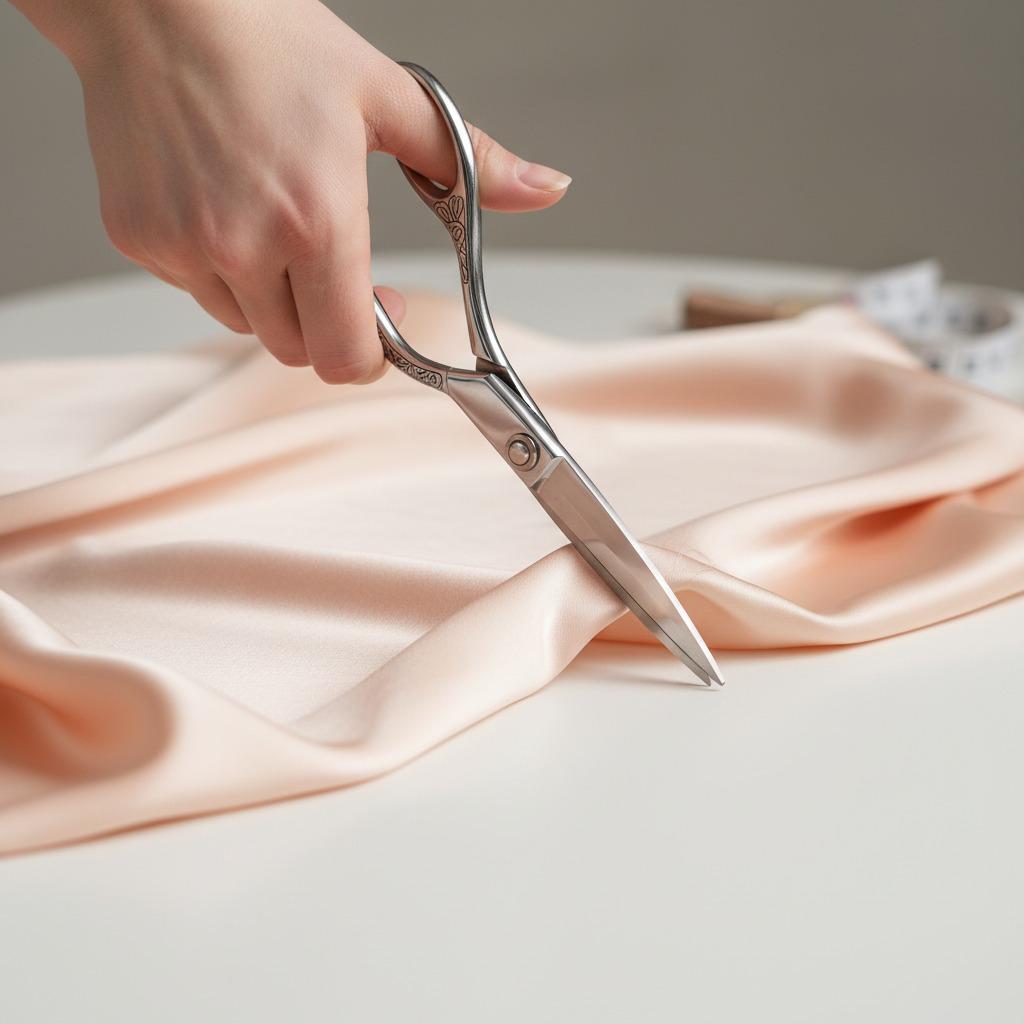
How to Cut Delicate Fabrics Without Snagging
Delicate fabrics can turn a simple cutting job into a frustrating one. Silk, chiffon, satin, lace, and other fine materials may shift, stretch, fray, or catch on a blade before you have finished the first pattern piece. The result can be uneven seams, pulled threads, or a garment panel that no longer matches the pattern.
Clean cutting is not about speed. It depends on preparation, a stable work surface, and the right tool for the fabric. Sharp tailor scissors, also called tailor shears, are useful because their longer blades support smooth cuts while the bent handle helps keep fabric flat on the table. For some very slippery fabrics, a rotary cutter may also be worth considering.
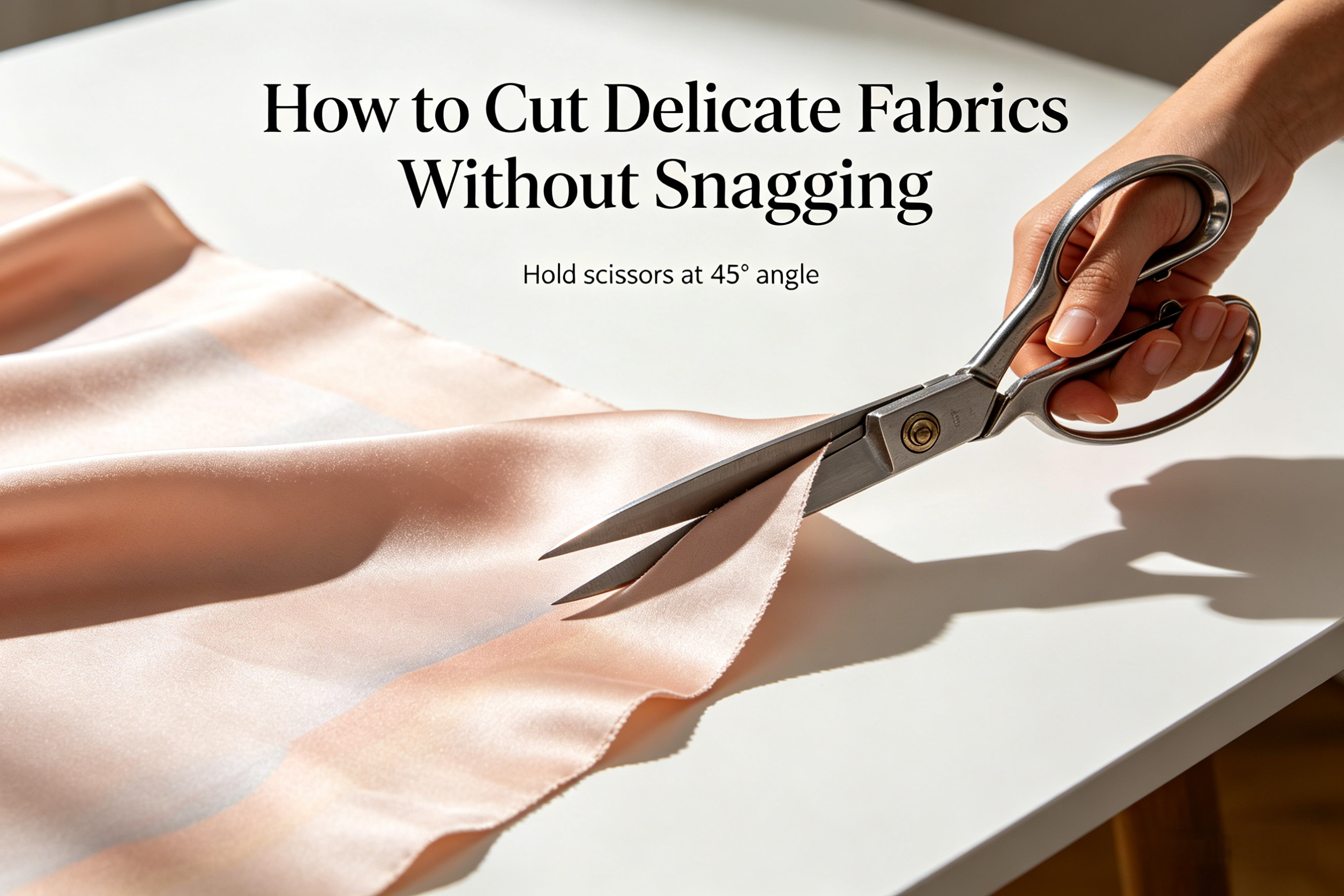
Key Takeaways
- Use sharp fabric-only tailor scissors; dull blades are a common cause of snags and jagged edges.
- Stabilize slippery or sheer fabrics with tissue paper, pattern weights, or a cutting mat before cutting.
- Cut with long, smooth strokes rather than short, choppy movements.
- For chiffon, satin, and similar fabrics, cutting a single layer often gives better control.
- Always test your method on a scrap before cutting expensive or limited fabric.
Why Delicate Fabrics Snag During Cutting
Snagging usually happens when a blade pushes or catches threads instead of slicing through them. Fine weaves and loose structures are especially vulnerable. Chiffon can crawl away from the pattern line. Satin can slide as the blades close. Lace may catch on a scissor tip or decorative opening. Silk can show permanent pulls if handled roughly.
The problem is often made worse by using scissors that have been used on paper, plastic packaging, or other non-fabric materials. Even if the scissors look acceptable, a slightly dull or nicked edge can tug at fine threads. A cluttered or slippery table also allows the cloth to move, which makes accurate cutting harder.
Prepare the Fabric Before You Cut
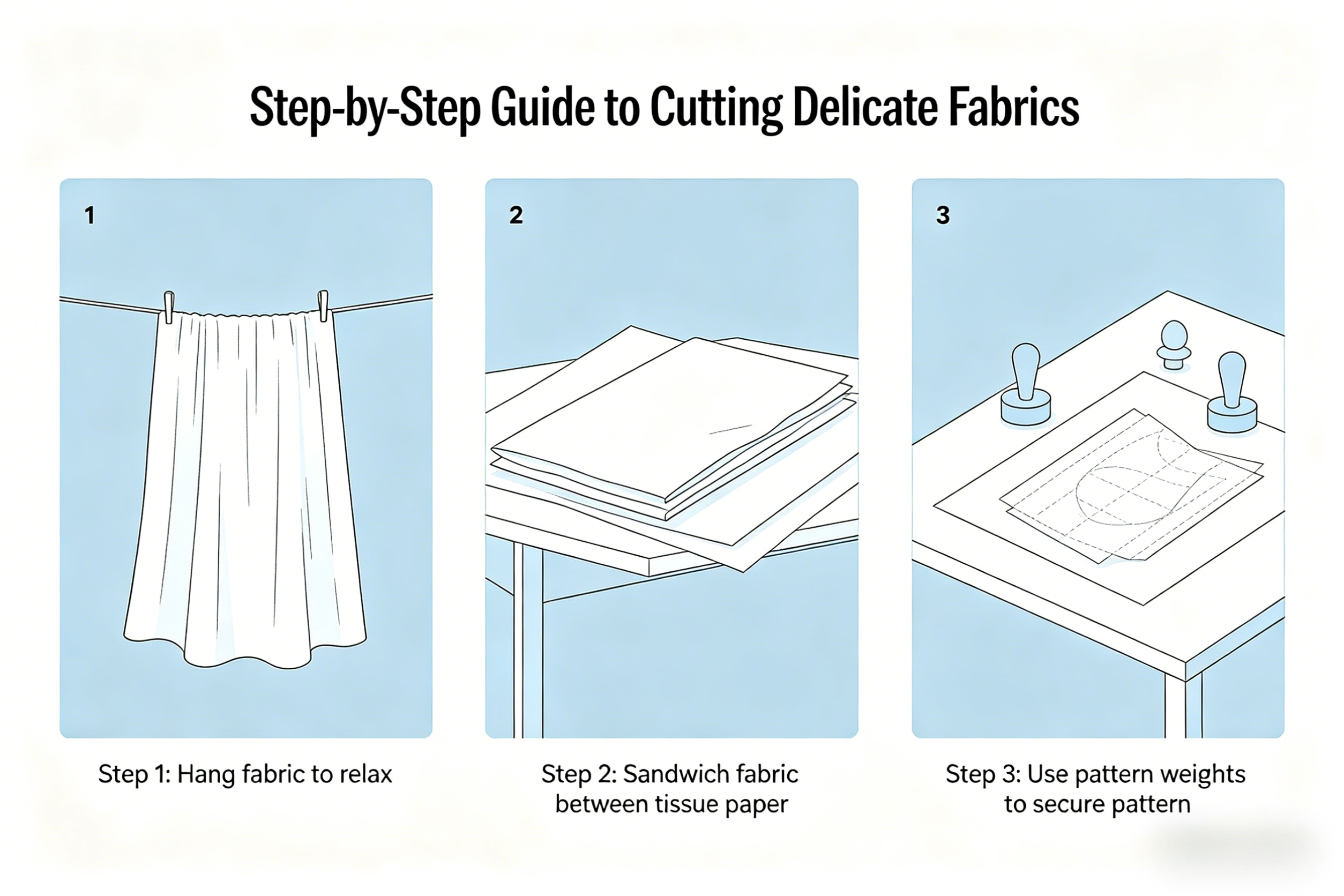
Good cutting begins before the scissors touch the fabric. Lay the material on a large, clean, flat surface so the full piece is supported. If fabric hangs off the table, its weight can pull the grain out of alignment. Let folded or rolled fabric relax before marking and cutting, especially if it has been tightly stored.
For sheer or slippery fabrics, place tissue paper underneath the fabric or sandwich the fabric between two layers of tissue paper. This adds temporary stability and reduces shifting. Some sewers lightly use spray starch on certain slippery fabrics, but it should be tested first on a scrap because finishes and fibers can react differently.
Instead of using many pins, consider pattern weights. Pins can leave holes in delicate fabrics, especially silk and some sheers. If pins are necessary, use fine, sharp pins and place them in seam allowances where possible.
Choose the Right Cutting Tool
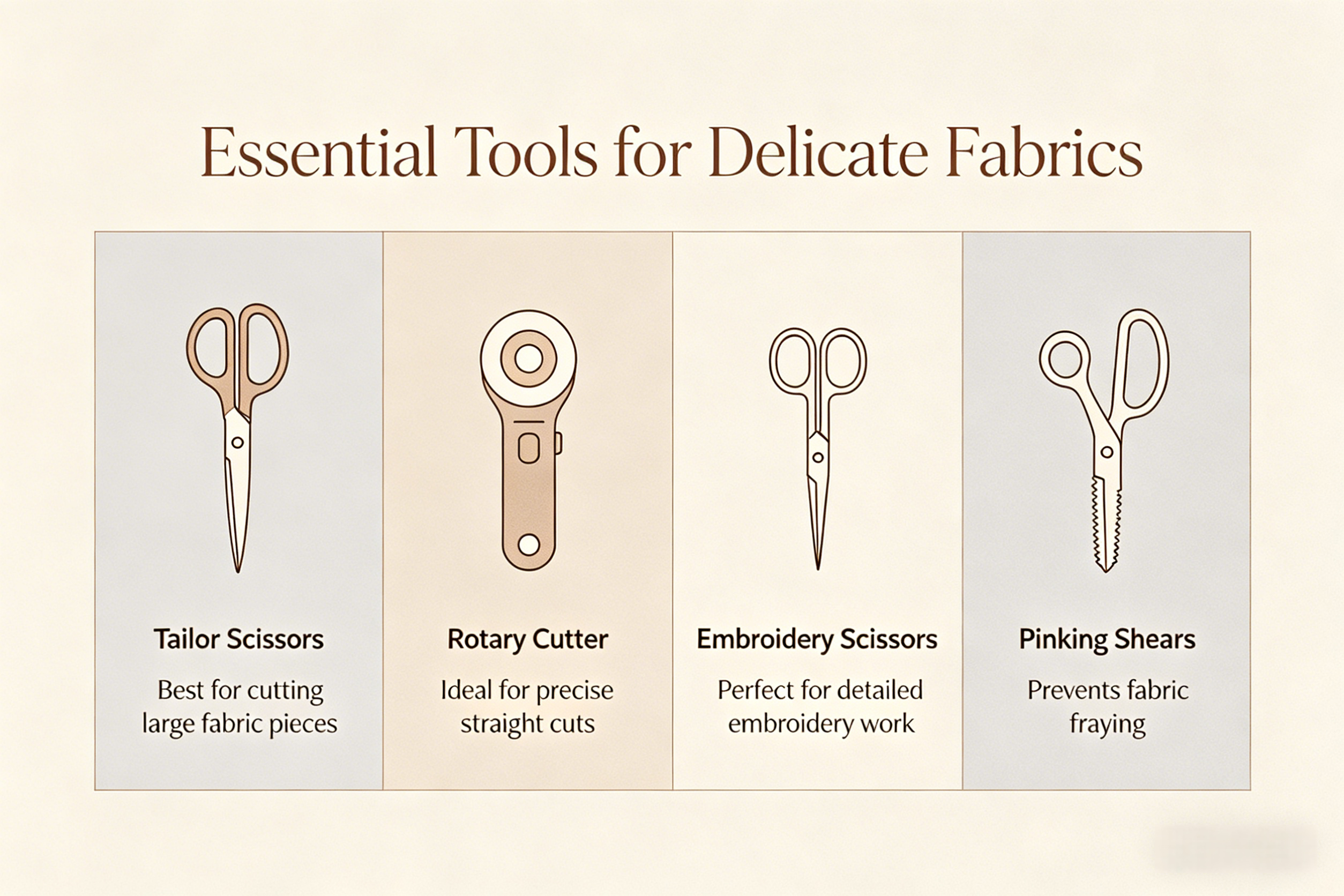
Tailor scissors are a strong general choice for garment cutting because they allow long, controlled strokes. A bent handle keeps the lower blade close to the table, helping the fabric stay flat. However, no single tool is ideal for every situation. Small embroidery scissors can help with tight curves or thread trimming, while a rotary cutter can be effective for fabrics that move too much when lifted by scissor blades.
| Tool | Best Use | Advantages | Watch Out For | Snag-Prevention Tip |
|---|---|---|---|---|
| Tailor scissors | Most garment panels and long lines | Controlled cuts and smooth strokes | Requires sharp blades and steady handling | Use the full blade length, not tiny snips |
| Rotary cutter | Slippery chiffon, satin, and straight lines | Does not lift fabric while cutting | Needs a suitable cutting mat | Use pattern weights and a fresh blade |
| Embroidery scissors | Small curves, threads, and detail work | Good control in tight areas | Not efficient for long cuts | Reserve for trimming, not main cutting |
| Pinking shears | Reducing fraying on some edges | Creates a zigzag edge | Can chew delicate fabric if dull | Test on a scrap before using |
Step-by-Step Method for Cleaner Cuts
- Check the fabric grain. Align the fabric carefully before placing the pattern. Delicate fabrics can distort easily, so do not pull them into position.
- Stabilize the layout. Use weights, tissue paper, or a cutting mat to reduce movement. Keep the fabric fully supported on the table.
- Mark lightly. Use a marking method suitable for the fabric and test it first. For very fine fabrics, thread tracing may be safer than heavy marks or clipped notches.
- Cut one layer when needed. If the fabric shifts when doubled, cut a single layer. For mirrored pieces, flip the pattern carefully and cut the second piece separately.
- Use long scissor strokes. Open the tailor scissors enough to use most of the blade. Close them smoothly and avoid lifting the fabric.
- Support curves with your free hand. Guide the fabric gently without stretching it. Rotate the pattern area slowly instead of twisting the scissors sharply.
Fabric-Specific Tips for Silk, Chiffon, Satin, and Lace
Silk: Handle gently and avoid unnecessary pinning. If the silk is very smooth, tissue paper can help prevent sliding. Cut slowly and keep hands clean and dry to avoid marks.
Chiffon: Chiffon is light and mobile, so single-layer cutting often gives better accuracy. Pattern weights are usually preferable to heavy pinning. A rotary cutter on a mat can be helpful for straight lines.
Satin: Satin can shift because of its smooth surface. Keep the fabric flat, avoid hanging edges, and use long cuts to reduce jagged lines. Test any stabilizer first because visible surfaces can be sensitive.
Lace: Pay attention to motifs and repeats before cutting. Small scissors may be useful for detailed areas, but use sharp tailor scissors for longer seams when the lace structure allows.
Care for Tailor Scissors So They Keep Cutting Cleanly
Even good cutting technique will not compensate for neglected scissors. Keep tailor scissors dedicated to fabric only, and avoid cutting paper patterns directly with them. Store them closed and dry, away from pins or hard tools that could damage the blades. If you feel fabric folding between the blades or hear a rough scraping sound, the scissors may need cleaning, adjustment, or professional sharpening.
For buyers comparing scissors for a sewing room, studio, or classroom, ask practical questions before purchasing: Are the scissors intended for fabric use? Do they feel balanced during long cuts? Is the handle comfortable for the users? Can the blades be maintained or sharpened when needed? These questions are more useful than relying on appearance alone.
Common Mistakes to Avoid
- Using household scissors that have been dulled by paper or packaging.
- Letting fabric hang off the table while cutting.
- Making many short snips along a long seam line.
- Pinning heavily through visible or delicate areas.
- Skipping a test cut on scrap fabric.
FAQ
What are the best scissors for delicate fabric?
Sharp tailor scissors are a good choice for most garment cutting because they support long, smooth cuts. The best option also depends on the fabric, cutting surface, and user comfort.
Should I cut chiffon with scissors or a rotary cutter?
Both can work. A rotary cutter often performs well because it does not lift the chiffon, but sharp tailor scissors can also give good results if the fabric is stabilized.
How do I stop silk from sliding while cutting?
Use a flat surface, pattern weights, and tissue paper if needed. Cut a single layer if the fabric shifts when folded.
Can I use pinking shears on delicate fabrics?
Sometimes, but test first. Dull pinking shears can snag fine fabric, and the zigzag edge may not suit every seam finish.
Why should fabric scissors not be used on paper?
Paper can dull the cutting edge. Once the blade loses sharpness, it is more likely to push, chew, or snag delicate threads.
Final Thoughts
Cutting delicate fabric without snagging is a combination of sharp tools, stable preparation, and patient technique. Keep the fabric supported, control shifting before it starts, and use smooth strokes with fabric-only tailor scissors. With a few test cuts and careful handling, silk, chiffon, satin, and lace become much easier to manage.
