




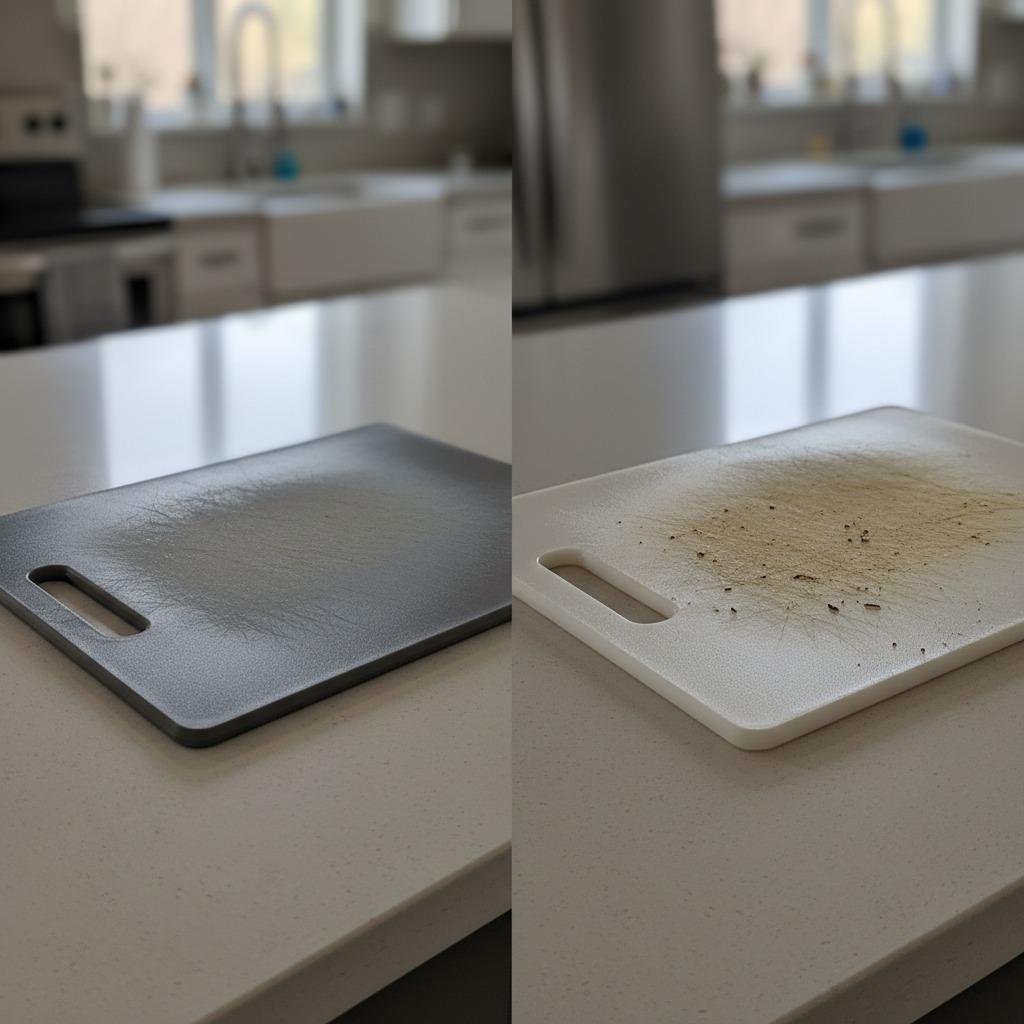

How to Tell If Your Plastic Cutting Board Is High Quality
A plastic cutting board is one of the most frequently used tools in a home or commercial kitchen. It handles vegetables, fruit, bread, raw meat, poultry, seafood, and stain-prone foods such as beets or turmeric. Because it touches food directly and takes repeated knife contact, quality matters more than many buyers realize.
A good plastic cutting board should feel stable, clean easily, resist deep gouges for a reasonable period, and suit the way you prep food. A poor one may flex, slide, stain quickly, warp in heat, or develop cuts that are difficult to sanitize. If you are comparing options, including a cutting board for household or food-service use, the following checks will help you make a more informed choice.
Key Takeaways
- Look for a clearly stated food-contact plastic material, commonly HDPE or PP, rather than an unspecified plastic.
- Choose a board with enough thickness and weight to stay flat and stable during chopping.
- A slightly textured, even surface is usually more practical than a very slippery or overly soft surface.
- Replace plastic boards when deep grooves, warping, cracking, or persistent staining make cleaning unreliable.
- For bulk or OEM sourcing, ask suppliers for material details, test documentation, packaging options, and care instructions instead of relying on vague quality claims.
1. Start With the Material
The material is the first sign of quality. Many durable plastic cutting boards are made from HDPE, or high-density polyethylene. Some boards use PP, or polypropylene. Both can be suitable for cutting boards when designed for food contact, but buyers should confirm the material rather than assume it.
A quality product listing or supplier quotation should identify the plastic type clearly. If the board is described only as “plastic” with no further detail, ask follow-up questions. Food-contact suitability, material source, and whether the board uses virgin or recycled plastic should be clarified before purchase, especially for wholesale or private-label orders.
Material affects stiffness, scratch behavior, heat tolerance, and long-term appearance. No plastic board is immune to knife marks, but better materials generally resist deep scarring longer and are easier to clean after regular use.
2. Check Thickness, Weight, and Flatness
A high-quality plastic cutting board should not feel flimsy. Very thin mats are convenient for light prep, but they are not the same as a sturdy everyday chopping board. If a board bends easily when you press down, it may move during cutting and may develop uneven wear faster.
For general kitchen use, look for enough thickness to keep the board flat on the counter. Weight is also useful: a board that feels substantial is less likely to slide, especially when used with a damp towel underneath. In retail buying, pick up the board and flex it gently. In online or B2B sourcing, ask for the thickness, net weight, and dimensional tolerance.
Flatness matters. A warped board rocks under the knife and can be unsafe. If the product is advertised as dishwasher-safe, ask what care conditions are recommended, because heat and drying cycles can affect some plastic boards over time.
3. Examine the Surface and Knife Feel
The best plastic cutting board surface is not mirror-smooth. A board that is too slick may allow wet vegetables or meat to slide. A slightly matte or lightly textured surface gives food better grip while still being easy to wash.
When possible, run your fingertips over the board. The surface should feel even, without rough patches, bubbles, sharp flashing, or thin areas. After use, normal shallow knife marks are expected. What you want to avoid is a surface that becomes deeply gouged after only a few sessions. Deep cuts can trap food residue and make thorough cleaning harder.
Knife feel is also important. Extremely hard surfaces may be unpleasant to cut on, while very soft surfaces may scar quickly. A balanced cutting board supports repeated prep without damaging knives unnecessarily or breaking down too fast.
4. Look for Stability and Practical Design Details
A cutting board that moves during prep is frustrating and can increase accident risk. Some boards use rubberized corners, anti-slip edges, textured undersides, or silicone feet. Others rely on weight and a flat base. Any of these designs can work if the board stays secure on the counter.
Design features should match the use case. A juice groove can help contain liquid from tomatoes, citrus, or cooked meat, but it also reduces usable flat cutting area. A reversible board gives more cutting surface, though raised feet may prevent full use of both sides. Color-coded boards can support better separation of raw proteins and ready-to-eat foods in busy kitchens.
Before buying, consider how the board will be stored and washed. Oversized boards are useful for batch prep but may not fit small sinks or dishwashers. Handles can improve lifting and hanging, but they should not create weak points or hard-to-clean recesses.
5. Compare Quality Signals Before You Buy
The following checklist summarizes common differences between higher-quality and lower-quality plastic cutting boards. Use it as a practical buying guide rather than a guarantee, because final performance also depends on usage, cleaning, and storage.
| Check Point | Better Quality Signal | Warning Sign |
|---|---|---|
| Material information | Material is clearly named, such as HDPE or PP, with food-contact details available on request | Only described as “plastic” with no supporting information |
| Thickness and weight | Feels sturdy, lies flat, and does not flex excessively under pressure | Thin, lightweight, flexible, or uneven |
| Surface finish | Even, slightly textured, and free from sharp edges or defects | Very slippery, sticky, rough, bubbled, or poorly finished |
| Stability | Non-slip design or enough weight to stay secure during prep | Slides easily on a dry counter |
| Cleaning and care | Clear washing, sanitizing, and replacement guidance | No care instructions or unrealistic durability claims |
| Bulk sourcing | Supplier can answer questions about dimensions, packaging, labeling, and documentation | Vague answers, inconsistent samples, or unclear specifications |
6. Hygiene, Cleaning, and Replacement Signs
Plastic boards are popular because they are non-porous and straightforward to clean. After ordinary use, wash the board with hot water and dish soap, scrubbing both sides and the edges. For raw meat, poultry, or seafood, sanitize according to accepted kitchen practice or use a dishwasher if the board’s care instructions allow it.
Good hygiene also depends on replacement. A cutting board should be retired when it has deep grooves that remain dirty after washing, visible cracks, warping, frayed edges, or odors that do not go away. Stains alone do not always mean the board is unsafe, but heavy staining combined with knife damage is a sign to inspect carefully.
To extend service life, avoid using a plastic cutting board as a hot pan rest unless the manufacturer says it is suitable for that purpose. Store boards upright or flat with airflow so moisture does not remain trapped between surfaces.
7. Guidance for Wholesale, OEM, or Supplier Evaluation
For retailers, importers, hospitality buyers, and private-label brands, cutting board quality should be evaluated before placing volume orders. Do not rely only on photos. Request samples and compare them under realistic use: chopping, washing, drying, stacking, and storage.
Useful supplier questions include:
- What plastic material is used, and is it intended for food-contact applications?
- What are the exact dimensions, thickness, weight, and acceptable tolerances?
- Can the supplier provide relevant documentation for the target market if required?
- What colors, shapes, packaging formats, and labeling options are available?
- How should the board be washed, sanitized, stored, and replaced?
- How are surface finish, edge trimming, flatness, and color consistency checked before shipment?
For OEM projects, confirm artwork placement, barcode requirements, carton details, and whether any claims on packaging need third-party support. Avoid adding claims such as antimicrobial performance, certification, or special heat resistance unless they are backed by appropriate documentation.
FAQ: Plastic Cutting Board Quality
Is HDPE always better than other plastics?
HDPE is commonly used for durable plastic cutting boards, but quality still depends on formulation, thickness, surface finish, and manufacturing consistency. PP can also be suitable. Always check the actual product details.
Are plastic cutting boards safe for raw meat?
Plastic boards are often used for raw meat because they are easy to wash and sanitize. Use separate boards for raw and ready-to-eat foods when possible, and clean thoroughly after each use.
When should I replace a plastic cutting board?
Replace it when deep grooves, cracks, warping, frayed edges, or persistent odors make cleaning difficult. Heavy daily use will require replacement sooner than occasional home use.
Does a heavier board mean higher quality?
Not by itself, but weight can indicate better stability and thickness. Judge it together with material clarity, flatness, surface finish, and care instructions.
What should B2B buyers check before ordering in bulk?
Ask for samples, material details, dimensions, packaging information, quality-control points, and any documents needed for your sales market. Confirm claims before printing them on packaging.
