




Vegetable Peeler Manufacturer for Bulk Buyers: Factory Insights & Quality Control
For importers, wholesalers, supermarket buyers, and private label kitchenware brands, a vegetable peeler looks simple until it performs poorly in the market. Common problems include uneven peeling performance across batches, blades that lose sharpness too quickly, weak handle construction, packaging that does not suit retail display, and limited OEM customization options.
Because vegetable peelers are low-cost, high-frequency kitchen tools, small quality issues can create a large number of complaints when orders are sold at scale. The goal is not only to find a low unit price, but to choose a vegetable peeler manufacturer that can explain materials, production controls, packaging choices, and inspection methods clearly.
Key Takeaways
- Vegetable peelers remain a stable kitchenware category because they are used in daily cooking and are easy to bundle with other utensils.
- Bulk buyers should compare blade design, handle comfort, packaging format, and consistency across production batches.
- Quality control should include raw material review, blade sharpness checks, peeling performance tests, handle strength checks, and final packaging inspection.
- OEM and private label projects require clear questions about logo method, packaging artwork, samples, lead time, and approval steps.
Why Vegetable Peelers Still Sell in Bulk
Vegetable peelers continue to be a high-demand kitchen tool because they solve a routine preparation task quickly. They are used by home cooks, foodservice teams, and buyers who assemble value kitchen tool sets. For retailers, peelers can be sold individually, included in starter kitchen ranges, or paired with graters, knives, cutting boards, and other small utensils.
This product category is especially attractive for B2B sourcing because it is compact, familiar to consumers, and suitable for different price tiers. However, this also means competition is strong. A buyer cannot rely on appearance alone. A peeler that looks acceptable in a product photo may still fail if the blade angle, handle structure, or packaging is inconsistent.
Common Vegetable Peeler Types to Compare
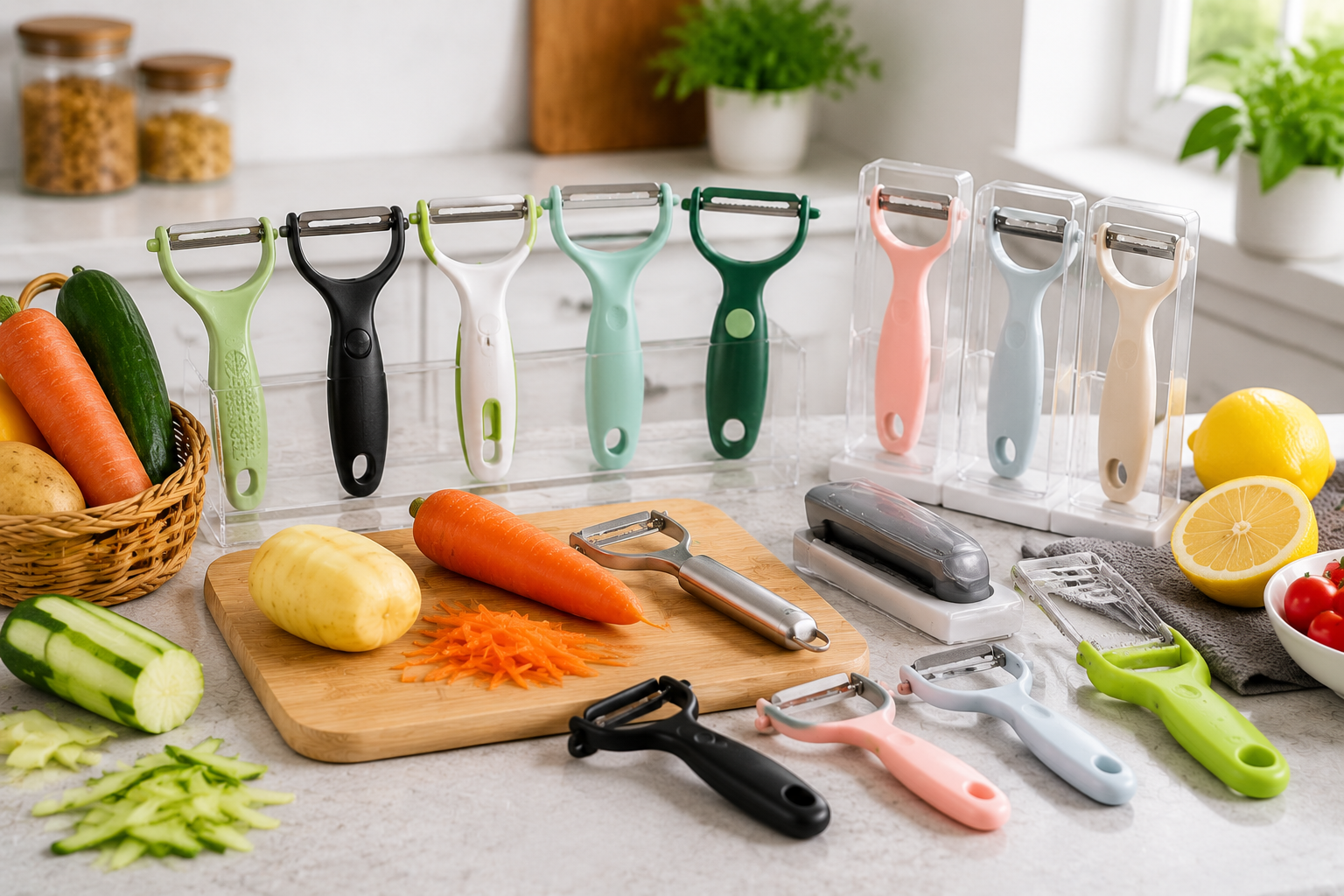
A kitchen peeler factory may produce several designs for different markets. The original article listed straight blade peelers, Y-shaped peelers, serrated peelers for soft fruits, and multi-functional peelers with extra features. Each type has a different use case and should be reviewed with the buyer’s sales channel in mind.
| Peeler type | Typical buyer focus | Questions to ask the supplier |
|---|---|---|
| Straight blade peeler | General household use and familiar handling | Is the blade alignment consistent across samples and bulk production? |
| Y-shaped peeler | Fast peeling and easy downward motion | How is the handle tested for strength and grip comfort? |
| Serrated peeler | Soft fruits or delicate skins | What performance test is used for soft produce? |
| Multi-functional peeler | Gift sets, promotional packs, and differentiated listings | Are all extra functions inspected individually before packing? |
Buyers should also confirm whether the supplier can provide samples of each design before final selection. A short in-house use test with carrots, potatoes, cucumbers, and soft fruit can reveal practical differences that may not appear in catalog specifications.
Factory Process: What Bulk Buyers Should Understand
A reliable vegetable peeler manufacturer should be able to describe the basic production process in plain language. Typical stages include material selection, blade forming, assembly, surface finishing, and packaging. The original article noted stainless steel blades and ABS or PP handles as common material descriptions, but buyers should not stop at general terms. Ask which exact material options are available, whether they are suitable for your target market, and what documents can be provided for review.
Blade forming is especially important because the blade edge and angle affect peeling smoothness. Assembly also matters: a blade that shifts inside the handle or frame can feel unsafe and produce inconsistent results. Surface finishing and cleaning should be reviewed so that goods arrive ready for retail packing or distribution.
If sourcing from Bonet Houseware or another supplier, keep commercial details specific and written. Ask about available product ranges, sample procedures, packaging choices, expected lead time for your design, and what information is needed to quote accurately. Bonet’s company background can be reviewed at https://bonethome.com/about-us.
Quality Control Points for Vegetable Peeler Orders
Quality control should be practical and repeatable. For bulk vegetable peelers, the most useful inspection points usually include raw material inspection, blade sharpness testing, peeling performance testing, handle strength testing, and final packaging inspection. These were identified in the original article and remain the core checks buyers should discuss with a supplier.
- Pre-production sample approval: Confirm the final sample, packaging, color, logo position, and functional feel before production begins.
- Incoming material review: Ask how blade and handle materials are checked before manufacturing.
- In-process inspection: Confirm how the factory monitors blade consistency, assembly tolerance, and visible defects during production.
- Functional testing: Request details on how peeling performance and handle strength are evaluated.
- Final carton check: Review packing quantity, barcode or label placement, retail packaging condition, and shipping mark accuracy.
Buyers should avoid vague statements such as “good quality” or “strict QC” unless the supplier can explain what is checked, when it is checked, and what happens if defects are found.
OEM and Retail Packaging Considerations
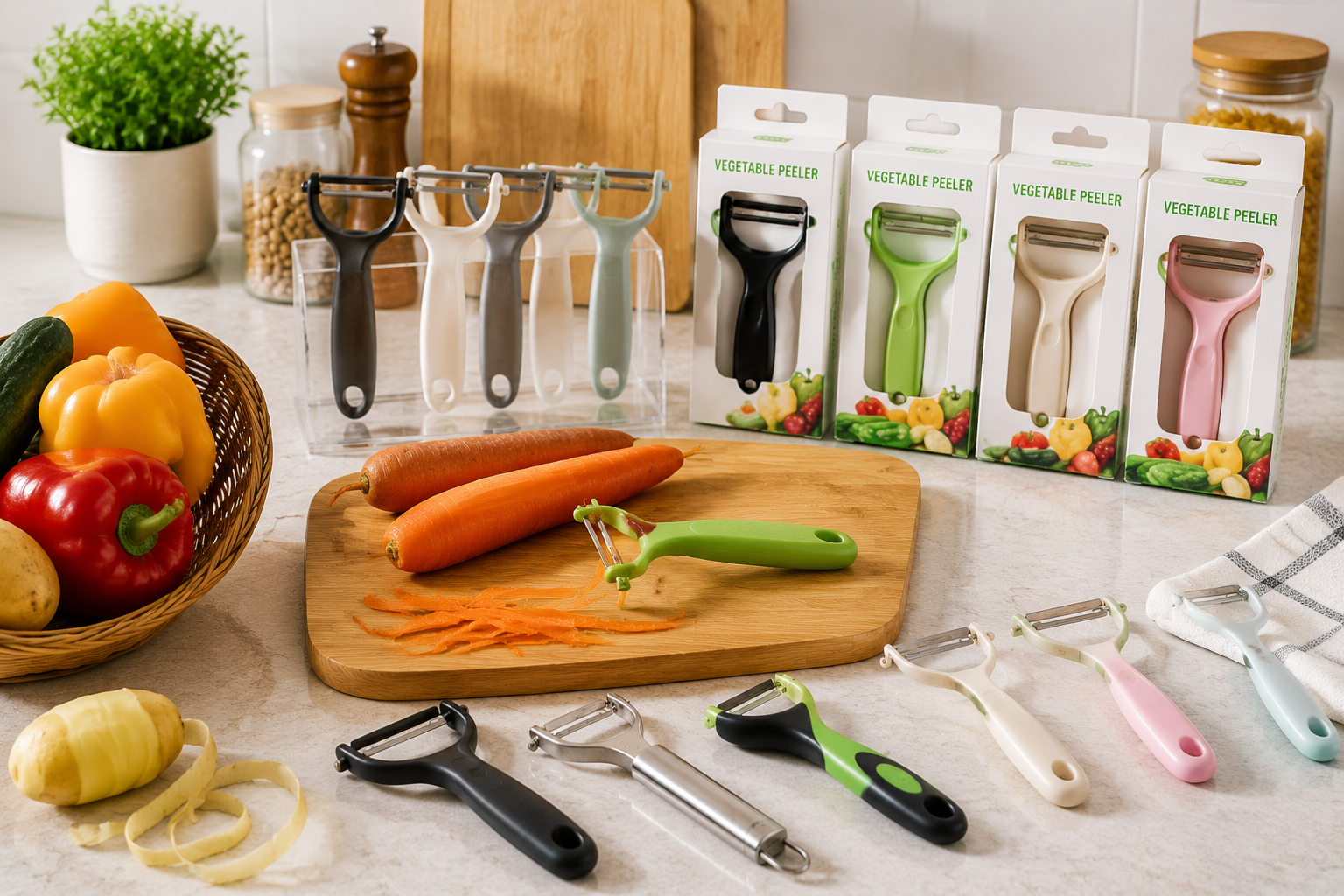
OEM customization can include logo printing, retail blister packaging, color box packaging, hanging display packaging, and private label design support. These options are useful for supermarkets, online sellers, import distributors, and kitchenware brands, but each option affects cost, schedule, and approval requirements.
Before placing an OEM order, prepare artwork files, preferred packaging dimensions, barcode requirements, warning text if applicable to your market, and any retailer display rules. Ask the manufacturer which printing methods are available for the handle or packaging, whether a packaging mockup can be reviewed, and how changes are approved before mass production.
For e-commerce sellers, packaging should protect the peeler during parcel handling and still present well in product photos. For store shelves, hanging holes, blister clarity, color box strength, and display orientation may be more important. The right packaging decision depends on the sales channel, not only on appearance.
Supplier Evaluation Checklist
When comparing a vegetable peeler manufacturer, buyers should organize questions before requesting quotations. A clear checklist reduces misunderstanding and makes competing offers easier to compare.
- Which peeler types are available: straight, Y-shaped, serrated, or multi-functional?
- What blade and handle material options can be provided, and what documentation is available?
- Can the supplier provide samples before bulk order confirmation?
- What QC checks are performed for sharpness, peeling performance, handle strength, and packaging?
- Which OEM branding and retail packaging formats are supported?
- What information is required to confirm quotation, lead time, and production schedule?
- How are approved samples, artwork, and packaging specifications recorded?
Bonet Houseware’s broader product range can be reviewed at https://bonethome.com/. Buyers should contact the supplier directly for current product details rather than assuming specifications from a general article.
Practical FAQ
Q1: What is the MOQ for vegetable peelers?
MOQ depends on design, packaging, customization, and current production planning. Ask the supplier for the MOQ of the exact model and packaging format you want.
Q2: Can vegetable peelers be customized for private label sales?
Many suppliers offer OEM options such as logo printing and retail packaging. Confirm available methods, artwork requirements, sample approval steps, and any additional cost.
Q3: What materials should I request?
The original article referenced stainless steel blades with ABS or PP handles as common options. Buyers should ask for exact material options, suitability for the target market, and supporting documents where required.
Q4: How can I judge blade quality before ordering?
Request samples and perform peeling tests on several vegetables and fruits. Check smoothness, resistance, clogging, blade movement, and comfort after repeated use.
Q5: What packaging is suitable for retail?
Blister packaging, color boxes, and hanging display packaging are common options. Choose based on shelf display needs, online shipping conditions, barcode placement, and brand presentation.
Q6: Should I inspect the goods before shipment?
For bulk orders, a final inspection is recommended. It should cover appearance, function, packaging accuracy, carton marks, and quantity. Confirm inspection standards with the supplier in advance.
Conclusion
Sourcing vegetable peelers in bulk is not just a price comparison. The best results come from reviewing design options, confirming materials, testing samples, clarifying OEM packaging, and agreeing on quality control steps before production. A dependable vegetable peeler manufacturer should be able to answer practical questions and document the final approved product clearly.
To discuss product options or sourcing requirements with Bonet Houseware, visit https://bonethome.com/contact-us.
