




Hypoallergenic Kitchenware: Why Silicone Wins
Choosing kitchenware is not only about color, shape, or how a utensil feels in the hand. For allergy-aware households, the material matters. Some people avoid latex, some react to certain metals, and many shoppers want to reduce contact with plastics that may soften, stain, or absorb odors over time. This is where silicone kitchenware has become a popular option for spatulas, baking mats, ice trays, pot holders, and other everyday tools.
Silicone is valued because it is flexible, non-porous, and generally gentle on cookware surfaces. The original article highlighted several important points: silicone is not natural rubber latex, it can be used across a wide temperature range, and it is commonly chosen for tools that touch food directly. However, consumers should still look carefully at product labeling, care instructions, and supplier information before buying. Not every silicone product is made to the same standard.
What Hypoallergenic Means in the Kitchen
Hypoallergenic does not mean a product is guaranteed to cause no reaction for every person. It means the material is less likely to trigger common sensitivities when compared with known irritants. In kitchenware, the main concerns often include latex proteins, nickel contact, strong odors, dyes, plasticizers, and surfaces that trap food residue.
Food-contact kitchen tools should also be easy to clean. A utensil with scratches, cracks, or absorbent areas can hold oils, sauces, and particles that are difficult to remove. For families managing allergies, this can matter as much as the base material itself. A smooth silicone spatula or baking mat can be a useful choice because it does not have the grain of wood or the rigidity of metal.
Why Silicone Is Often Preferred
Silicone is a synthetic polymer made from silicon, oxygen, carbon, and hydrogen. Unlike natural rubber, it is not a latex material. That distinction is important for people who are trying to avoid latex exposure in household items. Quality food-grade silicone is also widely used because it is flexible, does not rust, and can tolerate heat better than many ordinary plastics.
The original article described silicone kitchen tools as latex-free, non-porous, resistant to odors, and stable from about -40°C to 220°C or higher, depending on the product. Treat those temperature figures as a reminder to check the specific label rather than as a universal promise. A baking mat, spatula, oven mitt, and collapsible bowl may each have different heat limits and use instructions.
- Latex avoidance: Silicone is not natural rubber latex.
- Cookware protection: Soft silicone edges are less likely to scratch non-stick pans than metal tools.
- Flexible handling: Silicone bends, which helps with scraping bowls and releasing baked goods.
- Cleaning convenience: Smooth silicone surfaces are usually easier to rinse than porous materials.
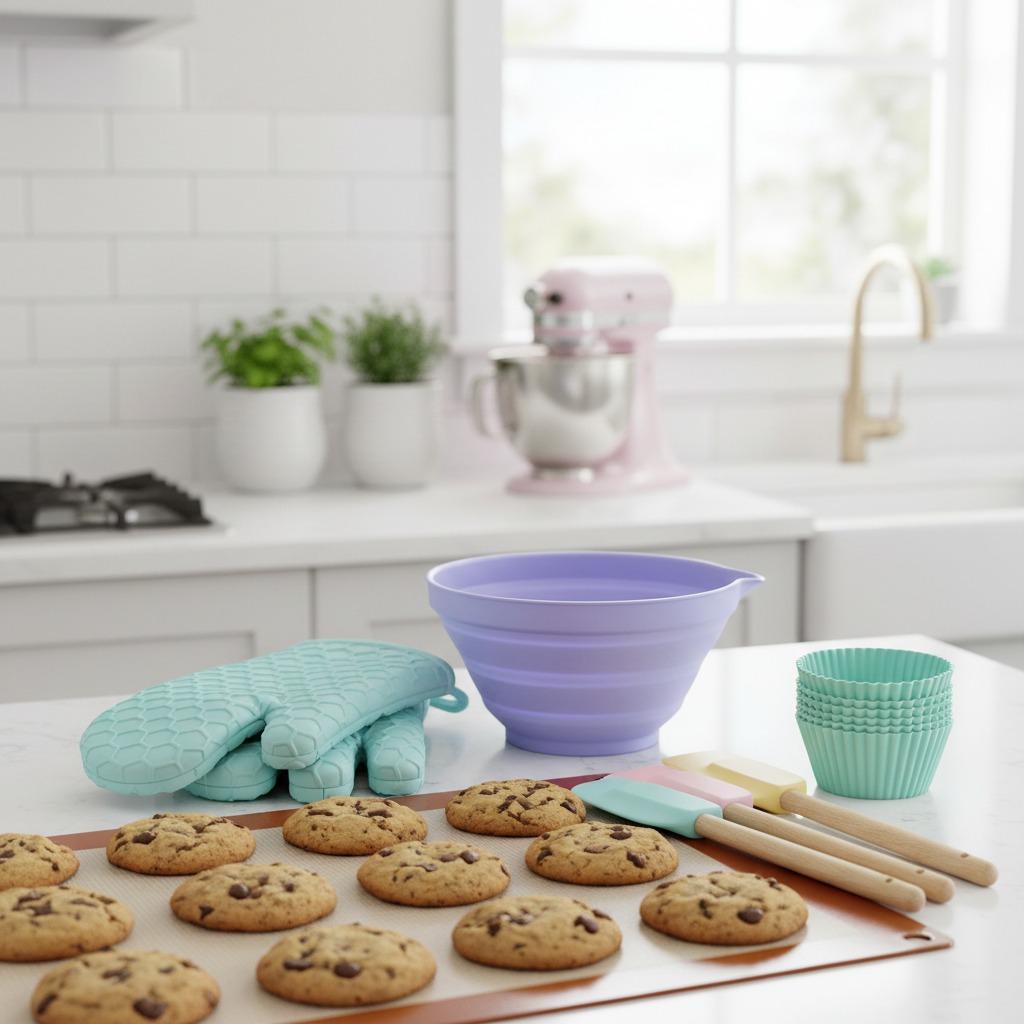
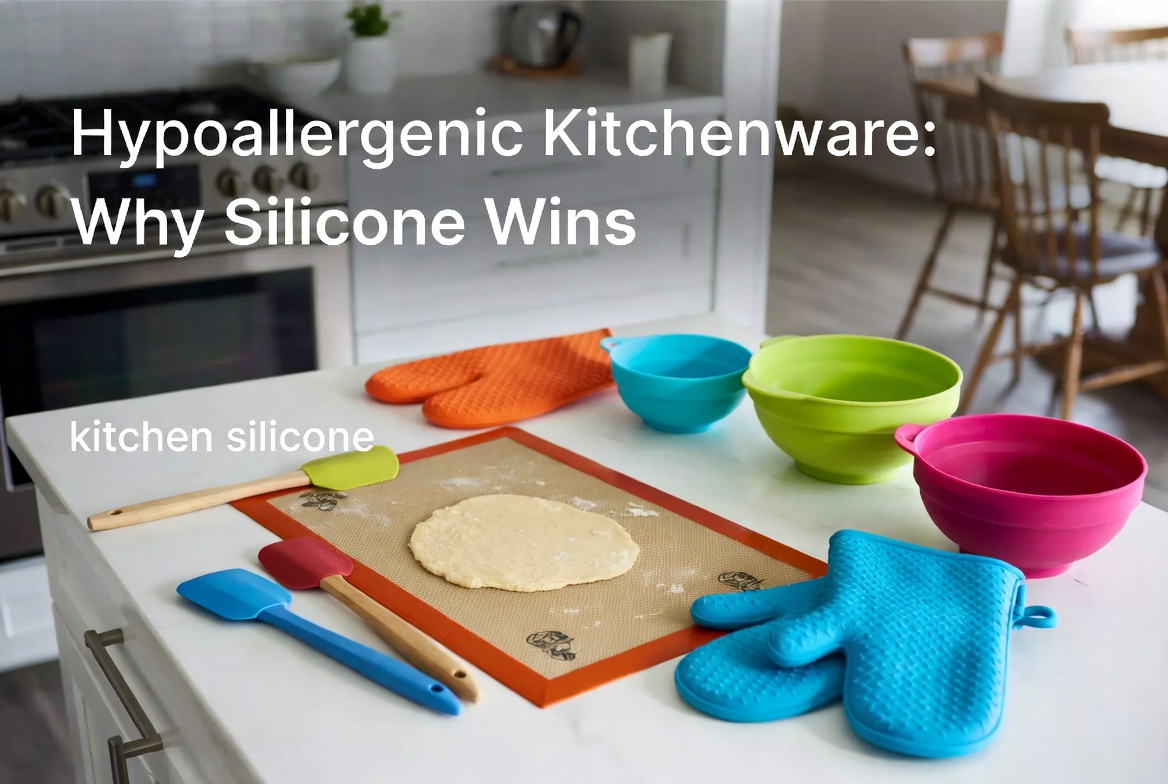
- Everyday versatility: Common uses include spatulas, baking mats, oven mitts, trays, and molds.
Silicone Compared With Other Kitchenware Materials
No single material is perfect for every cooking task. Stainless steel is excellent for strength, wood has a traditional feel, and plastic can be inexpensive. Silicone stands out when the priority is a softer, flexible, allergy-conscious tool for food preparation and baking.
| Material | Strengths | Possible Concerns | Best Use |
|---|---|---|---|
| Silicone | Flexible, latex-free, gentle on cookware, non-porous | Quality varies; heat limit must be checked | Spatulas, baking mats, molds, pot holders |
| Plastic | Lightweight and widely available | Can warp, stain, absorb odors, or soften with heat | Low-heat serving or storage tools |
| Stainless steel | Strong, durable, heat tolerant | Can scratch coated pans; may not suit all metal sensitivities | Tongs, whisks, ladles, heavy-duty cooking |
| Wood | Comfortable grip, classic appearance | Porous; can absorb oils, odors, and moisture | Stirring and serving when cleaned carefully |
| Rubber | Soft and flexible | May involve latex or lower heat tolerance depending on type | Check material label before food-contact use |
How to Choose Silicone Kitchenware
For consumer buyers, product selection should start with the intended use. A spatula used in a hot pan needs a different heat rating than an ice cube tray. A baking mat should fit the pan size and oven use stated by the manufacturer. An oven mitt should be comfortable to grip with, not just thick on the surface.
Before purchasing silicone kitchenware, check the following:
- Food-contact labeling: Look for clear wording such as food-grade silicone or food-contact safe on the product information.
- Heat instructions: Confirm the maximum and minimum temperature range for that exact item.
- Construction: Inspect seams, joints, handles, and any rigid core that may be inside the utensil.
- Odor: A strong chemical smell is a reason to pause and investigate further.
- Cleaning method: Check whether the item is dishwasher-safe or should be hand washed.
- Colorants and fillers: Ask the seller what information is available if you are buying for a highly sensitive household.
Use and Care Tips for Longer Service
Silicone kitchen tools are easy to live with, but they still need proper care. Avoid using silicone directly over an open flame unless the product instructions clearly allow it. Do not cut on silicone baking mats or molds, because knife marks can damage the surface and create areas where residue collects. If a utensil becomes sticky, stained, cracked, torn, or permanently odorous, replace it.
For daily cleaning, warm water and mild dish soap are usually enough. For greasy residue, soak the item briefly and wash thoroughly before drying. Store silicone tools away from sharp objects that may puncture or slice them. When using silicone with tomato sauces, spices, or strong flavors, wash promptly to reduce staining and odor transfer.
Key Takeaways
- Silicone is often a strong choice for hypoallergenic kitchenware because it is not natural rubber latex.
- Its flexible, non-porous surface helps with scraping, baking, food release, and cleaning.
- Heat resistance depends on the specific product, so always read the label before oven or stovetop use.
- Silicone is especially useful around non-stick cookware because it is softer than metal.
- Quality matters: check food-contact labeling, odor, construction, and care instructions before buying.
FAQ: Hypoallergenic Silicone Kitchenware
Is silicone kitchenware safe for people with latex allergies?
Silicone is not natural rubber latex, so it is commonly chosen by people avoiding latex. Anyone with severe allergies should still review product details and consult a medical professional if unsure.
Can silicone melt in a hot pan?
Quality silicone usually handles heat better than ordinary plastic, but every product has its own limit. Check the stated temperature range and avoid open flames unless allowed by the instructions.
Does silicone scratch non-stick cookware?
Silicone is soft compared with stainless steel, so it is generally suitable for coated cookware. Replace tools if they develop exposed hard edges or damaged internal parts.
Why does some silicone smell?
Odor can come from manufacturing residues, packaging, or lower-quality materials. Wash before first use, follow the care label, and avoid using any food-contact item with a strong persistent smell.
What silicone items are most useful for allergy-aware kitchens?
Start with items that touch food often: spatulas, spoonulas, baking mats, ice trays, molds, and pot holders. Choose simple designs that are easy to wash thoroughly.
Final Thoughts
Silicone wins in hypoallergenic kitchenware because it combines latex-free material properties with flexibility, easy cleaning, and broad everyday usefulness. It is not a reason to ignore labels or care instructions, but it is a practical material for households that want fewer porous surfaces and gentler tools around cookware. Buy thoughtfully, use within the stated limits, and replace damaged pieces promptly for the best long-term experience.
