




Ice Tray Manufacturing: Practical Sourcing Guide for Buyers
Ice tray manufacturing may look simple from the outside, but buyers quickly discover that small design and material decisions affect user experience, packaging, durability, and retail positioning. Ice trays are everyday kitchen tools used to freeze water into cubes, spheres, or shaped pieces for drinks and food preparation. For wholesalers, retailers, promotional buyers, and OEM brands, the goal is not only to find a tray that looks good, but to source one that is consistent, safe for intended use, and suitable for the target market.
The original market discussion highlights several important points: silicone trays are popular because they are flexible and make ice easier to release; plastic trays are commonly made through molding processes; and suppliers help connect manufacturers with retailers. This rewritten guide focuses on how to use those facts in a practical sourcing process without assuming unverified specifications.
Key Takeaways
- Start with the end user: home use, bar use, gifting, promotional programs, or retail shelf sales.
- Compare silicone and plastic trays by release performance, structure, packaging needs, and price targets.
- Ask suppliers to document material information, food-contact suitability, testing options, and packaging details.
- For OEM projects, confirm mold ownership, artwork rules, lead times, sample approval steps, and defect handling before ordering.
How Ice Trays Are Commonly Manufactured
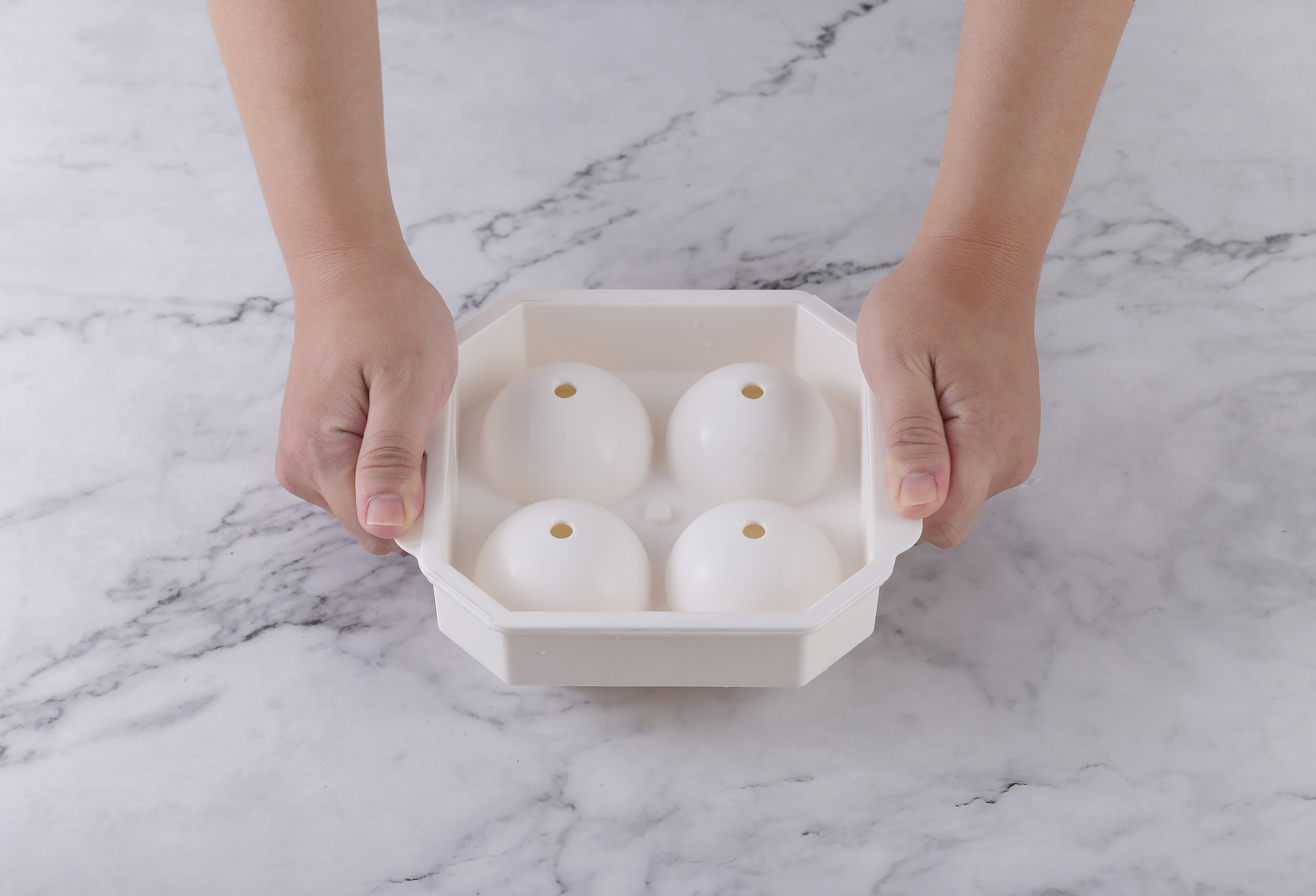
Ice tray production begins with product design. The supplier or factory must define the tray size, cavity shape, wall thickness, lid option, stacking design, and packaging method. A standard cube tray has different tooling and quality requirements from a spherical mold such as a 4-ball ice tray mold. Sphere molds require careful alignment so the two halves close properly and form a consistent shape.
Plastic trays are often produced through injection molding, where heated material is shaped inside a mold. Silicone trays are commonly formed through a molding or casting process, depending on the design and production setup. In both cases, tooling quality is critical. Poor mold design can lead to uneven cavities, rough edges, weak corners, or trays that do not stack neatly.
After forming, trays usually go through trimming, visual checks, assembly if lids or multi-part molds are included, and packing. Buyers should not assume that every supplier follows the same inspection standard. Instead, ask what quality checks are performed during production and before shipment.
Material Selection: Silicone, Plastic, and Buyer Questions
Material choice is one of the most important sourcing decisions. Silicone ice trays are widely used because their flexibility helps users remove ice more easily. They are also associated with shaped ice products, such as spheres or novelty molds. Plastic trays can be rigid, stackable, and cost-effective for many retail programs, but ice release depends heavily on tray design and material behavior.
Do not rely only on marketing descriptions such as “food grade” or “BPA-free” unless the supplier can support the claim with relevant documentation for the market where the product will be sold. Regulations and buyer requirements vary by country, retailer, and application. A responsible sourcing process should include written confirmation of the exact material, intended temperature range, care instructions, and available test reports.
| Selection Point | Silicone Ice Tray | Plastic Ice Tray | Questions to Ask the Supplier |
|---|---|---|---|
| Ice release | Flexible body can make removal easier | Depends on rigidity and cavity design | Can you provide samples for freezer testing? |
| Shape options | Good for spheres, novelty shapes, and flexible molds | Common for cube and stackable formats | Which shapes are existing molds and which require new tooling? |
| Stacking | May need a lid or reinforced structure | Often easier to design for stable stacking | Can packed and filled trays stack without deformation? |
| Documentation | Material details should be verified | Material details should be verified | What material declarations or test reports are available? |
| Packaging | May require support to keep shape on shelf | Usually straightforward for retail display | Can you quote packaging options and carton dimensions? |
Design Features That Matter in Real Use
Many ice tray complaints come from avoidable design issues. A tray that is difficult to fill, spills easily while moving to the freezer, traps odor, or releases ice poorly may lead to returns even if it looks attractive in product photos. For B2B buyers, usability testing with real water and a real freezer is more valuable than judging samples on appearance alone.
Consider these design points during sample review:
- Cavity size and shape: Larger cubes or balls melt more slowly, but they also require more freezer time and may not fit every glass.
- Rim stability: A tray should be easy to carry when filled with water.
- Lid fit: If a lid is included, check whether it helps stacking and reduces spills without being hard to remove.
- Release performance: Test after a full freeze cycle, not only with an empty tray.
- Cleaning: Look for corners or seams where residue could remain.
- Packaging fit: Confirm that the tray does not deform in retail packaging or during carton packing.
Supplier Evaluation for Wholesale and OEM Orders
Ice cube tray suppliers play an important role in the market because they connect production resources with retailers, importers, and brand owners. A supplier may be a factory, trading company, or distributor. Each model can work, but the buyer should understand who controls tooling, production scheduling, inspection, and after-sales communication.
For OEM or private-label programs, clarify whether the supplier has existing molds for standard cube trays, silicone molds, or specialty products such as a 4-ball ice tray mold. Existing tooling can reduce development complexity, while custom tooling may allow a unique size, logo placement, or packaging concept. However, custom work requires clear written agreements about mold fees, mold ownership, maintenance, and whether the design can be sold to other customers.
Ask potential suppliers for sample timelines, production lead times, packaging templates, export carton information, and inspection procedures. If the product will be sold through a retailer or online marketplace, share the packaging and compliance requirements early so the supplier can confirm feasibility before quotation.
Quality Checks Before Confirming Production
A careful approval process helps prevent misunderstandings. Buyers should request pre-production samples that match the intended material, color, logo, lid, and packaging as closely as possible. If the sample is handmade or from a different material, treat it as a design reference rather than final approval.
Practical checks include filling the tray to the recommended level, carrying it to the freezer, stacking it if applicable, freezing it overnight, releasing the ice, washing it, and repeating the cycle several times. Measure whether the tray fits common freezer drawers and retail packaging. For spherical molds, check whether the two halves close neatly and whether the ice ball forms consistently.
Before shipment, buyers may arrange inspection based on agreed criteria such as appearance, quantity, packaging, labeling, carton condition, and functional checks. The inspection standard should be discussed before production, not after a problem is found.
FAQ
What is the best material for an ice tray?
There is no single best material for every project. Silicone is valued for flexibility and easy ice release, while plastic can be suitable for rigid, stackable tray designs. Choose based on target price, user expectations, packaging, and verified material documentation.
Can suppliers make custom ice cube or sphere molds?
Many suppliers can discuss OEM designs, but buyers should ask whether the shape uses an existing mold or requires new tooling. Confirm tooling cost, sample process, ownership terms, and expected lead time in writing.
What should I ask an ice cube tray supplier before ordering?
Ask about material details, available test reports, sample availability, production lead time, packaging options, carton dimensions, inspection procedures, and how defects or shipment issues are handled.
Is a 4-ball ice tray mold suitable for retail programs?
It can be, especially for drinkware, barware, or gifting categories. Buyers should test the sample for sealing, filling, freezing, release, cleaning, and packaging stability before committing to a larger order.
Should I request compliance documents?
Yes. Any food-contact product should be reviewed against the requirements of the intended sales market. Ask the supplier what documentation is available and consult your compliance adviser or retailer requirements when needed.
Final Sourcing Advice
Successful ice tray sourcing depends on details: material verification, usable design, consistent molding, clear packaging, and supplier communication. Whether purchasing standard cube trays, silicone ice trays, or a specialty 4-ball ice tray mold, buyers should compare samples under real conditions and document every commercial and quality requirement before production begins.
