




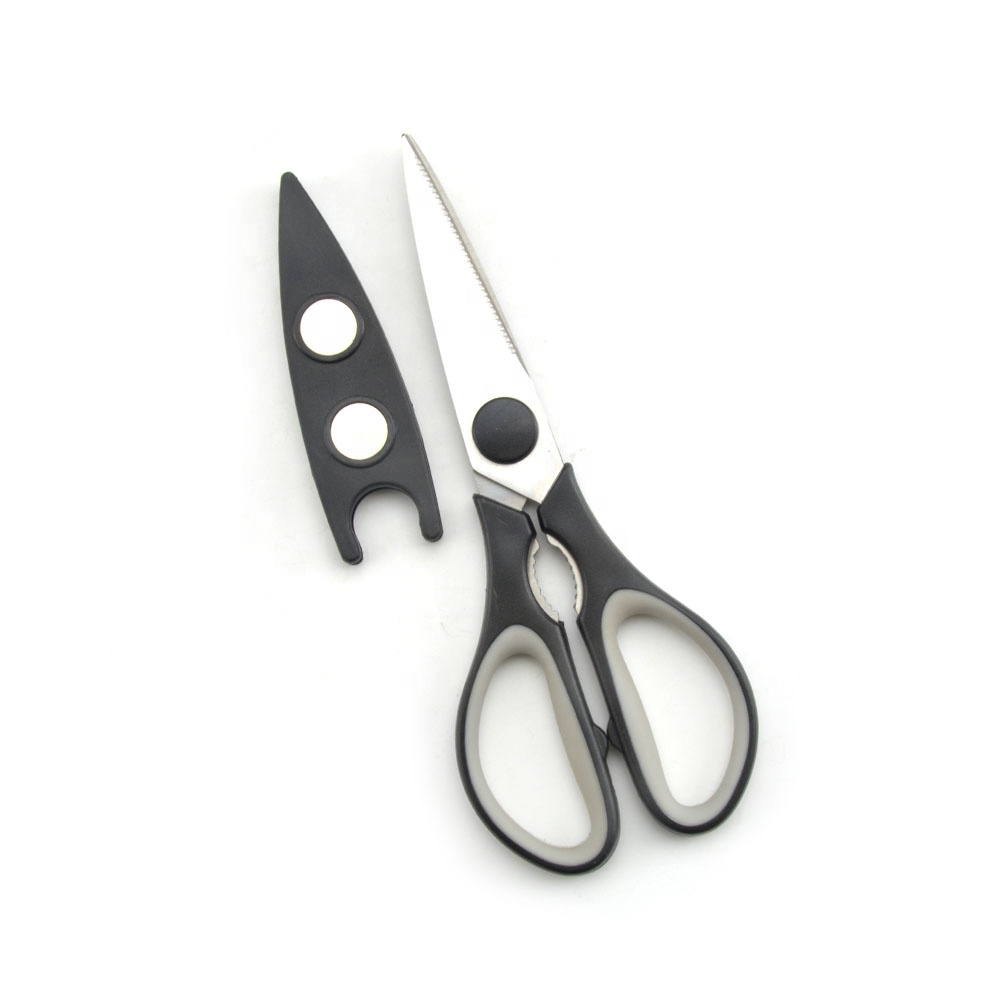
Innovate with Multi-Functional Kitchen Scissors
Multi-functional kitchen scissors are a small tool with a large role in everyday food preparation. A good pair can help cut herbs, trim vegetables, open food packaging, portion cooked foods, and handle quick prep tasks without reaching for a knife and board every time. For retailers, distributors, and private-label buyers, kitchen scissors also sit in a practical category: they are familiar to consumers, easy to demonstrate, and often purchased as part of a broader kitchen tool range.

The original article highlights several useful ideas: stainless steel blades, ergonomic handling, slip-resistant grip, a protective cover, possible magnetic storage, a bottle opener function, and a nutcracker area between the handles. This rewritten guide keeps those explicit points while focusing on what buyers and users should evaluate before selecting a product.
Key Takeaways
- Multi-functional kitchen scissors should cut cleanly, feel secure in the hand, and be easy to clean after contact with food.
- A cover can improve drawer safety and hygiene; a magnetic cover may also support convenient storage if the product includes that feature.
- Built-in functions such as a bottle opener or nutcracker can add value, but they should not compromise cutting comfort or blade alignment.
- OEM and wholesale buyers should ask suppliers clear questions about materials, packaging, testing, customization, lead times, and quality checks.
What Multi-Functional Kitchen Scissors Are Used For
Kitchen scissors are not simply office scissors placed in a kitchen drawer. They are designed around food preparation and quick utility. Common uses include snipping herbs directly into a pan, cutting parchment or food packaging, trimming leafy greens, slicing cooked noodles, and portioning smaller pieces of meat or poultry. Some cooks also use them to cut pizza, dried fruit, or seafood shells, depending on blade strength and the product instructions.
The advantage is control. Scissors allow the user to bring the cutting action to the food rather than moving the food to a board. That can save time during routine prep. However, buyers should avoid treating every model as a heavy-duty poultry shear. If a product is intended for light or medium kitchen work, the supplier should make that positioning clear in product descriptions and packaging.
Blade Design and Cutting Performance
The original article mentions high-quality stainless steel blades and a micro-serrated edge. These are important selection points, but buyers should still ask for exact material information rather than assuming a grade. Stainless steel is valued because it is commonly associated with corrosion resistance and kitchen suitability, but the grade, hardness, finish, and heat treatment should be confirmed by the supplier.
A micro-serrated edge can help grip slippery ingredients so they do not slide away during cutting. This can be useful for herbs, raw poultry skin, or flexible packaging. Smooth blades, on the other hand, may be easier to sharpen and may create a cleaner cut on certain foods. The right choice depends on the intended retail positioning: everyday household use, value packs, premium kitchen tools, or food-service style prep.
Handle Comfort and Safety
Handle design affects both user comfort and safety. The original article refers to ergonomic, slip-resistant grip, which is especially relevant when hands are wet or when repetitive cutting is required. A handle should provide enough space for the fingers, distribute pressure evenly, and allow the user to maintain control without twisting the wrist.
For consumer-facing product selection, users should look for scissors that feel balanced rather than blade-heavy or handle-heavy. The pivot should move smoothly, with enough resistance to control the cut. If the scissors are too stiff, they can cause fatigue. If they are too loose, blade alignment may suffer. For B2B sourcing, sample evaluation should include repeated opening and closing, wet-hand handling, and cutting through the intended range of materials.
Cover, Magnetic Storage, and Extra Functions
A kitchen scissors with cover design can make storage safer by shielding the blades in a drawer. It may also help keep the blades cleaner between uses, although proper washing and drying remain essential. The original article notes that some protective sheaths may include a magnetic backing for fridge storage or an integrated bottle opener. These are useful features when executed well.
Extra functions should be assessed carefully. A bottle opener should be positioned so it does not make the cover bulky or awkward. A nutcracker between the handles should feel stable and should not pinch the user's hand during normal cutting. Multi-function design works best when each function is practical, visible, and easy to explain on packaging or an e-commerce listing.
Comparison Checklist for Buyers
| Feature to Check | Why It Matters | Questions to Ask a Supplier |
|---|---|---|
| Blade material | Influences sharpness, corrosion resistance, and product positioning | What stainless steel grade is used, and can documentation be provided? |
| Blade edge | Affects grip on food and cutting style | Is the blade smooth, micro-serrated, or mixed edge? |
| Handle grip | Supports comfort and control during prep | What handle material is used, and has wet-hand usability been checked? |
| Protective cover | Improves drawer safety and storage | Is the cover included as standard packaging or an optional accessory? |
| Magnetic backing | Can support visible storage on suitable metal surfaces | Is the magnet strength tested, and what surfaces is it intended for? |
| OEM packaging | Important for retail and private-label sales | What customization options, artwork requirements, and lead times apply? |
OEM and Wholesale Sourcing Guidance
For an OEM manufacturer kitchen scissors project, the best starting point is a clear specification sheet. Include target market, intended price range, preferred blade finish, handle color, cover design, packaging format, and whether the product needs extra functions such as a bottle opener or nutcracker. Do not rely only on photos; request physical samples and evaluate them in real kitchen scenarios.
Wholesale buyers should ask about quality control steps, acceptable defect standards, packaging protection, carton details, barcode labeling, and whether the supplier can support private-label artwork. If compliance or food-contact requirements apply in your destination market, ask the supplier what documents they can provide and verify them through your own compliance process. Avoid assuming certifications, test results, or market approvals unless they are documented.
- Request at least one production-equivalent sample, not only a display sample.
- Test cutting performance on packaging, herbs, vegetables, and any use case promoted on the listing.
- Check the cover fit after repeated removal and replacement.
- Confirm cleaning instructions and whether the product is dishwasher safe before making that claim.
- Review packaging copy to ensure functions are accurate and not overstated.
Use and Care Tips for Everyday Kitchens
Consumers can extend the useful life of kitchen scissors by washing them soon after use, especially after cutting meat, fish, or strongly colored foods. Dry the blades before storage to reduce water spots and help maintain smooth movement at the pivot. If the scissors include a cover, make sure both the blade and cover are dry before closing them together.
It is also wise to keep kitchen scissors separate from office or craft scissors. Food-prep tools should stay in the kitchen and should be cleaned according to the supplier's instructions. If the product is not described as suitable for bones, frozen foods, or hard shells, avoid those tasks. Overloading the blades can damage alignment and reduce cutting quality.
Practical FAQ
Are multi-functional kitchen scissors better than a knife?
They are not a full replacement for a knife. They are useful for quick cutting, trimming, and portioning tasks where scissors provide better control or convenience.
Should I choose kitchen scissors with a cover?
A cover is helpful for safer drawer storage and for protecting the blade edge. If the cover has a magnetic feature, confirm that it holds securely on the intended surface.
What should OEM buyers confirm before ordering?
Confirm blade material, handle material, edge type, cover design, packaging, customization options, quality checks, lead time, and any required compliance documents for the target market.
Can kitchen scissors go in the dishwasher?
Only if the supplier states that they are dishwasher safe. When in doubt, hand wash and dry them promptly to protect the blades, handle, and pivot.
Do extra features always make the product better?
No. Extra features are valuable only when they work well and do not reduce comfort, safety, or cutting performance. A simple, reliable design may be better for some customers.
