




OEM Kitchen Scissors Manufacturer: Sourcing Guide for Buyers
Kitchen scissors are small tools, but they can create large sourcing problems when buyers overlook details such as cleaning, storage, blade protection, packaging, and user safety. For importers, distributors, kitchenware brands, promotional buyers, and retail purchasing teams, choosing an OEM kitchen scissors manufacturer is not only about finding a low unit price. It is about confirming whether the product concept, sample quality, customization process, and after-sales communication match the market you serve.
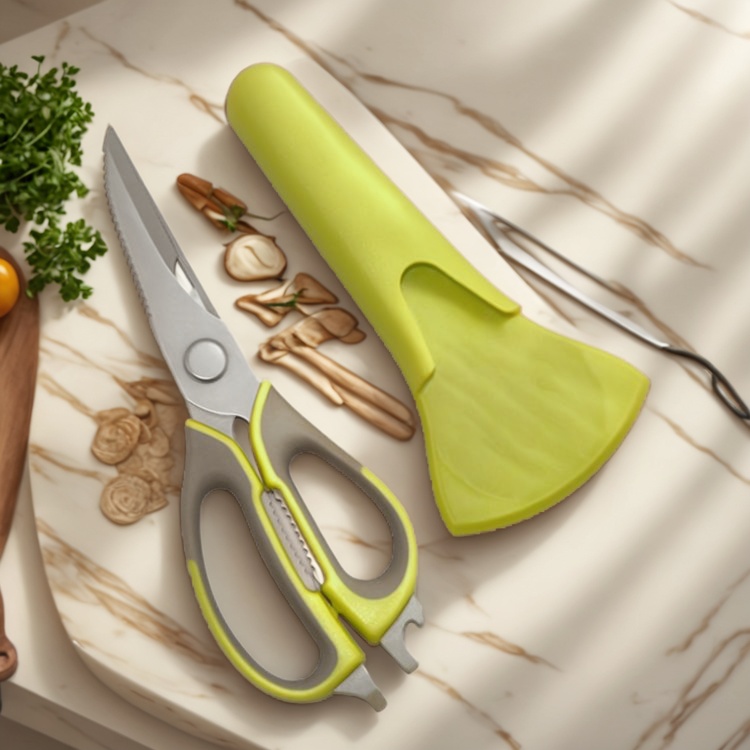
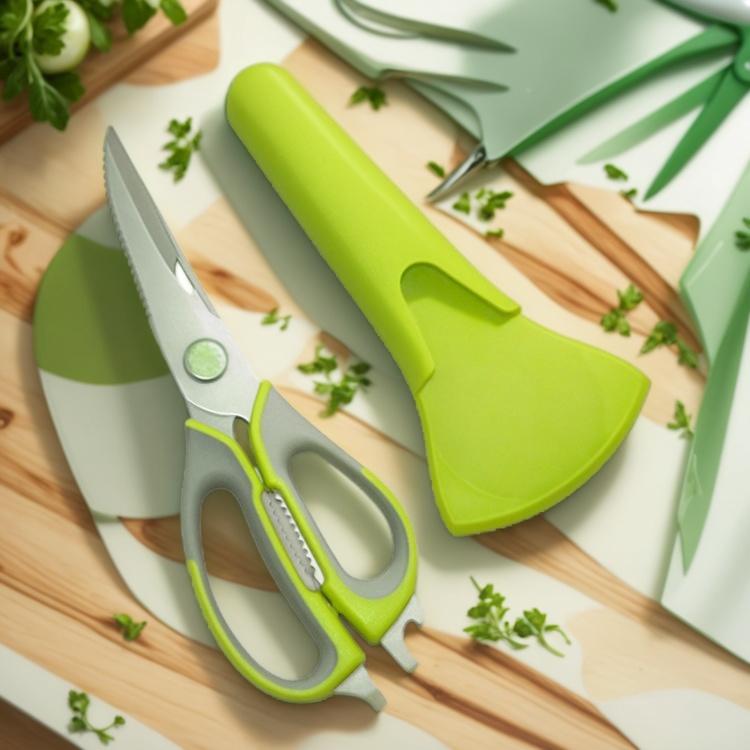
The original product focus includes kitchen scissors with practical features such as detachable blades for easier cleaning, serrated cutting edges, ergonomic handles, and a cover for safer storage. This guide explains how B2B buyers can evaluate those features without relying on vague claims. It also outlines the questions to ask before confirming samples, private label packaging, or repeat wholesale orders.
Key Takeaways
- Detachable kitchen scissors can support easier cleaning, but buyers should check how securely the blades reconnect after repeated use.
- A kitchen scissors with cover can help protect blades during storage and reduce accidental contact in drawers or transport cartons.
- Supplier claims about materials, testing, compliance, or production capacity should be confirmed with documentation and samples.
- OEM buyers should define packaging, logo placement, user instructions, and inspection criteria before placing a bulk order.
- For wholesale programs, usability, cleaning, storage, and consistent finishing are often as important as the cutting edge itself.
What Buyers Should Look For in OEM Kitchen Scissors
A professional sourcing process starts with the intended market. Kitchen scissors sold to restaurant suppliers may need a different grip feel, package format, and cleaning message than scissors sold through home goods retailers. If your order is for a private label line, ask whether the supplier can support your required handle color, logo method, sheath or cover style, inner packaging, barcode placement, and instruction sheet.
The source article describes a design that includes detachable blades, a protective cover, serrated edges, and ergonomic handles. Those are useful features, but a buyer should still verify the exact construction during sample review. Do the blades separate smoothly without feeling loose? Does the cover stay in place during normal handling? Is the handle comfortable for both short trimming tasks and longer food preparation sessions? These observations are more useful than a general statement that the scissors are durable or innovative.
Detachable Kitchen Scissors: Benefits and Checks
Detachable kitchen scissors are popular because food residue can collect near the pivot area. A detachable structure may make cleaning and drying easier, which is especially relevant for consumers who cut herbs, vegetables, poultry packaging, or cooked food. For B2B buyers, however, the detachable feature should be treated as a mechanical design that needs review.
During sampling, open and close the scissors repeatedly, separate the blades according to the intended method, then reconnect them. Check whether the pivot remains stable and whether the cutting alignment changes. If the product will be sold online, consider whether customers will understand the detachable function from the packaging or product page. Clear instructions can reduce misuse and returns.
Kitchen Scissors With Cover: Storage and Safety Value
A kitchen scissors with cover offers practical value for retail and wholesale buyers. The cover can help protect the cutting edge, reduce contact with other utensils, and make the product easier to pack in a drawer, picnic kit, camping box, or delivery bundle. The original article notes that a cover can also provide peace of mind in homes with children, although buyers should avoid presenting a cover as a childproof safety device unless the supplier can support that claim with appropriate evidence.
When reviewing the cover, check the fit, thickness, edge retention, and ease of removal. A cover that is too loose may fall off in transit or storage. A cover that is too tight may frustrate users or create handling risk. If the cover is part of the product's main selling point, ask the supplier whether replacement covers are available and whether the cover material, color, and branding can be customized.
Comparison Checklist for Supplier Evaluation
| Evaluation Area | What to Check | Questions to Ask the Supplier |
|---|---|---|
| Blade design | Cutting alignment, serration consistency, edge finish | What blade material is used, and can it be documented? |
| Detachable function | Ease of separation, secure reconnection, pivot stability | How should users detach and clean the scissors safely? |
| Cover or sheath | Fit, retention, storage convenience, packaging compatibility | Can the cover color, logo, or shape be customized? |
| Handle comfort | Grip size, balance, pressure points, left or right hand usability | Are alternative handle colors or materials available? |
| OEM packaging | Retail box, blister card, hang tag, instructions, barcode area | What artwork files and approval steps are required? |
| Quality control | Sample consistency, visual defects, opening force, carton packing | What inspection standard can be agreed before shipment? |
Sample Testing Before Wholesale Orders
Before confirming a wholesale kitchen shears order, request samples that match the intended production version, not only showroom samples. Test them on common tasks such as cutting herbs, trimming food packaging, snipping vegetables, and general kitchen preparation. If the supplier presents the scissors as suitable for meat or poultry tasks, ask for the exact intended-use wording and confirm whether your local labeling requirements allow that message.
It is also useful to test cleaning behavior. Wash the scissors according to the supplier's recommended method, dry them, reassemble them if detachable, and check for trapped moisture or rough areas near the pivot. If you plan to market the product as easy to clean, the user experience should support that claim. Avoid adding dishwasher-safe, food-grade, anti-rust, or specific stainless steel grade claims unless the supplier provides verifiable information for your order.
OEM Customization and Branding Questions
OEM sourcing requires more than choosing a model from a catalog. Buyers should prepare a written specification sheet that covers product name, dimensions if available, handle color, cover style, logo location, packaging format, carton labeling, instruction language, and any market-specific warnings. If these details are not agreed early, small differences can become expensive after production begins.
Ask the manufacturer how sample approval works, whether pre-production samples are available, and what happens if mass production differs from the approved sample. Also ask about lead time, minimum order quantity, payment terms, and shipping options, but treat all commercial details as order-specific rather than assuming they are fixed. A reliable supplier should be able to answer clearly or explain which details depend on customization.
How to Avoid Common Sourcing Mistakes
- Do not approve bulk production from photos only; test physical samples first.
- Do not use marketing claims that the supplier has not documented.
- Do not ignore packaging tests, especially if the scissors include a cover or detachable parts.
- Do not choose the cheapest option before comparing finishing, handling comfort, and sample consistency.
- Do not leave inspection criteria vague; define acceptable defects before shipment.
For distributors and brand owners, the best kitchen scissors are not always the most complex. A simple, well-finished pair with a secure cover, clear instructions, and consistent packaging may perform better in the market than a product with many features but weak execution. The goal is to match features to user needs and verify that the supplier can repeat the approved standard.
Practical FAQ
What makes detachable kitchen scissors useful?
They can make cleaning around the pivot and blade area easier. Buyers should still test how securely the blades reconnect and whether users can understand the function from the instructions.
Is a kitchen scissors with cover better for retail?
It can be helpful because the cover protects the blade during storage and can make the product easier to display or pack. The cover should fit securely without being difficult to remove.
What should I ask an OEM kitchen scissors manufacturer first?
Ask about available models, customization options, sample process, material documentation, packaging choices, inspection criteria, MOQ, lead time, and how production will match the approved sample.
Can I claim the scissors are stainless steel or dishwasher safe?
Only use those claims if they are supported by the supplier's product information and appropriate documentation for your order. If the evidence is not available, use more general wording or ask for clarification.
How should I compare suppliers?
Compare sample quality, communication speed, willingness to document specifications, packaging support, consistency between samples, and clarity on commercial terms. Price matters, but it should not be the only factor.
Final Sourcing Advice
An OEM kitchen scissors project should begin with user needs and end with clear specifications. Detachable blades, serrated edges, ergonomic handles, and a protective cover can all add value when they are executed well and described accurately. For B2B buyers, the safest approach is to request representative samples, document every approved detail, confirm any product claims, and build inspection criteria before mass production. That process helps turn a useful kitchen tool into a reliable wholesale or private label product.
