




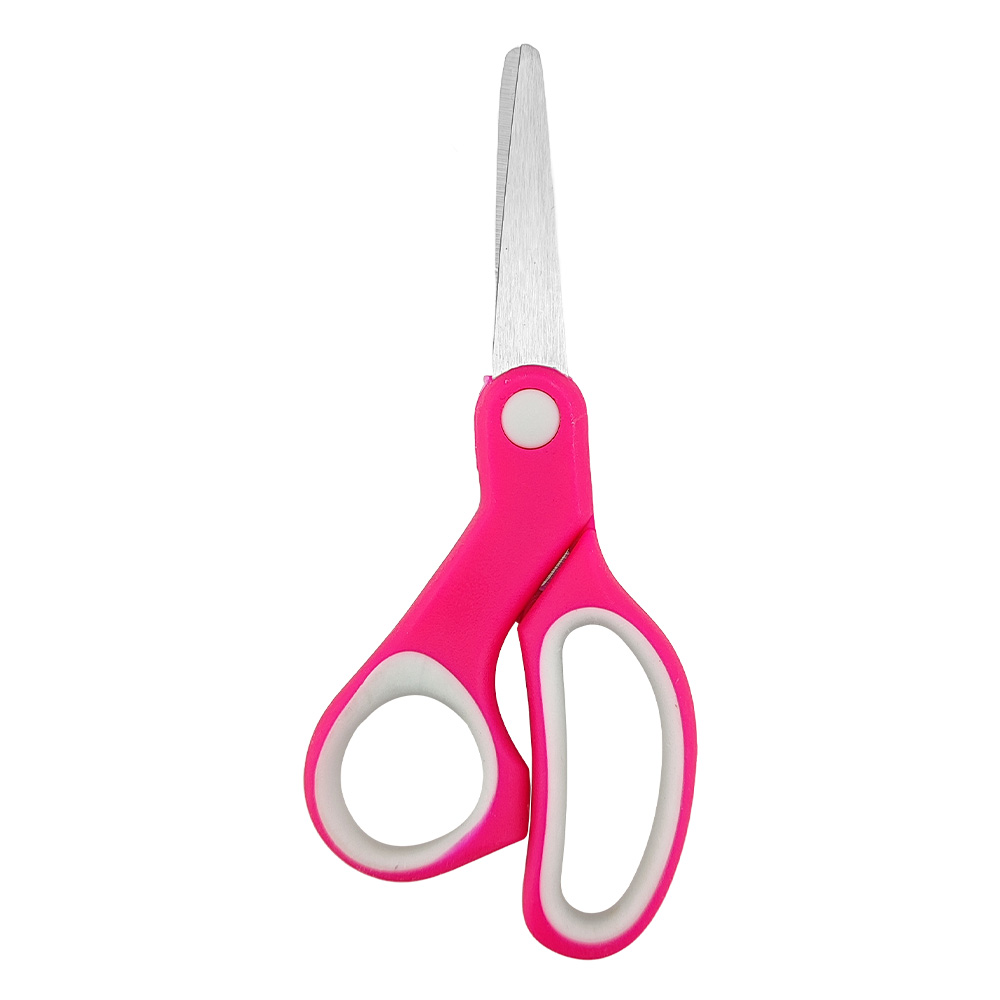
OEM Left-Handed Scissors: Practical Sourcing Guide for Comfort, Safety, and Quality
Left-handed users often struggle with ordinary right-handed scissors because the blade orientation, handle shape, and cutting sightline are not designed for their natural hand movement. For schools, craft retailers, stationery brands, and promotional product buyers, OEM left-handed scissors can fill a real product gap when they are specified carefully. The goal is not only to offer a left-hand label, but to source scissors that cut cleanly, feel stable, and match the intended age group and use case.
This guide reviews the key sourcing considerations behind OEM left-handed scissors, with attention to children’s scissors, ergonomic handling, supplier communication, and quality checks. It is written for buyers comparing factory options, including those looking at a children’s scissors factory or a scissors manufacturer in Yangjiang.
Key Takeaways
- True left-handed scissors should support left-hand blade visibility, grip comfort, and controlled cutting motion.
- For children’s scissors, buyers should ask about tip design, handle fit, material details, and age suitability instead of assuming one model fits all users.
- OEM customization can include color, handle shape, packaging, branding, and assortment planning, but specifications should be confirmed in writing.
- Before ordering, request samples and verify cutting performance, pivot smoothness, edge consistency, labeling, and packaging quality.
Why Left-Handed Scissors Need a Different Design
Left-handed scissors are not simply right-handed scissors with a different handle color. The blade orientation matters because it affects how the user sees the cutting line and how the blades press together during use. When a left-handed person uses standard scissors, the cutting edge can be hidden by the top blade, and the natural hand pressure may push the blades apart. This leads to folded paper, uneven cuts, and frustration during schoolwork or craft projects.
For OEM sourcing, buyers should ask whether the model is genuinely configured for left-hand use or only marketed as suitable for both hands. Ambidextrous handles may be useful for some basic classroom applications, but dedicated left-handed children’s scissors can provide a more natural experience for young left-handed users. The difference is especially important where accuracy, comfort, and confidence matter.
What to Check When Sourcing from a Children’s Scissors Factory
A children’s scissors factory should understand that child-use products require careful design choices. The original product description highlights child-friendly features such as blunt tips, ergonomic handles, and soft-grip interiors. Those features can be valuable, but buyers should still confirm the exact specifications for each production order. A sample photo or catalog description is not enough for a purchase decision.
Ask the supplier to clarify the intended user age, blade length, tip shape, handle dimensions, edge sharpness, and packaging warnings. If stainless steel blades are offered, request the actual material specification rather than relying on a general description. If colorful designs, including pink handle options, are available, confirm color matching standards, acceptable color variance, and whether custom colors require special tooling or minimum order conditions.
Comparison Checklist for OEM Left-Handed Scissors
| Review Point | What to Confirm | Why It Matters |
|---|---|---|
| Left-hand blade orientation | Ask whether the blades are built for left-handed cutting, not only labeled as left-hand friendly. | Improves line visibility and cutting control. |
| Handle ergonomics | Check finger-hole size, grip shape, and comfort for the target age group. | Reduces hand strain during repeated use. |
| Tip design | Confirm blunt or rounded tip details for children’s models. | Supports safer classroom and craft use. |
| Blade material | Request the stated stainless steel grade or material information. | Helps compare durability and corrosion resistance. |
| Pivot construction | Review screw, rivet, or pin structure and cutting smoothness. | Affects durability and ease of opening and closing. |
| OEM packaging | Confirm artwork, barcode, warnings, language, and carton packing. | Prevents retail and logistics problems after production. |
Comfort Features That Matter for Left-Handed Children
Comfort is not a decorative issue; it affects whether a child can use scissors safely and confidently. Left-handed children may already be adapting to classroom tools designed for right-handed classmates. A pair of left-handed children’s scissors with a natural handle angle can make cutting paper, craft sheets, and basic project materials easier.
When reviewing samples, test how the handle sits in the left hand. The user should not need to twist the wrist sharply to see the cutting path. The scissors should open and close without excessive resistance, and the grip should not pinch the fingers. If soft-grip interiors are included, check whether the softer material is securely integrated and whether it remains comfortable after repeated use.
Questions to Ask a Scissors Manufacturer in Yangjiang
Yangjiang is widely known as a manufacturing center for knives, scissors, and metal household products. When working with a scissors manufacturer in Yangjiang, buyers should still evaluate each supplier on its own process control, communication, and ability to meet the project brief. Location alone does not guarantee the right product.
- Can you provide left-handed samples for the exact model under discussion?
- Which parts can be customized for OEM orders: handle color, logo, blade finish, packaging, or assortment?
- What material information can you provide for blades, handles, pivot parts, and grip inserts?
- How do you inspect cutting performance and pivot smoothness before shipment?
- What product warnings, labeling, and documentation can be supplied for the destination market?
- Are there any tooling, sample, lead-time, or order quantity requirements for custom designs?
Sample Testing Before Placing an OEM Order
Before confirming a bulk order, request pre-production samples and test them in realistic conditions. For school scissors, this may include cutting copy paper, construction paper, labels, thin craft materials, and packaging inserts. Buyers should note whether the scissors cut cleanly from base to tip, whether the blades separate under pressure, and whether the pivot feels too loose or too tight.
It is also useful to compare the left-handed model against a common right-handed model. A true left-handed design should make the cutting line easier to see for left-handed users. If the product is intended for children, involve users from the target age range under supervision and record feedback on comfort, control, and ease of use.
OEM Branding and Packaging Considerations
OEM scissors are often purchased for retail stationery lines, school supply programs, craft kits, and promotional assortments. Branding decisions should support clear product identification. If the product is left-handed, make that visible on the retail card, blister pack, box, or online listing. Buyers may also want to specify icon use, age guidance, care instructions, and safety warnings where appropriate.
Avoid approving packaging based only on appearance. Check whether the product name, barcode, color description, country-of-origin statement, and carton marks match the purchase order. If multiple colors are ordered, confirm how they are packed and labeled so warehouse teams do not confuse left-handed and right-handed versions.
FAQ: OEM Left-Handed Scissors
Are left-handed scissors different from ambidextrous scissors?
Yes. Ambidextrous scissors may have symmetrical handles, but dedicated left-handed scissors should also consider blade orientation and cutting visibility for left-hand use.
What should buyers verify for children’s scissors?
Confirm the tip shape, handle size, blade material, pivot smoothness, intended age range, packaging warnings, and whether the model is truly designed for left-handed users.
Can OEM left-handed scissors be customized?
Many suppliers can discuss custom colors, logos, packaging, or assortments, but buyers should ask about tooling needs, sample timing, artwork requirements, and order conditions before planning a launch.
How should samples be evaluated?
Test cutting performance, grip comfort, blade alignment, pivot movement, visual quality, packaging accuracy, and consistency between samples. Document issues before approving production.
What commercial details should be requested from the supplier?
Ask for current pricing, minimum order quantity, lead time, payment terms, packaging options, inspection process, and any documents needed for your market. Do not assume these details from a catalog page.
