




Pepper Grinder Manufacturing and Supplier Sourcing Guide
Pepper grinder manufacturing combines product design, material selection, component sourcing, assembly, and quality control. For retailers, importers, hospitality buyers, and private-label brands, understanding the production process helps reduce sourcing risk and compare suppliers more effectively. A pepper grinder may look simple, but its performance depends on several details: the grinding mechanism, container body, top adjustment system, fit of assembled parts, and consistency of the grind from fine to coarse.
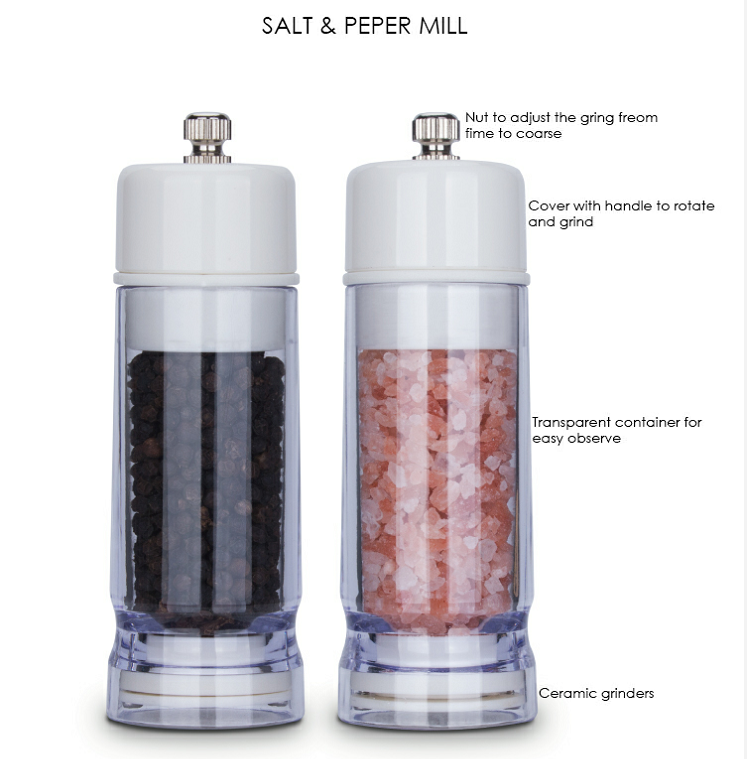
The original product description highlights common elements used in pepper mill production, including ceramic grinding mechanisms, transparent containers, and an adjustable nut that allows users to change grind size. These are useful starting points for evaluating a Salt & Pepper Mill Set or similar product, but B2B buyers should avoid assuming that every model has the same specification. Instead, ask for written product details, samples, and inspection criteria before placing wholesale or OEM orders.
Key Takeaways
- Ceramic mechanisms, transparent bodies, and adjustable nuts are important features to verify during sourcing.
- Buyers should ask suppliers for exact material descriptions, packaging options, quality checks, and sample availability.
- Consistent grind adjustment and clean assembly are major indicators of production quality.
- For OEM or private-label projects, confirm customization limits before approving artwork or packaging.
How Pepper Grinders Are Typically Produced
Pepper mill production usually begins with a product design that defines the grinder shape, container capacity, cap style, adjustment method, and packaging. The body may be molded or formed to provide visibility of the contents when a transparent container is used. Separate components, such as the top, shaft, grinding mechanism, and adjustment nut, are then prepared for assembly.
During assembly, the supplier must align the grinding mechanism so that peppercorns feed smoothly and the nut changes grind size predictably. A grinder that feels tight, slips during turning, or produces uneven particles may have issues with part tolerances or assembly accuracy. For this reason, the best sourcing conversations go beyond appearance and include functional testing of multiple samples.
Core Components Buyers Should Check
A pepper grinder is only as reliable as its components. The original article mentions ceramic grinders, transparent containers, a white top, and an adjustable nut. When reviewing a product based on these features, buyers should request confirmation of the exact construction and ask whether the same components will be used in mass production samples.
| Component or Feature | Why It Matters | Supplier Questions to Ask |
|---|---|---|
| Ceramic grinding mechanism | Often selected for corrosion resistance and consistent grinding behavior. | What is the mechanism material, and is it used for both sample and bulk production? |
| Transparent container | Allows users to see remaining peppercorns or salt. | What material is the body made from, and how is clarity checked? |
| Adjustable nut | Lets users switch between finer and coarser grinds. | How many adjustment positions are practical, and how is looseness prevented? |
| Top and handle design | Affects comfort, grip, and turning control. | Can the top color or finish be customized for OEM orders? |
| Packaging | Protects the grinder in transport and supports retail presentation. | What packaging options are available, and can drop protection be discussed? |
Quality Control in Pepper Mill Manufacturing
Quality control should cover both appearance and function. Visual checks may include scratches, color consistency, transparent body clarity, alignment, and packaging condition. Functional checks should include turning smoothness, grind adjustment, filling access, and whether the grinder remains stable after repeated use.
For wholesale buyers, it is wise to define a simple inspection checklist before production begins. Ask the supplier whether they conduct incoming material checks, in-process inspections, and final product inspections. Avoid relying only on catalog photos. A short video showing the grinder in use, plus physical samples tested with actual peppercorns, can reveal issues that static images miss.
OEM and Wholesale Sourcing Guidance
When sourcing pepper grinders from a factory or supplier, the lowest quoted price is not the only factor. Differences in mechanism quality, body material, cap fit, packaging, and inspection standards can affect returns and customer satisfaction. If you are planning an OEM pepper grinder or a private-label Salt & Pepper Mill Set, prepare a clear request for quotation with product photos, target market, packaging expectations, and any branding requirements.
- Request a product specification sheet instead of relying on a brief catalog description.
- Ask whether the supplier offers existing molds or requires custom tooling for new designs.
- Confirm what branding methods are available, such as logo printing or packaging customization.
- Check sample lead time, sample cost, and whether the sample represents bulk production.
- Discuss carton packing, inner protection, and labeling requirements for your sales channel.
- Ask what quality standard will be used before shipment and whether third-party inspection is acceptable.
Commercial details such as minimum order quantity, production lead time, pricing, and certifications can vary by supplier and product. These should be requested directly and confirmed in writing before purchase order approval.
Design and Usability Considerations
Good pepper grinder design is not only about appearance. A transparent body helps users monitor contents, while an adjustable nut gives control over grind size. The top should be easy to grip, especially when hands are damp or when the grinder is used repeatedly in a food-service environment. The filling method should also be simple enough to avoid spills.
For retail buyers, consider how the product will be used at home: on a dining table, near a stove, or as part of a giftable salt and pepper set. For hospitality or restaurant buyers, durability, easy refilling, and consistent grinding may matter more than decorative details. In both cases, request user-focused testing rather than judging the product only by its exterior.
Common Sourcing Mistakes to Avoid
- Approving a sample without confirming that the same mechanism will be used in production.
- Ignoring packaging strength for international shipping and warehouse handling.
- Using vague terms such as “high quality” without defining inspection points.
- Assuming all ceramic mechanisms perform the same without testing grind consistency.
- Finalizing branding artwork before confirming printable areas and production limitations.
Practical FAQ
What should I test first in a pepper grinder sample?
Test the grinder with peppercorns, adjust from fine to coarse, check turning smoothness, and inspect whether the top and nut stay secure during use.
Is a ceramic grinder mechanism always better?
Ceramic mechanisms are commonly valued for corrosion resistance and consistent grinding, but buyers should still test the actual sample and confirm the written specification.
Can a pepper grinder supplier support OEM packaging?
Many suppliers may offer packaging options, but capabilities vary. Ask about artwork format, printing method, carton packing, and whether a pre-production sample can be reviewed.
What details should be in a pepper grinder RFQ?
Include target quantity, required features, body style, mechanism preference, branding needs, packaging expectations, destination market, inspection requirements, and requested delivery timeline.
How can buyers reduce quality risk before shipment?
Approve a representative sample, define inspection criteria, request production photos if available, and consider pre-shipment inspection for larger wholesale or private-label orders.
