




Quick answer: For kitchen gadgets wholesale China purchasing, the most useful starting point is a profitable assortment plan rather than a promise of the lowest factory price. Choose a small group of tools with distinct retail roles, approve each product and its individual packaging, calculate the landed cost of every saleable SKU, and decide whether you need separate master cartons, buyer-assembled sets, or supplier-packed retail bundles. Then align the minimum order quantity, inspection rules, shipping basis, and replenishment cycle before issuing a purchase order.
For an importer, a mixed assortment of peelers, garlic tools, knife sharpeners, cutters, and tongs can serve several kitchen tasks and price points. Yet the assortment can also create hidden costs: many carton configurations, excessive packaging variants, leftover promotional inventory, awkward warehouse picking, or a bestselling item that runs out while a slow seller accumulates. This guide treats wholesale sourcing as a carton-to-shelf commercial system. It uses five publicly listed BONET HOUSEWARE products as reference points, but every quoted price, MOQ, pack count, lead time, customization route, and compliance claim must be confirmed for the approved order.
Explore BONET's Multi Functional products | Request a mixed-SKU wholesale quotation
1. What Does Kitchen Gadgets Wholesale China Mean for a B2B Buyer?
A wholesale program is the purchase of multiple saleable units for resale, distribution, retail promotions, e-commerce fulfillment, or an approved private-label range. It may use standard catalog products, approved color or packaging variants, or a more extensive OEM/ODM development route. Buying wholesale does not automatically mean every model can be combined into a single factory minimum, shipped in any packaging mix, or supplied on a fixed universal schedule.
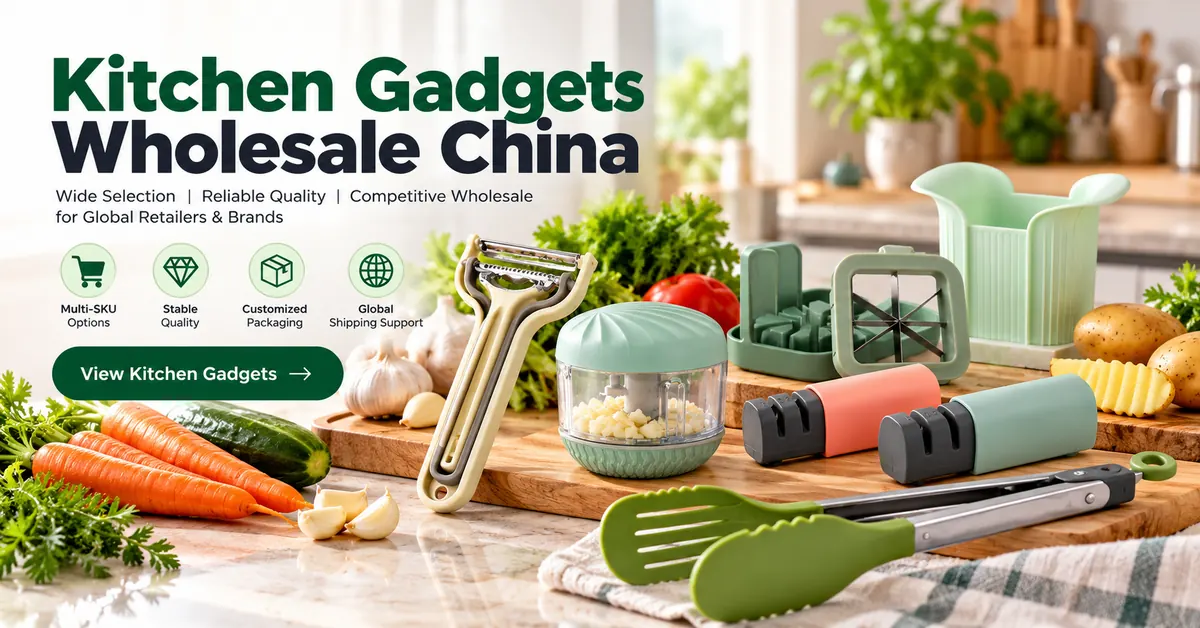
The main decision-makers have different constraints. A supermarket category manager cares about shelf facings, barcodes, replenishment and consistent consumer packaging. A houseware importer values stable specifications, documentary evidence, shipping efficiency and claim handling. An online retailer needs product differentiation, convincing task photography, parcel protection and a margin after marketplace or fulfillment fees. A promotional buyer may value a coordinated set, but must control artwork approval, event deadlines and leftover stock. A private-label brand needs specifications that can be produced again without relying on verbal memory.
For broader cross-category decisions, see BONET's existing Kitchenware Wholesale China Buying Guide; this article goes deeper into gadget-specific cartons, components, and contribution margins.
A wholesale supplier should therefore answer practical questions: Which named products match the channel? Can several items share a visual identity without changing their technical specification? How is MOQ calculated per model or color? Which packing formats have been costed? What is included in an offer? Which attributes will be inspected before dispatch? A good quotation makes these questions explicit rather than hiding them behind a single price per piece.
BONET HOUSEWARE publicly identifies multifunctional kitchen tools, kitchen gadgets, utensils, knives, scissors and chopping boards among its product and customization categories. Its OEM/ODM page describes materials, color, logo and packaging options together with design, sampling, quotation, production and inspection stages. These are relevant starting points for a wholesale inquiry, not proof that every possible combination is currently stocked or can be manufactured under one fixed MOQ.
2. Design the Assortment Around Three Commercial Roles
Before asking factories for a long catalog, assign every SKU a job in the range. The most disciplined assortments mix three roles, rather than buying five products simply because they appear inexpensive in a spreadsheet.
A dependable everyday item addresses a frequent, easily understood task. A vegetable peeler is a plausible example: consumers already know why they need one, and a clear picture can communicate the value quickly. Its commercial success still depends on price, grip, blade configuration, and how the product compares with items already on the buyer's shelves.
A demonstrable differentiation item attracts shoppers through a distinctive task or configuration. A manual garlic-preparation tool or a potato cutter may work in this role, provided the actual production version delivers the promised function and is easy enough to explain in packaging and product images. It should not be promoted as superior without comparative evidence.
A related-category attachment item increases average basket value by complementing an existing kitchen purchase. A knife sharpener can be merchandised near suitable knives, while spatula tongs may belong with cooking utensils. These items should not automatically be forced into a food-preparation gift set just because a supplier can quote them together.
Use a short range first: one anchor, one or two differentiators, and one attachment. Review sales evidence before adding a new color, size or second pack configuration. Every variant creates an additional forecast, artwork file, warehouse bin, and potential label error; a broader catalog is not valuable if the variants compete for the same limited demand.
3. Five Real BONET Models to Use as Wholesale Reference Points
The table below contains publicly stated product references, not a fixed BONET five-piece bundle. It helps buyers select items to quote and identifies technical points that affect packaging and retail positioning. Buyer-specific colors, branding, weights, pack counts, prices, stock status and documentary evidence remain subject to written confirmation.
| Product / model | Published reference specification | Wholesale category role | Important quotation question |
|---|---|---|---|
| M054 — 3-in-1 Vegetable Peeler | 420 stainless steel and PP; listed L, M and S sizes | Everyday preparation / anchor | Which size and blade functions belong to each ordered version? |
| M028 — Lazy Garlic Pounder | 420 stainless steel and ABS; 10 × 9.5 cm | Distinctive prep tool | Are all components, cleaning instructions and retail accessories included? |
| M031 — Dual-Stage Knife Sharpener | Listed 420 stainless steel and PP; 12.3 × 5 × 6 cm; 108 g | Knife-category attachment | What knife compatibility and instructions are approved for the specific version? |
| M047 — Multi-Functional Potato Cutter | 420 stainless steel and PP+TPR; 15.9 × 11.7 × 11.5 cm; 314.6 g | Demonstrable cutter / seasonal promotion | Which inserts, container, helper base and protective packing are included? |
| U103 — 2-in-1 Spatula Tongs | 420 stainless steel; plastic-material field says NYLON; 27.5 × 8 × 4 cm | Cooking-utensil attachment | Can BONET confirm the actual material of each food-contact component? |
The M054 product listing includes several dimensions, so a quotation should not treat them as a single universal SKU. For U103, the public description mentions silicone while its structured product field lists nylon. A buyer must resolve that difference with a current component specification before using temperature, food-contact, or dishwasher-related claims. The weight and measurements shown above are catalog references, not guaranteed carton weights or tolerances.
Open the current reference pages: M054 3-in-1 peeler, M028 garlic tool, M031 knife sharpener, M047 potato cutter, and U103 spatula tongs. BONET's separate Kitchen Gadgets category currently shows no items in its public listing, so actual product pages and the Multi Functional collection are more useful as initial reference points.
4. Separate Product Selection From Purchase-Order Allocation
A merchandising team might want all five references in the range, but a procurement team still needs to determine how many of each to buy. Equal quantities are easy to type into a purchase order and often have little relationship to demand. The recommended approach is to allocate purchase quantities using a forecast by retail function, channel and price point.
Begin with a base demand estimate for each approved SKU. Support it with comparable-product sell-through where available, an existing category forecast, or a deliberately modest trial assumption. Then consider whether the product has a high-frequency everyday role, a demonstration-dependent niche, or a seasonal promotional role. Apply a confidence rating and make the initial commitment smaller where demand evidence is weak.
For example, the anchor peeler might justify a larger share than a specialty potato cutter in a general supermarket assortment; for a promotional campaign centered on potato preparation, the opposite could be reasonable. No universal allocation ratio exists. This guide does not claim BONET has measured sales for any of the five references.
Use one planning sheet containing the requested SKU, forecast weekly sales, initial proposed units, available supplier MOQ, unit-pack dimensions, units per master carton, lead time, cost assumptions and decision owner. Do not finalize allocations until all of those fields can be linked to one approved product revision. If five models each have independent MOQs, the combined total is not automatically negotiable as one shared threshold.
5. Calculate Unit Economics Per Saleable SKU, Not Per Purchase Order
Wholesale buyers commonly compare a supplier's ex-factory piece price and stop there. That can produce an attractive spreadsheet but an unprofitable range. A more useful metric is landed cost per saleable retail unit, calculated separately for every SKU and package version.
A practical planning formula is:
Landed cost per saleable unit = (product, unit packaging, allocated setup and quality expenses, freight, insurance, duties, clearance and other attributable costs) / expected saleable units.
If freight or duty is already included under the contracted delivery basis, do not charge it twice. If the numerator includes an explicit loss or damage reserve, do not also reduce the denominator for the same expected loss. Keep one consistent method and document it.
Next compute contribution per unit after the expenses of the intended sales channel. In a marketplace, that may include platform fees, fulfillment, storage and expected returns. For a traditional retailer, it may include distribution-center handling, shelf promotions and rebates. These are buyer-side costs; BONET's product pages do not contain the purchaser's actual channel economics.
The retailer should also consider cash tied up in stock. Ten cartons of an unproven accessory may cost less per unit than five cartons, but the extra inventory can occupy warehouse space, age out of a packaging design, or miss the selling season. Total profitability depends on sell-through and replenishment—not the purchase discount alone.
6. An Illustrative Margin Model: Why Cheapest Is Not Always Best
The following example is fictional, in US dollars per saleable unit, and is provided only to demonstrate a comparison method. These are not BONET prices, market quotations, current freight rates or expected product margins.
| Model assumption per unit (USD) | Option A: low unit quote | Option B: coordinated retail pack |
|---|---|---|
| Product purchase price | $1.30 | $1.42 |
| Individual retail packaging | $0.26 | $0.18 |
| Allocated freight and import expenses | $0.35 | $0.27 |
| Allocated inspection and setup | $0.08 | $0.08 |
| Illustrative landed cost | $1.99 | $1.95 |
| Hypothetical net channel revenue | $3.80 | $3.80 |
| Hypothetical other variable selling cost | $0.85 | $0.85 |
| Illustrative contribution | $0.96 | $1.00 |
The higher nominal piece price produces a slightly better contribution in this scenario because coordinated packaging and transport are assumed to be more efficient. The lesson is not that Option B is always better; it is that quotes should be evaluated using the same specification, retail presentation, Incoterms rule and destination. Real results require actual measurements and negotiated terms.
A sensitivity check is even more useful than a single comparison. What happens if freight rises, retailer promotion discounts deepen, the first order contains unsold variants, or a carton fails inspection? A robust price decision has enough margin to absorb realistic variability without relying on unsupported statements such as “guaranteed 40% profit.”
7. Understand the Difference Between a Mixed-SKU Order and a Mixed Carton
In a kitchen gadgets wholesale China program, a mixed-SKU order means the purchase order contains multiple different items. It does not automatically mean that the factory will put different items in each master carton. Those are separate questions with consequences for labeling, picking, inspection and logistics.
Single-SKU master cartons generally make identification, counting, inspection and distributor replenishment easier. They may be appropriate when each model is sold independently to different stores or fulfillment locations. Mixed display cartons can help a retail promotion if the display has been designed and the retailer accepts a fixed assortment ratio. Retail kits or gift sets are different again: they are consumer-facing finished products that require their own bill of materials, packaging approval, barcode and inspection criteria.
A buyer should ask BONET which packing arrangements are feasible for the chosen models and quantities, whether mixing affects MOQ or labor costs, and whether every carton can retain traceability to the individual items inside. Never promise that five catalog products will ship in arbitrary combinations unless an agreed quote confirms it.
Before deciding, create a carton map: product code, units per carton, gross weight, packed dimensions, inner-pack count, carton labeling, and intended destination or fulfillment method. Test the packed sample if abrasion, sharp edges, movement or compression could damage the item or its retail presentation. The apparent shipping benefit of mixed cartons can be offset by slower warehouse receiving or store-level sorting.
8. Carton Geometry and Cubic Efficiency Matter More Than Product Photos
For kitchen gadgets wholesale China buyers, carton efficiency is especially important because kitchen tools often have awkward shapes. A long tong, compact peeler, square cutter and knife sharpener occupy different volumes even when their unit prices appear similar. Calculating shipping costs by simply adding five product weights will miss the impact of individual packaging and empty space.
Ask for three distinct dimensions: the product itself, the packed retail unit, and the outer shipping carton. For each carton, record packed gross weight and actual pieces. An online retailer may also need parcel dimensions after fulfillment packaging, because carrier dimensional-weight rules can change the cost of a seemingly lightweight product.
Compare at least two approved pack configurations where volumes justify the exercise. For example, a hang-card peeler and a boxed peeler may use different shelf and shipping space; the lower-volume option is valuable only if it also protects the blade, supports product information and meets channel requirements. A knife sharpener should not be stacked in a way that damages adjacent retail boxes. A cutter with removable parts needs an insert count and protective arrangement that prevent missing components.
Do not calculate an exact container loading plan from the naked product dimensions. Pallets, carton compression, mixed orders, shipping constraints and warehouse handling all affect the result. Request carton drawings or a loading estimate based on final packaging; then have the forwarder validate the shipping assumption.
9. Plan MOQ and Color Quantities Without Creating Dead Stock
In kitchen gadgets wholesale China sourcing, MOQ must be interpreted at the correct level. A supplier may quote separate minimums for a tool body, one color, a printed box, a custom logo method or a new mold. Those commercial constraints are not interchangeable, and BONET's public OEM/ODM information does not establish one standard MOQ for every gadget.
Create an MOQ matrix for each model. Request the minimum for an unchanged catalog unit, a new color, a customer logo, a custom carton, and a structurally changed version. Ask whether the minimum applies to individual SKUs, color variants, a full order, or production batches. If multiple models share a branding concept, do not assume they automatically share the same manufacturing or packaging minimum.
For an untested range, resist creating too many colors. A green peeler and a pink peeler may appeal to different shoppers, but the retailer should validate whether sales are incremental rather than split between two versions. Printed artwork can also have a separate minimum, and a seasonal gift box may become obsolete if the campaign changes.
When a request is below the relevant MOQ, ask about realistic alternatives: standard-color stock with an approved label, fewer color variants, a simpler pack, or a revised trial mix. These are negotiation possibilities, not confirmed offers from BONET. The best solution is one that preserves product quality and honest branding rather than hiding costs through an unapproved substitution.
10. Choose Packaging by Sales Channel and Handling Environment
A supermarket, e-commerce seller and promotional distributor should not automatically use the same retail package. Packaging works as both a selling surface and a logistics component. It communicates product function, but it also influences shipping volume, breakage, barcode scans, warehouse receiving and customer returns.
For a supermarket, review hang holes, product visibility, barcode placement, tamper expectations, translated instructions, shelf dimensions and display-stand requirements. A compact peeler may suit a hanging card; a tool with a container and loose inserts may need a controlled box or insert. Those are channel suggestions, not confirmation that every BONET model is offered in those exact formats.
For e-commerce, photograph the product and package separately. Buyers need to understand what arrives in the parcel, and any protective features shown online must exist on the shipment. Model-specific assembly instructions, blade safety warnings, cleaning directions and accessory counts should be readable without misleading claims. Packaging must also survive the retailer's real fulfillment route.
For gift and promotion, coordinate brand colors and messaging while verifying that the components can be bundled without unnecessary extra volume or damage. A gift sleeve is not a substitute for adequate internal protection. Promotional claims such as “eco-friendly,” “BPA-free,” “dishwasher safe,” or “heat resistant” should not be placed on the artwork without suitable, product-specific substantiation.
11. A Packaging Approval Checklist for Five Models
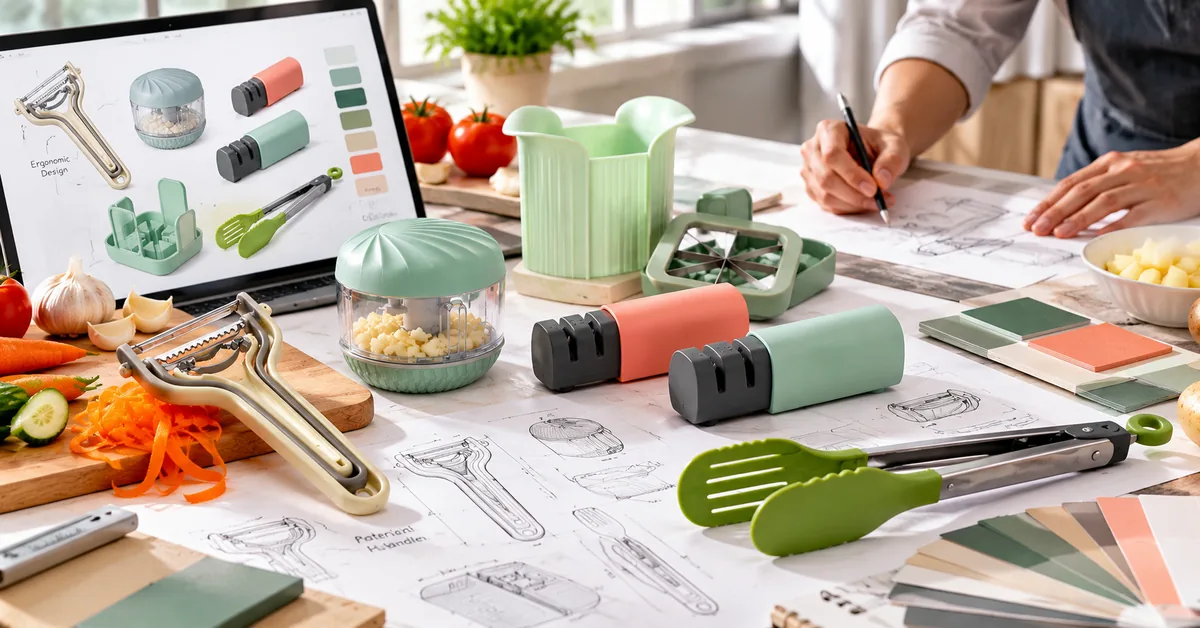
Use one artwork control sheet per SKU or retail kit. Each sheet should contain the exact item number, product description, included components, barcode, origin statement when applicable, regulatory or safety information, language, color reference, pack material, artwork revision and approval owner.
| Approval field | Why buyers need it | Evidence before production |
|---|---|---|
| Model and included parts | Prevents wrong inserts, size or components | Approved item master and pack-out photo |
| Consumer-facing claims | Avoids misleading performance or safety language | Claim review and relevant test/technical evidence |
| Brand and barcode | Prevents retail rejection and stock confusion | Artwork proof and barcode verification |
| Individual pack dimensions | Drives shelf and fulfillment economics | Measured production-intent packed sample |
| Master carton and quantity | Supports warehouse receiving and freight costing | Carton specification and shipping marks |
| Care and safety text | Helps safe intended use and fewer returns | Approved instructions for the actual product |
A photography review matters too. If a peeler comes in three sizes, confirm which appears in the product image. If M047 has a container or helper base, show the actual quoted components. For U103, settle the conflicting public material descriptions before approving any silicone or nylon claims. Packaging should represent the final purchase-order configuration, not an earlier prototype or a different catalog image.
12. Keep OEM, ODM and Private Label in the Right Commercial Lane
BONET describes OEM work against drawings or samples and ODM support covering concepts, structure, materials, sampling and packaging. For wholesale buyers, the efficient route depends on how much change is actually necessary. Not every retailer needs a new product development project to launch an assortment.
Standard catalog sourcing is most appropriate where the item and approved retail presentation already meet the buyer's needs. Private-label sourcing may involve logo and packaging work while retaining the existing product structure. OEM modification may involve a buyer-defined color, material or specification that must be verified as feasible. ODM development is appropriate for a new or materially changed design and may involve prototypes and tooling discussions.
As customization increases, so can the need for revised samples, extra QC points, new printed material, tooling costs and separate MOQs. Ask for the estimated impact before treating a new feature as a free option. A custom peeler grip, for example, should be discussed in terms of functional review and potential tooling, not merely as a new color choice.
A well-written RFQ should state whether the product is to remain unchanged, receive cosmetic branding, or undergo a functional redesign. This prevents a supplier from quoting standard stock while the brand assumes bespoke production. Explore the current BONET OEM/ODM services for the stated collaboration process and ask for project-specific limits and pricing.
13. Quality Control Should Follow the Commercial SKU Definition
The previous supplier-selection article focused on testing individual tool functions. A wholesale program needs another layer: shipment and pack-out consistency across several SKUs. A functionally correct peeler in the wrong carton is still a commercial failure if the retailer cannot receive or sell it correctly.
At sample approval, create a golden reference for each model, including its accessories, retail package, labeling and carton configuration. Make the revision visible on purchase orders and inspection instructions. At pre-shipment inspection, verify both the physical tools and their pack-out: quantities, colors, barcode version, component count, retail artwork, carton markings and any agreed appearance or functional checks.
Agree on inspection timing, sample selection and defect definitions before production. AQL sampling may be used if the parties specify a suitable plan, but mentioning AQL alone does not establish acceptance numbers or prove a supplier has completed a particular inspection. For mixed cartons, build a counting method that verifies each item rather than just the total pieces inside the carton.
Request product-specific documentation where the materials or intended use make it relevant. In particular, materials likely to contact food may require market-specific evidence. The European Commission describes Regulation (EC) No 1935/2004 as the general EU framework for food-contact materials and Regulation (EU) No 10/2011 as a relevant measure for plastic food-contact materials, with amendments and scope that must be considered. This discussion explains buyer due diligence; it does not certify any listed BONET product.
14. Never Transfer One Gadget's Compliance Claim to the Whole Range
A multi-SKU assortment may include a steel peeler blade, ABS-bodied garlic tool, PP-based knife sharpener, a PP+TPR cutter and a nylon-described tong. These materials and contact surfaces are not equivalent. A document applicable to one item, resin, color, process or contact condition cannot automatically establish compliance for the other four.
Ask the responsible supplier to identify the actual food-contact components, intended temperatures and use conditions, supporting material declarations, laboratory reports where needed, and permitted care wording. For products with sharp or moving parts, assess the instructions, packaging protections and foreseeable handling risks for the market. Check whether claims in catalog marketing have adequate evidence before copying them into a private-label box.
If the destination is the EU, involve the importer's regulatory team in checking relevant legislation and national requirements. If the destination is the United States, review the applicable product and material requirements rather than assuming a generic “FDA-approved kitchen gadget” label is correct. A safer purchasing practice is to record required evidence for each SKU and leave unsupported fields blank until documentation arrives.
BONET's ability to discuss customized material and packaging solutions does not mean every potential combination has been tested or approved. The purchasing team retains responsibility for defining the destination market, approved use, claims and documentary acceptance conditions.
15. Normalize Quotes and Incoterms Before Comparing Suppliers
A quotation that says “USD per piece” is incomplete until the buyer knows what the piece includes. For every approved model, specify the product revision, ordered quantity, components, logo, pack type, carton configuration, currency, MOQ, sample arrangements, one-time costs, lead-time assumption and delivery rule. Compare only quotations with matched scopes.
For international shipping, include a named place and the applicable Incoterms 2020 rule. The International Chamber of Commerce explains that Incoterms rules allocate relevant delivery tasks, costs and risks between parties. They do not replace the need for separately agreed product specifications, payment conditions, quality acceptance or transfer of ownership provisions.
If a buyer requests FOB, FCA, EXW or DAP, write the place clearly and verify whether the rule is suitable for the transportation arrangement. Do not assume that “FOB China” by itself gives a reliable landed-cost comparison. Clarify export, transport, import and destination responsibilities with the forwarder and supplier.
Also confirm how the exporter will handle mixed commercial paperwork: item numbers, carton counts, unit and total values, product descriptions, weights and any origin or test documentation required by the shipment. A clean master SKU list avoids mismatches between invoice, packing list and receiving records.
16. Build a Reorder Rule Before the First Shipment
In kitchen gadgets wholesale China programs, wholesale margin can disappear when a bestselling peeler runs out and capital remains locked in slow-moving specialty gadgets. A replenishment system should therefore begin before the pilot shipment arrives. Track weekly unit sales, available stock, open purchase orders, measured replenishment lead time and any channel-specific promotional peaks.
A basic model is:
Reorder point = average weekly demand × total replenishment lead time (weeks) + safety stock.
As an illustration only, if a retailer sells 70 units per week, has a verified 8-week replenishment cycle and chooses 140 units of safety stock, the reorder trigger is 700 units. These numbers are fictional; they are not BONET's delivery promise or a forecast for any listed product.
Run the calculation separately for each SKU, then reconcile it with practical carton quantities and supplier MOQs. A peeler may reorder monthly, while a seasonal cutter may need limited campaign orders. Do not automatically replenish all five products just because they were first ordered together. Review returns, defects, new packaging changes and component substitutions before repeating an order.
For improved control, classify the items by demand and uncertainty. High-volume, predictable SKUs can receive tighter replenishment routines; uncertain or promotional SKUs require shorter commitments and explicit end-of-campaign decisions. The objective is a repeatable buying process, not a permanently growing stockroom.
17. Pilot-Order Scorecard: What Should the Buyer Measure?
A pilot is worthwhile when it produces evidence for a decision. Before ordering, define the metrics and who will review them. At a minimum, record product acceptance, packaging damage, landed cost, sell-through, return reasons, carton accuracy, replenishment reliability, and whether product listings accurately communicate the actual item.
| Pilot measure | Suggested question | Decision after review |
|---|---|---|
| Sell-through by SKU | Which items move without heavy discounting? | Increase, maintain or discontinue |
| Landed contribution | Which products remain profitable after channel costs? | Adjust price, pack or purchase mix |
| Packaging damage | Are units saleable after receiving and fulfillment? | Change protection or carton configuration |
| Return reason | Are problems functional, informational or logistical? | Revise product, instructions or listing |
| Carton accuracy | Do actual packed assortments match the documents? | Improve labeling and inspection |
| Repeat-order feasibility | Can approved quality and artwork be reproduced? | Release a controlled next PO |
Use real buyer data; never market the illustrative measurements above as BONET achievements. If a retailer sees strong consumer interest but high returns caused by misunderstood contents, a clearer package may be more valuable than a redesigned product. If the demand is weak across channels, additional color options are unlikely to solve the underlying product-market fit problem.
18. A 90-Day Commercial Launch Plan for Wholesale Kitchen Gadgets
A timeline is useful only if it is explicitly a buyer planning scenario, not a supplier delivery commitment. The following 90-day framework shows how a retailer could stage decisions; real sample, production, testing and shipping schedules depend on the products and negotiated project terms.
Days 1–15: Range definition. Identify the channel, target consumer, shortlisted SKUs and each item's role. Set expected prices and an initial contribution target. Request current product specifications, material clarification and preliminary packaging information from BONET.
Days 16–30: Sampling and technical review. Obtain representative product and pack samples where agreed. Approve the correct configuration, component count, appearance, barcodes and instructions. Confirm required documentary evidence for the destination market.
Days 31–45: Commercial model. Compare normalized quotations, MOQ by model or color, packing quantities, carton dimensions and freight assumptions. Decide which SKUs merit a pilot and which should remain under review. Finalize the buyer's item master and sample approval.
Days 46–75: Production and inspection coordination. Use the supplier's confirmed project schedule and milestone reporting. Review artwork release, packing trial, inspection plan and shipment documents. If the agreed schedule cannot fit the marketing date, revise the launch rather than implying the supplier must meet an invented deadline.
Days 76–90 and beyond: Market launch and learnings. Monitor receiving, listing accuracy, first sales, returns and carton performance. Schedule the next review based on actual demand and replenishment timing. The value of this framework is the decision discipline, not the exact day count.
19. Send a Wholesale RFQ That Can Produce a Usable Quote
For kitchen gadgets wholesale China sourcing, a useful request is specific enough for the supplier to quote and practical enough for the purchasing team to compare. Include the following information in a single email or form submission:
Company and channel: brand/importer name; target country; retail chain, distribution, e-commerce or promotion; expected first-order quantity and forecast repeat volume. Products: named BONET model pages or product photos; preferred configuration and color; units requested per model. Packaging: logo, artwork, label language, barcode, consumer unit pack, master carton expectations, and whether a mixed carton or finished consumer set is requested. Quality: approved sample process, destination-market material evidence, instructions, inspection criteria and any special handling conditions. Commercial: currency, named Incoterms place, sample cost, one-time setup, MOQ per variant, target timing and requested quote validity.
Ask BONET to mark every line as standard option, customized option requiring review, or unavailable / to be confirmed. That makes unanswered questions visible and prevents the buyer from treating a concept as a committed production model. Request itemized costs or enough detail to calculate real landed margins; a single bundled price without a packing breakdown is difficult to audit.
The most direct starting points are the BONET product catalog, the Multi Functional selection, the OEM/ODM process and the contact page. Use those links to send the actual model references and your commercial brief rather than a generic “best price please” message.
Request a wholesale assortment quote | Review OEM/ODM possibilities
20. Frequently Asked Questions About Kitchen Gadgets Wholesale China
1. What kinds of kitchen gadgets can I source from BONET?
BONET lists multifunctional kitchen products and individual items such as vegetable peelers, a manual garlic tool, a knife sharpener, a potato cutter and spatula tongs. Other tool types appear on its site, but a catalog listing is not confirmation of current stock, pricing or an agreed production schedule. Send the relevant model links and request the latest product and availability details.
2. Can several kitchen gadget models share one MOQ?
Do not assume so. MOQ may be determined separately by product, material, component, color, packaging artwork or manufacturing batch. Ask for a line-by-line MOQ matrix and distinguish a mixed purchase order from the factory's production minimum for each SKU. If a proposed assortment is below a minimum, request feasible alternatives rather than assuming an exception.
3. Can I order different gadgets packed together in one carton?
It may be a project-specific packaging option, but the public BONET information does not guarantee arbitrary mixed-carton configurations. Provide a proposed carton map with product codes, quantities, retail packs, destination and labeling requirements. Ask for feasibility, added labor cost, inspection arrangements and an approved packing sample before placing the order.
4. Which tools make a sensible entry-level wholesale assortment?
A practical starting approach is one understandable everyday task and one differentiated tool, with a companion item if the channel supports it. M054 can be evaluated as an everyday peeler reference, while M028 or M047 could represent different food-preparation tasks. Actual selection should follow buyer demand, samples, margins and the target shelf—not a supplier's blanket recommendation.
5. How do I calculate the real profit margin on wholesale kitchen gadgets?
Add the product, retail packaging, allocated setup, freight, duty, clearance and other attributable expenses to calculate landed cost per saleable unit. Then subtract channel-specific costs such as fulfillment, promotions and expected returns from net sales revenue. Use the same trade terms, price assumptions and loss method across products, and check cash tied up in slow-moving inventory.
6. What product and carton dimensions should I request?
Request the tool dimensions, retail-unit packed dimensions and shipping-carton dimensions, as well as gross weight and pieces per carton. These serve different functions: consumer-use comparison, shelf or parcel planning, and freight or receiving calculations. Product dimensions alone cannot support an accurate freight quotation or container load estimate.
7. Does BONET support OEM, ODM and private-label kitchen gadgets?
BONET's OEM/ODM page describes production from drawings or samples, material and color options, logo and retail packaging work, sampling, feasibility assessment, manufacturing and inspection support. Specific changes to M054, M028, M031, M047 or U103 must be confirmed for the chosen materials and versions, with separate sample, MOQ, cost and delivery implications where applicable.
8. How do I verify material and food-contact claims?
Identify each part that contacts food, then request documents applicable to the exact material, color or formulation, finished product and intended conditions of use. Check the destination market's requirements and the validity of any report. In particular, U103's published nylon material field differs from descriptive references to silicone; the exact parts and claims should be clarified before artwork approval.
9. What inspection checks matter for a mixed-SKU shipment?
Use a separate approved sample and pack-out file for every SKU. Check the ordered model, components, color, barcode, instructions, cartons, labels, item counts and agreed product functions. For a retail kit, verify the finished kit as its own saleable product. Record sampling rules and defect decisions in the purchase order rather than relying on the word “inspection” alone.
10. How can I request a kitchen gadget wholesale quotation from China?
Choose the model references, specify the quantities by SKU, list destination markets, explain your brand and packing requirements, and state the requested Incoterms rule and named location. Include quality documentation, sampling and launch expectations. Submit the RFQ through BONET's contact page, requesting separate confirmation of standard options, customization, MOQ, price, package, inspection and projected schedule.
Conclusion
A profitable kitchen gadgets wholesale China program is built between the supplier's product catalog and the retailer's actual shelf or fulfillment operation. The critical work is to select products with distinct roles, translate them into approved saleable SKUs, cost the complete packaged units, specify cartons accurately, control MOQs and claims, and reorder according to evidence rather than habit. Product variety is useful only when it creates genuine consumer choice without creating avoidable complexity or unsold inventory.
BONET HOUSEWARE provides published references for multifunctional peelers, garlic-preparation tools, knife maintenance, vegetable cutting and cooking utensils, and describes OEM/ODM support for material, branding, packaging, sampling, quality inspection and delivery coordination. Those public capabilities make a focused commercial discussion possible, while final specifications, documentation and terms must be confirmed for each order. Review the BONET product collection, explore OEM/ODM options, and send BONET your wholesale RFQ with the models, quantities, packaging and destination needed to develop an actionable quote.
