




Kitchen Scissors: Ultimate Cutting Companion for Your Kitchen
Kitchen scissors are one of the simplest tools in a kitchen, yet they can make daily preparation faster, cleaner, and safer when chosen carefully. Instead of reaching for a knife and cutting board for every small task, cooks can use scissors to trim herbs, cut packaging, portion leafy greens, snip cooked noodles, or trim poultry skin. For retailers, wholesalers, and OEM buyers, kitchen scissors are also a practical category because shoppers understand the product quickly and use it often.
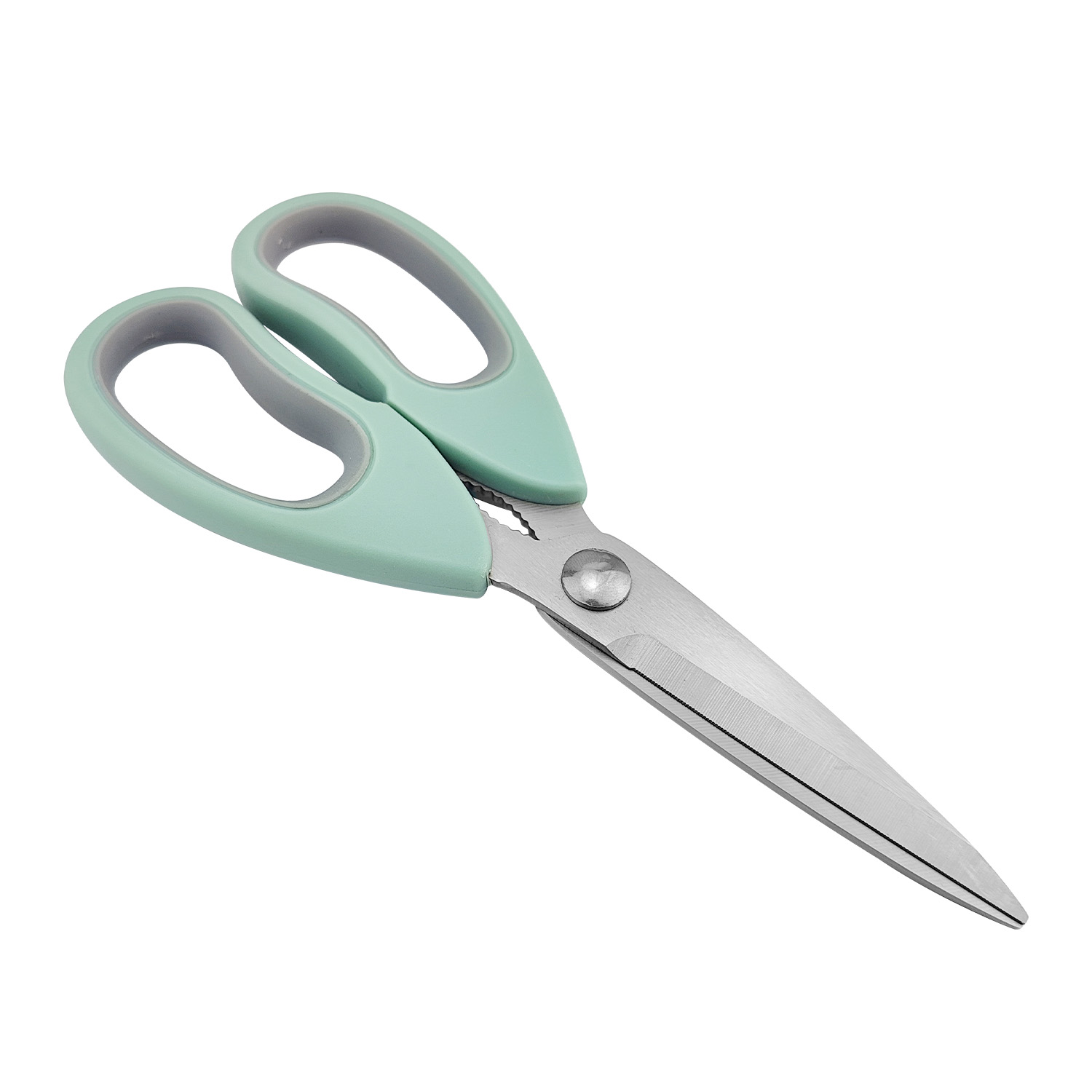
The original product description highlights a pair of kitchen scissors with pastel mint green handles, gentle contours, ergonomic handling, a robust joint, and stainless steel blades. Those details point to the features many buyers look for: comfort, control, easy maintenance, and reliable cutting. This guide explains how to evaluate kitchen scissors for household use and how B2B buyers can ask better questions before placing a sourcing or OEM order.
Key Takeaways
- Choose kitchen scissors based on cutting tasks, handle comfort, blade material, joint strength, and cleaning requirements.
- Ergonomic handles can reduce hand strain during repeated trimming, snipping, and portioning tasks.
- For OEM or wholesale sourcing, ask suppliers for material details, test reports, packaging options, sample lead times, and quality control procedures.
- A good product listing should avoid vague claims and clearly explain care instructions, intended use, and safety precautions.
What Kitchen Scissors Are Best Used For
Kitchen scissors are not meant to replace every knife, but they are excellent for jobs where a direct snipping motion gives more control. They are useful for cutting herbs directly over a bowl, trimming fat from meat, opening food packaging, cutting parchment paper, portioning pizza or flatbread, and preparing small ingredients for salads or soups. In busy kitchens, they reduce the need to move between tools, which can save time and limit mess.
For home cooks, the most important question is not whether the scissors look modern, but whether they feel secure in the hand and suit common meals. For professional or semi-professional users, repeat comfort matters more because the tool may be used many times in one shift. For retailers, the value is in communicating these use cases clearly so customers understand why kitchen scissors are different from office scissors.
Ergonomic Features That Matter
Ergonomic kitchen scissors focus on control and comfort. The original article describes soft-grip, pastel mint green handles with gentle contours. Handle shape matters because cutting wet herbs, slippery meat, or thick food packaging can require pressure. A handle that feels too narrow, too hard, or too small may become uncomfortable during repeated use.
When evaluating a sample, test it with both small and large hands if possible. Check whether the grip allows a stable hold, whether the thumb loop causes pressure, and whether the scissors can be opened and closed smoothly. Buyers should also check balance: a pair that feels blade-heavy may tire the hand, while a pair with a loose joint may feel inaccurate.
Blade, Joint, and Maintenance Considerations
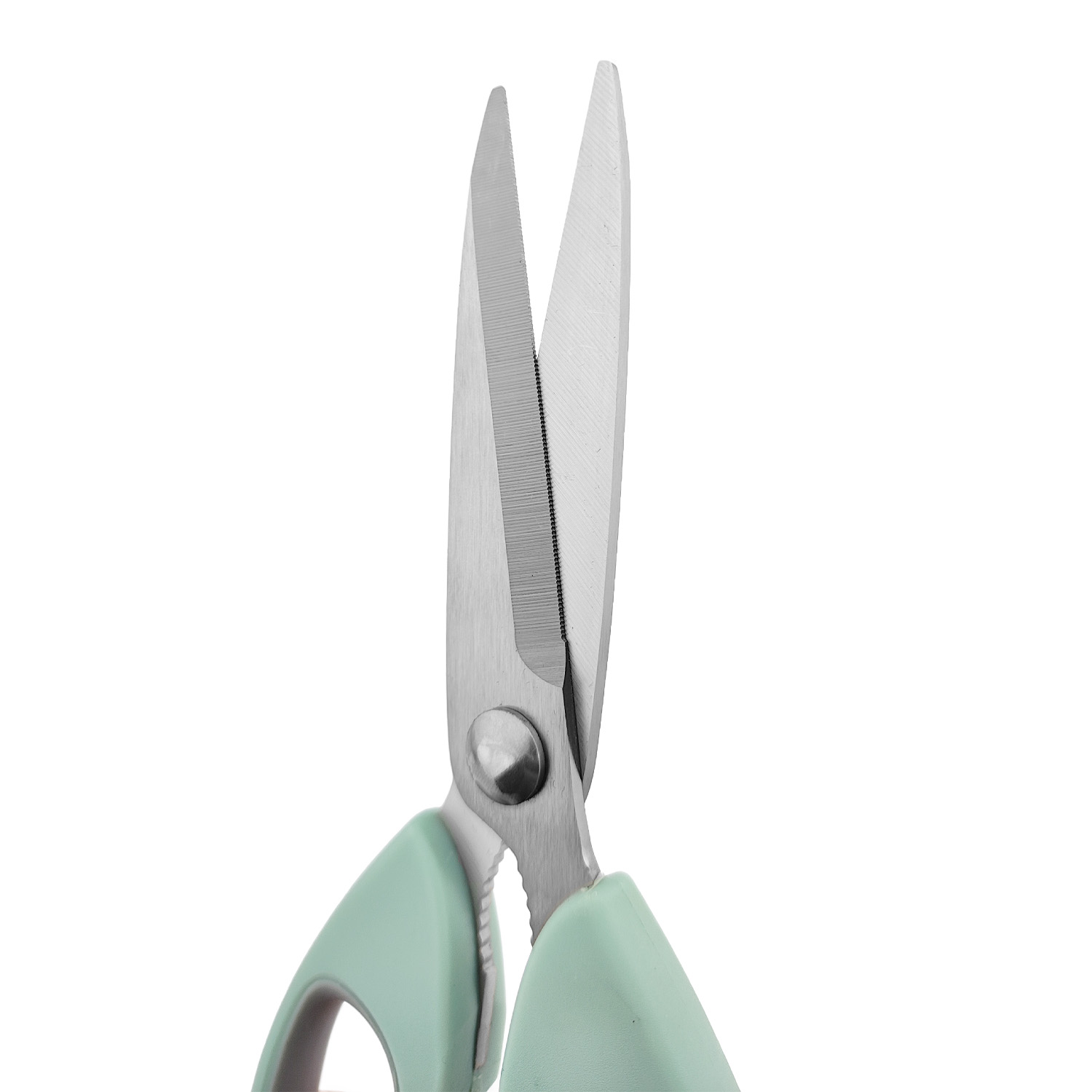
The source article refers to stainless steel blades and a robust joint. Stainless steel is commonly used for kitchen cutting tools because it is suitable for food-preparation environments and is easier to maintain than many untreated metals. However, buyers should not rely on the term alone. For sourcing, ask the supplier what stainless steel type is used, how the blade is finished, and whether the material specification can be documented.
The joint is equally important. A weak or uneven joint can make cutting feel rough and may reduce accuracy. During inspection, open and close the scissors several times. The movement should be consistent, without grinding or excessive looseness. If the scissors are intended for frequent food use, ask whether the design supports thorough cleaning around the pivot area.
Comparison Checklist for Selection
| Selection point | What to check | Why it matters |
|---|---|---|
| Handle comfort | Grip shape, pressure points, hand fit | Improves control and reduces fatigue during repeated cutting |
| Blade material | Stainless steel details and supplier documentation | Helps buyers verify durability and suitability for kitchen use |
| Joint strength | Smooth opening, stable pivot, no wobble | Affects cutting accuracy and long-term user confidence |
| Cleaning design | Accessible surfaces and care instructions | Supports hygiene after contact with food ingredients |
| Packaging | Retail card, box, instruction insert, barcode needs | Important for wholesale, retail, and private-label programs |
| Supplier support | Samples, inspection process, lead time, documentation | Reduces sourcing risk before larger orders |
Use and Care Tips for Daily Kitchens
Kitchen scissors last longer when used for suitable tasks and cleaned promptly. Avoid using food scissors for hard non-food materials unless the product is designed for that purpose, because this can dull the blades or damage the joint. If scissors are used on raw meat or poultry, wash them carefully before using them on ready-to-eat foods.
- Rinse food residue soon after use so it does not dry around the blades or pivot.
- Wash according to the supplier's care instructions, especially if the handle has a soft-grip surface.
- Dry thoroughly before storage to help protect the blades and joint.
- Store in a drawer organizer, sheath, or safe location away from children.
- Keep kitchen scissors separate from craft or office scissors to reduce cross-contamination.
Guidance for OEM, Wholesale, and Retail Buyers
When the topic is kitchen scissors for OEM or wholesale supply, product evaluation should go beyond appearance. A pastel handle or modern shape can help shelf appeal, but commercial buyers also need repeatable quality and clear documentation. Before ordering, ask the scissors manufacturer or supplier specific questions rather than accepting broad claims.
Useful questions include: What blade material is used? Can the supplier provide material documentation? What handle material options are available? Can color be customized? What packaging formats are offered? Are samples available before bulk production? How is cutting performance checked during quality control? What inspection standard is used for appearance, joint movement, sharpness, and packaging? What are the available branding methods, and where can logos be placed?
Buyers should also clarify commercial details that are often missing from short product descriptions, such as minimum order quantity, production lead time, sample cost, packaging dimensions, carton weight, and spare-part or replacement policy. These should be confirmed directly with the supplier instead of assumed from a marketing article.
How to Present Kitchen Scissors in an Online Store
A strong product page should help shoppers decide quickly. Include clear images, handle color, blade material as documented by the supplier, intended uses, cleaning guidance, and safety notes. If the scissors have ergonomic handles or a robust joint, explain what the user gains: easier grip, steadier cutting, and better control. Avoid unsupported claims such as certified food safety, professional test results, or special manufacturing capacity unless documents are available.
For B2B listings, add downloadable specification sheets when possible. Even a simple table covering size, material, packaging, sample options, and customization choices can reduce back-and-forth communication. The goal is not to oversell the scissors, but to give buyers enough accurate information to compare suppliers.
Practical FAQ
Can kitchen scissors replace a chef's knife?
No. Kitchen scissors are best for trimming, snipping, portioning, and opening packages. A chef's knife is still better for chopping large vegetables, slicing thick ingredients, and precision knife work.
Are ergonomic kitchen scissors worth choosing?
They are useful if you cut often or have tasks that require repeated pressure. Look for comfortable handles, stable control, and smooth opening and closing rather than relying only on the word ergonomic.
What should OEM buyers ask a scissors manufacturer?
Ask about blade and handle materials, sample availability, packaging options, logo customization, quality control checks, lead times, minimum order quantities, and whether supporting documents can be provided.
How should kitchen scissors be cleaned?
Follow the supplier's care instructions. In general, remove food residue quickly, wash after contact with raw ingredients, dry thoroughly, and store safely to protect the blades and joint.
What details should not be assumed from a product photo?
Do not assume steel grade, dishwasher suitability, certifications, cutting test results, or production capacity from an image. Confirm these details with the supplier before purchasing or sourcing in bulk.
