




Why kitchen tools deserve closer attention on Amazon
For many sellers, kitchen tools for Amazon sellers look like a simple category: low drama, steady demand, and plenty of suppliers. In practice, that is exactly why they can be tricky. The category is crowded, buyers compare listings quickly, and small differences in material, finish, packaging, and usability can decide whether a product earns repeat orders or gets buried in returns and review complaints.
The first decision is not whether kitchen tools sell. They do. The real question is which products are easy to explain, easy to photograph, and easy for customers to trust once they arrive at the door. That is where kitchen tool product sourcing becomes more than a price negotiation exercise. Sellers need to think about daily use, storage, durability, and the sort of kitchen that the buyer imagines on the other side of the screen.
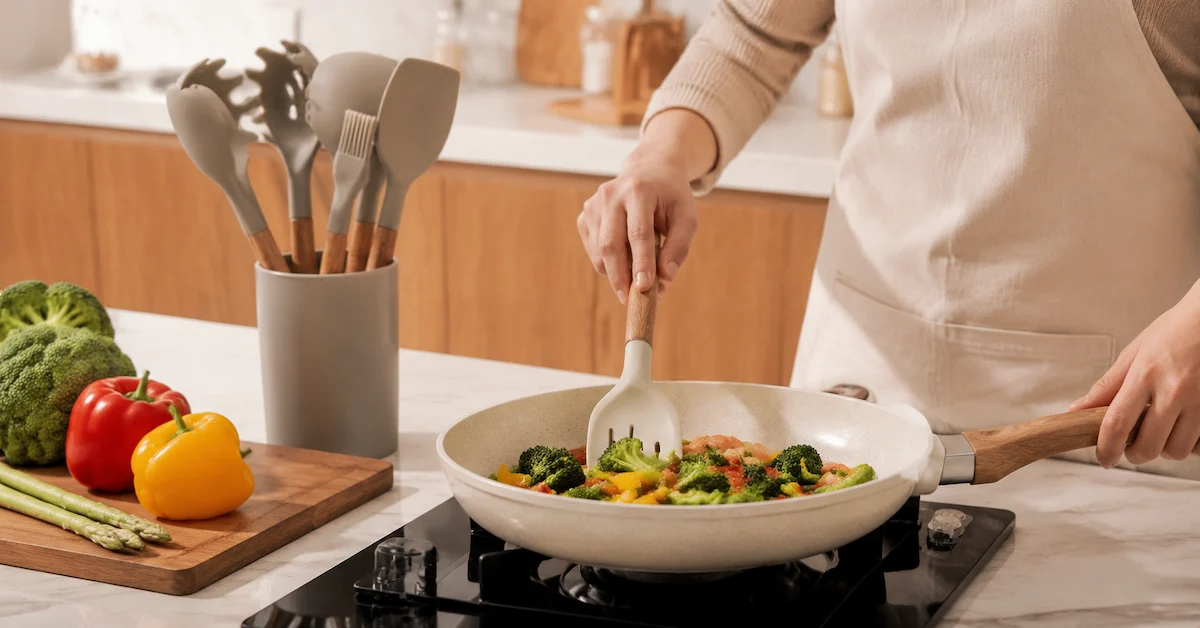
A coordinated utensil set with a countertop holder is a good example. The product is visually tidy, practical, and easy to stage for lifestyle photography. A neutral matte palette, wooden handles, and soft-touch gray heads create a calm, modern look. Pair that with a light-interior frying pan or wok, and the listing instantly feels more contemporary. It is not flashy, but it is the kind of item that fits everyday cooking, which is often exactly what shoppers want.
What buyers actually compare before they click “Add to Cart”
Amazon shoppers do not inspect kitchen tools the way a chef would, but they do notice the details that affect day-to-day use. They want to know whether the utensil set looks coordinated, whether the holder keeps the tools upright, and whether the pan or wok can handle simple stovetop cooking without looking cheap. They also want enough visual confidence to believe the set will fit into a real kitchen, not just a styled product image.
That means presentation matters as much as function. A utensil set with a matching holder signals order and convenience. The holder keeps the tools accessible, which is practical for anyone who cooks often. In a product photo, that also helps the set read as a complete countertop solution rather than a loose bundle of items. For sellers, that is useful because bundles and coordinated sets often photograph better than single pieces, especially in a category where many listings look nearly interchangeable.
Material choices that change the sourcing conversation
Kitchen tools are simple on the surface, but the material stack is where sourcing mistakes happen. The utensils in the example product appear to combine wooden handles with silicone or soft-touch gray heads. That is a familiar direction in modern home goods because it balances grip, heat tolerance expectations, and a less utilitarian look. Still, the exact construction should be confirmed with the supplier rather than assumed from appearance alone.
For buyers, wooden handles can feel warmer and more premium than all-plastic tools. Silicone or nylon heads are common because they are gentler on cookware than bare metal, although the buyer still needs to know what the utensil is intended for. A spatula, turner, serving spoon, and mixing tool all solve slightly different problems. If a set blurs those roles too much, customers may like the look but doubt the usefulness.
The matching holder also deserves attention. A matte cylindrical container can be ceramic, coated metal, or another rigid storage material. Each option changes the perceived value, shipping protection needs, and breakage risk. Ceramic often looks attractive in the kitchen, but it is less forgiving in transit. Metal or coated alternatives may be easier to pack, though they need a finish that does not look thin or overly industrial. This is one of those places where the cheapest option is not always the best option for marketplace performance.
The pan or wok in the image has a light-colored interior and a wood-look handle with a metal connector near the base. That combination suggests a nonstick-coated cookware style, although the exact coating and base material are not confirmed. For Amazon sellers, that uncertainty is a reminder: never rely on a visual guess when a material claim affects customer expectations. If the coating, compatibility, or care instructions are not documented, the listing language should stay conservative.
A practical way to judge the best kitchen tools for Amazon
There is no single formula for the best kitchen tools for Amazon, but there is a useful filter: choose products that are easy to understand, useful in ordinary homes, and defensible in both photos and product copy. A good kitchen item should answer three questions quickly: What does it do? Why is this version better than a generic alternative? What problem does it solve on a counter or stovetop?
For utensil sets, the answer is usually convenience and coordination. The buyer gets stirring, mixing, turning, and serving tools in one visual system. For cookware, the value is often in the visible cooking surface, the handle design, and whether the pan feels like it belongs in a modern kitchen. A light interior can help users see food as it cooks, which is a small but real benefit for sautéing vegetables or checking browning at a glance.
That may sound obvious, but it matters. Many listings fail not because the product is bad, but because the value proposition is muddy. If the set looks nice but does not clearly explain what the pieces do, shoppers move on. If the cookware looks attractive but the product page leaves material questions unanswered, they hesitate. On Amazon, hesitation usually means lost conversion.
Kitchen tool product sourcing: what to ask before placing an order
Kitchen tool product sourcing should start with use case, not unit cost. Ask how the product will be used every day, what surfaces it will touch, and how it will be stored after use. A utensil set that lives in a countertop holder has different packaging and merchandising needs than a loose set packed in a carton. A pan that is meant for sautéing vegetables needs a finish and handle design that feel comfortable during repeated stovetop use.
Good sourcing questions include:
What materials are actually being used in the handle, head, base, and storage holder?
How will the item be packed to avoid cosmetic damage in transit?
Does the set look cohesive enough to justify a premium presentation?
Are the item names and feature claims simple enough for a shopper to understand at a glance?
Does the product solve a common kitchen task without requiring much explanation?
These questions are not glamorous, but they save money later. Too many sellers focus on the sample photo and forget the boring parts: cartons, inserts, breakage, and whether the item can survive the Amazon fulfillment path without arriving scuffed or bent.
Common mistakes sellers make in this category
One frequent mistake is overpromising on material quality. If the utensil heads are silicone or soft-touch and the handles are wood, the listing should not imply a premium professional-grade tool unless the supplier can document that claim. Buyers do not always complain about the product itself; sometimes they complain that the listing set expectations too high.
Another issue is ignoring the storage story. A utensil holder is not just an accessory. It changes how the set sits on the countertop, how it photographs, and how customers experience the product when they unpack it. If the holder feels flimsy, the whole set may feel cheaper than it is. If it is too large or awkward, it can become dead weight in the bundle.
Sellers also sometimes forget that cookware and utensils are part of a visual system. A neutral matte finish can work beautifully in modern kitchens, but it can also disappear in bad photography. Lighting, angle, and prop selection matter. If the product is meant to feel calm and coordinated, the listing images should support that mood rather than clutter it.
How to build a cleaner listing story
The easiest listings are the ones where the product story is obvious. In this case, the story is straightforward: a coordinated utensil set with a holder for accessible countertop storage, plus cookware suited to everyday stovetop use. That is enough to build a credible listing without inventing extra features.
Use the language the customer already understands. Stirring, mixing, turning, serving, and pan cooking are plain words, and they belong in the listing when appropriate. If the tools are meant for vegetable sautéing or similar daily tasks, say so. Buyers of home kitchen goods usually do not want a lecture. They want reassurance that the product works in a normal kitchen and looks good enough to leave out.
That said, be careful with claims that require testing. Heat resistance, dishwasher safety, BPA-free status, exact coating type, and induction compatibility should only appear if the supplier has provided reliable documentation. A cautious listing may sound less dramatic, but it is easier to defend when questions come up.
FAQ for Amazon sellers
Are coordinated utensil sets easier to sell than single tools?
Often, yes. A coordinated set with a holder creates a stronger visual identity and can justify a higher perceived value. It also reduces the burden of explaining separate pieces.
Should I lead with the utensils or the pan?
It depends on the listing strategy. If the utensil set is the main product, keep the cookware as supporting context. If the pan is the main SKU, show the tools as part of a kitchen lifestyle scene rather than the hero item.
What matters most in this category?
Clarity. Buyers need to understand what the item is, how it will be used, and why the design makes their kitchen feel easier to manage.
A sensible next step for sellers
If you are evaluating kitchen tools for Amazon sellers, start with products that are easy to source, easy to explain, and easy to photograph without overclaiming. A coordinated utensil set with a countertop holder is a strong example because it combines everyday utility with a clean presentation. Add cookware only when the material story and feature claims are clear enough to stand up in a marketplace listing.
The goal is not to chase every trendy kitchen item. It is to choose products that make sense in a real home, hold up in transit, and give shoppers a reason to trust the listing on first view. That is the kind of practical discipline that turns a crowded category into a manageable one.
