




Why Should Buyers Audit a Kitchen Tools Manufacturer China Before Ordering?
Selecting a kitchen tools manufacturer China is a long-term business decision.
Many buyers focus first on:
- Product price
- MOQ
- Delivery time
However, these factors alone cannot determine whether a supplier is reliable.
A professional factory audit helps buyers understand:
- Whether the supplier really owns production capability
- Whether quality standards are controlled
- Whether production capacity matches order requirements
- Whether OEM projects can be completed successfully
- Whether future repeat orders can maintain consistency
For kitchenware buyers, supplier reliability directly affects:
- Customer satisfaction
- Product reviews
- Retail reputation
- Inventory stability
A factory that can produce one good sample is different from a manufacturer that can consistently deliver thousands of qualified products.
BONET provides kitchenware manufacturing solutions for global buyers, including product development, customization, and production support. Buyers can review the company's kitchen tools collection to understand available product categories.
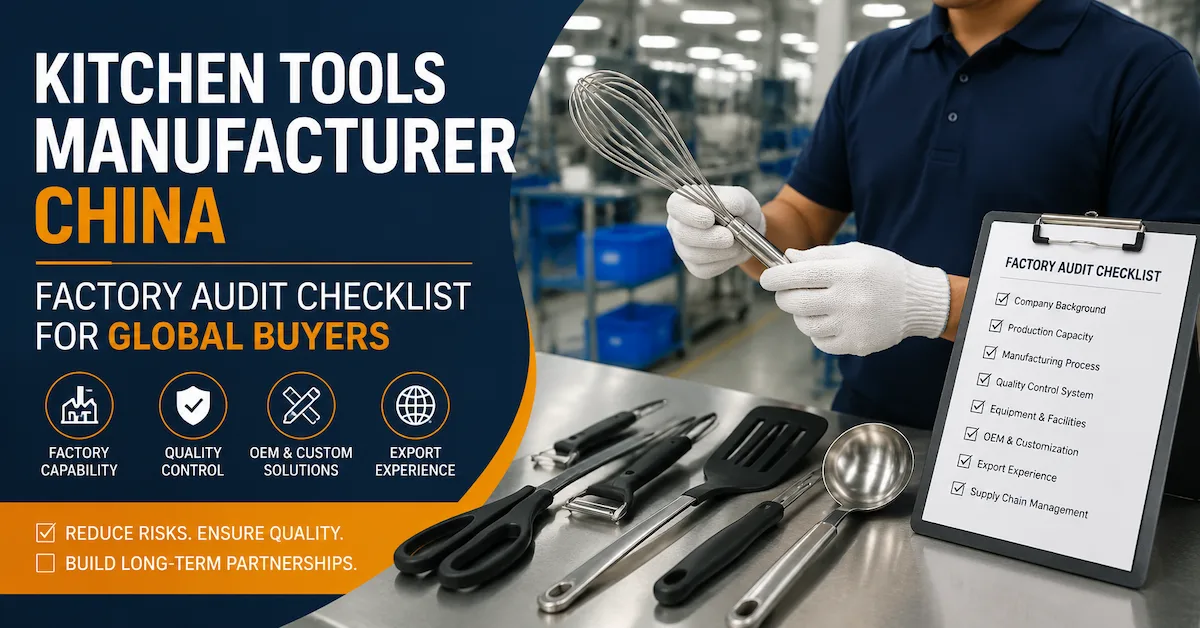
What Should Buyers Check Before Visiting a Kitchen Tools Factory?
Before conducting an audit, prepare clear evaluation criteria.
A professional factory assessment should include:
- Company background
- Production capability
- Equipment
- Manufacturing process
- Quality control system
- OEM capability
- Export experience
- Supply chain management
Without a structured checklist, buyers may focus only on appearance rather than actual manufacturing capability.
Factory Background Verification
The first step is confirming the supplier's identity.
Buyers should check:
Company History
Important questions:
- How long has the company operated?
- What products does it specialize in?
- Which markets does it serve?
Experience in kitchen tools manufacturing indicates whether the supplier understands industry requirements.
Product Focus
A factory producing only general products may have different capabilities compared with a manufacturer specializing in:
- Kitchen scissors
- Cooking utensils
- Stainless steel tools
- Plastic kitchen accessories
- Custom kitchenware
A focused manufacturer usually has deeper process experience.
Production Capability Audit Checklist
A reliable kitchen tools manufacturer China should clearly explain its manufacturing process.
Buyers should review:
| Audit Item | Questions to Ask |
|---|---|
| Production lines | How many lines are available? |
| Equipment | What machines are used? |
| Capacity | Monthly output capability? |
| Workforce | Number of production employees? |
| Processes | Which steps are completed internally? |
| Peak season | How are large orders handled? |
Production capacity should match the buyer's business plan.
A small factory may handle test orders well but struggle with large retail programs.
A large factory may support volume but require higher MOQ.
The right supplier depends on the buyer's requirements.
Manufacturing Process Evaluation
Kitchen tools often involve multiple manufacturing stages.
A professional factory should understand:
Material Preparation
Including:
- Stainless steel sourcing
- Plastic materials
- Silicone components
- Packaging materials
Forming Process
Depending on the product:
- Stamping
- Injection molding
- Cutting
- Assembly
Surface Treatment
May include:
- Polishing
- Coating
- Finishing
Assembly
Check:
- Component fitting
- Product function
- Structural stability
Final Inspection
Confirm:
- Appearance checks
- Functional testing
- Packaging inspection
BONET explains its production capability through its kitchen tools manufacturing process, covering manufacturing steps, quality checks, and production control.
How to Evaluate Kitchen Tools Quality Control System?
Quality control is one of the most important parts of a factory audit.
A professional manufacturer should have inspection procedures throughout production.
Incoming Material Inspection
Check:
- Material specification
- Supplier consistency
- Surface condition
Production Inspection
Monitor:
- Manufacturing accuracy
- Assembly quality
- Product performance
Final Product Inspection
Evaluate:
- Appearance
- Function
- Packaging
- Quantity
For kitchen tools, buyers should pay special attention to:
- Cutting performance
- Handle strength
- Surface finishing
- Assembly stability
- Product consistency
What Quality Problems Should Buyers Watch For?
Common kitchen tools quality risks include:
Material Problems
Examples:
- Incorrect material specification
- Poor corrosion resistance
- Inconsistent appearance
Manufacturing Problems
Examples:
- Uneven finishing
- Loose components
- Poor assembly
Packaging Problems
Examples:
- Incorrect labels
- Damaged packaging
- Missing accessories
A good manufacturer should have preventive controls instead of relying only on final inspection.
OEM Capability Audit for Kitchen Tools Manufacturers
Many buyers search for a kitchen tools manufacturer China because they need customization.
During factory evaluation, check:
Product Development Ability
Can the factory support:
- New designs?
- Product modifications?
- Samples?
Custom Branding
Confirm whether the supplier supports:
- Logo printing
- Laser engraving
- Custom colors
- Packaging design
Sample Process
Ask:
- How long does sampling take?
- How many revisions are included?
- Who approves final samples?
BONET provides OEM kitchen tools manufacturing services for brands requiring customization, product development, and private-label solutions.
How to Evaluate Factory Equipment and Production Environment?
A factory visit should include production areas.
Buyers should observe:
Equipment Condition
Check:
- Machine maintenance
- Production efficiency
- Safety conditions
Production Organization
Look for:
- Organized workflow
- Clear production stages
- Material management
Worker Operations
Observe:
- Standard procedures
- Skill level
- Quality awareness
A clean showroom does not represent the complete factory capability.
The production area provides more valuable information.
How to Check Supplier Export Experience?
Export experience matters because international orders require additional management.
Check:
- Export markets
- Previous customers
- Packaging experience
- Documentation ability
International buyers often require:
- Correct labeling
- Export documents
- Packaging standards
- Shipping coordination
A manufacturer experienced in overseas markets usually understands these requirements better.
Kitchen Tools Manufacturer China vs Trading Company
Before cooperation, buyers should understand the difference.
| Factor | Manufacturer | Trading Company |
|---|---|---|
| Factory control | Direct | Indirect |
| Customization | Stronger | Depends |
| Technical communication | Direct | Through intermediary |
| Production visibility | Higher | Lower |
| Product range | Usually focused | Usually broader |
For OEM projects and long-term cooperation, direct manufacturer communication often provides better control.
How to Reduce Risk When Working With Chinese Kitchen Tool Factories?
A structured sourcing process reduces mistakes.
Recommended steps:
Step 1: Supplier Research
Compare:
- Product range
- Experience
- Manufacturing ability
Step 2: Factory Evaluation
Review:
- Production
- QC
- Equipment
- Team
Step 3: Sample Testing
Test:
- Function
- Materials
- Appearance
- Packaging
Step 4: Production Confirmation
Confirm:
- Specifications
- Quality standards
- Packaging
Step 5: Bulk Inspection
Before shipment:
- Inspect products
- Confirm quantity
- Verify packaging
What Documents Should Buyers Request?
Depending on market requirements, buyers may request:
- Company information
- Product specifications
- Quality documents
- Test reports if applicable
- Packaging information
The exact requirements depend on:
- Product type
- Destination market
- Customer requirements
How to Prepare a Factory Audit Checklist?
A practical checklist includes:
| Category | Audit Questions |
|---|---|
| Company | How long operating? |
| Products | What products are specialized? |
| Factory | Own production facilities? |
| Capacity | Monthly output? |
| Quality | What inspections are used? |
| OEM | Can customize products? |
| Export | Which markets served? |
| Delivery | How are schedules controlled? |
Using a checklist helps buyers compare suppliers objectively.
Common Mistakes During Supplier Selection
Choosing Only the Lowest Price
Price differences may come from:
- Materials
- Processes
- Quality controls
Auditing Only the Office
The production floor provides more useful information.
Ignoring Repeat Order Capability
A supplier must maintain quality after the first order.
Not Confirming Specifications
Clear standards prevent disputes.
Skipping Sample Approval
Approved samples should become the production reference.
FAQ
Why should I audit a kitchen tools manufacturer China?
A factory audit helps verify production capability, quality control systems, OEM ability, and supplier reliability before bulk purchasing.
What should I check when visiting a kitchen tools factory?
Check production equipment, manufacturing processes, quality control, workforce, capacity, and export experience.
How do I know if a Chinese kitchen tools supplier is reliable?
Evaluate factory history, production capability, QC systems, customer experience, and communication quality.
Can kitchen tools manufacturers support OEM projects?
Yes. Many manufacturers provide customization including product design, colors, logos, and packaging.
Should I choose a factory or trading company?
For customized products and long-term cooperation, working directly with a manufacturer often provides better production control.
How can I reduce quality risks?
Use samples, factory audits, clear specifications, inspection procedures, and approved production standards.
What information should I provide when contacting a factory?
Provide product requirements, quantity, target market, customization needs, packaging requirements, and timeline.
Conclusion
Choosing a reliable kitchen tools manufacturer China requires more than comparing quotations.
A professional factory evaluation should examine:
- Manufacturing capability
- Production process
- Quality control
- OEM experience
- Export ability
- Long-term cooperation potential
For importers, retailers, and brands, a proper factory audit reduces sourcing risks and creates a stronger foundation for successful kitchenware projects.
BONET supports global customers with kitchen tools manufacturing, OEM customization, and production solutions.
Buyers can review the company's kitchenware manufacturing capabilities or request a kitchen tools quotation to discuss their sourcing requirements.
