




How Can Home Stores Choose the Right Kitchenware Supplier?
A reliable kitchenware supplier for home stores should provide more than a large product catalog. For homeware retailers, specialty stores, importers, and distributors, the right supplier needs to support product selection, consistent quality, retail packaging, customization, and long-term supply.
Home stores usually sell products across different customer needs and price levels. A successful kitchenware category requires a balanced assortment that includes everyday essentials, functional tools, attractive designs, and products with strong retail appeal.
When selecting a supplier, buyers should evaluate:
- Product range and category coverage
- Manufacturing capability
- Product quality consistency
- Packaging suitability
- OEM and private-label support
- Supply reliability
- Communication efficiency
The goal is not simply to find a supplier with the lowest price. The goal is to build a stable product supply system that supports customer satisfaction and repeat sales.
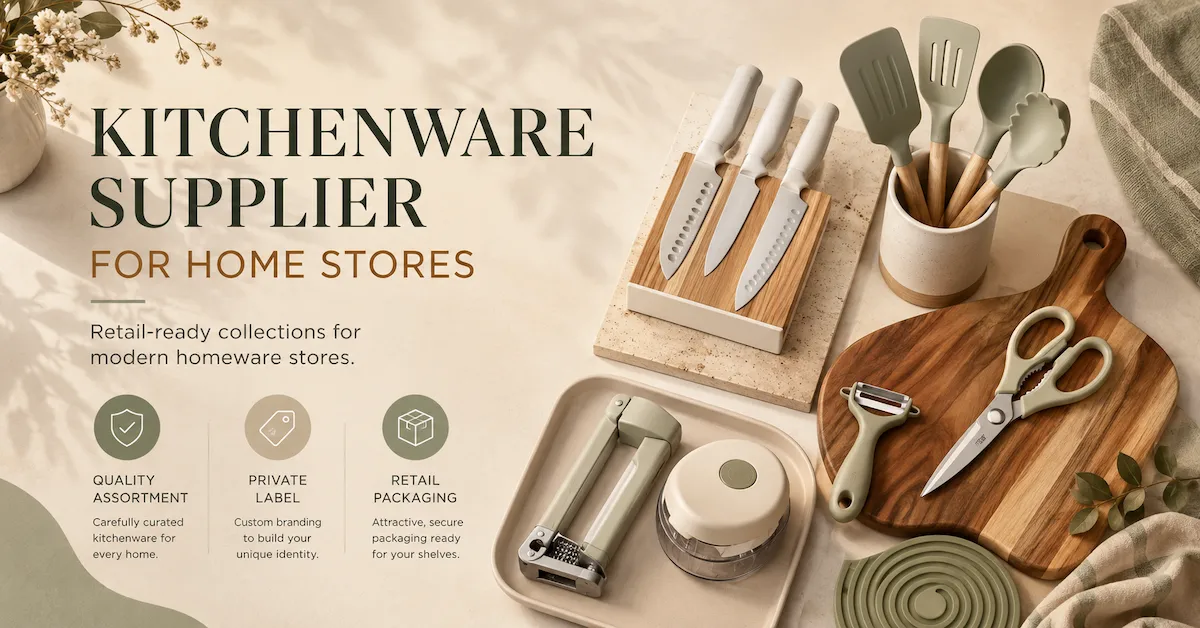
BONET provides kitchenware manufacturing solutions covering kitchen scissors, kitchen knives, utensils, chopping boards, multifunctional kitchen tools, and related kitchen products for global brands, retailers, distributors, and e-commerce businesses. BONET Products
What Do Home Stores Need from a Kitchenware Supplier?
Home stores typically require suppliers that can support multiple product categories and different customer segments.
Unlike single-product buyers, home stores need products that work together as a retail collection.
A supplier should understand:
- Which products are daily essentials
- Which products create category differentiation
- Which products fit different price levels
- Which products are suitable for seasonal promotions
- Which products can support private branding
Key Requirements for Home Store Suppliers
| Requirement | Why It Matters |
|---|---|
| Product variety | Helps stores build complete kitchen categories |
| Stable quality | Reduces customer complaints and returns |
| Retail packaging | Improves shelf presentation |
| Customization | Supports store branding |
| Manufacturing capability | Ensures repeat-order consistency |
| Flexible product development | Supports market changes |
A professional homeware store supplier should act as a long-term sourcing partner rather than only a product provider.
What Kitchenware Products Should Home Stores Stock?
A strong kitchenware section usually combines high-demand essentials with products that improve customer shopping experience.
Retail buyers should create a balanced product mix instead of selecting random items.
Common Kitchenware Categories for Home Stores
| Product Category | Retail Role | Typical Customers |
|---|---|---|
| Kitchen scissors | Everyday household essential | General home users |
| Kitchen knives | Core kitchen category | Household buyers |
| Kitchen utensils | Cooking accessories | Daily cooking customers |
| Chopping boards | Food preparation products | Home kitchens |
| Multifunctional tools | Convenience products | Modern lifestyle buyers |
| Kitchen gadgets | Problem-solving products | Online and retail shoppers |
BONET's current product range includes all-purpose scissors, multifunctional kitchen tools, kitchen knives, utensils, chopping boards, and kitchen gadgets, supporting different retail assortment strategies. BONET Product Categories
How Should Home Stores Build a Kitchenware Product Assortment?
Successful home stores usually organize products according to customer demand and price positioning.
A complete assortment often includes three levels.
Entry-Level Kitchen Products
These products usually focus on:
- Everyday use
- Affordable pricing
- High purchase frequency
Examples:
- Basic kitchen scissors
- Simple utensils
- Small kitchen gadgets
Mid-Range Kitchen Products
These products often provide better design and functionality.
Examples:
- Kitchen knife sets
- Cooking tool sets
- Coordinated kitchen accessories
Premium Kitchen Collections
Premium products focus on:
- Better presentation
- Gift value
- Brand differentiation
Examples:
- Kitchen gift sets
- Customized collections
- Premium kitchen tool combinations
A supplier that can support different product levels allows home stores to create a more complete retail experience.
How to Evaluate a Kitchenware Supplier Before Purchasing?
Choosing a supplier requires evaluating both products and business capability.
Kitchenware Supplier Evaluation Checklist
| Evaluation Area | Questions Buyers Should Ask |
|---|---|
| Product capability | Can the supplier provide suitable categories? |
| Manufacturing | Does the supplier understand production processes? |
| Materials | Are product specifications clearly defined? |
| Quality control | Are products inspected before shipment? |
| Customization | Can products match store branding? |
| Packaging | Is packaging suitable for retail shelves? |
| Communication | Are requirements confirmed clearly? |
| Supply stability | Can the supplier support repeat orders? |
A supplier may have attractive products but still fail to support long-term retail programs if quality and communication are inconsistent.
Why Manufacturing Capability Matters for Retail Kitchenware
Home stores depend on repeat customers. Product consistency is therefore one of the most important supplier requirements.
Manufacturing capability affects:
- Product quality stability
- Production consistency
- Customization possibilities
- Packaging control
- Delivery planning
Working with a manufacturer can help retailers communicate directly about:
- Product specifications
- Sample approval
- Design adjustments
- Quality requirements
BONET describes manufacturing processes for related cutting products, including stamping, straight adjustment, heat treatment, grinding, polishing, injection molding, cleaning, assembly, quality inspection, and packing. BONET Manufacturing Process
Understanding manufacturing processes helps buyers evaluate whether suppliers can maintain consistent quality.
Material Selection for Home Store Kitchenware Products
Material selection influences:
- Product appearance
- Customer perception
- Durability expectations
- Market positioning
- Cost structure
BONET's OEM/ODM capabilities include support for materials such as stainless steel, silicone, plastic, wood, bamboo, aluminum alloy, and composite materials depending on project requirements. BONET OEM ODM Service
Stainless Steel Kitchen Products
Common applications:
- Kitchen knives
- Kitchen scissors
- Metal kitchen tools
Retail buyers should confirm:
- Product specifications
- Surface finish
- Intended usage
- Manufacturing requirements
Silicone Kitchen Tools
Common applications:
- Spatulas
- Cooking utensils
- Kitchen accessories
Buyers should consider:
- Design
- Color consistency
- Product positioning
- Market requirements
Wood and Bamboo Kitchen Products
Often used for:
- Natural-style kitchen collections
- Premium-looking products
- Gift-oriented products
Material choice should always match customer expectations and retail positioning.
OEM and Private Label Solutions for Home Stores
Many home stores develop their own branded kitchenware collections to create stronger customer loyalty.
A suitable supplier should support different levels of customization.
Common Private Label Requirements
Home stores may require:
- Store logo
- Custom colors
- Product combinations
- Packaging design
- Retail labels
- Gift packaging
- Product development support
BONET's OEM/ODM services include production based on drawings or samples, material and color customization, logo printing or laser engraving, packaging customization, and product development support. BONET OEM ODM Solutions
OEM vs Private Label Kitchenware
| Service | Suitable For |
|---|---|
| OEM | Stores that need branded existing products |
| Private Label | Retailers creating their own kitchenware line |
| ODM | Buyers developing new product concepts |
Home stores should decide whether they need simple branding or deeper product development before choosing a supplier.
Retail Packaging Requirements for Home Stores
Packaging directly influences purchasing decisions.
Customers often judge kitchen products through:
- Product appearance
- Package design
- Brand presentation
- Product information
Important Retail Packaging Elements
| Element | Purpose |
|---|---|
| Product image | Helps customers understand the item |
| Brand information | Builds recognition |
| Barcode | Supports store management |
| Product details | Explains benefits |
| Protection | Prevents damage |
| Gift packaging | Supports premium positioning |
A supplier that understands retail packaging can help home stores improve product presentation.
BONET supports packaging customization options including retail packaging, gift boxes, barcode labels, and export cartons depending on project requirements. BONET Packaging Support
Quality Control Checklist for Retail Kitchenware
Retail buyers should define quality requirements before mass production.
A clear inspection standard helps prevent problems after products reach stores.
Kitchenware QC Checklist
| Inspection Area | What to Check |
|---|---|
| Appearance | Surface quality and consistency |
| Function | Product performance |
| Dimensions | Product specifications |
| Assembly | Component connection |
| Branding | Logo and packaging accuracy |
| Quantity | Order completeness |
| Packaging | Retail presentation |
BONET states that its OEM/ODM workflow includes quality inspection covering appearance, function, assembly, packaging, and overall consistency before delivery. BONET OEM ODM Process
Common Mistakes When Choosing a Kitchenware Supplier
Choosing Only Based on Price
The lowest quotation may create hidden costs through:
- Quality problems
- Returns
- Replacements
- Delayed launches
Retail buyers should compare total sourcing value.
Buying Products Without Considering Store Positioning
Products should match:
- Customer profile
- Price range
- Store style
- Sales channel
Ignoring Packaging
Even good products may perform poorly if packaging does not support retail presentation.
Not Confirming Samples
Sample approval helps verify:
- Product appearance
- Function
- Packaging
- Customer experience
Failing to Define Quality Standards
Clear requirements reduce misunderstandings between buyers and suppliers.
How Can Home Stores Start a Kitchenware Sourcing Project?
A structured sourcing process improves efficiency.
Step 1: Define Store Requirements
Confirm:
- Target customers
- Product categories
- Price positioning
- Packaging requirements
Step 2: Select Product Categories
Choose products based on:
- Customer demand
- Shelf space
- Market trends
- Retail strategy
Step 3: Review Supplier Capability
Evaluate:
- Manufacturing experience
- Customization support
- Quality control
- Packaging ability
Step 4: Approve Samples
Check:
- Product quality
- Design
- Function
- Packaging
Step 5: Develop Long-Term Cooperation
Maintain communication about:
- New products
- Repeat orders
- Quality improvements
- Market feedback
FAQ
What is a kitchenware supplier for home stores?
A kitchenware supplier for home stores provides kitchen products in wholesale quantities for homeware retailers, specialty stores, distributors, and other business buyers.
What products should home stores buy from kitchenware suppliers?
Common products include kitchen scissors, knives, utensils, chopping boards, kitchen gadgets, and multifunctional kitchen tools.
How do home stores choose a reliable kitchenware supplier?
Home stores should evaluate product range, manufacturing capability, quality control, customization options, packaging, communication, and supply stability.
Can kitchenware suppliers provide private label products?
Yes. Many suppliers support private label services including logo customization, packaging design, product combinations, and branded collections.
Why should retailers work with kitchenware manufacturers?
Manufacturers can provide better control over production, customization, quality consistency, and product development.
What packaging options are available for retail kitchenware?
Options may include retail boxes, gift boxes, barcode labels, product inserts, and export packaging depending on project requirements.
What quality checks should home stores request?
Retailers should check appearance, function, materials, assembly, packaging, quantity, and consistency with approved samples.
Can suppliers create custom kitchenware collections?
Yes. OEM and ODM services can support customized product concepts, materials, colors, branding, and packaging.
What information should buyers provide when requesting a quotation?
Buyers should provide product requirements, target market, quantity, materials, customization needs, packaging requirements, and quality expectations.
Does BONET support home store kitchenware sourcing?
BONET provides kitchenware manufacturing, OEM/ODM customization, product development support, and packaging solutions for global business buyers. BONET Contact Us
Conclusion
Choosing the right kitchenware supplier for home stores requires evaluating more than product price. Retail buyers need suppliers that can provide suitable product categories, stable quality, customization support, professional packaging, and reliable manufacturing capability.
A successful kitchenware retail program depends on selecting products that match customer needs while building a supply relationship that supports future growth.
BONET helps global retailers, distributors, and brands source kitchen scissors, knives, utensils, chopping boards, and multifunctional kitchen tools with OEM/ODM and customization support.
Home stores developing new kitchenware collections can explore BONET's products, manufacturing capabilities, OEM/ODM services, or contact the team to discuss sourcing requirements. BONET Products BONET Contact Us
