




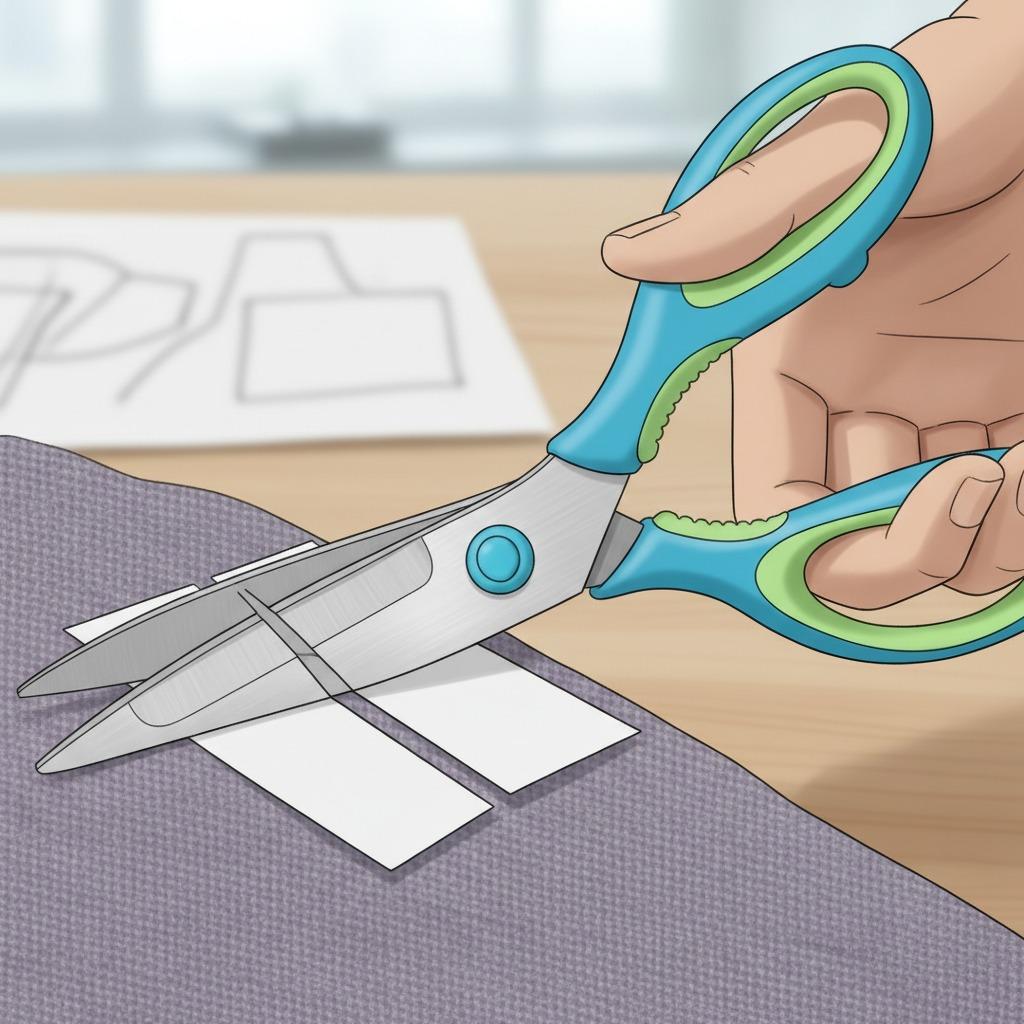
Left-Handed Tailoring: Finding the Perfect Pair of Southpaw Shears
For left-handed sewists, tailors, pattern cutters, and craft users, ordinary scissors can make fabric cutting harder than it needs to be. The issue is not only the handle shape. True left-handed tailoring shears place the blades in the reverse orientation from right-handed shears, allowing the left hand to push the blades together naturally while keeping the cutting line visible.
The original article highlighted a common problem: left-handed users often experience fabric bunching, frayed edges, awkward wrist angles, and fatigue when using right-handed tools. This updated guide focuses on how to identify genuine southpaw shears, how to compare options for home and professional use, and what wholesale or OEM buyers should ask before placing an order.

Key Takeaways
- True left-handed shears have reversed blade orientation, not just left-shaped handles.
- Cutting comfort depends on blade alignment, handle geometry, tension, weight, and intended fabric use.
- Wholesale buyers should request samples and confirm blade orientation before approving bulk production.
- Regular wiping, pivot oiling, and proper sharpening help keep tailoring shears cutting cleanly.
Why True Left-Handed Shears Are Different
On right-handed scissors, the right blade normally sits on top. When used in the right hand, the squeezing motion helps the blades press together. A left-handed user often applies force in the opposite direction, which can separate the blades slightly and cause dragging or uneven cutting.
True left-handed tailoring shears reverse this arrangement. When held in the left hand, the upper blade position gives the user a clearer view of the fabric edge or pattern line. This matters when cutting slippery lining, long straight panels, curves, seam allowances, or repeated pattern pieces. A small visibility problem at the blade tip can become a measurable cutting error over a full garment.
True Left-Handed vs Universal vs Right-Handed Scissors
Many products are described as “left-hand friendly,” but that phrase can mean several things. Some have softer handles only. Others have symmetrical grips but keep right-handed blade orientation. The table below can help buyers separate useful designs from confusing descriptions.
| Selection Point | True Left-Handed Tailoring Shears | Universal or Left-Friendly Scissors | Right-Handed Scissors Used in Left Hand |
|---|---|---|---|
| Blade orientation | Reversed for left-hand cutting | Varies; must be checked | Designed for right-hand force |
| Cutting line visibility | Usually clear for left-handed users | Partial or inconsistent | Often blocked by the upper blade |
| Comfort in long sessions | Best when handle and weight suit the user | Acceptable for light work | May cause extra grip pressure |
| Best use | Tailoring, sewing, pattern cutting, fabric work | Paper, crafts, occasional fabric cuts | Right-handed users |
| Buyer check | Confirm left blade position and sample cut | Ask whether blades are truly reversed | Avoid for left-handed fabric cutting |
How to Choose Shears for Your Use Case
Start with the work you do most often. A home sewing user who cuts cotton, interfacing, and light denim may not need the same size or weight as an upholstery studio cutting thick fabric all day. Bigger shears can produce longer, smoother cuts, but they also require more control and hand strength.
- Confirm blade orientation. Hold the shears in the left hand. The cutting edge should give a clear view of the line without twisting the wrist.
- Match blade length to the task. Shorter shears are easier for curves and small projects; longer shears are useful for long garment panels and layered fabric.
- Check handle fit. The thumb and finger openings should not pinch. A bent handle can help keep fabric flat on the table.
- Test tension. Blades should close smoothly without wobble. If there is an adjustment screw, ask how it should be maintained.
- Consider material and finish carefully. The source article mentions stainless steel, high-carbon steel, titanium-coated options, and Japanese steel. Do not rely on those terms alone; ask the supplier what the actual material is and how it is verified.
Guidance for Professional and B2B Buyers
If you are sourcing left-handed tailoring shears for a sewing school, alteration chain, fabric store, distributor, or private-label range, the biggest risk is receiving “left-hand style” handles with right-handed blades. Product titles and catalog photos are not enough. Request physical samples or a clear video showing the blade overlap while the shears are held in the left hand.
Before approving a purchase order, ask the supplier these practical questions:
- Are the blades genuinely reversed for left-handed cutting?
- What materials are used for the blades, handle, pivot, and coating if any?
- Can the supplier provide close-up photos of blade alignment and pivot construction?
- What cutting tests are performed before shipment, and on which materials?
- Can packaging clearly identify the product as true left-handed to reduce returns?
- Are samples from mass production identical to the approved pre-production sample?
A reliable sourcing process should also include carton inspection, random functional checks, and user testing by actual left-handed cutters. Commercial details such as MOQ, lead time, customization options, packaging, spare parts, and after-sales handling should be confirmed directly with the supplier rather than assumed.
Care and Maintenance for Cleaner Cuts
Even good shears perform poorly if they are used on the wrong materials or stored carelessly. Reserve fabric shears for fabric whenever possible. Cutting paper, wire, plastic strapping, or adhesive materials can dull the edge or contaminate the blades. After use, wipe lint and residue from the cutting surfaces with a dry cloth.
Add a small amount of suitable oil at the pivot when movement feels dry, then open and close the shears several times and wipe away excess. Store them closed, dry, and protected from knocks. If cutting becomes crunchy, folded, or uneven, do not grind the blades randomly at home. A professional sharpener familiar with sewing shears and left-handed blade geometry is usually the safer option.
Common Mistakes to Avoid
- Buying based only on the word “left-handed” without checking blade orientation.
- Choosing the largest size because it looks professional, even if it strains the hand.
- Using fabric shears for paper patterns, cardboard, or packaging.
- Ignoring loose pivot tension until the blades start folding fabric.
- Assuming a coating or steel description guarantees performance without a cutting sample.
FAQ
How can I tell if shears are truly left-handed?
Hold them in your left hand and look at the blade overlap. A true left-handed pair should let you see the cutting line clearly and should not require wrist twisting to keep the blades together.
Are ambidextrous scissors good enough for tailoring?
They may be fine for light craft or paper use, but precision fabric cutting usually benefits from true left-handed blade orientation and a handle designed for longer sessions.
What size should a left-handed beginner choose?
Many beginners do well with a medium size that feels controllable. If possible, test on the fabrics you use most rather than choosing by size alone.
What should wholesale buyers inspect first?
Inspect blade orientation, cutting smoothness, pivot stability, handle comfort, packaging accuracy, and consistency between samples and bulk goods.
Can left-handed shears be sharpened like regular scissors?
They can be sharpened, but the sharpener should understand left-handed blade geometry. Incorrect sharpening can reduce alignment and cutting quality.
