




Left-Handed vs. Right-Handed Scissors: What’s the Real Difference?
Scissors look simple, but their performance depends on a small mechanical detail: which blade sits on top. For many right-handed users, standard office scissors feel natural and cut cleanly. For left-handed users, the same pair may cause the paper to bend, the blades to separate, or the cutting line to disappear behind the blade. This is not just a comfort issue; it affects accuracy, effort, and everyday productivity.
This guide explains the real difference between left-handed and right-handed scissors, how to identify each type, and how to choose better office scissors for individual desks, shared workrooms, schools, and purchasing teams.
Understanding the Core Mechanical Difference
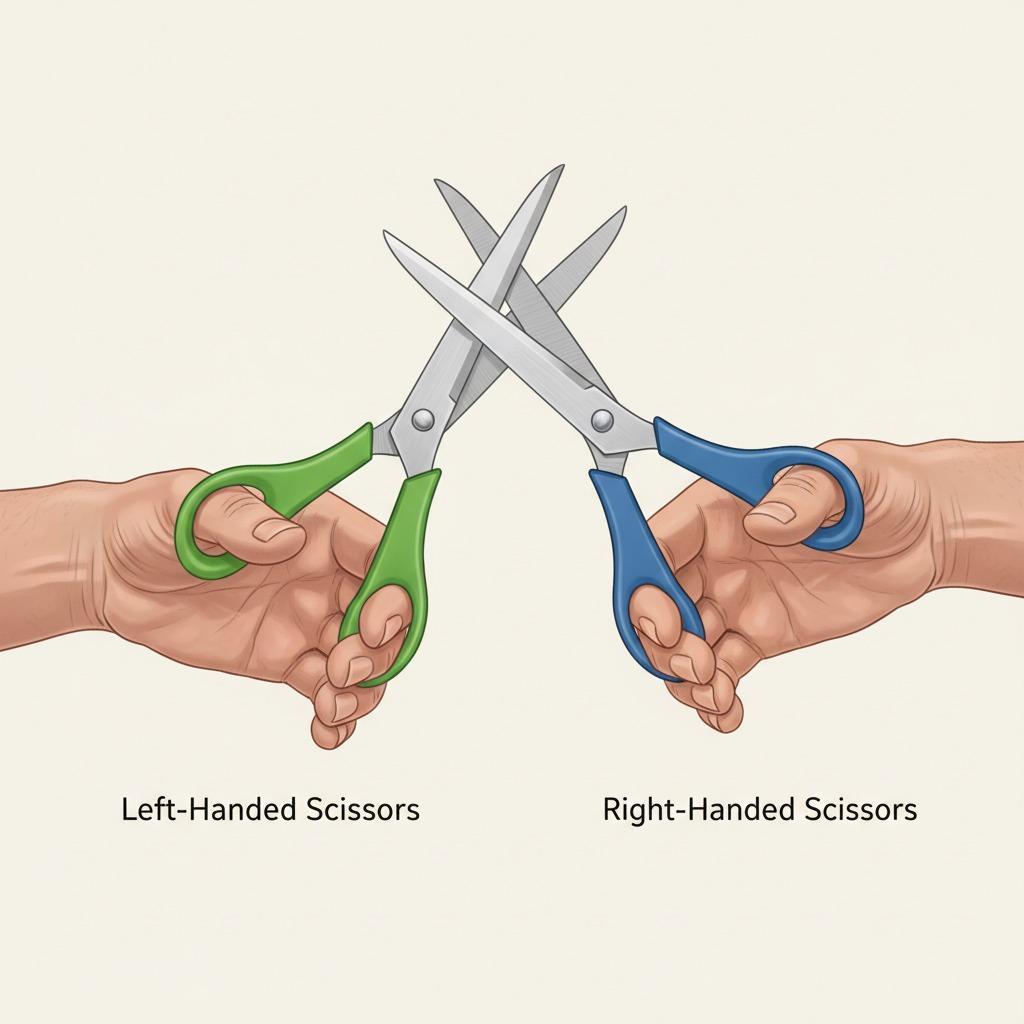
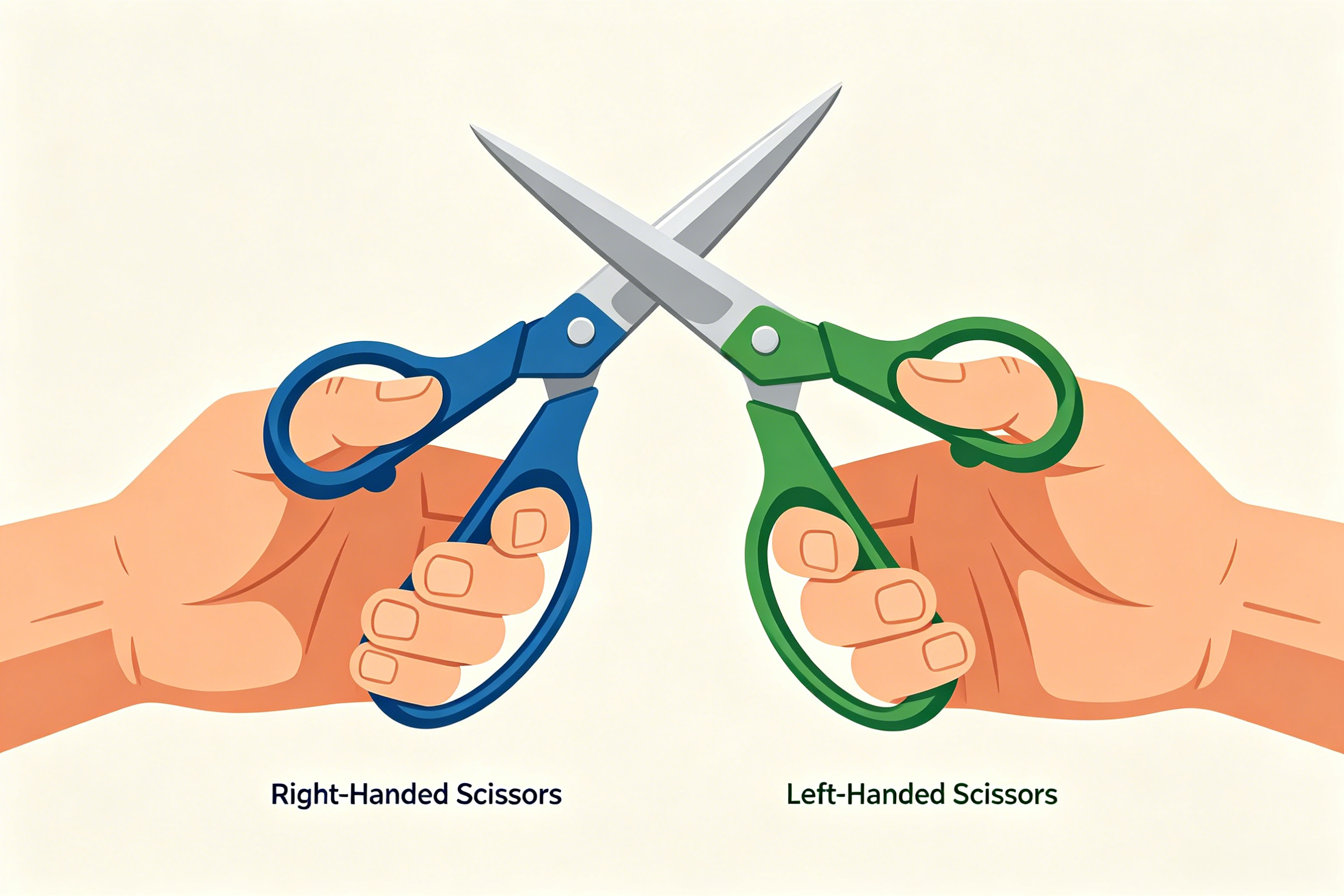
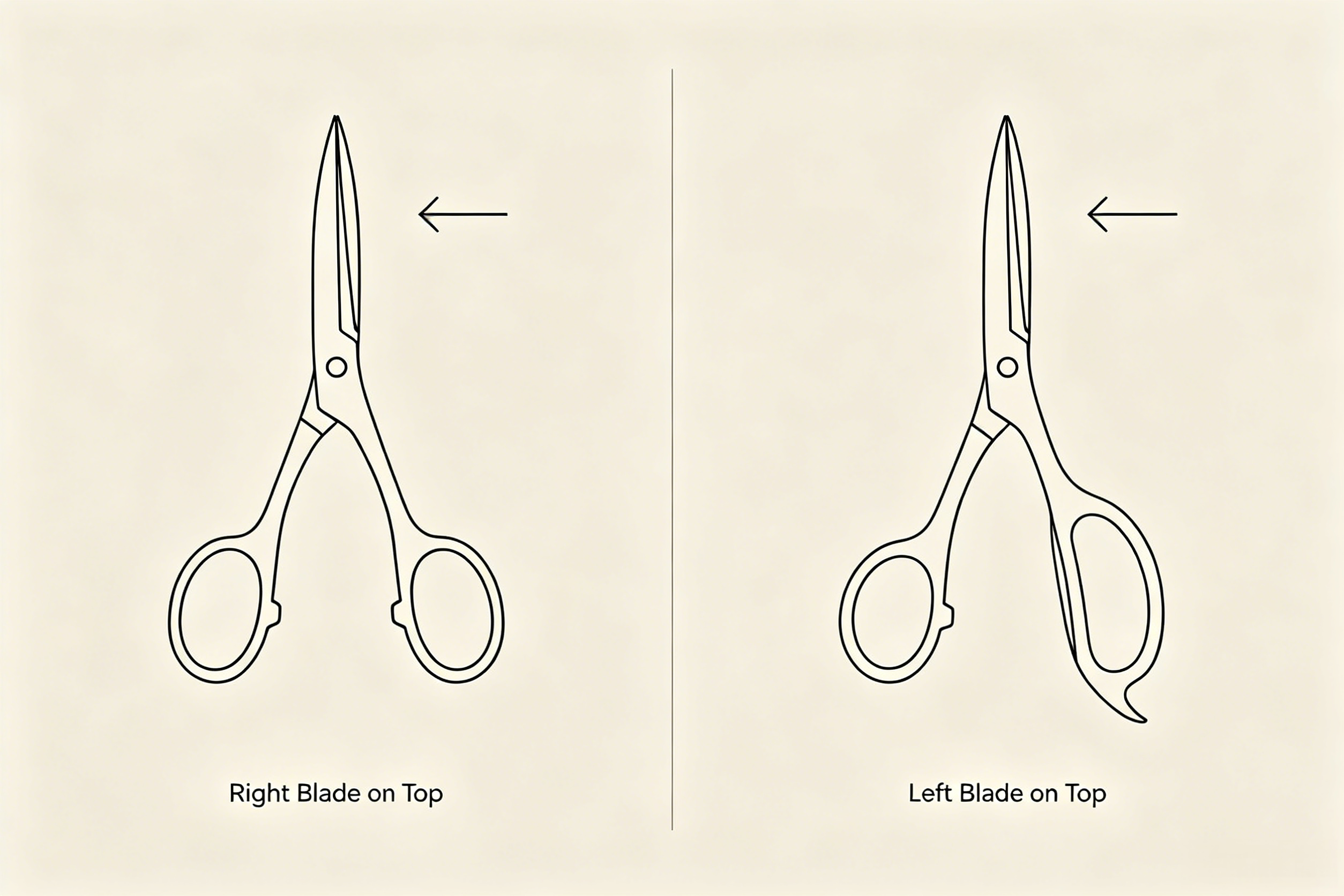
The main difference is not handle color or whether the grip looks symmetrical. The key difference is blade orientation. On right-handed scissors, the right blade sits on top when the scissors are open and held normally. On true left-handed scissors, the left blade sits on top. This reversed construction changes how hand pressure is transferred to the blades.
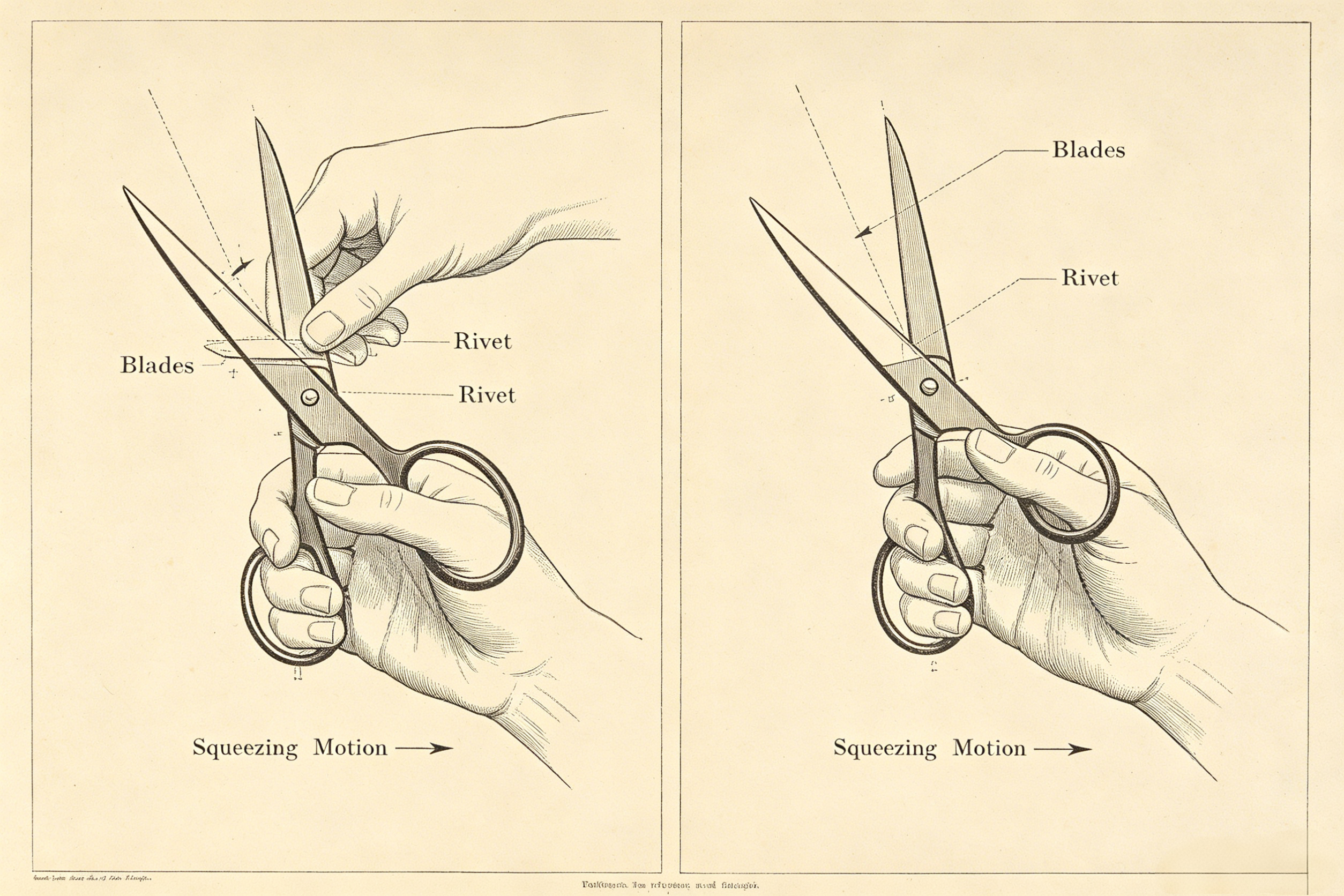
When scissors are matched to the user’s dominant hand, the natural squeezing action pushes the blades together. That contact is what produces a clean cut. When the scissors are used by the opposite hand, the same squeezing motion can push the blades apart. The result is more friction, more force, and less control.
Left-Handed vs. Right-Handed Scissors Comparison
The following table summarizes the practical differences buyers and users should check before choosing scissors for office use.
| Feature | Right-Handed Scissors | Left-Handed Scissors |
|---|---|---|
| Top blade when open | Right blade on top | Left blade on top |
| Best suited for | Right-handed users | Left-handed users |
| Cutting pressure | Right-hand grip pushes blades together | Left-hand grip pushes blades together |
| Cutting-line visibility | Clearer for right-handed cutting | Clearer for left-handed cutting |
| Typical office availability | Common as standard office scissors | Less common and may need dedicated sourcing |
| Ambidextrous handle issue | May still have right-handed blades | Requires reversed blades to be truly left-handed |
Why Blade Orientation Matters in Office Work
For occasional straight cuts, the wrong scissors may seem like a minor inconvenience. In busy offices, design studios, schools, packing stations, and administration areas, the difference becomes more noticeable. Repeated cutting of paper, labels, envelopes, samples, or craft materials requires alignment between the user’s hand and the scissor blades.
- Cleaner cuts: Correct blade orientation helps the blades meet tightly instead of pushing apart.
- Better line of sight: The user can see the cutting line without twisting the wrist or paper.
- Less hand fatigue: Less force is needed when the tool is mechanically suited to the user.
- Improved consistency: Shared offices can reduce damaged documents, uneven labels, and wasted materials.
Many standard office scissors are right-handed, even when the handles appear neutral. Some products marketed as “ambidextrous” may only have symmetrical handles while retaining right-handed blade orientation. That can help with handle feel, but it does not solve the cutting mechanics for a left-handed user.
How to Identify the Correct Pair
You do not need special equipment to check whether a pair is right-handed or left-handed. Use this quick inspection before buying, distributing, or labeling scissors in a workplace.
- Open the scissors and hold them in the hand they are intended for.
- Look at the blade that sits on top near the cutting edge.
- If the right blade is on top, the scissors are right-handed.
- If the left blade is on top, the scissors are left-handed.
- Make a test cut through ordinary paper and watch whether the blades stay together smoothly.
Also check the handle shape. Some handles have molded thumb and finger rings designed for one hand only. Others are more symmetrical. However, handle shape should be checked after blade orientation, not before it.
Selection Checklist for Offices and Purchasing Teams
For a single user, the decision is simple: choose the scissors that match the dominant hand. For shared spaces, the purchasing decision should be more deliberate. A workplace may need standard right-handed scissors, dedicated left-handed scissors, or clearly labeled sets of both.
When sourcing office scissors, ask the supplier practical questions instead of relying only on packaging terms:
- Are the blades truly reversed for left-handed models, or only the handles?
- What cutting tasks are the scissors intended for: paper, labels, packaging, or light craft use?
- Are there pointed-tip and blunt-tip options for different environments?
- What handle sizes are available for adult office users or school settings?
- Can products be labeled or packaged separately as left-handed and right-handed?
- What materials, inspection process, and packaging details can the supplier confirm?
These questions are especially useful for wholesale, OEM, or supplier sourcing. Buyers should request samples and compare actual cutting performance before placing larger orders. Avoid assuming that a generic “universal” description means the scissors will cut equally well for left- and right-handed users.
Use and Care Tips for Better Cutting
Even the correct scissors perform poorly if they are damaged or used on unsuitable materials. Keep office scissors assigned to light tasks such as paper, labels, and general desk use unless the supplier states otherwise. Cutting heavy packaging, wire, adhesive-backed materials, or abrasive surfaces can dull the blades or loosen the pivot.
For daily care, wipe adhesive residue from the blades, store scissors closed, and avoid dropping them on hard floors. If the blades feel loose, misaligned, or rough during cutting, replace the pair or ask whether the pivot can be adjusted. A sharp, correctly oriented pair is safer and more predictable than a dull pair that requires extra force.
Key Takeaways
- The real difference is blade orientation: right blade on top for right-handed scissors, left blade on top for left-handed scissors.
- True left-handed scissors are not just right-handed scissors with different handles.
- Shared offices should consider offering clearly marked options for both hand types.
- Purchasing teams should test samples and ask suppliers to confirm blade orientation, intended use, and packaging details.
Practical FAQ
Can a left-handed person use right-handed scissors?
Yes, but it is often less comfortable and less precise. The left-hand squeezing motion can push right-handed blades apart, which may cause bending, tearing, or jagged cuts.
Are ambidextrous scissors the same as left-handed scissors?
Not always. Some ambidextrous scissors have symmetrical handles but still use right-handed blade orientation. For true left-handed cutting, the blade order should be reversed.
How many left-handed scissors should a shared office buy?
There is no universal number. Start by asking employees or users, then place left-handed scissors in common areas where cutting tasks are frequent. Clear labeling helps prevent mix-ups.
What should buyers check when comparing suppliers?
Ask for samples, confirm blade orientation, check handle comfort, test cutting on intended materials, and request clear product details. Do not rely only on broad terms such as “universal” or “multi-purpose.”
When should office scissors be replaced?
Replace them when blades are dull, loose, rusted, chipped, or no longer meet cleanly. Forcing damaged scissors increases strain and can reduce cutting accuracy.
