




OEM Kitchen Shears: Practical Sourcing and Selection Guide
OEM kitchen shears are a compact tool, but they can affect how efficiently cooks trim meat, cut herbs, open food packaging, and handle everyday prep tasks. For retailers, distributors, and private-label buyers, the goal is not simply to find scissors that look attractive. The better question is whether the shears are comfortable, safe to control, easy to clean, and suitable for the real cutting jobs customers expect.
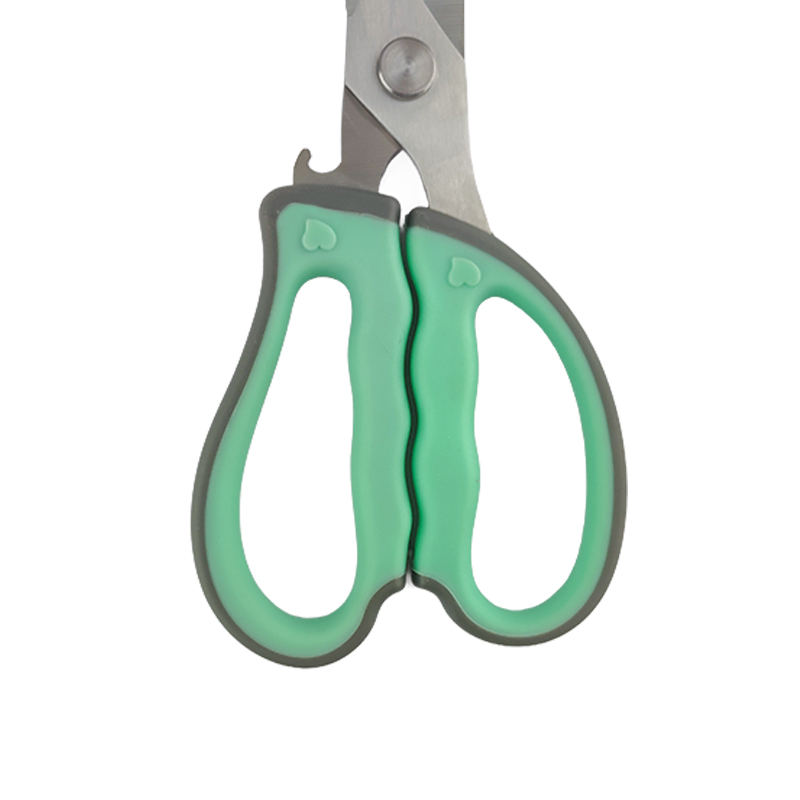
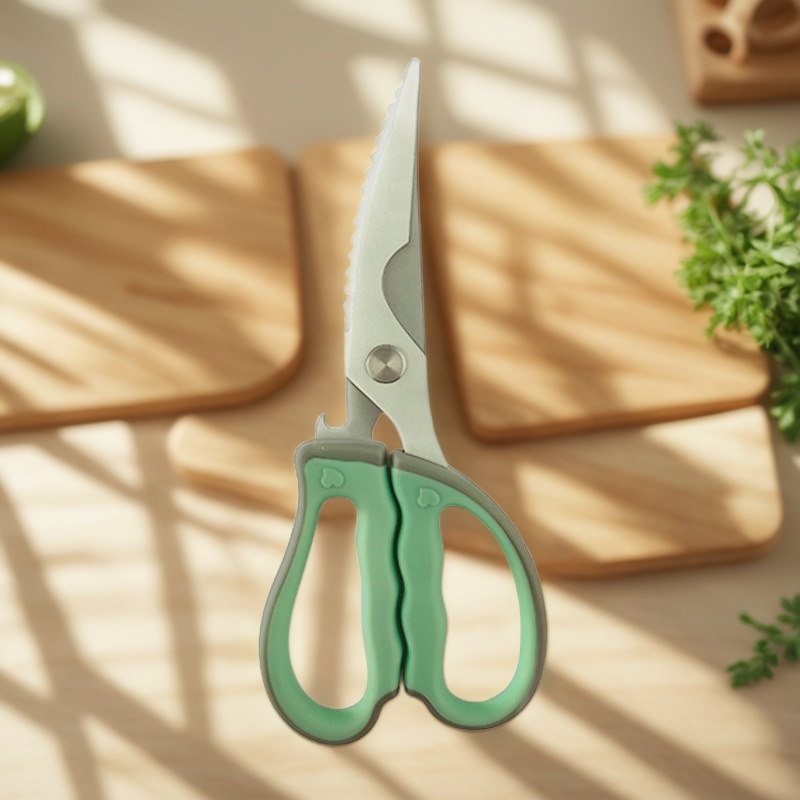
The original product described by Bonet Houseware is a pair of multi-functional kitchen scissors with soft handles in a mint green and grey color scheme, stainless steel blades, a micro-serrated edge, and integrated herb-stripping holes. Those are useful starting points for evaluating a product concept. This guide explains how to assess similar OEM kitchen shears before requesting samples, approving packaging, or preparing a wholesale order.
Key Takeaways
- For OEM kitchen shears, cutting performance, handle comfort, cleanability, and packaging should be checked together, not separately.
- A micro-serrated edge can help grip slippery foods, while herb-stripping holes add convenience for fresh herb preparation.
- Soft handle kitchen shears should be evaluated with wet-hand use, repeated cutting, and different hand sizes in mind.
- Before ordering, buyers should ask suppliers about material details, customization options, sample policies, inspection standards, lead times, and packaging choices.
What Makes Kitchen Shears Different from Ordinary Scissors?
Kitchen shears are expected to work in conditions that office scissors never face. They may be used around moisture, oils, raw poultry, herbs, vegetable stems, and food packaging. Because of this, buyers should focus on grip stability, blade bite, hinge strength, and cleaning access.
Multi-functional kitchen scissors often appeal to consumers because they reduce the need for several small tools. A single pair may be used for trimming meat, portioning leafy greens, cutting pizza or flatbread, snipping herbs, opening sealed bags, or preparing poultry. However, the more functions a product claims, the more important it becomes to test each function during sample approval.
Blade Design: Sharpness, Grip, and Real Prep Tasks
The original article notes stainless steel blades with a micro-serrated edge. For kitchen use, this combination is worth evaluating carefully. Stainless steel is commonly chosen for food-prep tools because it is practical for repeated cleaning, while a micro-serrated edge can help hold food in place during cutting. That grip is especially useful on slippery items such as raw meat, poultry skin, or fibrous vegetables.
When reviewing OEM kitchen shears, do not rely only on a quick paper-cutting test. Paper does not show how the shears perform on food textures. A more practical sample test should include herbs, scallions, thin plastic food packaging, cooked flatbread, raw chicken skin, and small poultry bones if the supplier presents the shears as suitable for that use. Buyers should also check whether the blades twist, bind, or leave ragged cuts after repeated use.
Handle Comfort and Control Matter More Than Appearance
The source product is described as soft handle kitchen shears with an ergonomic grip in mint green and grey. Color can support shelf appeal and private-label branding, but comfort is the feature that affects repeat use. A handle that feels acceptable for one cut may become uncomfortable when used for several minutes.
During evaluation, test the shears with dry hands and slightly wet hands. The grip should feel secure without forcing the user to squeeze excessively. Buyers should also consider whether the handle openings suit a wide range of hand sizes. If the target customers include home cooks, meal-prep users, or professional kitchens, comfort testing should include repeated trimming tasks rather than a single demonstration cut.
Useful Features to Confirm Before OEM Approval
Extra functions can be valuable when they are simple and durable. The original product includes herb-stripping holes, which can speed up preparation of fresh herbs by pulling stems through appropriately sized openings. This is a practical feature for consumers who cook with herbs often, but the holes should be smooth, easy to clean, and positioned where they do not weaken the handle or interfere with grip.
| Feature to Check | Why It Matters | Buyer Evaluation Tip |
|---|---|---|
| Micro-serrated blade edge | Helps grip slippery or fibrous foods while cutting | Test on poultry skin, herbs, and vegetable stems |
| Soft handle grip | Improves comfort and control during repeated tasks | Try wet-hand use and longer cutting sessions |
| Herb-stripping holes | Adds a simple prep function for fresh herbs | Check hole smoothness and cleaning access |
| Blade alignment | Affects cutting accuracy and long-term feel | Open and close repeatedly; watch for rubbing or gaps |
| Packaging and instructions | Supports retail presentation and correct use | Ask what packaging options and care guidance are available |
OEM and Wholesale Questions to Ask a Supplier
For sourcing teams, a product sample is only one part of the decision. Commercial and technical details should be confirmed directly with the supplier because assumptions can lead to delays or mismatched expectations. Avoid guessing about material grades, certifications, minimum order quantities, or production capacity unless the supplier provides written confirmation.
- What blade material is used, and can the supplier provide the exact specification?
- What handle materials and color options are available for OEM orders?
- Can the product be customized with private-label branding, and where can branding be placed?
- What packaging formats are available, such as carded packaging, box packaging, or other retail options?
- What sample process, sample cost, and sample lead time apply?
- What inspection criteria are used for blade sharpness, handle finish, alignment, and packaging quality?
- What are the MOQ, production lead time, payment terms, and reorder process?
- Are any test reports, compliance documents, or destination-market documents available if required by the buyer?
Care and Use Guidance for End Customers
Even strong kitchen shears perform better when used correctly. Retailers and brand owners should consider adding clear care instructions to packaging or inserts. Good instructions reduce misuse and can improve customer satisfaction.
General guidance may include washing the shears promptly after cutting raw meat or herbs, drying them before storage, and keeping fingers away from the blade edge and pivot area. If the product is marketed for poultry, users should still avoid forcing the blades through materials beyond the intended use. If dishwasher suitability is important for your market, ask the supplier to confirm whether the specific model supports that cleaning method before printing any claim.
How to Compare Samples Before Placing an Order
When comparing several OEM kitchen shears, use the same test routine for every sample. Cut the same foods, repeat the same number of cycles, and record comments from more than one tester. This makes the decision less subjective and helps identify issues before production.
A practical review should cover first impression, handle comfort, blade smoothness, cutting strength, ease of cleaning, odor retention around the handle, finish consistency, and packaging fit. If the shears will be sold online, also check whether the product photographs clearly show the soft handle, micro-serrated blade, and herb-stripping holes. Accurate imagery helps reduce confusion and returns.
FAQ
Are OEM kitchen shears suitable for both home and professional use?
They can be, depending on the design and supplier specifications. Buyers should test samples under the conditions expected by their target users and ask the supplier what use cases the model is designed to support.
What is the benefit of a micro-serrated edge?
A micro-serrated edge can help the blade grip slippery foods, reducing sliding during cutting. It is especially useful when trimming poultry, meat, herbs, and fibrous vegetables.
Should I choose soft handle kitchen shears?
Soft handles can improve comfort and control, particularly during repetitive preparation tasks. The handle should still be tested for grip security, durability, and comfort across different hand sizes.
Can herb-stripping holes replace a separate herb tool?
For many simple prep tasks, integrated herb-stripping holes can reduce the need for another small gadget. Buyers should confirm that the holes are smooth, effective, and easy to clean.
What should be confirmed before printing claims on packaging?
Confirm all material details, cleaning instructions, safety guidance, compliance documents, and performance claims with the supplier in writing. Do not print claims that have not been verified for the exact product model.
Final Thoughts
OEM kitchen shears are valuable when they combine clean cutting, comfortable handling, practical features, and reliable supplier communication. The Bonet Houseware product concept highlights several useful elements: soft handles, stainless steel blades, a micro-serrated edge, and herb-stripping holes. For buyers, the next step is structured sample testing and clear supplier questioning. That approach leads to a better product choice than judging by appearance alone.
