




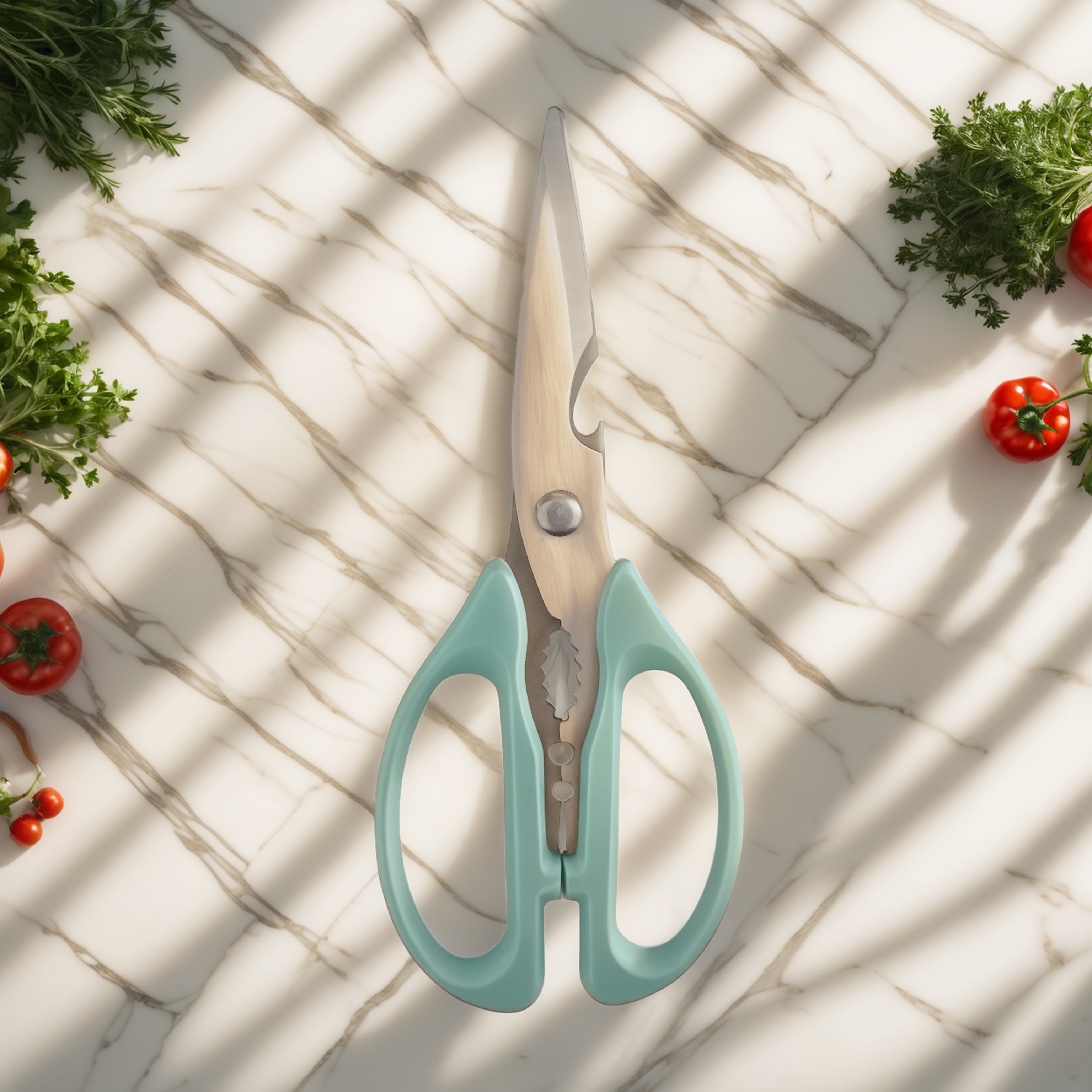
Master the Kitchen with Multi-functional Kitchen Scissors
Multi-functional kitchen scissors are one of the most useful tools in a busy kitchen because they reduce the need to switch between a knife, cutting board, bottle opener, and small cracking tool. For home cooks, they make everyday food preparation faster and cleaner. For retailers, wholesalers, and OEM buyers, they are also a practical product category because shoppers understand the value quickly: one compact tool can handle many common kitchen tasks.
The original Bonet Houseware article introduced these scissors as a versatile kitchen multitasker with sharp stainless-steel blades, mint green ergonomic handles, and added functions such as a bottle opener and nutcracker. This updated guide keeps those explicit product facts while focusing on how buyers should evaluate kitchen scissors for real use, product selection, and sourcing discussions.

What Multi-functional Kitchen Scissors Are Used For
Kitchen scissors, often called kitchen shears, are designed for food preparation rather than paper or craft use. A good pair can snip herbs, trim meat, cut poultry into smaller pieces, open food packaging, cut twine, portion pizza or flatbread, and handle small convenience tasks around the kitchen. When extra functions are built in, such as a bottle opener or nutcracker, the tool becomes more useful in compact kitchens, outdoor cooking kits, and giftable kitchen tool sets.
For consumers, the main benefit is control. Scissors allow users to cut directly over a bowl, pan, or plate, which can reduce mess and speed up preparation. For commercial buyers, the benefit is market clarity: the product is easy to demonstrate and can be positioned for home cooking, barbecue, meal prep, camping, or general kitchen organization.
Core Features to Check Before Buying
Not every pair of kitchen scissors should be evaluated only by appearance. Buyers should look closely at cutting performance, grip comfort, cleaning requirements, and the usefulness of any additional functions. The article source explicitly notes stainless-steel blades, mint green handles, ergonomic grip design, and integrated bottle opener and nutcracker functions. Those features are a useful starting point, but a sourcing team should still confirm details directly with the supplier before placing an order.
- Blade material: Confirm the stainless-steel type, edge treatment, and whether the blades are suitable for frequent food contact.
- Cutting feel: Test herbs, packaging, poultry skin, twine, and cooked foods rather than relying only on visual inspection.
- Handle comfort: Check grip size, slip resistance, and comfort for repeated use by different hand sizes.
- Extra functions: Verify that the bottle opener and nutcracker are positioned safely and work without awkward hand pressure.
- Cleaning method: Ask whether the scissors separate for cleaning and what washing instructions are recommended.
Comparison Checklist for Product Selection
The table below can help retailers, importers, and private-label buyers compare sample products before making a sourcing decision. It avoids assumptions and turns product evaluation into a practical checklist.
| Selection Point | What to Inspect | Questions to Ask the Supplier |
|---|---|---|
| Blade performance | Clean cuts through herbs, meat, packaging, and twine | What stainless-steel grade is used, and how is edge sharpness controlled? |
| Handle design | Comfort, grip security, and control for right- and left-handed users | Can handle color, material, or packaging be customized for OEM orders? |
| Added tools | Bottle opener and nutcracker usability | Are these functions tested during quality inspection? |
| Cleaning and hygiene | Food residue traps, joint area, and ease of washing | What care instructions should be printed on packaging or inserts? |
| Retail readiness | Labeling, barcode space, safety warnings, and packaging strength | What packaging options, artwork requirements, and lead times apply? |
OEM and Wholesale Sourcing Guidance
Because the original article refers to OEM kitchen scissors and kitchen scissors manufacturing in Yangjiang, sourcing teams should approach the product as both a tool and a supply-chain decision. Yangjiang is widely associated with cutlery and kitchen tool production, but buyers should not assume that every supplier offers the same quality control, customization process, or export documentation. Ask specific questions and request physical samples before confirming a bulk order.
Start by defining the intended sales channel. A supermarket kitchen tool may need simple packaging, clear use instructions, and a competitive unit cost. A private-label cookware range may require stronger brand presentation, coordinated colors, and more detailed quality checks. A promotional product may focus on visual appeal and broad usability, while a professional or heavy-use product may require more demanding performance testing.
Useful sourcing questions include: What materials are used for the blades and handles? Are there existing models available for branding? What customization is possible for color, logo, packaging, or inserts? What inspection steps are used for sharpness, assembly, handle finish, and opener or nutcracker function? What are the sample process, production lead time, payment terms, and shipping options? If compliance documents are required for your market, ask what the supplier can provide rather than assuming certification.
How to Evaluate Samples in a Real Kitchen
Sample testing should be practical. Open and close the scissors repeatedly to check smooth movement. Cut soft herbs to see whether they bruise or slice cleanly. Trim poultry skin or meat edges to test strength and control. Cut plastic packaging and kitchen twine to evaluate everyday convenience. Try the bottle opener and nutcracker functions carefully to see whether hand placement feels safe and natural.
Also inspect details that affect reviews and repeat purchases. Are there rough handle edges? Does the pivot feel loose after repeated use? Does food residue collect in difficult areas? Do the scissors feel balanced, or are they tiring to use? These observations are especially important for wholesale buyers because small comfort issues can become customer-service issues after distribution.
Use and Care Tips for Longer Service
Even durable kitchen scissors perform better when used correctly. Keep them for food and kitchen tasks rather than cutting cardboard, wire, or hard non-food materials. Wash them soon after contact with raw meat, sticky sauces, or acidic foods. Dry the blades and joint area thoroughly before storage to reduce spotting and keep the cutting action smooth.
If the supplier provides specific cleaning instructions, follow those directions and include them in retail packaging or online product pages. If the scissors are not confirmed as dishwasher safe, hand washing is the safer recommendation. Store them in a drawer organizer, knife block slot, or protective sleeve so the blades do not scrape against other utensils.
Key Takeaways
- Multi-functional kitchen scissors are useful for food prep, packaging, twine, herbs, poultry, and small kitchen tasks.
- The product described includes stainless-steel blades, mint green ergonomic handles, a bottle opener, and a nutcracker.
- OEM and wholesale buyers should confirm materials, customization, inspection steps, packaging, and compliance needs directly with the supplier.
- Sample testing should include real foods and repetitive cutting, not just a visual check.
- Clear care instructions help reduce misuse and improve customer satisfaction.
FAQ
Are multi-functional kitchen scissors better than a knife?
They are not a full replacement for a chef's knife, but they are better for many quick tasks such as snipping herbs, cutting twine, opening packages, trimming small pieces of meat, and portioning cooked foods directly over a bowl or plate.
What should OEM buyers confirm before ordering?
OEM buyers should confirm blade and handle materials, customization options, sample approval steps, packaging artwork requirements, quality inspection methods, lead time, payment terms, and any documents needed for the destination market.
Can kitchen scissors be used for poultry?
Many kitchen scissors are used for poultry trimming and portioning, but buyers should test sample performance first. The scissors should cut cleanly, feel stable in the hand, and be easy to clean after contact with raw meat.
How should kitchen scissors be cleaned?
Wash them promptly after use, especially after cutting raw or sticky foods. Dry the blades and joint area well before storage. Follow the supplier's instructions regarding dishwasher use, separation, sharpening, and long-term care.
Why consider Yangjiang for OEM kitchen scissors?
Yangjiang is known as a major kitchen tool and cutlery production region. However, buyers should still evaluate each supplier individually through samples, quality checks, communication, packaging review, and documentation requests.
